The Healthiest High-Protein Breakfasts: Science-Backed Choices, Quick Recipes, And A 7-Day Plan (2026)
We know mornings set the tone for the whole day, and a protein-rich breakfast consistently shows up in the research as one of the best ways to stabilize energy, control appetite, and support muscle health. Whether our goal is weight management, improved recovery from workouts, or simply to avoid mid-morning energy crashes, choosing the right high-protein breakfast makes a measurable difference. In this guide we’ll explain why breakfast protein matters, how much to aim for based on goals and body size, the top whole-food protein choices (both animal and plant-based), quick recipes and meal-prep strategies, plus a practical 7-day sample menu with portion sizes and easy swaps. Read on for evidence-based, approachable options we can actually cook and enjoy.
Why Protein-Rich Breakfasts Matter For Energy, Appetite, And Muscle Health
Protein does a few things at once that make it uniquely valuable at breakfast. First, it slows gastric emptying and blunts blood sugar spikes compared with a carb-heavy meal, which translates to steadier energy and fewer cravings mid-morning. Several randomized trials show higher-protein breakfasts reduce calorie intake at the next meal and improve subjective satiety, in short, protein helps us feel fuller, longer.
Second, protein supplies the amino acids required for muscle maintenance and growth. That’s especially important if we’re exercising or aging: muscle protein synthesis remains responsive to dietary protein throughout life, and spreading protein intake across meals (rather than loading it at dinner) seems to produce better anabolic signaling. For people trying to preserve lean mass while losing fat, a higher-protein breakfast is a simple, evidence-backed strategy.
Third, there’s a cognitive angle: some studies link breakfast meals higher in protein to improved attention and memory in the morning hours, likely due to steadier blood glucose and neurotransmitter availability.
Finally, from a metabolic standpoint, diets higher in protein can increase diet-induced thermogenesis and support a more favorable body composition over time. That doesn’t mean we should overdo it, balance matters, but a protein-rich breakfast is a practical place to start when we want to improve energy, control appetite, protect muscle, and support metabolic health.
How Much Protein To Aim For At Breakfast (Guidelines By Goal And Body Size)
There isn’t a single “right” number for everyone, but practical guidelines help. The general population RDA for protein is 0.8 g/kg/day, which many experts consider the minimum to prevent deficiency. For most health, body composition, and performance goals, we aim higher.
- Sedentary adults: ~1.0–1.2 g/kg/day, spreading intake across 3 meals aims for ~20–30 g per meal.
- Active adults & endurance athletes: ~1.2–1.6 g/kg/day, breakfast target ~25–35 g.
- Strength athletes & those building muscle: ~1.6–2.0 g/kg/day, breakfast target ~30–40 g (or more, depending on total intake).
- Older adults (to combat sarcopenia): 1.0–1.5 g/kg/day, emphasize ~30–40 g at breakfast where possible.
A simpler rule that’s easy to apply: aim for 20–40 grams of protein at breakfast depending on our body size and goals. For many people, 25–30 g at breakfast is a solid default, it’s enough to trigger robust muscle protein synthesis for most adults and to promote satiety. For smaller people or lower activity levels, 15–20 g can still be effective: for larger or highly active individuals, 35–40 g may be more appropriate.
Practical portion examples to hit those targets:
- 3 large eggs + 1 oz cheddar = ~25 g protein
- 1 cup Greek yogurt (200 g) + 2 tbsp hemp seeds = ~28–30 g
- 6 oz tofu scramble + 1/2 cup quinoa = ~30 g
- Smoothie: 1.5 scoops whey or plant protein + 1 cup milk + nut butter = ~25–40 g
We recommend using these guidelines as a flexible framework. If you’re tracking macros precisely for performance or clinical reasons, calculate per kg body weight: otherwise focus on meal-built examples we can prepare daily.
Best Whole-Food High-Protein Choices
We prioritize whole foods because they deliver protein plus vitamins, minerals, and satiety-promoting textures. Below we break animal and plant-based options into practical categories so we can mix and match to reach our breakfast targets.
Eggs, Greek Yogurt, Skyr, And Other Complete Animal Proteins
Eggs are a breakfast classic for good reason: one large egg has about 6–7 grams of high-quality, complete protein and provides choline, vitamin D (small amounts), and bioavailable iron in the yolk. Three eggs (18–21 g) paired with whole-grain toast or vegetables makes a satiating start.
Greek yogurt and skyr are strained dairy options with concentrated protein, a 7–8 oz serving typically delivers 15–20 g. Choose plain varieties to control added sugar and add fruit or a drizzle of honey if needed. Cottage cheese (1 cup) gives ~25 g and works well with fruit, herbs, or savory toppings like smoked salmon.
Lean animal proteins like smoked salmon, turkey sausage, and chicken breast can be part of breakfast bowls or wraps, adding 15–25 g per modest portion. For those who tolerate dairy, combining dairy with eggs (e.g., an omelet with cottage cheese) is an efficient way to boost protein.
Why “complete” matters: animal proteins contain all essential amino acids in ratios that efficiently support muscle protein synthesis. That said, well-planned plant meals can achieve the same effect.
Plant-Based Proteins: Tofu, Tempeh, Legumes, And High-Protein Nuts
For plant-forward breakfasts, tofu and tempeh are favorites because they’re concentrated soy proteins with roughly 8–15 g per 3–4 oz serving. A tofu scramble with vegetables and a slice of sprouted-grain bread easily reaches 20–30 g.
Legumes, chickpeas, lentils, and black beans, add both protein and fiber. Half a cup of cooked lentils gives ~9 g protein: combine with eggs or whole grains to reach our targets. Chickpea flour pancakes (besan) are another high-protein, gluten-free alternative.
Nuts and seed butters are calorie-dense but add protein: 2 tablespoons of peanut butter have ~7–8 g protein. High-protein nut options like almonds and pistachios provide 6–7 g per ounce and pair well with yogurt or oatmeal.
Combining plant proteins across categories (legume + grain, soy + seed) helps secure a complete amino acid profile without relying on animal products.
Protein-Packed Grains, Seeds, And Smoothie Add-Ins (Quinoa, Chia, Hemp)
Some grains and seeds pack more protein than we expect. Cooked quinoa offers ~8 g per cup and works beautifully in porridge bowls or savory breakfasts. Buckwheat and farro are other higher-protein grain options.
Seeds like chia and hemp are tiny nutrition powerhouses: 2 tablespoons of chia provide ~4–5 g protein plus fiber and omega-3s: 3 tablespoons of hemp seeds give ~10 g and are especially protein-dense with a good amino acid balance. Flaxseed adds fiber and alpha-linolenic acid but less protein.
Smoothies are a practical way to stack protein quickly: using 1–2 scoops of whey or plant protein powder (20–30 g per scoop, depending on product), a cup of milk or fortified plant milk (8 g for dairy, 6–10 g for some soy milks), and 2 tablespoons of nut butter or hemp seeds will push most smoothies into the 30–40 g range. We recommend whole-food additions (oats, spinach, Greek yogurt) plus to powders for texture and micronutrients.
These whole-food choices make hitting our breakfast protein targets achievable without relying entirely on supplements.
Quick High-Protein Breakfasts And Practical Meal-Prep Tips
Busy mornings should not sabotage our protein goals. Here are quick, scalable breakfast ideas and meal-prep tips we actually use.
Quick breakfasts (under 10 minutes):
- Greek yogurt bowl: 1 cup plain Greek yogurt + 2 tbsp hemp seeds + 1/2 cup berries (~30 g).
- Microwave scrambled eggs: 3 eggs whisked, microwave 90 seconds, add cheese and spinach (~25 g).
- Smoothie: 1.5 scoops protein powder + 1 cup milk + 1 tbsp peanut butter + frozen banana (~30–40 g).
- Cottage cheese toast: 1 cup cottage cheese on whole-grain toast + tomato slices (~25 g).
Prep-ahead strategies:
- Hard-boil or sous-vide eggs for the week (3–4 days shelf-life if peeled and stored). They’re a grab-and-go 6–7 g protein each.
- Batch-cook tofu scramble or tempeh crumbles and portion into containers with roasted vegetables and grains.
- Make overnight oats with Greek yogurt and chia, a 10–15 minute evening routine yields a >20 g protein breakfast.
- Freeze smoothie packs (fruit + spinach + oats) in single-serve bags. In the morning, blend with milk and protein powder.
Container and portion tips:
- Use 3-compartment containers for a protein + vegetable + carb setup to maintain balance.
- Portion protein sources to planned grams using common measures: 3 eggs, 1 cup yogurt, 4 oz tofu, 1 scoop protein powder.
Time-saving ingredient list:
- Eggs, Greek yogurt, cottage cheese, protein powder, tofu/tempeh, canned beans, frozen berries, hemp seeds, nut butters, quick-cook quinoa.
We find that planning 2–3 breakfasts per week in bulk (e.g., a batch of frittata slices, jars of Greek yogurt parfaits) covers most mornings and keeps variety without daily cooking.
7-Day Sample High-Protein Breakfast Plan With Portions And Swaps
Below is a practical 7-day plan designed to average 25–35 g protein per breakfast. Portions are approximate and include easy swaps for dietary preferences. We built the plan to be realistic for busy lives while covering animal and plant-based options.
Day 1, Greek Yogurt Parfait (approx. 30 g)
- 1¾ cups plain Greek yogurt (approx. 28 g) + 2 tbsp hemp seeds (6–7 g) + 1/2 cup berries.
Swap: Use 1 cup skyr + 1/2 cup cottage cheese if you prefer thicker texture.
Day 2, Veggie Omelet + Toast (approx. 28 g)
- 3 large eggs (18–21 g) + 1 oz cheddar (7 g) + sautéed spinach and tomatoes: 1 slice whole-grain toast.
Swap: For dairy-free, use 4 egg whites + 2 oz smoked salmon (approx. 25–30 g total).
Day 3, Tofu Scramble Bowl (approx. 30 g)
- 6 oz firm tofu (about 18–20 g) + 1/2 cup cooked quinoa (4 g) + 1 tbsp nutritional yeast (2–3 g) + veggies.
Swap: Tempeh (4 oz) provides ~18–20 g and works well crumbled into the bowl.
Day 4, Protein Smoothie + Oat Bar (approx. 35 g)
- Smoothie: 1.5 scoops whey or combined plant protein (25–30 g) + 1 cup milk (8 g dairy) + 1 tbsp peanut butter (4–5 g). Omit the bar if calorie-conscious.
Swap: Use soy milk for a dairy-free boost (7–9 g per cup) or add a scoop of vegan blend.
Day 5, Cottage Cheese + Fruit + Seeds (approx. 28 g)
- 1.5 cups cottage cheese (approx. 30 g) + 1 tbsp chia seeds (2 g) + sliced peach.
Swap: If lactose intolerant, try firm silken tofu blended with a touch of lemon and salt for a savory bowl.
Day 6, Savory Chickpea Pancakes (Socca) + Yogurt Dip (approx. 25–30 g)
- 1 cup prepared chickpea pancake (approx. 14–18 g depending on recipe) + 1/2 cup Greek yogurt dip (10 g) + herbs.
Swap: Make a mixed lentil crepe to vary flavors and keep protein similar.
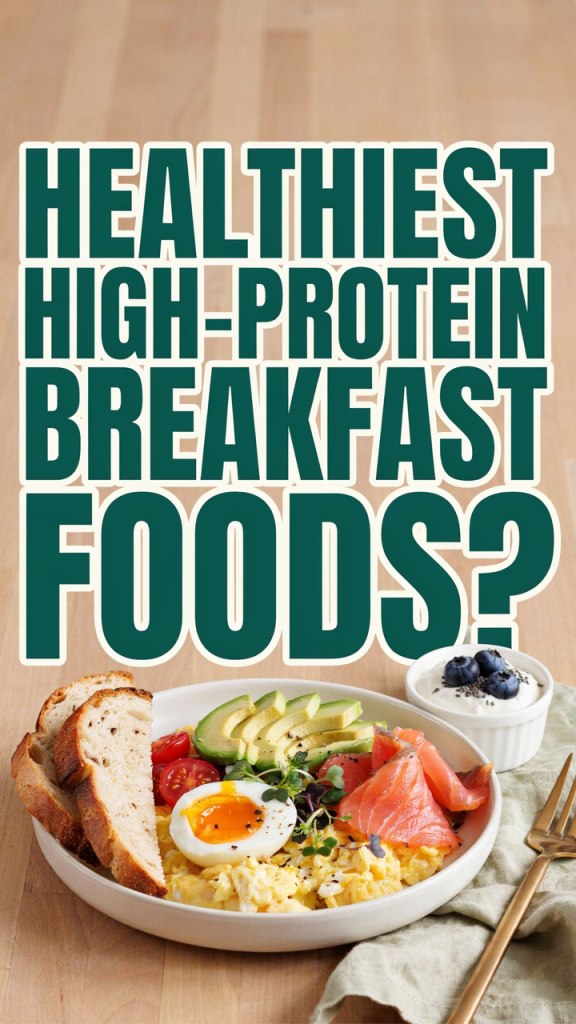
Day 7, Smoked Salmon & Avocado Toast + Boiled Egg (approx. 32 g)
- 3 oz smoked salmon (15–18 g) + 1 boiled egg (6–7 g) + 1 slice whole-grain bread + small handful of arugula.
Swap: For a plant alternative, use a chickpea salad (1 cup mashed chickpeas ~15 g) + hemp seeds.
Portion guidance and tweaks:
- If we need to increase protein for training days, add 1 scoop protein powder to the smoothie or an extra serving of cottage cheese.
- For lower-calorie needs, reduce grain portions and lean into eggs, Greek yogurt, and vegetables.
- For vegetarian days, combine dairy/eggs with seeds/nuts: for vegan days, pair soy foods, legumes, and seeds.
By rotating these breakfasts we keep variety, meet a consistent protein target, and make shopping and prep efficient.
Conclusion
A protein-rich breakfast is a small habit with outsized benefits: better morning energy, reduced mid-morning cravings, and meaningful support for muscle health. We don’t need complicated recipes to hit effective targets, 20–40 grams at breakfast is realistic with whole-foods like eggs, Greek yogurt, tofu, cottage cheese, legumes, seeds, and targeted smoothies. Use the 7-day plan and meal-prep tips to build a system that fits your schedule and goals. Start with one consistent high-protein morning this week, see how you feel, and iterate, consistency beats perfection when it comes to nutrition.