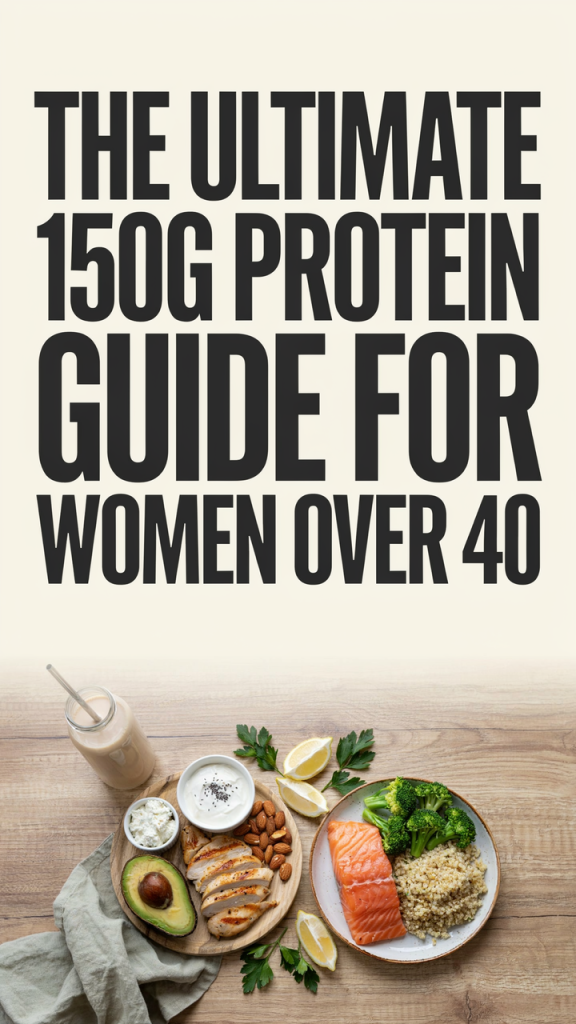
The Ultimate 150g Protein Guide for Women Over 40
A clear, practical, and encouraging blueprint to reach 150 grams of protein per day — tailored to the physiology, lifestyle, and goals of women over 40.
Whether your goal is to preserve muscle, burn fat, improve bone health, manage appetite, or support energy and mood through hormonal change, getting enough protein matters. This guide breaks down the why, the how, and the what: evidence-based reasons to aim higher for protein, smart strategies for hitting 150g/day without feeling overwhelmed, and 10 tested recipes and meal ideas you can start using today.
Why 150g of Protein? (And is it right for you?)
As women age, especially after 40, a combination of declining sex hormones and reduced anabolic responsiveness can accelerate muscle loss (sarcopenia). Protein is the primary nutrient that stimulates muscle protein synthesis. For many active women over 40, a target such as 150 grams/day:
- Supports muscle maintenance and strength when combined with resistance training.
- Helps maintain resting metabolic rate and improves body composition.
- Improves satiety and appetite control, which aids weight management.
- Supports bone health and recovery from injury or illness.
Is 150g right for you? That depends on body weight, activity level, and goals. General ranges for older adults or those trying to optimize body composition are about 1.2–2.0 g/kg body weight. For a 68–75 kg (150–165 lb) woman, 150 g/day sits around 2.0–2.2 g/kg, which is high but reasonable for an athletic woman or someone in a focused muscle-preserving phase. If you have kidney disease or other medical conditions, consult your healthcare provider before increasing protein.
Protein Principles for Women Over 40
H2: Key concepts to maximize benefit and minimize confusion
H3: Spread protein evenly across meals
Aim for 30–40 g per meal rather than one giant serving. The anabolic response to protein has a plateau; distributing protein supports repeated stimulation of muscle protein synthesis through the day.
H3: Hit the leucine threshold each meal
Leucine is the amino acid that signals muscle-building. Aim for ~2.5–3 g leucine per meal — roughly 25–35 g of high-quality protein (animal sources, or carefully combined plant sources).
H3: Prioritize high-quality protein sources
Animal proteins (meat, dairy, eggs, fish) are complete proteins with high leucine. Plant proteins can work well when combined or concentrated (tofu, edamame, tempeh, legumes, protein powders).
H3: Pair protein with resistance training
Diet + exercise = best results. Strength training (2–4 times/week) amplifies the muscle-preserving and building effects of protein.
H3: Consider protein timing and sleep
Protein before bed (casein or cottage cheese) can support overnight muscle maintenance. Aim for a final ~20–40 g serving before sleep if possible.
H3: Watch total calories and balance
Protein is filling. Keep fiber, healthy fats, and vegetables in the plan to support digestion and micronutrient sufficiency.
How to Hit 150g Without Eating Constantly
- Aim for 3 main meals of 35–50 g each and 1–3 protein-rich snacks (10–25 g).
- Use concentrated protein sources: Greek yogurt, cottage cheese, extra egg whites, lean poultry, fish, whey or plant protein powders.
- Meal prep large portions of cooked protein (roast chicken, turkey, salmon) and portion them.
- Use shakes strategically: a high-protein shake can pack 30–50 g quickly when needed.
- Add protein boosters: powdered milk, powdered collagen (note: low in leucine), chia seeds, hemp seeds, nuts, cheese, or Greek yogurt to recipes.
10 Recipes & Meal Ideas to Reach 150g
Below are 10 recipe-style meal ideas with clear ingredients and step-by-step instructions. Each includes an approximate protein estimate so you can plan a day of meals to reach 150g.
H3: 1) High-Protein Greek Yogurt & Berry Bowl (Breakfast)
Ingredients:
– 1 1/2 cups plain Greek yogurt (2% or whole)
– 1 scoop whey protein powder (about 24–28 g protein)
– 1/2 cup mixed berries (fresh or frozen)
– 1 tablespoon chia seeds
– 10 almonds, chopped
– Optional: 1 teaspoon honey or cinnamon
Instructions:
1. Place Greek yogurt in a bowl.
2. Stir in whey protein powder until smooth.
3. Top with berries, chia seeds, and almonds.
4. Drizzle honey or sprinkle cinnamon if desired and serve immediately.
Approximate protein: ~35–40 g
2) Savory Cottage Cheese & Spinach Omelette (Breakfast or Brunch)
Ingredients:
– 2 whole eggs + 4 egg whites
– 1/2 cup low-fat cottage cheese
– 1 cup fresh spinach, chopped
– 1 oz smoked salmon or turkey breast slices (optional)
– 1 teaspoon olive oil or butter
– Salt and pepper to taste
Instructions:
1. Whisk eggs and egg whites with salt and pepper.
2. Heat oil in a skillet and sauté spinach until wilted.
3. Pour eggs into skillet and cook until edges begin to set.
4. Spoon cottage cheese and smoked salmon/turkey onto half the omelette; fold and cook 1–2 minutes.
5. Serve hot.
Approximate protein: ~35–40 g (higher with smoked salmon/turkey)
3) High-Protein Oats with Whey & Peanut Butter (Breakfast or Snack)
Ingredients:
– 1/2 cup rolled oats
– 1 cup milk (cow’s or fortified plant milk with added protein)
– 1 scoop whey protein (or plant protein)
– 1 tablespoon peanut butter
– 1/4 cup fresh fruit (banana or berries)
Instructions:
1. Cook oats in milk according to package instructions.
2. Remove from heat and stir in whey protein until fully mixed.
3. Swirl in peanut butter and top with fruit.
4. Eat warm.
Approximate protein: ~30–35 g
4) Grilled Chicken Quinoa Bowl (Lunch)
Ingredients:
– 6 oz grilled chicken breast (about 170 g)
– 1/2 cup cooked quinoa
– 1 cup mixed salad greens
– 1/2 cup cherry tomatoes, halved
– 1/4 avocado, sliced
– 1 tablespoon olive oil + lemon juice for dressing
– Salt, pepper, herbs to taste
Instructions:
1. Slice grilled chicken breast.
2. Place quinoa and salad greens in a bowl.
3. Top with chicken, tomatoes, and avocado.
4. Drizzle with olive oil and lemon, season, and serve.
Approximate protein: ~45–50 g
5) Tuna & White Bean Salad (Lunch or Dinner)
Ingredients:
– 1 (5–6 oz) can tuna in water, drained (or fresh seared tuna)
– 1/2 cup canned white beans, rinsed and drained
– 1 cup arugula or mixed greens
– 1/4 cup diced cucumber
– 1 tablespoon olive oil, 1 tablespoon red wine vinegar
– Salt, pepper, chopped parsley
Instructions:
1. Combine tuna and white beans in a bowl.
2. Add cucumber, greens, and parsley.
3. Toss with olive oil and vinegar, season with salt and pepper.
4. Serve chilled or at room temperature.
Approximate protein: ~40–50 g
6) Oven-Baked Salmon with Lentils & Greens (Dinner)
Ingredients:
– 6 oz salmon fillet
– 1/2 cup cooked green or brown lentils
– 1–2 cups steamed greens (kale, spinach, or broccoli)
– 1 teaspoon olive oil, lemon wedge, salt and pepper, garlic powder
Instructions:
1. Preheat oven to 400°F (200°C). Place salmon on a baking sheet, season with salt, pepper, and garlic powder.
2. Bake salmon 12–15 minutes until cooked through.
3. Warm lentils and steam greens.
4. Plate salmon over lentils and greens, drizzle with olive oil and lemon, and serve.
Approximate protein: ~40–45 g
7) Turkey & Black Bean Chili (Dinner or Make-Ahead)
Ingredients:
– 1 lb (450 g) lean ground turkey
– 1 cup canned black beans, drained and rinsed
– 1 can crushed tomatoes (14 oz)
– 1/2 cup diced onion, 1 clove garlic, chili powder, cumin, salt
– 1 cup chopped bell pepper
– Optional: Greek yogurt for topping, cilantro
Instructions:
1. In a pot, brown ground turkey with onion and garlic. Drain excess fat if necessary.
2. Add bell pepper, black beans, crushed tomatoes, and spices.
3. Simmer 20–30 minutes to combine flavors.
4. Serve hot with a dollop of Greek yogurt and cilantro.
Approximate protein (per 1.5-cup serving): ~40–50 g depending on portion
8) Green Protein Smoothie (Snack or Meal Replacement)
Ingredients:
– 1.5 scoops whey or plant protein powder (aim for ~36 g protein)
– 1 cup milk (dairy or protein-fortified plant milk)
– 1 cup spinach
– 1/2 banana or 1/2 cup berries
– 1 tablespoon ground flaxseed or almond butter
– Ice as needed
Instructions:
1. Add all ingredients to a blender.
2. Blend until smooth and creamy.
3. Pour into a glass and enjoy immediately.
Approximate protein: ~40–45 g
9) Cottage Cheese & Fruit Protein Snack (Mid-Afternoon)
Ingredients:
– 1 cup low-fat cottage cheese
– 1/2 cup pineapple chunks or berries
– 1 tablespoon chopped walnuts or pumpkin seeds
– Optional: sprinkle cinnamon or a drizzle of honey
Instructions:
1. Place cottage cheese in a bowl.
2. Top with fruit and nuts.
3. Sprinkle cinnamon or honey if desired and serve.
Approximate protein: ~25–30 g
10) Edamame & Almond Power Snack (Quick Protein Boost)
Ingredients:
– 1 cup shelled edamame (steamed)
– 1 oz (about 23) almonds
– Sprinkle of sea salt and lemon zest (optional)
Instructions:
1. Steam or microwave edamame according to package directions.
2. Toss with a pinch of salt and lemon zest.
3. Serve with almonds on the side.
Approximate protein: ~20–25 g
Sample Daily Plans to Reach 150g
Sample Day A — Balanced omnivore (approx. 150–160 g)
- Breakfast: High-Protein Greek Yogurt & Berry Bowl — 35 g
- Mid-morning snack: Cottage Cheese & Fruit — 25 g
- Lunch: Grilled Chicken Quinoa Bowl — 45 g
- Afternoon snack: Edamame & Almonds — 20 g
- Dinner: Salmon with Lentils & Greens (smaller portion) — 25 g
Total: ~150 g
Sample Day B — Higher-protein shake day (approx. 150–165 g)
- Breakfast: High-Protein Oats with Whey — 35 g
- Mid-morning: Protein Smoothie (green) — 45 g
- Lunch: Tuna & White Bean Salad — 45 g
- Dinner: Turkey & Black Bean Chili (smaller bowl) — 35 g
Total: ~160 g
Adjust portion sizes to align with caloric needs. These are examples; customize protein distribution to match appetite and training schedule.
Meal Prep & Grocery Tips
- Batch-cook proteins: grill several chicken breasts, bake salmon, cook a big pot of lentils/beans.
- Freeze single portions of cooked meat in labeled bags for quick meals.
- Keep protein powders on hand for fast shakes and to boost oatmeal/yogurt.
- Buy Greek yogurt and cottage cheese in larger tubs for cost-effectiveness.
- Use canned fish (tuna, salmon) and beans as inexpensive, shelf-stable protein sources.
- Choose lean cuts and vary sources: poultry, fish, eggs, dairy, legumes, tofu, tempeh.
Supplements: Helpful or Not?
- Whey protein: fast, high-quality source with high leucine — useful post-workout and for shakes.
- Casein (or cottage cheese before bed): slower digestion — supports overnight muscle maintenance.
- Plant protein blends: effective if they provide enough leucine and total protein; aim for blends with pea+rice or soy.
- Collagen: supports connective tissue and skin, but low in leucine — use alongside other proteins, not as primary muscle-building protein.
- Creatine: well-researched, safe, and effective for older adults to improve strength and muscle mass when combined with resistance training. Consider discussing with your provider.
Safety Notes & Final Considerations
- If you have chronic kidney disease, uncontrolled diabetes, or other major health conditions, consult your healthcare provider before increasing protein significantly.
- Monitor hydration: higher protein increases nitrogen excretion; drink adequate water.
- Watch total calorie intake: increasing protein without adjusting calories can lead to weight gain if you consume surplus calories. Use protein to support satiety and lean mass preservation.
- Be patient: increases in strength, body composition, and energy may take several weeks to months to appear, especially when combined with consistent resistance training.
Conclusion
H2: You can do this — and it’s worth it
Reaching 150 grams of protein per day as a woman over 40 is an achievable, evidence-informed strategy to protect muscle, boost metabolic health, improve satiety, and support functional strength. The keys are distribution, quality, and pairing your diet with strength training.
Start by choosing a few recipes from the list above that match your tastes and schedule. Meal prep the proteins you enjoy, add a protein shake when needed, and space your intake across the day. Small changes add up quickly — and as you build this habit, you’ll notice better recovery, steadier energy, and stronger performance in and out of the gym.
If you’re unsure how to tailor protein targets to your body or health circumstances, talk with a registered dietitian or your healthcare provider. With the right plan, encouragement, and consistency, you’ll protect your health and strength for the long term.
Go ahead — pick two recipes from this guide, plan a day this week, and see how good 150g of protein can make you feel.