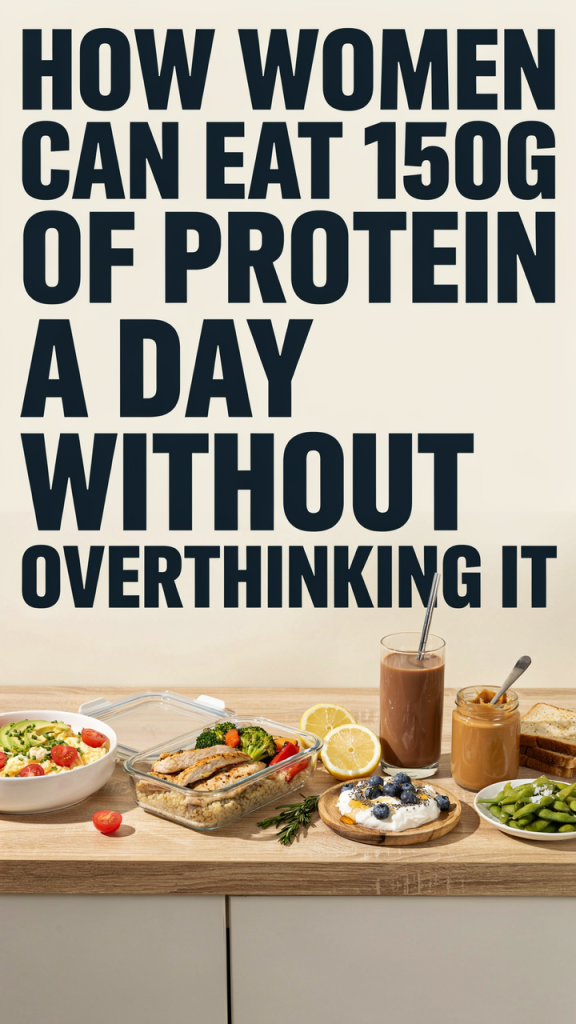
How Women Can Eat 150g of Protein a Day Without Overthinking It
Protein targets like “150 grams a day” can sound intimidating — especially if you’re balancing work, family, workouts, and social life. But hitting 150 g of protein daily doesn’t require complex calorie counting or cooking elaborate meals. With simple habits, smart swaps, and a few repeatable recipes, you can make high-protein eating effortless, sustainable, and enjoyable.
This post walks through why 150 g might be a useful target, how to split protein across the day, a realistic sample day that adds up to ~150 g, six easy recipes/meal ideas (with ingredient lists and step-by-step instructions), meal-prep strategies, shopping tips, and common FAQs. Read on and you’ll finish with a practical plan to hit your protein goal — without overthinking it.
Why 150 g of protein?
Hitting 150 g of protein daily can support:
– Muscle maintenance and growth (important for strength, metabolism, and daily function).
– Recovery after workouts (especially resistance training).
– Appetite control and stable blood sugar through the day.
– Meeting higher protein needs if you’re taller, more muscular, very active, or in a calorie deficit.
Note: 150 g isn’t mandatory for every woman. Protein needs vary by body weight, goals, and activity. If you’re unsure, consult a registered dietitian or healthcare provider. This guide focuses on practical ways to reach the target if that’s your chosen goal.
How to think about distribution
You don’t have to get 150 g in one meal. Spreading protein evenly across meals and snacks is both effective and easier on appetite and digestion. A simple distribution:
– Breakfast: 35–50 g
– Morning snack: 10–15 g
– Lunch: 30–40 g
– Afternoon snack: 15–25 g
– Dinner: 25–40 g
This equals roughly 150 g. Adjust portions and timing to suit your schedule.
Quick rules to make it simple
- Add a protein source to every meal/snack (eggs, dairy, legumes, fish, poultry, tofu, whey/pea protein).
- Use convenient, high-protein staples (Greek yogurt, cottage cheese, canned tuna/salmon, jerky, eggs).
- Measure main proteins (chicken, fish, beef) at the start so you consistently hit grams.
- Keep easy mixed-protein meals (bowls, salads, burritos) in rotation — they’re forgiving and portable.
- Use protein powder strategically for quick boosts (smoothies, yogurt stirred in, pancakes).
Sample day that adds up (approximate protein totals)
Below is a practical, real-world day that reaches ~150 g. Protein numbers are approximate.
Breakfast — High-Protein Yogurt Parfait (approx. 45 g)
– 1 scoop whey protein (20 g)
– 200 g plain Greek yogurt (20 g)
– 1/2 cup rolled oats (5 g)
Morning snack — Egg + Nuts (approx. 12 g)
– 1 large hard-boiled egg (6 g)
– 1 oz almonds (6 g)
Lunch — Chicken Quinoa Power Bowl (approx. 37 g)
– 4 oz (113 g) cooked chicken breast (26 g)
– 1/2 cup cooked quinoa (4 g)
– 1/4 cup chickpeas (canned, rinsed) (3 g)
– 1 oz feta cheese (4 g)
Afternoon snack — Cottage Cheese Snack Bowl (approx. 25 g)
– 1 cup (226 g) low-fat cottage cheese (approx. 25 g)
Dinner — Salmon + White Beans (approx. 31 g)
– 4 oz cooked salmon (23 g)
– 1/2 cup cooked cannellini beans (8 g)
Total ≈ 150 g
You can swap proteins between meals and preserve the overall total — more about variations below.
Six easy, repeatable recipes and meal ideas
Each of these recipes is intentionally simple and scalable. Ingredients are bulleted and instructions numbered.
1) High-Protein Yogurt Parfait (Breakfast)
Approximate protein: 40–50 g depending on scoop size.
Ingredients
– 1 scoop whey or plant protein powder (20–25 g protein per scoop)
– 200 g plain Greek yogurt (approx. 20 g protein)
– 1/2 cup rolled oats (approx. 5 g protein)
– 1/2 cup berries (optional)
– 1 tbsp nut butter or seeds (optional)
Instructions
1. Add yogurt to a bowl or jar.
2. Stir in protein powder until smooth.
3. Mix in oats and top with berries and nut butter if using.
4. Eat immediately or refrigerate for grab-and-go.
Tip: Use an insulated cup to take it to work.
2) Savory Egg & Spinach Scramble (Breakfast or Lunch)
Approximate protein: 25–35 g (add cottage cheese or whole eggs to increase).
Ingredients
– 3 large eggs (≈18 g protein) or 2 eggs + 1/2 cup egg whites (≈20 g)
– 1 cup fresh spinach
– 1/4 cup shredded low-fat cheese (optional, ≈7 g)
– Salt, pepper, and cooking spray or 1 tsp olive oil
Instructions
1. Whisk eggs (and egg whites if using) with salt and pepper.
2. Heat oil in a non-stick pan over medium heat, sauté spinach until wilted.
3. Pour eggs into the pan and scramble until cooked.
4. Sprinkle cheese on top and fold; serve with whole-grain toast or a side of Greek yogurt to increase protein.
Variation: Add a side of smoked salmon or turkey bacon to boost protein.
3) Chicken Quinoa Power Bowl (Lunch or Meal-Prep)
Approximate protein: 30–40 g (scale chicken portion to reach target).
Ingredients
– 4 oz cooked chicken breast, sliced (≈26 g)
– 1/2 cup cooked quinoa (≈4 g)
– 1/4 cup chickpeas (≈3 g)
– 1 cup mixed greens
– 1 oz feta or a tablespoon tahini for dressing
Instructions
1. Place mixed greens in a bowl.
2. Add cooked quinoa, chickpeas, and sliced chicken.
3. Top with feta or drizzle tahini dressing; toss and serve.
Make a double batch of chicken and quinoa on Sunday for 3–4 days of quick lunches.
4) Simple Protein Shake (Snack or Post-Workout)
Approximate protein: 20–30 g per serving.
Ingredients
– 1 scoop whey or plant protein powder (20–25 g protein)
– 8–12 oz water or milk (dairy or plant-based)
– 1/2 banana or 1 tbsp nut butter (optional)
– Ice cubes (optional)
Instructions
1. Combine all ingredients in a blender or shaker bottle.
2. Blend until smooth (or shake vigorously in a bottle).
3. Drink immediately or within an hour of preparing.
Tip: Mix with milk instead of water for extra protein and calories.
5) Cottage Cheese Snack Bowl (Afternoon Snack)
Approximate protein: 20–28 g (depending on cottage cheese type).
Ingredients
– 1 cup low-fat cottage cheese (≈25 g)
– 1/2 cup pineapple or berries (optional)
– 1 tbsp chopped nuts or seeds (optional)
Instructions
1. Spoon cottage cheese into a bowl.
2. Top with fruit and nuts if desired.
3. Eat immediately; great paired with whole-grain crackers for extra carbs.
6) 20-Minute Salmon with Cannellini Beans (Dinner)
Approximate protein: 30–35 g.
Ingredients
– 4 oz salmon fillet (≈23 g)
– 1/2 cup cooked cannellini or navy beans (≈8 g)
– 1 cup baby spinach or kale
– 1 tbsp olive oil
– Lemon, garlic, salt, and pepper
Instructions
1. Preheat oven to 400°F (200°C). Line a baking sheet with foil.
2. Place salmon on sheet, drizzle with half the olive oil, season with salt, pepper, and a squeeze of lemon.
3. Roast salmon 10–12 minutes until cooked through.
4. While salmon roasts, sauté garlic in remaining olive oil in a skillet, add beans and greens, cook 2–3 minutes.
5. Plate salmon over beans and greens; finish with extra lemon.
This dinner is fast, nourishing, and packs protein with fiber to keep you full.
Grocery list — high-protein staples
Stock these to make hitting 150 g easy:
- Greek yogurt (full-fat or low-fat)
- Cottage cheese
- Whey or plant protein powder
- Eggs and liquid egg whites
- Chicken breast and turkey breast
- Canned tuna/salmon
- Fresh or frozen fish (salmon, cod)
- Lean beef or pork (for variety)
- Tofu and tempeh
- Beans and lentils (canned or dried)
- Quinoa, farro
- Nuts and seeds (almonds, peanuts, chia)
- Low-fat cheese (feta, mozzarella)
- Nut butter
Buying some items in bulk (chicken breasts, canned beans, protein powder) simplifies meal prep.
Simple swaps and shortcuts
- Breakfast swap: Swap pancakes for Greek yogurt + protein powder stirred in — same comfort, more protein.
- Use canned tuna or salmon in salads or sandwiches — easy 20+ g protein.
- Top salads with shredded rotisserie chicken (cost-effective and fast).
- Double protein in meals by combining sources: 3 eggs + cottage cheese, or chicken + beans.
- Meal-prep eggs (hard-boil a dozen) for easy snacks.
Meal-prep strategy (two-hour Sunday session)
- Cook a big batch of chicken and one of salmon (freeze what you won’t eat in 3 days).
- Cook quinoa and beans; portion into containers.
- Make two types of snacks: hard-boiled eggs and cottage cheese cups divided with fruit.
- Portion protein powder into single-serve shaker bags if you travel.
- Label and store — breakfasts and lunches will be ready in minutes.
Tracking without obsessing
- Use rough portion sizes (3–4 oz cooked meat = 20–30 g protein). Memorize a few common conversions.
- Focus on including one concentrated protein source per meal and one moderate source per snack.
- If you use a food tracker app, treat totals as guidance: you’re aiming for a ballpark 150 g, not an exact laser number.
- Track for a week to learn how your common meals add up, then rely on habits.
Frequently asked questions
Q: Is 150 g too much for women?
A: It depends. For many women, 150 g is above the RDA and is appropriate for those who are active, trying to build/retain muscle, or dieting. For sedentary women of small body mass, it may be higher than needed. Personalization matters.
Q: Will high protein harm my kidneys?
A: In healthy individuals, higher protein diets are not shown to damage kidneys. If you have pre-existing kidney disease, consult a healthcare provider before increasing protein intake.
Q: Can I get 150 g from plants?
A: Yes. It requires planning and combining higher-protein plant foods: tofu, tempeh, seitan, legumes, edamame, protein-fortified foods, and protein powder. Expect slightly larger portions and more variety.
Q: What about calories?
A: Protein contains calories. If your primary goal is weight loss, you may need to pair a high-protein intake with a calorie deficit. If you’re gaining muscle, you may need extra calories. Work with a dietitian if you have a specific body-composition target.
Troubleshooting common barriers
- No time in the morning: Use a shake or yogurt parfait you prepare the night before.
- Food budget concerns: Canned tuna, eggs, and beans are affordable high-protein options.
- Don’t like protein powder: Use more dairy, eggs, or canned fish. Protein powders are optional convenience tools.
- Digestive discomfort: Spread protein more evenly, choose leaner sources, and drink water. If dairy causes issues, choose lactose-free or plant-based alternatives.
Small habit changes that add up
- Start breakfast with 15–20 g protein (yogurt, eggs, shake).
- Pack one protein-rich snack for the day (cottage cheese or jerky).
- Add an ounce of nuts or seeds to a bowl for 6–8 g extra protein.
- Swap half the carbs in a meal for a legume or extra chicken.
- Post-workout: consume 20–30 g protein in the next 1–2 hours.
Encouragement and final tips
Hitting 150 g of protein a day is a skill you build, not a test you pass or fail. Start with one or two of the recipes above and rotate them. Use tracking for a week to understand how your go-to meals stack up, then let habit take over. Celebrate consistency — eating an extra 20–40 g protein most days still moves the needle on strength, recovery, and appetite control.
Conclusion
Eating 150 g of protein a day doesn’t have to be complicated. Choose a few reliable, high-protein staples, distribute protein across meals, and keep 5–10 go-to recipes in rotation. With small, repeatable habits — like stirring protein into yogurt, keeping cottage cheese on hand, and prepping lean proteins ahead of time — you can reach your target without stress. Use the sample day and recipes in this post to get started this week, tweak them for your tastes, and notice how greater protein consistency improves your energy, workouts, and fullness. You’ve got this — one simple meal at a time.