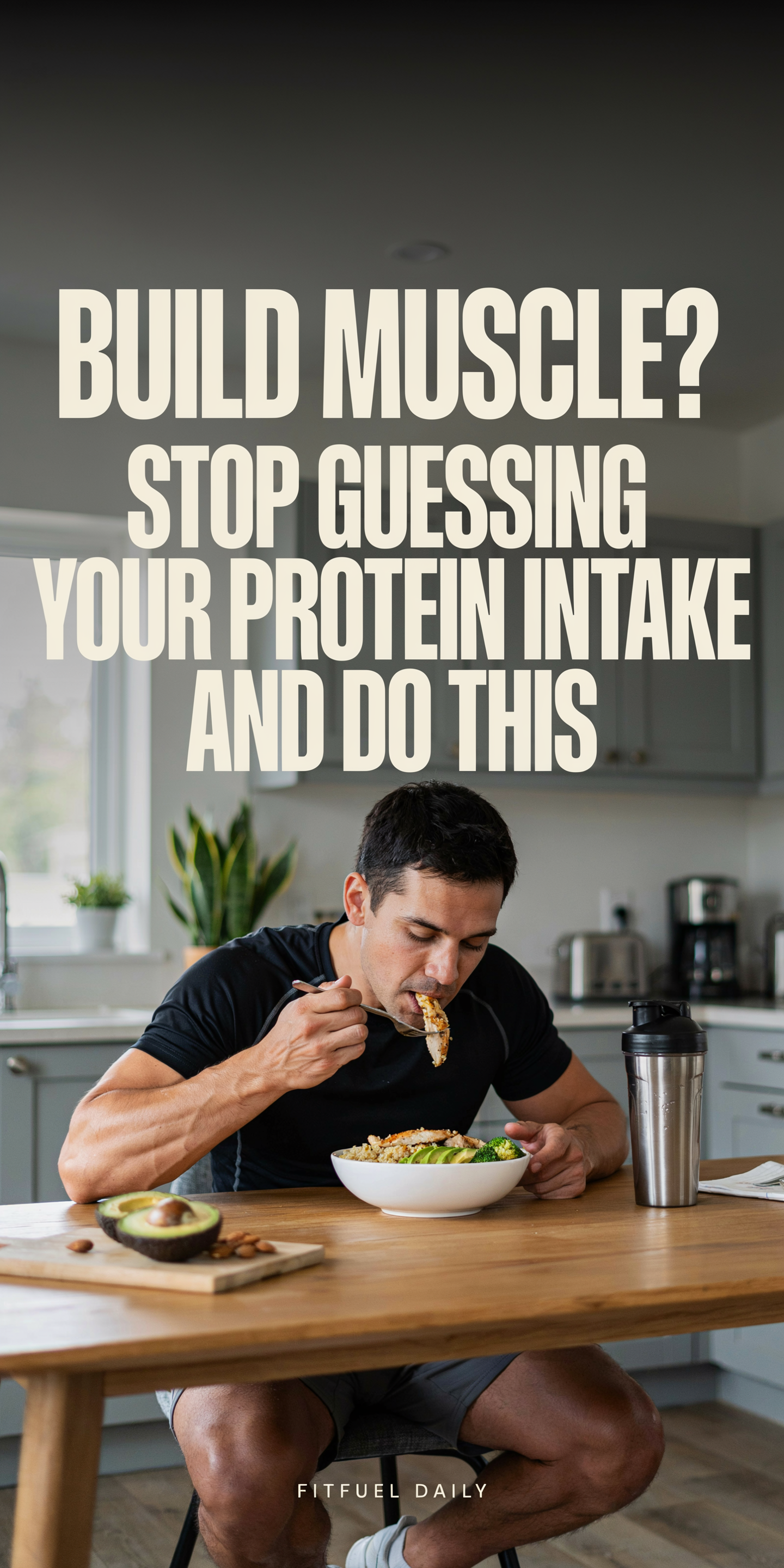
What Should I Eat to Build Muscle? Stop Guessing Your Protein Intake and Do This Instead
Introduction
If you’re building muscle and still guessing your protein intake, you’re leaving strength gains on the table. Muscle growth depends on two major things: progressive resistance training and providing your body with the right nutrients — especially protein. But “eat more protein” is vague and unhelpful. This article gives a clear, science-backed, practical plan: how much protein you need, how to spread it across the day, which foods to choose, and exact meal and recipe ideas you can use immediately. No guesswork. Just a step-by-step approach that produces results.
Whether you’re an experienced lifter or just starting, this guide will help you stop guessing and get consistent progress.
Why protein matters for muscle growth
Protein provides the amino acids your body needs to repair and build muscle tissue after training. Resistance exercise stimulates muscle protein synthesis (MPS), but MPS requires dietary protein — in particular, essential amino acids like leucine — to produce real gains.
- Muscle protein synthesis vs. breakdown: Growth occurs when synthesis exceeds breakdown over time. Training triggers MPS; protein supplies the materials.
- Leucine threshold: Each meal should provide enough leucine (about 2–3 g) to optimally stimulate MPS. That typically corresponds to ~20–40 g of high-quality protein per meal, depending on the source.
- Quality matters: Animal proteins and well-combined plant proteins provide complete amino acid profiles. Variety helps vegetarians and vegans meet needs.
How much protein do you actually need?
Stop using vague recommendations. Use evidence-based ranges:
- For muscle gain: aim for 1.6–2.2 grams of protein per kilogram of body weight per day (g/kg/day).
- In pounds: that’s about 0.7–1.0 grams per pound per day (g/lb/day).
Practical examples:
– 70 kg (154 lb): 112–154 g protein/day (1.6–2.2 g/kg)
– 80 kg (176 lb): 128–176 g protein/day
If you’re new to training, aim toward the lower end initially (1.6 g/kg). If you’re in a calorie deficit or an advanced athlete, aim toward the higher end (2.2 g/kg).
Per-meal protein target
Distribute protein evenly across meals to maximize MPS:
– Aim for 20–40 g protein per meal (roughly 0.25–0.4 g/kg per meal).
– For an 80 kg person aiming for 160 g/day across 4 meals → 40 g/meal.
This spacing helps you hit the leucine threshold multiple times per day and supports consistent MPS.
Stop guessing: a simple step-by-step plan
- Calculate your daily protein target using 1.6–2.2 g/kg.
- Choose how many protein-containing meals you’ll eat (3–5 is common). Divide total protein evenly.
- Prioritize whole-food sources first (meat, fish, dairy, eggs, legumes, soy, tempeh, tofu).
- Use protein supplements (whey, casein, plant powders) to fill gaps, not replace whole foods.
- Track intake for 2–4 weeks and adjust based on recovery, strength gains, and body composition.
- Make sure total calories support muscle growth. Protein alone won’t build muscle if calories are too low.
What to eat: best protein sources and portion ideas
High-quality protein sources:
– Animal: chicken breast, turkey, lean beef, pork loin, fish (salmon, tuna), eggs, Greek yogurt, cottage cheese, milk.
– Plant: soy (tofu, tempeh, edamame), legumes (lentils, chickpeas, black beans), seitan, quinoa, nuts and seeds, combined grains + legumes.
– Supplements: whey concentrate/isolate (fast), casein (slow), vegan blends (pea+rice).
Approximate portions that provide ~25–30 g protein:
– 120–140 g (4–5 oz) cooked chicken breast ≈ 25–30 g protein
– 150–170 g (5–6 oz) salmon ≈ 30 g protein
– 3 large eggs + 100 g Greek yogurt ≈ 30 g protein
– 1 scoop whey (~25 g scoop) ≈ 20–25 g protein (varies)
– 200 g tofu ≈ 20 g protein (firm)
– 1 cup cooked lentils ≈ 18 g protein (pair with grains to increase quality)
Sample meal ideas you can use today
Below are explicitly listed meal ideas. After the list, you’ll find full recipes for several of these.
- Breakfast: Greek yogurt parfait (protein-packed)
- Breakfast option 2: Spinach & feta omelette with oats
- Lunch: Chicken quinoa power bowl
- Dinner: Sheet-pan salmon with sweet potato & broccoli
- Vegetarian dinner: Lentil and tofu curry
- Post-workout: Chocolate banana whey smoothie
- Snack: Cottage cheese with fruit and nuts
- Snack alternative: Hard-boiled eggs and whole-grain crackers
All recipes below include ingredients and numbered cooking instructions.
Recipes and meal ideas
Protein-Packed Greek Yogurt Parfait
Estimated protein: ~30–35 g
Ingredients
– 1 1/2 cups (340 g) plain Greek yogurt (0% or 2%)
– 1/2 cup (50 g) granola (choose low-sugar)
– 1/2 cup (75 g) mixed berries (fresh or frozen)
– 2 tbsp (20 g) chopped nuts (almonds or walnuts)
– 1 tbsp (15 g) chia seeds or hemp seeds
– 1 tsp honey or maple syrup (optional)
Instructions
1. Spoon Greek yogurt into a bowl or jar.
2. Layer half the granola and half the berries over the yogurt.
3. Sprinkle the nuts and chia/hemp seeds on top.
4. Add the remaining granola and berries.
5. Drizzle with honey or maple syrup if desired and enjoy immediately.
Spinach & Feta Omelette with Oats
Estimated protein: ~35–40 g
Ingredients
– 3 large eggs
– 1/2 cup (120 ml) liquid egg whites or an extra egg for added protein
– 1 cup (30 g) fresh spinach, chopped
– 1/4 cup (40 g) crumbled feta cheese
– 1/2 tsp olive oil or cooking spray
– Salt and pepper to taste
– 1/2 cup (40 g) dry rolled oats cooked with water or milk
Instructions
1. Whisk the eggs and liquid egg whites with salt and pepper.
2. Heat oil in a non-stick pan over medium heat and sauté spinach until wilted.
3. Pour the egg mixture into the pan, let it set slightly, then sprinkle feta over one half.
4. Fold the omelette and cook until eggs are set.
5. Meanwhile cook oats according to package directions.
6. Serve the omelette with the cooked oats on the side.
Chicken Quinoa Power Bowl
Estimated protein: ~45 g
Ingredients
– 150 g cooked chicken breast (about 5 oz)
– 1 cup (185 g) cooked quinoa
– 1 cup (150 g) roasted vegetables (bell peppers, zucchini, carrots)
– 1/2 avocado, sliced
– 1 cup (30 g) mixed greens
– 2 tbsp (30 g) hummus or a drizzle of olive oil and lemon juice
– Salt, pepper, and any preferred herbs (parsley, oregano)
Instructions
1. Prepare quinoa according to package instructions and set aside.
2. Roast vegetables at 200°C/400°F with a little oil, salt, and pepper for 20–25 minutes.
3. Heat or grill the cooked chicken breast and slice it thinly.
4. Assemble the bowl: greens, quinoa, roasted vegetables, chicken slices, and avocado.
5. Add hummus or a drizzle of olive oil and lemon; season with herbs and serve.
Sheet-Pan Salmon with Sweet Potato & Broccoli
Estimated protein: ~40 g
Ingredients
– 170–200 g (6–7 oz) salmon fillet
– 1 medium sweet potato, cubed (about 200–250 g)
– 1 cup (90–100 g) broccoli florets
– 1 tbsp olive oil
– 1 tsp smoked paprika
– Salt and pepper to taste
– Lemon wedges for serving
Instructions
1. Preheat oven to 200°C/400°F. Toss sweet potato cubes with half the oil, paprika, salt, and pepper and spread on a sheet pan.
2. Roast sweet potatoes 10 minutes; add broccoli florets tossed with the remaining oil and seasonings.
3. After another 8–10 minutes, push vegetables to the sides and place salmon in the center. Season salmon with salt and pepper.
4. Roast 10–12 minutes until salmon is cooked and vegetables are tender.
5. Serve with lemon wedges.
Lentil and Tofu Curry (Vegetarian)
Estimated protein: ~30–35 g per serving (serves 2)
Ingredients
– 1 cup (200 g) cooked lentils (brown or green)
– 200 g firm tofu, cubed
– 1 tbsp olive oil or coconut oil
– 1 small onion, diced
– 2 cloves garlic, minced
– 1 tbsp grated ginger
– 1 tbsp curry powder or paste
– 1 can (400 ml) light coconut milk
– 1 cup (150 g) spinach or kale
– Salt, pepper, and cilantro to garnish
– Cooked brown rice or quinoa to serve
Instructions
1. Heat oil in a large pan, sauté onion until translucent, then add garlic and ginger and cook 1 minute.
2. Add curry powder/paste and cook until fragrant (30–60 seconds).
3. Add tofu cubes and brown slightly on all sides.
4. Stir in cooked lentils and coconut milk; simmer 8–10 minutes to combine flavors.
5. Add spinach/kale and cook until wilted. Season to taste.
6. Serve over brown rice or quinoa and garnish with cilantro.
Chocolate Banana Whey Smoothie (Post-Workout)
Estimated protein: ~30–35 g (with 1 scoop whey)
Ingredients
– 1 medium banana
– 1 scoop (about 25 g) chocolate whey protein powder
– 1 cup (240 ml) milk or fortified plant milk
– 1 tbsp (15 g) peanut butter or almond butter
– 1/2 cup (120 g) plain Greek yogurt (optional for extra protein)
– Ice as desired
Instructions
1. Add all ingredients to a blender.
2. Blend until smooth and creamy.
3. Taste and adjust thickness with more milk or ice.
4. Drink within 30–60 minutes after training for fast-refueling.
Practical tips for success
- Track your protein for 2–4 weeks using a food diary or app to ensure you’re hitting targets reliably.
- Focus on whole foods first. Use powders and bars as convenient top-ups.
- Prioritize a protein source at every meal.
- Aim for a post-workout meal/shake that contains 20–40 g protein and some carbs to support recovery.
- Don’t fear fats and carbs — both are essential for hormone balance, energy, and recovery. Balance your plate.
- When calorie-dense or trying to gain weight, add caloric but nutritious foods (oils, nuts, full-fat dairy) alongside protein.
- Vegetarians/vegans: combine complementary plant proteins (grains + legumes) and consider higher totals (toward 2.2 g/kg) because plant proteins are often less digestible.
Common mistakes people make
- Relying solely on protein shakes: Supplements are convenient but whole foods come with additional micronutrients and satiety.
- Uneven protein distribution: Skipping protein at breakfast and loading dinner reduces daily MPS opportunities.
- Ignoring calories: You can’t build muscle in a large calorie deficit. Ensure a slight surplus (~250–500 kcal/day) if muscle gain is the primary goal.
- Not adjusting as you change weight: Recalculate protein needs when you gain or lose a significant amount of weight.
How to measure progress
- Strength: Are your lifts (squat, bench, deadlift, rows) increasing over weeks-months?
- Body composition: Use photos, measurements, and how clothes fit rather than only the scale.
- Recovery and energy: Improved recovery, reduced soreness, and higher training intensity mean you’re supporting muscle growth nutritionally.
- Weekly check-ins: If you’re not progressing after 6–8 weeks, increase calories moderately and re-evaluate training volume.
Final checklist — Do this instead of guessing
- Calculate your target: 1.6–2.2 g/kg/day.
- Split protein evenly across 3–5 meals.
- Shoot for 20–40 g protein per meal to trigger MPS.
- Prioritize whole foods; use supplements to fill gaps.
- Support protein with adequate calories and a progressive strength program.
- Track, adjust, and be consistent.
Conclusion
Building muscle isn’t guesswork when you follow a simple, science-backed framework: calculate your protein needs, spread protein throughout the day, choose high-quality sources, and combine that with solid training and adequate calories. Use the recipes and meal ideas above to make the process easy, sustainable, and delicious. Start by calculating your daily protein target, plan a few meals that hit your per-meal protein targets, and track your progress for a month. With consistent nutrition and training, the results will follow — no guessing required.
You’ve got the plan. Now eat, lift, and grow.