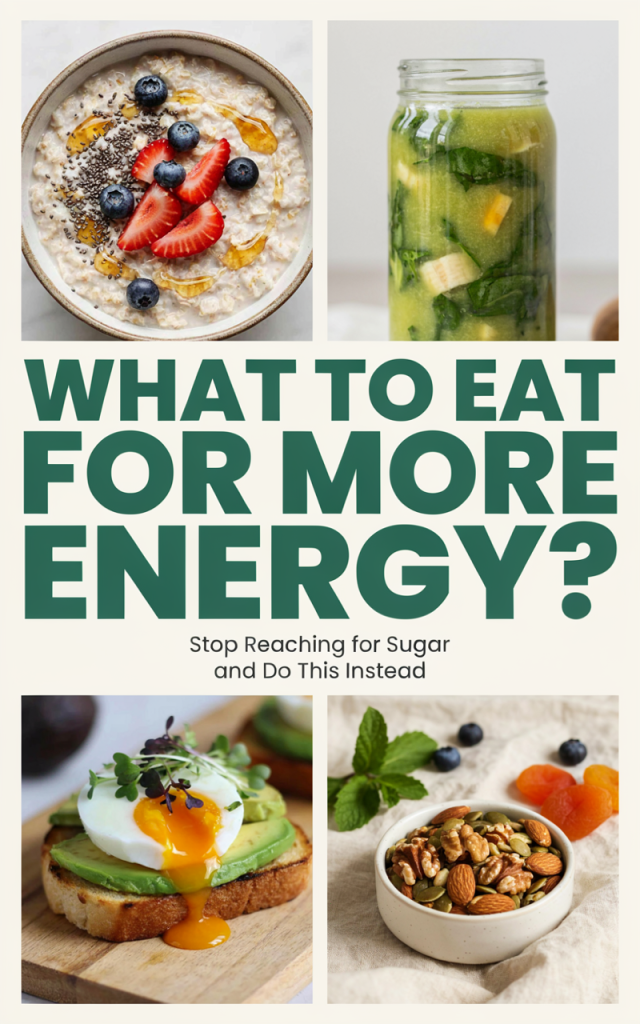
What Should I Eat for More Energy? Stop Reaching for Sugar and Do This Instead
Introduction
Do you find yourself reaching for candy, soda, or a quick pastry every afternoon? You’re not alone. That sugar jolt feels immediate, but the crash that follows leaves you more exhausted than before. If your goal is sustainable, reliable energy — for work, workouts, parenting, or simply getting through the day with clarity — it’s time to replace the sugar habit with smarter food choices and simple meal strategies. This article explains why sugar is a short-term trap, what to eat instead for steady energy, and gives practical recipes and snack ideas you can use today. Read on for a step-by-step plan to fuel your day without the crash.
Why that sugary pick-me-up backfires
Sugary foods and refined carbs cause rapid blood sugar spikes. Your pancreas responds by releasing insulin to lower blood sugar, sometimes overshooting and causing a dip below your baseline. That dip is what feels like fatigue, brain fog, cravings, and irritability — which often drives you straight back to sugar.
More problems:
– Repeated spikes and crashes can worsen insulin sensitivity.
– Sugary choices tend to lack protein, fiber, healthy fats, and micronutrients — all important for sustained energy.
– Energy from sugar is short-lived. Fat, protein, and complex carbs release energy more slowly.
Instead of blaming willpower, shift your food patterns: combine protein, healthy fats, and fiber-rich carbs to keep blood sugar steady and supply brain and muscle cells with the fuel they need.
The 7 pillars of steady energy
Hitting consistent energy levels depends on more than one food. These seven pillars work together:
- Balanced meals: Pair complex carbs with protein and healthy fats.
- Fiber: Slows digestion and moderates blood sugar.
- Protein: Keeps you full and supports neurotransmitters.
- Healthy fats: Provide long-lasting fuel and support brain function.
- Hydration: Dehydration reduces energy and cognitive performance.
- Key micronutrients: Iron, B vitamins, magnesium, vitamin D, and zinc support cellular energy production.
- Regular meals/snacks: Avoid long gaps that trigger low blood sugar and strong cravings.
Top foods to eat for energy (what to keep in your kitchen)
- Oats (steel-cut or rolled) — slow-release carbohydrates and fiber
- Quinoa — complete plant protein + carbs
- Beans and lentils — protein, fiber, iron
- Eggs — high-quality protein and B vitamins
- Fatty fish (salmon, sardines) — omega-3s and vitamin D
- Greek yogurt — protein and probiotics
- Nuts and seeds (almonds, walnuts, chia, hemp) — healthy fats, magnesium
- Sweet potatoes — complex carbs and potassium
- Leafy greens (spinach, kale) — iron, magnesium, folate
- Berries — antioxidants, fiber, lower glycemic sugar
- Avocado — healthy fats, fiber
- Whole fruit (apples, pears, bananas) — portable, fiber-rich carbs
- Lean poultry — protein and B vitamins
- Dark chocolate (70%+) — in moderation, can improve mood and focus
- Water, herbal teas — hydration matters
Meal and snack strategies to beat fatigue
- Build each meal around a protein source, a fiber-rich carb, and a healthy fat.
- Start the day with protein and whole grains — avoid plain sugary cereals.
- Snack proactively: choose protein-plus-fiber options when you notice your energy dip (not after you’re ravenous).
- Limit caffeine to earlier in the day and avoid stacking it with sugar.
- Eat iron-rich foods with vitamin C (e.g., spinach salad with orange slices) to improve iron absorption.
- Spread your carbohydrates across the day rather than eating a large carb-only meal in the evening.
- Move: a 5–10 minute brisk walk can increase alertness and blood flow.
Recipes and meal ideas (explicitly listed, with ingredients and instructions)
Below are practical recipes and snack ideas you can make quickly. Each includes a bulleted ingredients list and numbered instructions so you can follow them easily.
1) Power Breakfast Bowl: Oats + Greek Yogurt + Berries
Ingredients
– 1/2 cup rolled oats (or 3 tbsp quick oats)
– 1/2 cup Greek yogurt (plain, unsweetened)
– 3/4 cup water or milk (dairy or plant)
– 1/2 cup mixed berries (fresh or frozen)
– 1 tablespoon chia seeds or ground flaxseed
– 1 tablespoon chopped nuts (almonds or walnuts)
– Optional: 1 teaspoon cinnamon, small drizzle of honey or maple (if needed)
Instructions
1. Cook oats in water or milk according to package directions (about 5 minutes for rolled oats).
2. Transfer cooked oats to a bowl and let cool for 1 minute.
3. Stir in Greek yogurt and chia or flaxseed until combined.
4. Top with berries, nuts, and cinnamon. Add a light drizzle of honey only if you need sweetness.
5. Enjoy warm or let cool and pack for breakfast on the go.
Why it works: Protein from yogurt, fiber from oats and berries, and healthy fats from nuts — steady energy plus satiety.
2) Green Energy Smoothie (portable, nutrient-dense)
Ingredients
– 1 cup unsweetened almond milk (or milk of choice)
– 1 handful baby spinach (1 cup)
– 1/2 frozen banana
– 1/2 cup frozen pineapple or mango
– 1 scoop plain protein powder or 1/2 cup Greek yogurt
– 1 tablespoon nut butter or 1/4 avocado
– 1 tablespoon chia seeds or hemp seeds
– Optional: small piece ginger or 1/2 tsp matcha for an extra alertness boost
Instructions
1. Place all ingredients in a blender, starting with the liquid.
2. Blend on high until smooth and creamy, adding a splash more liquid if too thick.
3. Taste and adjust sweetness with a small amount of honey if absolutely necessary.
4. Pour into a travel cup and drink within a few hours for best nutrient and texture retention.
Why it works: Greens + fruit + protein + fat give vitamins, fiber, and stable energy.
3) Overnight Oats with Almond Butter and Fruit
Ingredients
– 1/2 cup rolled oats
– 1/2 cup milk (dairy or plant)
– 1/4 cup Greek yogurt
– 1 tablespoon almond butter
– 1/2 teaspoon cinnamon
– 1/2 cup sliced fruit (apple, pear, or banana)
– 1 teaspoon chia seeds
Instructions
1. In a jar or bowl, combine oats, milk, Greek yogurt, almond butter, and cinnamon.
2. Stir well, then fold in chia seeds and fruit slices.
3. Cover and refrigerate overnight (or at least 4 hours).
4. Stir before eating. Add more milk if you prefer a creamier texture.
Why it works: Make-ahead breakfast with protein, fiber, and healthy fat to prevent mid-morning crashes.
4) Simple Egg & Avocado Toast (high-protein, quick)
Ingredients
– 2 slices whole-grain or sprouted bread
– 1 ripe avocado
– 2 eggs (poached, soft-boiled, or fried in minimal oil)
– Salt, pepper, and a squeeze of lemon
– Optional: red pepper flakes, microgreens, or sliced tomato
Instructions
1. Toast the bread.
2. Smash avocado with lemon, salt, and pepper; spread evenly on toast.
3. Cook eggs to your liking and place on top of avocado toast.
4. Season with red pepper flakes or garnish if desired and serve immediately.
Why it works: Protein from eggs, healthy fats from avocado, and whole grains provide sustained energy.
5) Chickpea & Quinoa Salad (vitamin-packed lunch)
Ingredients
– 1 cup cooked quinoa (cooled)
– 1 cup canned chickpeas (drained and rinsed)
– 1 cup chopped cucumber and cherry tomatoes
– 1/2 cup chopped parsley or spinach
– 2 tablespoons olive oil
– 1 tablespoon lemon juice
– 1/4 teaspoon cumin, salt, and pepper
– Optional: 2 tablespoons crumbled feta
Instructions
1. In a bowl, combine quinoa, chickpeas, cucumber, tomatoes, and greens.
2. Whisk olive oil, lemon juice, cumin, salt, and pepper in a small cup.
3. Pour dressing over salad and toss to combine.
4. Add feta if using, adjust seasoning, and serve chilled or at room temperature.
Why it works: Plant-based protein, fiber, and steady carbs that keep energy even through an afternoon.
6) Baked Salmon, Sweet Potato & Greens (balanced dinner for recovery)
Ingredients
– 4–6 oz salmon fillet
– 1 small sweet potato
– 1–2 cups mixed greens (spinach, kale)
– 1 teaspoon olive oil
– Salt, pepper, and 1/2 teaspoon dried herbs (rosemary or thyme)
– Lemon wedge for serving
Instructions
1. Preheat oven to 400°F (200°C). Pierce sweet potato with a fork and bake for 35–45 minutes until tender (or microwave for 6–8 minutes).
2. Season salmon with salt, pepper, and herbs. Place on a baking sheet lined with parchment.
3. Bake salmon for 12–15 minutes, until cooked through.
4. Toss greens with olive oil and a pinch of salt, lightly steam or massage if desired.
5. Plate salmon with sweet potato and greens, squeeze lemon over top, and enjoy.
Why it works: Omega-3s, high-quality protein, complex carbs, and iron-rich greens — supports muscular recovery and steady blood sugar.
7) No-Bake Energy Balls (perfect snack for dips)
Ingredients
– 1 cup rolled oats
– 1/2 cup natural peanut butter or almond butter
– 1/4 cup ground flaxseed or chia seeds
– 1/4 cup honey or maple syrup
– 1/4 cup dark chocolate chips or cacao nibs
– 1/2 teaspoon cinnamon
– Optional: 1/4 cup shredded coconut
Instructions
1. In a bowl, stir together oats, nut butter, flax or chia, honey, cinnamon, and chocolate chips.
2. Mix thoroughly until a sticky dough forms; chill for 15 minutes if too soft.
3. Roll into 1-inch balls and place on a tray.
4. Refrigerate for 30 minutes to set. Store in the fridge for up to 1 week.
Why it works: Portable combination of carbs, protein, and healthy fats that tastes like a treat without the sugar crash.
8) Greek Yogurt Parfait (fast, nourishing snack)
Ingredients
– 1 cup plain Greek yogurt
– 1/2 cup mixed berries
– 2 tablespoons granola (low sugar)
– 1 tablespoon chopped nuts
– 1 teaspoon honey (optional)
Instructions
1. Spoon half the yogurt into a bowl or jar.
2. Add half the berries and sprinkle half the granola and nuts.
3. Repeat layers with remaining yogurt, berries, and crunch.
4. Drizzle honey on top if desired. Eat immediately.
Why it works: Protein-rich and satisfying; berries and granola provide fiber for steady glucose release.
9) Hummus & Veggie Wrap (portable lunch for steady energy)
Ingredients
– 1 whole-grain wrap or large lettuce leaf
– 1/3 cup hummus
– 1/2 cup sliced bell pepper, cucumber, and shredded carrots
– 1/4 avocado, sliced
– Handful of spinach or arugula
– Optional: 2–3 tablespoons cooked chicken or turkey for extra protein
Instructions
1. Lay the wrap flat and spread hummus evenly.
2. Layer veggies, avocado, and optional cooked protein.
3. Roll tightly and slice in half. Serve with a side of fruit if desired.
Why it works: Plant-based protein, fiber, and healthy fats create a balanced, portable meal.
Simple daily sample plan for steady energy
- Breakfast: Power Breakfast Bowl (recipe above) + green tea
- Mid-morning snack: No-Bake Energy Ball + water
- Lunch: Chickpea & Quinoa Salad + water or herbal tea
- Afternoon snack: Greek Yogurt Parfait or small handful of nuts + an apple
- Dinner: Baked Salmon, Sweet Potato & Greens
- If needed before bed: small piece of dark chocolate or chamomile tea
Adjust portion sizes to your activity level and appetite. If you exercise heavily, add an extra snack with protein after workouts.
Supplements and micronutrients to consider (talk with your provider)
- Iron: If you have fatigue and risk factors for deficiency (heavy periods, vegetarian/vegan diet), check ferritin and iron levels before supplementing.
- B vitamins: Especially B12 for vegetarians/vegans; deficiency causes tiredness.
- Vitamin D: Low vitamin D is linked to fatigue in some people.
- Magnesium: Helps with sleep and energy metabolism for some individuals.
Always consult a healthcare professional before starting supplements.
Lifestyle tips that amplify the food changes
- Sleep: Aim for consistent, restorative sleep — poor sleep undermines even perfect nutrition.
- Movement breaks: Short walks or light activity every 60–90 minutes help maintain alertness.
- Time your carbs: Complex carbs alongside protein are best; heavy carb meals late at night can disrupt sleep.
- Mindful caffeine use: Keep it earlier in the day and don’t rely on it to mask ongoing poor nutrition or sleep debt.
- Hydration: Start your day with a glass of water; set reminders if you forget.
Troubleshooting: When energy problems persist
If you’ve optimized food, sleep, hydration, and movement but still experience persistent fatigue, consider medical evaluation. Causes can include thyroid dysfunction, anemia, sleep apnea, chronic infections, medication side effects, or mental health conditions. Use food as a first-line, high-impact change — but don’t hesitate to seek professional assessment if problems continue.
Conclusion
Sugar gives fast rewards but short-term energy; a smarter approach combines protein, complex carbs, fiber, healthy fats, hydration, and targeted micronutrients. Build meals that pair these elements to keep blood sugar stable, support brain function, and maintain mood and focus throughout the day. Use the recipes and snack ideas above to replace impulsive sugary choices with satisfying, nutrient-dense alternatives. Small, consistent swaps — a bowl of oats with yogurt instead of a doughnut, an energy ball instead of a candy bar — add up quickly. Start with one change today, and notice how your energy becomes steadier, your cravings decrease, and your day feels more manageable. You’ve got this — and your body will thank you for the fuel that lasts.