The 7-Day Low‑Carb Meal Plan To Reset Your Metabolism: A Practical Guide To Jumpstart Energy And Fat Loss
If you’ve felt sluggish, struggled with stubborn weight, or want a short, evidence‑backed way to reset your appetite and energy, a focused low‑carb week can be a powerful tool. We designed this 7‑day low‑carb meal plan to simplify choices, reduce inflammatory carbs, and help your body rely more on fat for fuel, without extreme restriction or calorie counting. Over the next seven days you’ll eat satisfying meals built from whole foods, maintain steady blood sugar, and get practical strategies for electrolytes, hydration, and real‑life substitutions. This isn’t a crash diet: it’s a metabolic reset that’s short, sustainable, and easy to follow whether you’re cooking for one or feeding a family. Read on for the shopping list, a day‑by‑day menu (breakfast, lunch, dinner, snacks), flexible recipes, and tips to keep cravings and energy dips at bay.
How This 7‑Day Low‑Carb Reset Works And What To Expect
What we’re aiming for in this 7‑day low‑carb reset is simple: reduce refined and starchy carbohydrates, prioritize protein and healthy fats, and stabilize blood sugar so our bodies tap stored fat and we feel less hungry. Physiologically, cutting carbs for a short period lowers insulin excursions after meals, reduces water retention (you’ll likely see a quick drop on the scale in the first 48–72 hours), and nudges metabolism toward greater fat oxidation. We’re not advocating a zero‑carb approach, carbohydrate intake will vary each day and include nonstarchy vegetables and modest portions of berries or yogurt when helpful.
Expectations and realistic outcomes
- Energy: It’s common to feel slightly tired or foggy for the first 1–3 days as glycogen stores deplete. That’s normal. We’ll address sleep, electrolytes, and simple movement to minimize this.
- Weight: Early weight loss often reflects water loss: sustainable fat loss takes longer. After a week many people notice reduced bloating, smaller appetite, and 1–5 pounds lost depending on starting point and adherence.
- Appetite and cravings: Stabilized blood sugar tends to reduce midafternoon and late‑evening cravings. We’ll include high‑satiety proteins and fiber to help with that.
Safety and who should consult a clinician
- If you take glucose‑lowering medications, diuretics, or have kidney disease, please consult your healthcare provider before starting a low‑carb plan.
- Pregnant or breastfeeding people, and individuals with a history of disordered eating, should avoid restrictive diets without medical supervision.
What we’ll measure subjectively
- Hunger levels, energy during workouts or daily tasks, sleep quality, and mood. Keep a quick daily note: it helps us see trends and make small adjustments.
Why a seven‑day window?
Seven days is long enough to break patterns, like late‑night snacking and constant carb reliance, without causing undue deprivation. It gives us a trial run: we can test recipes, learn substitutions, and decide whether a moderate low‑carb approach fits our lifestyle going forward.
Prep, Pantry, And A Simple Shopping List For The Week
Successful weeks start with good prep. We recommend setting aside 60–90 minutes before day one to shop, chop, and batch‑cook a few components. That front‑loaded effort saves time, reduces decision fatigue, and keeps us on track when evenings get busy.
Kitchen tools that make this easy
- A quality chef’s knife and cutting board. – A large sheet pan for roasting. – A nonstick skillet and a cast‑iron or ovenproof pan for one‑pan dinners. – Food storage containers for grab‑and‑go meals. – A digital scale or measuring cups for portioning (optional but helpful).
Pantry staples for low‑carb success
- Olive oil and avocado oil
- Canned tuna or salmon (in water or olive oil)
- Nuts and seeds: almonds, walnuts, chia seeds
- Nut butter (almond or peanut with no added sugar)
- Apple cider vinegar and Dijon mustard for dressings
- Low‑sodium broth (for soups and electrolytes)
- Spices: sea salt, black pepper, smoked paprika, cumin, garlic powder, dried oregano
Fresh and refrigerated items (shopping list)
- Proteins: boneless chicken thighs, eggs, salmon fillets, ground turkey or beef, extra‑firm tofu (if plant‑based)
- Vegetables: mixed salad greens, spinach, broccoli, cauliflower, zucchini, bell peppers, cucumbers, asparagus
- Low‑sugar dairy: Greek yogurt (full‑fat plain), feta or goat cheese, cheddar
- Fruits (small amounts): berries (strawberries, raspberries), 1–2 apples for the week if desired
- Healthy fats: avocados, olives
Optional additions
- Cauliflower rice or miracle noodles for convenience
- Low‑carb tortillas or wraps (if you want wraps)
- Dark chocolate (70%+ cacao) for a controlled treat
A simple prep plan (60–90 minutes)
- Roast a large tray of mixed veggies (broccoli, cauliflower, bell peppers) with olive oil, salt, and pepper, use for dinners and lunches. 2. Hard‑boil 6 eggs for breakfasts and snacks. 3. Cook two protein bases: a pan of seasoned chicken thighs and a tray of salmon or baked tofu. 4. Portion salads into containers with dressing on the side. 5. Make a batch of a simple dressing (olive oil + vinegar + mustard + herbs). 6. Portion nuts and cut raw veggies into snack packs.
Labeling and portioning
Use containers for complete meals (protein + veg + fat) and separate snack packs for nuts and cheese. We recommend visual portioning: a palm‑sized protein, two cupped hands of vegetables, a thumb‑sized fat portion (like 1 tbsp nut butter or 1/4 avocado) for most meals. Adjust portions up or down based on activity and hunger.
Day‑By‑Day 7‑Day Meal Plan (Breakfast, Lunch, Dinner, Snacks) — Ready To Follow
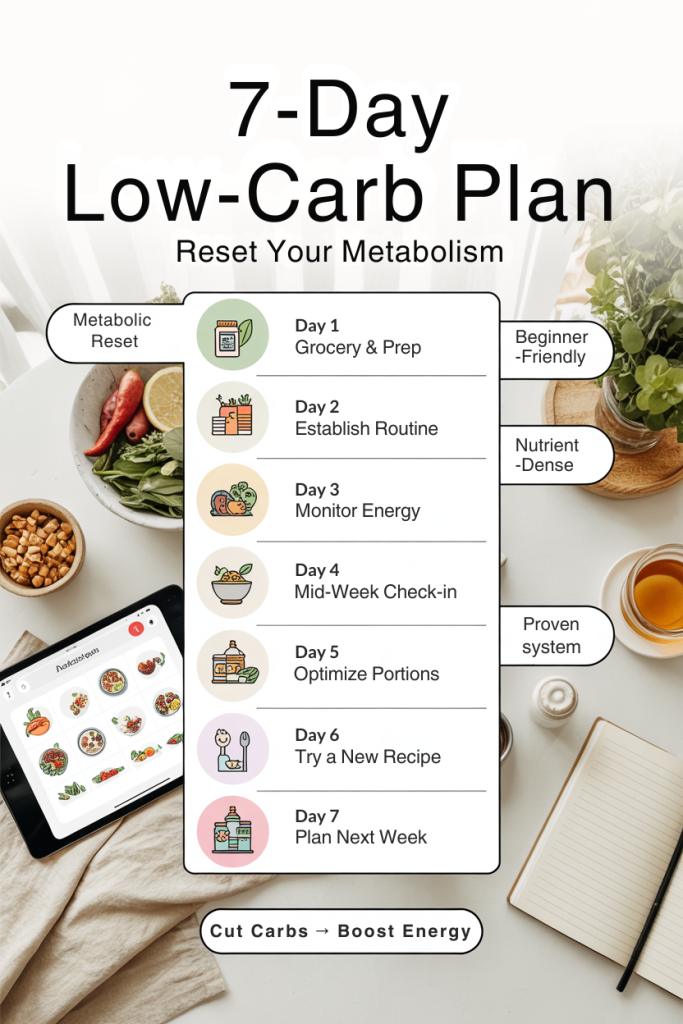
We created a straightforward, repeatable menu with variety across the week. Portions assume average adult needs: increase protein or add a healthy snack if you’re highly active. Each day includes breakfast, lunch, dinner, and two snack options.
Day 1
- Breakfast: Scrambled eggs with spinach and feta, 1/4 avocado. – Lunch: Grilled chicken salad (mixed greens, cucumbers, cherry tomatoes, olive oil vinaigrette). – Dinner: Baked salmon with lemon, roasted broccoli and cauliflower. – Snacks: Greek yogurt with a handful of raspberries: 10 almonds.
Day 2
- Breakfast: Greek yogurt parfait (plain full‑fat yogurt, chia seeds, a few blueberries). – Lunch: Tuna salad lettuce wraps (tuna, mayo, celery, Dijon, wrapped in butter lettuce). – Dinner: One‑pan chicken thighs with roasted zucchini and bell pepper. – Snacks: Hard‑boiled egg: cucumber slices with 2 tbsp hummus.
Day 3
- Breakfast: Omelet with mushrooms, onions, and cheddar. – Lunch: Leftover chicken over a bed of spinach with sliced avocado. – Dinner: Stir‑fry beef and broccoli (use tamari or coconut aminos) over cauliflower rice. – Snacks: Celery sticks with almond butter: 1 oz cheese.
Day 4
- Breakfast: Chia pudding made with unsweetened almond milk, topped with a few sliced strawberries. – Lunch: Cobb‑style salad (greens, boiled egg, bacon, avocado, blue cheese, vinaigrette). – Dinner: Baked cod with herb crust, steamed asparagus. – Snacks: A small apple with 1 tbsp peanut butter (optional for slightly higher carbs): a handful of olives.
Day 5
- Breakfast: Cottage cheese (or kefir alternative) with cinnamon and a few walnuts. – Lunch: Turkey and avocado roll‑ups (sliced turkey, avocado, spinach, rolled). – Dinner: Zucchini noodle pasta with basil pesto and sautéed shrimp. – Snacks: Greek yogurt: bell pepper strips with guacamole.
Day 6
- Breakfast: Fried eggs over sautéed kale and cherry tomatoes. – Lunch: Salmon salad (flaked salmon, capers, red onion, olive oil) on mixed greens. – Dinner: Pork tenderloin roasted with rosemary, side of roasted Brussels sprouts. – Snacks: 10–12 almonds: dark chocolate square (70%+).
Day 7
- Breakfast: Smoothie (unsweetened almond milk, protein powder, handful spinach, 1/4 avocado, ice). – Lunch: Leftover pork sliced over salad with mustard vinaigrette. – Dinner: Grilled steak with a side of garlic butter mushrooms and steamed green beans. – Snacks: Hard‑boiled egg: Greek yogurt with cinnamon.
Notes on portioning and timing
- Aim for protein at every meal to support muscle maintenance and satiety. – If you train intensely, add an extra snack with 15–20 g protein post‑workout (e.g., protein shake or canned salmon). – Keep snacks small and protein/fat focused to prevent blood sugar swings.
Meal swaps
If you don’t like a listed protein, swap with an equivalent serving: e.g., swap salmon for chicken or tofu. Replace starchy sides with extra nonstarchy vegetables or a small portion of mashed cauliflower. This plan is intentionally flexible so we can stick with it.
Flexible Recipe Ideas, One‑Pan Meals, And Easy Substitutions
A low‑carb week succeeds when recipes are adaptable and fast. Below are flexible templates and two quick one‑pan recipes we return to often. We’ll also provide substitutions so you never feel boxed in.
Flexible meal templates (swap liberally)
- Protein + Veg + Fat: Protein (4–6 oz) + 2 cups nonstarchy veg + 1 fat portion (1/4 avocado, 1 tbsp olive oil, or 1 oz nuts). – Salad bowl: Base greens + 4–6 oz protein + crunchy veg + cheese/olives + oil/vinegar dressing. – Stir‑fry: Protein + fibrous veg + 1 tbsp oil + flavor (garlic, ginger, tamari). Serve over cauliflower rice.
One‑pan roasted chicken & veg (serves 4)
Ingredients: 4 bone‑in or boneless chicken thighs, 1 lb mixed vegetables (broccoli, cauliflower, zucchini), 3 tbsp olive oil, 1 tsp smoked paprika, salt and pepper, lemon wedges.
Method: Preheat oven to 425°F. Toss vegetables with 2 tbsp oil, salt, pepper. Arrange chicken on a sheet pan, rub with remaining oil and paprika. Roast 25–30 minutes until chicken reaches 165°F and vegetables are tender. Squeeze lemon over top and serve.
Why it works: Minimal cleanup, high flavor, easy to scale.
One‑pan shrimp & pesto zucchini noodles (serves 2)
Ingredients: 1 lb shrimp (peeled), 2 medium zucchinis spiralized, 2 tbsp pesto (store‑bought or homemade), 1 tbsp olive oil, salt, pepper, red pepper flakes optional.
Method: Heat oil in a skillet, sauté shrimp 1–2 minutes per side until opaque. Remove shrimp, add zucchini noodles and toss 1–2 minutes just to warm (avoid sogginess). Return shrimp to pan, mix in pesto and serve.
Why it works: Fast, low‑carb, and satisfying: pesto adds healthy fats and fullness.
Substitutions guide
- Dairy: Replace Greek yogurt with coconut yogurt if dairy‑sensitive (choose unsweetened). – Grains/rice: Use cauliflower rice, shirataki noodles, or extra veggies. – Bread/tortillas: Use large lettuce leaves, collard wraps, or low‑carb tortillas sparingly. – Sweet cravings: A small serving of dark chocolate or a few berries works better than bingeing on sweets.
Batching and freezing tips
- Cooked meats freeze well in 1–2 portion containers. – Prepare a big batch of low‑carb soup or chili (no beans or with minimal beans) and freeze individual portions for busy nights. – Portion pesto, dressings, and nut butter into small jars for easy access.
Flavor hacks to prevent boredom
- Make compound butters (herb + lemon + butter) to add to steaks or vegetables. – Use spice blends (smoked paprika, za’atar, curry powder) to rotate cuisines quickly. – Acid (lemon, vinegar) brightens low‑carb meals and reduces perceived heaviness.
Tips For Success: Hydration, Electrolytes, Exercise, And Managing Cravings
A metabolic reset isn’t just about food, it’s the small habits that support energy, mood, and consistency. We’ll highlight practical strategies to help the week feel easier and more effective.
Hydration and electrolytes
- Drink water consistently across the day. Aim for at least 8–10 cups, more if you sweat or exercise heavily. – When carbs drop, the body sheds water and electrolytes: we should proactively replenish sodium, potassium, and magnesium. – Simple strategy: add a pinch of sea salt to a glass of water once daily, eat potassium‑rich foods (avocado, spinach), and consider a magnesium supplement (200–300 mg at night) if we’re prone to muscle cramps or poor sleep.
Exercise recommendations
- Keep workouts moderate: brisk walks, light strength training, yoga, or short interval sessions. During the first 2–3 days we may prefer lower intensity until energy stabilizes. – Strength training 2–3 times across the week helps preserve muscle mass and supports metabolic rate. – If we do high‑intensity training, add a post‑workout protein snack (e.g., protein shake or canned salmon) to aid recovery.
Managing cravings and hunger
- Prioritize protein at each meal, protein is the single best tool for satiety. – Plan and pack snacks so we don’t reach for convenience carbs. – When cravings strike, pause for five minutes and hydrate first: sometimes thirst feels like hunger. – For emotional eating, use a different coping strategy: short walk, call a friend, or do a 10‑minute household task, these small redirects break automatic patterns.
Sleep and stress
- Aim for consistent sleep windows. Poor sleep increases hunger hormones and carb cravings. – If we’re stressed, use quick breathing techniques (box breathing for 2–3 minutes) or a brief nighttime wind‑down routine to keep cortisol from sabotaging progress.
Monitoring and tweaking
- We suggest a simple daily log: weight (optional), hunger score (1–5), energy score (1–5), and notes on cravings/sleep. – If energy remains poor after day 4 and we’ve followed the plan, add a modest carb serving at one meal (1/2 sweet potato or 1/2 cup cooked quinoa) to see if that helps, this plan is flexible.
Social eating and travel
- At restaurants, choose protein and vegetable plates, swap fries for extra salad, and avoid sugary sauces. – For travel, bring shelf‑stable protein (tuna packets, jerky with no sugar) and prepped snack packs to stay on track.
Mindset: sustainable, not perfect
- We’re using seven days to reestablish habits, not to prove willpower. Minor slip‑ups don’t derail the benefits, get back on track at the next meal. – Celebrate small wins: better sleep, fewer cravings, fewer energy crashes. Those wins are the real metric of a successful reset.
Conclusion
This 7‑day low‑carb meal plan is a practical, short‑term strategy to reduce carb‑driven hunger, stabilize energy, and encourage our bodies to burn more fat. With a small upfront investment in shopping and prep, we can glide through the week on satisfying, nutrient‑dense meals, manageable snacks, and simple recipes that scale to our schedule. As we move past day seven, we recommend reflecting on what worked, did we sleep better, have fewer cravings, or feel more energetic? Use those insights to adopt a sustainable approach: a moderate low‑carb pattern, strategic carb timing around workouts, or keeping the best recipes in rotation. If you liked this plan, try repeating a cleaned‑up version each month or tailoring it to support a specific fitness or health goal. Small, consistent changes keep metabolism resilient, and make everyday eating easier.