7-Day Plant-Based Meal Plan That Actually Satisfies: Easy Recipes, Shopping List, and Prep Tips
Making the jump to a plant-based week doesn’t have to mean counting calories, starving between meals, or living on boring salads. We designed this 7-day plant-based meal plan to be approachable, filling, and flexible, perfect for beginners who want simple recipes, a practical shopping list, and small prep steps that save time. Over the next seven days you’ll get balanced breakfasts, protein-forward lunches, hearty dinners, and snack ideas that keep cravings in check. We’ll also show you how to scale portions, swap ingredients to match tastes or allergies, and batch-cook smartly so weekday evenings stay calm. Read on for the full day-by-day plan, recipes you can actually make, shopping and prep guidance, and troubleshooting tips so you stay satisfied all week.
How To Use This Meal Plan — Goals, Portions, And Customization
This section explains how to use the plan, set realistic goals, portion control guidance, and customizing for preferences/allergies.
Why this plan works
We built this plan around three simple goals: make meals high in fiber and plant protein, keep ingredient lists short, and enable easy swaps. That combo helps control hunger, stabilize blood sugar, and reduce decision fatigue, so the plan feels sustainable, not punishing.
Portions and calorie guidance
Portions are intended for an average adult with moderate activity. If you’re athletic or have higher calorie needs, increase portion sizes: add 1/2–1 cup cooked whole grains, an extra serving of legumes, or a generous handful of nuts/seeds to meals. If you’re trying to lose weight, reduce grain portions slightly and bulk meals with extra nonstarchy vegetables.
A simple plate method we recommend:
- Half the plate: nonstarchy vegetables (salad greens, roasted veg, steamed greens).
- One quarter: protein-rich foods (beans, lentils, tofu, tempeh, edamame).
- One quarter: whole grains or starchy veg (brown rice, oats, sweet potato).
- Add a healthy fat: 1–2 tablespoons olive oil, a quarter avocado, or a tablespoon of nut butter.
Customizing for preferences and allergies
We made the recipes modular. Swap tofu for tempeh or chickpeas: use gluten-free grains where needed: and replace tree nuts with seeds if you have allergies. If you prefer oil-free cooking, roast or steam veggies and use tahini or avocado to add fat and mouthfeel. For soy-free meals, choose extra legumes (lentils, peas) and whole grains plus a tablespoon or two of ground flax or chia to maintain healthy fats.
Timing and frequency
We’ve laid out three meals and two snack suggestions per day. If you prefer four smaller meals, split lunches or dinners into two portions and snack once. For intermittent fasting, condense meals into your eating window but maintain portion composition so protein and fiber are prioritized.
Meal swaps and batch strategies
- Double dinners to have leftovers for lunch. Most of the dinners are designed to refrigerate well for 1–3 days.
- Keep staples on hand, canned beans, frozen veg, and quick grains, to assemble a bowl or salad in 10 minutes.
Tracking progress
We suggest a short weekly check-in: how were your hunger levels, energy, and mood? Use that to tweak portions and swap meals. Small adjustments, an extra tablespoon of nut butter here, a bigger grain serving there, make the plan fit your life without derailing it.
Essential Grocery List And Simple Batch-Prep Guide
Grocery list (week’s core staples)
Produce
- Leafy greens: spinach, kale, or mixed salad greens (about 10–12 cups total)
- Cruciferous veg: broccoli or cauliflower (2 heads or 1 large bag frozen)
- Colorful veg: bell peppers (3), carrots (4), zucchini (2)
- Alliums: red onion (2), garlic (1 bulb)
- Tomatoes: 4–6 (or 1 pint cherry tomatoes)
- Fresh herbs: parsley or cilantro (1 bunch)
- Fruit: bananas (6), apples (4), berries (frozen or fresh, 2–3 cups)
- Starchy veg: sweet potatoes (4 medium)
Pantry & dry goods
- Canned beans: chickpeas (3 cans), black beans (2 cans), lentils (2 cans or 1 lb dry)
- Whole grains: brown rice (3–4 cups uncooked), rolled oats (1 large container), quinoa (2 cups)
- Nuts & seeds: almonds or walnuts (1 bag), chia or ground flax (small bag), tahini (jar)
- Nut butter: peanut or almond butter (jar)
- Plant milks: unsweetened (1–2 cartons)
- Canned tomatoes: 2 cans crushed or diced
- Vegetable broth: 2 cartons or bouillon
- Olive oil, soy sauce or tamari, apple cider vinegar, maple syrup
Protein & refrigerated
- Extra-firm tofu (2 blocks) or tempeh (2 packs)
- Hummus (small tub) or make your own
Frozen
- Peas or edamame (1 bag)
- Mixed berries (1 bag)
- Mixed stir-fry veg (optional)
Batch-prep guide (2 sessions: Sunday and midweek 20-minute refresh)
Session 1, Sunday (60–90 minutes)
- Cook grains: Make 3–4 cups cooked brown rice and 2 cups quinoa. Cool and store in airtight containers.
- Roast veg: Chop sweet potatoes, broccoli, and carrots, toss with 1–2 tbsp olive oil, salt, and pepper, and roast at 425°F for 25–30 minutes until tender. Store in fridge.
- Prepare proteins: Drain and press tofu: cube and toss with a little soy sauce and cornstarch and bake at 400°F for 20–25 minutes until golden. Alternatively, pan-fry. Rinse and drain canned beans.
- Make a big batch salad base: combine washed greens, chopped peppers, shredded carrots, and a simple vinegar-based dressing in a separate container to keep from wilting.
- Cook a pot of lentils (or use canned) and season with a bay leaf and salt.
Session 2, Midweek refresh (20–30 minutes)
- Re-roast any veggies that got soft, or quickly saut�e9 greens to refresh texture.
- Make a warm grain bowl: reheat rice, toss with beans, veggies, and a simple tahini dressing.
- Mix a quick stovetop curry using canned tomatoes, broth, spinach, and one can of chickpeas.
Make-ahead items and storage
- Cooked grains and legumes last 4–5 days refrigerated.
- Baked tofu keeps 3–4 days.
- Roasted veg: 4–5 days: best eaten within 3 but still usable after.
- Dressings: 1–2 weeks in the fridge if airtight.
Tools that save time
- Sheet pans (for roasting multiple items at once)
- Rice cooker or Instant Pot (hands-off grains)
- Airtight containers (clear and stackable)
With this grocery list and two focused prep sessions, assembling honest, satisfying meals during the week becomes fast and predictable. We recommend keeping a small checklist on your fridge so nothing gets forgotten during the busy weekdays.
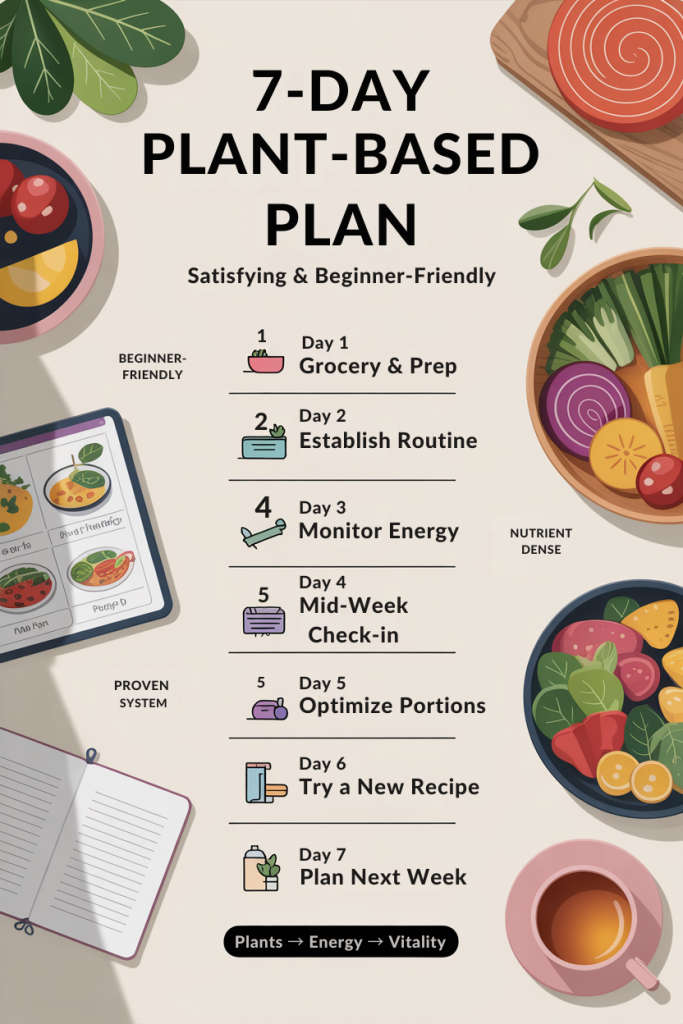
Day-By-Day Meal Plan (Breakfast, Lunch, Dinner + Quick Recipes)
Day 1, Monday
Breakfast: Peanut-banana overnight oats
- 1/2 cup rolled oats, 1 cup plant milk, 1 tbsp peanut butter, 1 mashed banana, 1 tbsp chia seeds. Mix, chill overnight, top with berries.
Lunch: Rainbow grain bowl
- 1 cup brown rice, 1/2 cup roasted chickpeas, roasted sweet potato cubes, spinach, tahini-lemon dressing.
Dinner: One-pan tofu stir-fry
- Sauté baked tofu with bell peppers, broccoli, garlic, and a splash of tamari. Serve over quinoa.
Quick recipe notes: For roasted chickpeas, toss a can of drained chickpeas with 1 tbsp olive oil, smoked paprika, salt, and roast 20–25 minutes at 400°F.
Day 2, Tuesday
Breakfast: Green smoothie bowl
- Blend 1 banana, 1 cup spinach, 1/2 cup frozen berries, 1 tbsp flax, and 3/4 cup plant milk. Top with granola and sliced apple.
Lunch: Lentil & tomato soup + whole-grain toast
- Simmer 1 cup cooked lentils with canned tomatoes, diced carrots, onion, garlic, and vegetable broth for 20 minutes. Season with cumin and herbs.
Dinner: Sweet potato & black bean tacos
- Warm roasted sweet potato cubes, black beans, avocado, cilantro, and lime on corn tortillas.
Day 3, Wednesday
Breakfast: Savory oats with spinach and tofu
- Cook 1/2 cup oats in broth, stir in sautéed spinach, crumbled baked tofu, nutritional yeast, and pepper.
Lunch: Mediterranean chickpea salad
- Chickpeas, cherry tomatoes, cucumber, red onion, parsley, olives (optional), lemon-olive oil dressing. Serve on greens.
Dinner: Coconut red lentil curry
- Cook red lentils with coconut milk, curry paste or powder, diced tomatoes, and spinach. Serve over rice.
Day 4, Thursday
Breakfast: Chia pudding with berries
- 3 tbsp chia seeds, 1 cup plant milk, 1 tsp maple syrup, refrigerate overnight. Top with berries and chopped nuts.
Lunch: Leftover curry bowl
- Reheat leftover lentil curry over rice, add fresh cilantro and a squeeze of lime.
Dinner: Sheet-pan tempeh and roasted veg
- Marinate tempeh in soy sauce and maple, roast alongside broccoli and carrots. Serve on quinoa.
Day 5, Friday
Breakfast: Toast with almond butter and fruit
- Two slices whole-grain toast, almond butter, sliced banana, sprinkle of cinnamon.
Lunch: Warm grain bowl with tahini dressing
- Brown rice, roasted veggies, baked tofu, sautéed greens, tahini dressing.
Dinner: Hearty veggie chili
- Simmer black beans, kidney beans, tomatoes, corn, bell pepper, and chili spices. Top with avocado.
Day 6, Saturday
Breakfast: Pancakes (oat-based) with fruit
- Blend 1 cup oats, 1 ripe banana, 1 tsp baking powder, plant milk to make batter. Cook like pancakes and top with berries and a drizzle of maple.
Lunch: Hummus and roasted veggie wrap
- Hummus, roasted sweet potato, greens, shredded carrot in a whole-wheat wrap.
Dinner: Mushroom and spinach polenta
- Sauté mushrooms and garlic, fold into cooked polenta with sautéed spinach and nutritional yeast.
Day 7, Sunday
Breakfast: Breakfast burrito bowl
- Scrambled tofu with turmeric, black beans, roasted potatoes, salsa, and avocado.
Lunch: Big salad + leftover chili or curry
- Build a big salad with any remaining veggies and top with leftover chili or curry for protein and warmth.
Dinner: Pasta with tomato-lentil sauce
- Simmer cooked lentils into a tomato sauce with garlic, onions, and herbs. Serve over whole-grain or legume-based pasta.
Snack ideas (short list)
- Apple with nut butter
- Roasted spiced chickpeas
- Hummus with carrot sticks and cucumber
- Handful of mixed nuts and a piece of fruit
Recipe timing tips
- Most breakfasts take under 10 minutes or were prepped overnight.
- Lunches reuse dinner leftovers or are quick salads.
- Dinners vary: sheet-pan or one-pot meals average 30–40 minutes: many can be halved and doubled for leftovers.
We intentionally repeat core ingredients across days so nothing goes to waste, and the shopping list remains manageable while flavor stays interesting.
Snacks, Fillers, And Smart Swaps To Keep You Full
Why snacks matter for a plant-based week
When we shift away from animal products, snacks play a big role in appetite control. Fiber and protein are the two best levers to keep us full between meals. Here are snacks and small additions (fillers) that are nutrient-dense and quick.
High-protein, high-fiber snacks
- Greek-style soy yogurt with a tablespoon of ground flax and berries (soy yogurt gives extra protein versus most plant yogurts).
- Edamame: steamed and lightly salted, 1 cup has roughly 17 grams of protein.
- Roasted chickpeas or seasoned lentils, crunchy and portable.
- Nut butter on whole-grain crackers or apple slices.
Savory fillers to bulk meals
- Add a scoop of cooked lentils or a handful of edamame to salads and grain bowls.
- Stir hemp seeds or ground flax into smoothies and oatmeal for extra fat and a subtle nutty flavor.
- Top soups with a spoonful of tahini or a sprinkle of toasted sunflower seeds for creaminess and calories without refined carbs.
Smart swaps to increase satiety
- Swap white rice for quinoa or brown rice to get more fiber and protein per serving.
- Replace single-ingredient snacks (like chips) with veggie sticks plus hummus or roasted chickpeas.
- Choose whole-fruit over fruit juice to keep fiber, reduce sugar spikes, and stay full longer.
Portable, 5-minute snack combos
- Trail mix: mix unsweetened dried fruit with nuts and pumpkin seeds.
- Avocado toast: half an avocado on whole-grain toast with red pepper flakes.
- Protein smoothie: 1 scoop plant protein powder (optional), 1 banana, 1 tbsp nut butter, water or plant milk.
Dessert that satisfies without derailing
We recommend small, nutrient-dense desserts rather than empty-calorie sweets. A square of dark chocolate with a handful of almonds, or baked apple slices with cinnamon and a drizzle of maple, are satisfying and still align with our satiety goals.
Caffeine and hydration
Sometimes cravings are dehydration in disguise. We keep water, herbal tea, and sparkling water on hand. If caffeine is part of your routine, we suggest keeping it morning-focused and pairing it with protein (e.g., a soy yogurt or a nut-butter toast) to avoid mid-morning energy dips.
Plan for social situations
When eating out or attending events, choose protein-rich appetizers (hummus, lentil salads, bean dips) and prioritize vegetable-forward dishes. Bringing a simple dish, like a bean-based salad, to a potluck ensures you have something satisfying to eat.
Common Pitfalls, Troubleshooting, And How To Stay Satisfied
Pitfall 1: Not eating enough protein
Troubleshooting: If you feel hungry two hours after lunch, add a clear protein source: an extra half cup of beans, 3–4 ounces of tofu/tempeh, or a scoop of soy/rice protein in a smoothie. We recommend aiming for roughly 15–25 grams of protein per main meal for most adults: adjust based on activity level.
Pitfall 2: Relying on processed “vegan” convenience foods
Troubleshooting: Highly processed meat substitutes and packaged snacks can be convenient but often lack fiber or are high in sodium. Use them occasionally for variety, but center your week on whole foods: legumes, whole grains, vegetables, nuts, and seeds.
Pitfall 3: Becoming bored with flavors
Troubleshooting: Rotate dressings and spices. One week use lemon-tahini and cumin: another week try a miso-ginger dressing or a smoky paprika vinaigrette. Adding fresh herbs is a low-cost way to make a plate feel new.
Pitfall 4: Micronutrient blind spots (B12, iron, omega-3s)
Troubleshooting: B12 is critical, choose a B12-fortified plant milk or take a supplement (consult your clinician). For iron, pair iron-rich plants (lentils, spinach) with vitamin C (tomatoes, bell pepper) to boost absorption. For omega-3s, include ground flaxseed, chia, hemp seeds, or a microalgae DHA supplement if desired.
Pitfall 5: Digestive discomfort when increasing fiber quickly
Troubleshooting: If you feel bloated or gassy, ease into high-fiber meals. Increase water intake and spread beans and whole grains across the day instead of concentrating them all at one meal. Consider using canned beans rinsed thoroughly to reduce oligosaccharides, or introduce an enzyme like alpha-galactosidase if recommended by your provider.
Behavioral tips to stay consistent
- Keep meal times regular to train appetite cues.
- Use leftovers intentionally: plan two dinners as one-cook sessions and pack them for lunch.
- Journal briefly for one week: note hunger levels, sleep, and energy to identify patterns and tweak portions or timing.
When to get professional help
If you have underlying medical conditions (diabetes, kidney disease, pregnancy, or specific nutrient deficiencies), consult a registered dietitian or clinician before making major dietary changes. They can help tailor portion sizes and supplements safely.
We find that being pragmatic, planning simple swaps, prioritizing protein and fiber, and preparing a few items in advance, prevents most common issues and keeps satisfaction high throughout the week.
Conclusion
This 7-day plant-based meal plan gives us a realistic, tasty path to eating more plants without feeling deprived. By focusing on simple staples, doubling recipes for leftovers, and emphasizing protein and fiber, we stay full, energized, and satisfied. Start with the shopping list and the two prep sessions, then follow the day-by-day plan and adapt portions to your needs. Small changes, swapping one meal a day or increasing legumes at lunch, add up quickly. If you keep a few core recipes and rotate dressings and spices, a plant-based week becomes not just doable, but enjoyable. Let’s try this week together and adjust as we learn what keeps us feeling our best.