The Complete 14-Day Keto Meal Plan For Fast Fat Loss: Lose Weight, Cut Carbs, And Boost Energy In 2 Weeks
We’ve designed a focused, practical 14-day keto meal plan so you can cut carbs, burn stored fat, and feel more energetic in just two weeks. This isn’t a vague sketch of “eat less”, it’s a day-by-day, easy-to-follow plan with menus, portion guidance, grocery lists, and swaps so you can actually stick with it. Whether you’re new to ketogenic eating or you’ve tried low-carb before and want a structured jumpstart, our plan lays out clear macro guidance, meal timing tips, and safety notes so you get results without guesswork. Read on to learn what to expect, how the plan works, and exactly what to eat for two weeks to maximize fat loss and sustain energy.
Who This Plan Is For, What To Expect, And Key Safety Notes
Who this plan is for
This 14-day keto meal plan is designed for adults who want rapid fat loss while preserving muscle and maintaining steady energy. It’s ideal for people who:
- Are generally healthy and cleared for dietary changes by a healthcare provider.
- Want a structured, short-term plan to break carb dependence and start burning fat.
- Prefer whole-food meals with minimal prep and sensible portioning.
It’s not for pregnant or breastfeeding people, children, those with active eating disorders, or anyone with certain medical conditions (untreated diabetes type 1, advanced kidney disease, or severe liver disease) unless supervised by a clinician.
What to expect in 14 days
In the first 48–72 hours you may notice reduced appetite and some water weight loss as glycogen stores deplete. You might also experience mild “keto flu” symptoms, headache, fatigue, or brain fog. These usually resolve within a few days if you stay hydrated, add electrolytes (sodium, potassium, magnesium), and get adequate sleep. After day 4–7 you’ll likely feel steadier energy, fewer sugar cravings, and clearer thinking.
Realistic outcomes
People often see a 3–10 pound drop in the first two weeks, primarily from water and early fat loss: body composition changes (less fat, preserved lean mass) depend on adherence and activity. This plan focuses on fast but safe fat loss, not extreme deprivation. We emphasize protein to maintain muscle, healthy fats for satiety and ketone production, and non-starchy vegetables for micronutrients.
Key safety notes
- Get medical clearance if you’re on medications (especially for diabetes or blood pressure). Keto can alter medication needs rapidly.
- Hydration matters: aim for 2–3 liters of water daily, more if you exercise.
- Add electrolytes: 1–2 teaspoons of salt in food or water daily, plus potassium-rich foods (avocado, leafy greens) and a magnesium supplement if needed.
- Watch for symptoms that indicate you should stop and consult a provider: severe dizziness, fainting, extreme fatigue, or palpitations.
We recommend treating this 14-day plan as a concentrated reset, use it to build habits, learn how your body responds, and plan a sustainable follow-up routine after day 14.
How The Plan Works: Macros, Meal Timing, And Simple Rules
Macro framework
This plan targets a classic ketogenic macro ratio tuned for fat loss: roughly 65–75% calories from fat, 20–30% from protein, and 5–10% from carbohydrates. In practice that usually translates to about 20–30 grams of net carbs per day, protein at 0.7–1.0 grams per pound of ideal body weight (to preserve lean mass), and the remainder of calories from healthy fats.
Example targets (approximate):
- Sedentary woman ~1400–1600 kcal: 90–115 g fat, 70–90 g protein, <30 g carbs.
- Moderately active man ~1800–2200 kcal: 130–170 g fat, 110–150 g protein, <30 g carbs.
We suggest starting at a calorie level that creates a 300–600 kcal daily deficit from your maintenance needs for steady fat loss without excessive hunger.
Meal timing and frequency
We prioritize simplicity and adherence over rigid timing. Three meals with an optional snack works best for most people, but some will prefer two meals (intermittent fasting 16:8) to reduce meal prep and extend fasting windows that support fat mobilization. If you do time-restricted eating, keep your eating window consistent (e.g., 11 am–7 pm).
Simple rules to follow
- Keep net carbs (total carbs minus fiber) under 30 g/day. Count carbs from vegetables, nuts, and dairy. Avoid bread, rice, pasta, and most fruit.
- Prioritize whole foods: fatty fish, eggs, quality meats, olive oil, avocados, nuts, and non-starchy vegetables.
- Eat protein at each meal to preserve muscle and control appetite.
- Use fats to satiety, don’t force high-fat foods if you’re not hungry: appetite often regulates intake on keto.
- Track key metrics: weight, waist measurement, perceived energy, and mood. Consider a ketone meter or strips if you want objective feedback, but they aren’t required.
Adjusting macros
If you’re not losing weight after one week, reduce energy intake by 150–300 kcal or increase activity. If you experience persistent fatigue or low performance, slightly raise carbs (up to 50 g) or increase the protein/fat ratio. For athletes or high-output jobs, plan targeted carbs around intense training (20–30 g of fast-absorbing carbs pre/post workouts) but keep daily net carbs mostly under 50 g.
We find that these clear, simple rules are easier to sustain than complicated calorie counting for a short, targeted 14-day phase.
14-Day Meal Plan (Day-By-Day Summaries)
Week 1, Daily Menus, Portion Guidelines, And Simple Swaps
Day 1: Kickoff, Protein-forward
Breakfast: 2 eggs scrambled in butter, spinach sauteed, 1/4 avocado.
Lunch: Chicken salad (4–5 oz chicken, mayo, celery, 1 cup mixed greens).
Snack (optional): 10–12 almonds.
Dinner: Salmon (5–6 oz) with roasted broccoli in olive oil.
Portion notes: Aim for palm-sized protein, thumb-sized fat additions if tracking.
Day 2: Low-carb comfort
Breakfast: Greek yogurt (full-fat, 3/4 cup) with 1 tbsp chia, few raspberries.
Lunch: Bunless burger (6 oz beef) with cheddar and leafy salad.
Dinner: Zucchini noodles tossed with pesto and shrimp (5 oz).
Swap: Use canned tuna if fresh fish isn’t available.
Day 3: Easy variety
Breakfast: Omelet with mushrooms and feta (2–3 eggs).
Lunch: Cobb-style salad (egg, bacon, blue cheese, 4 oz turkey).
Dinner: Pork chops (5 oz) with creamed spinach (spinach, cream, garlic).
Day 4: Higher-fat day
Breakfast: Bulletproof-style coffee (black coffee, 1 tbsp butter, 1 tbsp MCT oil) and a boiled egg.
Lunch: Sardines on arugula with olive oil.
Dinner: Roast chicken thigh with cauliflower mash.
Note: Higher-fat days keep ketones elevated and satiety high.
Day 5: Light & full of greens
Breakfast: Cottage cheese (full-fat, 1/2 cup) with cucumber slices.
Lunch: Salmon salad with avocado and lemon mayo.
Dinner: Beef stir-fry (5 oz) with bok choy and sesame oil.
Day 6: Weekend-friendly
Breakfast: Almond flour pancakes (2 small) with cream cheese.
Lunch: Leftover roast chicken with mixed greens.
Dinner: Grilled steak (6 oz) with asparagus and herb butter.
Day 7: Prep-and-reflect
Breakfast: Scrambled eggs with smoked salmon.
Lunch: Keto wrap (lettuce wrap) with turkey and avocado.
Dinner: Baked cod with lemon, side salad.
Weekly note: Assess weight and energy. If you feel weak or performance drops, up protein or add electrolytes.
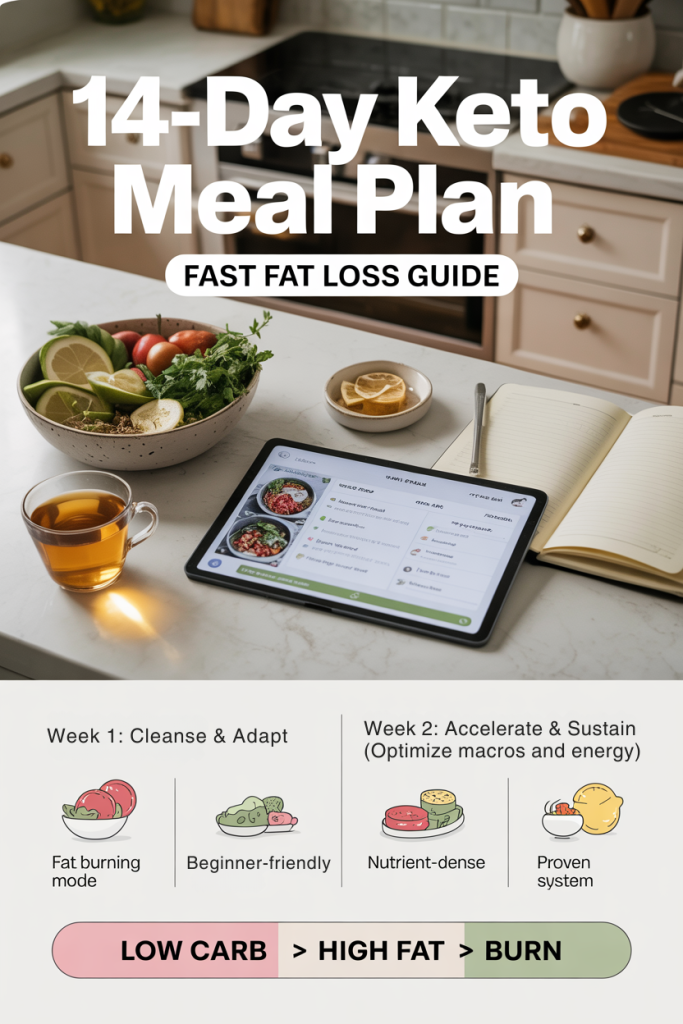
Week 2, Progressive Adjustments, Refeeds, And Sample Meals
Day 8: Slight calorie drop
Breakfast: Two poached eggs, sautéed kale.
Lunch: Tuna-stuffed avocado (4 oz tuna, 1/2 avocado).
Dinner: Ground turkey lettuce cups with guacamole.
Day 9: Protein emphasis
Breakfast: Egg muffins (3) with peppers and cheese.
Lunch: Salmon patties with mayo-based slaw.
Dinner: Lamb chops (5 oz) with rosemary and roasted radishes.
Day 10: Targeted mini-refeed option
Breakfast: Omelet with mushrooms.
Lunch: Chicken salad.
Snack (if we train hard): 15–20 g extra carbs from half a small banana or 3–4 dates around workout (only if performance is suffering).
Dinner: Baked trout with green beans.
Day 11: Fat-adapted focus
Breakfast: Full-fat Greek yogurt (1/2 cup) with ground flaxseed.
Lunch: Shrimp Caesar (no croutons).
Dinner: Duck breast (smaller portion) with sautéed cabbage.
Day 12: Keep protein steady
Breakfast: Cottage cheese with a sprinkle of cinnamon.
Lunch: Bunless turkey burger with avocado.
Dinner: Pan-seared chicken with Brussels sprouts and bacon.
Day 13: Refeed-aware day
Breakfast: If energy is low, have a thin slice of sprouted grain toast with cottage cheese (adds ~10–15 g carbs). Otherwise, eggs and greens.
Lunch: Keto taco bowl (cauliflower rice, ground beef, salsa, cheese).
Dinner: Grilled swordfish with lemon butter and zucchini.
Day 14: Wrap-up and transition prep
Breakfast: Huevos rancheros-style (use low-carb salsa and a small corn tortilla if transitioning or skip the tortilla).
Lunch: Salmon Niçoise (omit potatoes).
Dinner: Lean beef roast with roasted non-starchy veg.
Progressive adjustments and refeed guidance
- If we feel strength losses during workouts, allow a strategic 15–30 g carb mini-refeed around training (days 10 or 13) to support performance, no more than 1–2 days in the two-week window.
- Refeeds should be planned, not emotional. Use them to restore glycogen in muscles while keeping ketosis largely intact.
- Portion guidelines: protein = palm-sized portion each meal: veggies = two cupped handfuls: fats = thumb-sized servings (but flexible for appetite).
We’ve kept each day varied, practical, and focused on foods easy to buy and prepare. That helps adherence, the single most important factor for fast fat loss.
Grocery List, Meal-Prep Schedule, And Easy Substitutions
Grocery list (core items)
Proteins:
- Eggs, chicken thighs and breasts, ground beef or turkey, salmon, canned tuna, sardines, pork chops, steak.
Fats & oils:
- Olive oil, avocado oil, butter, ghee, MCT oil (optional), mayonnaise (full-fat), nuts (almonds, macadamia), avocados.
Vegetables (non-starchy):
- Spinach, kale, mixed salad greens, broccoli, cauliflower, zucchini, asparagus, Brussels sprouts, bell peppers, cucumbers.
Dairy & extras:
- Full-fat Greek yogurt, heavy cream, cheddar/blue/feta cheeses, cream cheese, cottage cheese.
Pantry & seasoning:
- Almond flour, chia seeds, flaxseed, canned coconut milk, olives, pickles, bone broth, salt, pepper, garlic, lemon, herbs, vinegar.
Optional performance aids:
- Electrolyte powders (no sugar), magnesium glycinate, ketone strips (if curious), omega-3 fish oil.
Meal-prep schedule (one-hour weekend session)
- Day 1 (90 minutes): Roast a batch of chicken thighs (6–8), hard-boil a dozen eggs, roast a sheet-pan mix of cauliflower and broccoli, wash/portion greens, make a simple vinaigrette.
- Mid-week (30–45 minutes): Pan-cook ground meat for tacos/bowls, make a double batch of egg muffins or frittata for breakfasts, portion nuts and snack packs.
Daily 10–15 minute tasks:
- Assemble salads, reheat prepped proteins, quickly steam or pan-sauté a vegetable.
Easy substitutions (when items aren’t available)
- No salmon? Use canned salmon or sardines for omega-3s.
- No almond flour? Use crushed pork rinds for breading, or omit and focus on egg-based dishes.
- Dairy intolerant? Swap in canned coconut milk, extra olive oil, and increase leafy greens and protein.
- Vegetarian approach? Use tempeh, tofu, eggs, full-fat dairy, and add macadamia nuts and avocado for fat, but be mindful that plant proteins can raise carbs, so track carefully.
Shopping tips and cost-saving hacks
- Buy frozen fish and vegetables when fresh is pricier: they retain nutrients and are often cheaper.
- Purchase larger cuts of meat and portion them yourself, usually more economical than pre-cut packages.
- Use seasonal produce and on-sale proteins to vary meals and keep costs down.
We recommend printing a one-page grocery list based on the week’s menu and sticking to the perimeter of the store for whole foods. Our meal-prep schedule frees up weekdays and reduces decision fatigue, that’s how you stay consistent and get rapid results.
Conclusion
This 14-day keto meal plan is a practical, evidence-informed way to jump-start fat loss while keeping energy and muscle preservation in mind. We gave you clear macros, daily menus, swaps, and a simple meal-prep rhythm so you can follow the plan without second-guessing. Remember: rapid results require adherence, hydration, and sensible adjustments if you feel unwell. After two weeks, use our tools to transition to a sustainable plan, either a relaxed low-carb approach or a cyclical keto plan aligned with your activity levels. If we stay consistent for these 14 days, we’ll have more energy, fewer cravings, and a stronger foundation for long-term body composition change.