10 Skin Symptoms That Could Signal Hormone Problems — What To Watch For In 2026
Hormones quietly shape a huge portion of our skin’s appearance and behavior. When they’re balanced, skin often looks clear, hydrated, and resilient. When they’re not, subtle changes can escalate into persistent issues. In this guide we’ll walk through 10 skin symptoms that could signal hormone problems in 2026, what each symptom typically means, the likely hormonal culprits, and when we should consider testing or specialist care.
We’ll avoid scare tactics and focus on practical signs to watch for: from sudden acne flare-ups and new pigmentation to thinning hair and slow wound healing. Our goal is simple, help you spot patterns early, understand plausible hormone-driven causes (and common non-hormonal mimics), and know when to bring the question to your dermatologist or endocrinologist. Let’s start with why hormones matter for skin health in the first place.
Why Hormones Matter For Skin Health
Our skin is a responsive organ: it listens to hormones and often echoes internal shifts. Hormones, including androgens (like testosterone), estrogens, progesterone, thyroid hormones, cortisol, insulin, and growth factors, regulate sebum production, cell turnover, pigmentation, hair growth cycles, and microvascular tone. When one or more of these signaling systems go off balance, the skin can show telltale changes before other symptoms become obvious.
For example, androgens stimulate sebaceous glands, so elevated androgen activity can increase oiliness and trigger acne. Estrogen helps maintain skin thickness, collagen production, and even pigmentation, which is why pregnancy, birth control changes, or menopause often alter skin tone. Thyroid hormones influence skin hydration and hair growth speed: hypothyroidism can cause dry, coarse skin and slow hair cycles, while hyperthyroidism may do the opposite.
Cortisol and insulin also matter: chronic high cortisol (from stress or Cushing’s syndrome) can thin skin, bruise easily, and release glucose-related processes that promote inflammation. Insulin resistance tends to amplify androgen activity, linking metabolic changes to acne and excess hair growth in conditions like polycystic ovary syndrome (PCOS).
Importantly, not every skin change is hormonal. Allergies, medications, dermatologic conditions, environmental exposures, and aging can produce similar signs. The value of recognizing hormone-linked patterns is that it helps us narrow down causes and pursue targeted testing, rather than chasing every symptom with topical treatments alone.
Breakouts, Cystic Acne, And Texture Changes (Signs Of Androgen Imbalance)
A sudden uptick in acne, especially nodulocystic or deep inflamed lesions, often points to androgen-driven activity. Androgens increase sebum output and change follicular keratinization, creating an environment where pores clog and bacteria flourish. We see this pattern in teenage puberty, but it’s also common in adults with androgen excess, for instance, in PCOS or with certain medications (like anabolic steroids or pro-androgenic progestins).
Clues that acne may be hormonally driven include: flares that cycle with the menstrual period, deep cysts on the lower face and jawline, poor response to topical therapies alone, and concurrent signs like new facial hair or irregular periods. Texture changes, persistent large pores, roughness, and post-inflammatory hyperpigmentation, can follow frequent inflammation.
When we suspect an androgen problem, relevant tests include serum total and free testosterone, DHEA-S, and an assessment for insulin resistance (fasting glucose/insulin or HOMA-IR). Treatment typically combines dermatologic care (topical retinoids, benzoyl peroxide, oral antibiotics when needed) with hormonal strategies when appropriate: combined oral contraceptives with anti-androgenic progestins or spironolactone for women, and addressing insulin resistance through lifestyle and sometimes metformin. We always individualize based on age, pregnancy plans, and comorbidities.
Melasma, Dark Patches, And Uneven Pigmentation (Estrogen & Pregnancy-Related Changes)
Melasma, symmetrical, brownish patches on the face, is a classic hormone-sensitive pigmentary condition. It frequently appears or worsens during pregnancy (the so-called ‘mask of pregnancy’) and with estrogen-containing contraceptives or hormone replacement therapy. Estrogen and progesterone can upregulate melanocyte activity and increase UV responsiveness, producing stubborn hyperpigmentation.
We also see uneven pigmentation with other hormonal contexts: perimenopausal hormone fluctuations can change skin tone subtly, and some endocrine treatments may influence pigmentation pathways. Importantly, sun exposure and genetic predisposition are major cofactors: hormones often act as a trigger on top of those underlying risks.
Management starts with realistic expectations. Melasma tends to relapse if the hormonal trigger remains. Sun protection is essential: broad-spectrum sunscreen every day and physical barriers (hats). Topical agents like hydroquinone, tranexamic acid, azelaic acid, and retinoids help fade patches, while in-office procedures (chemical peels, laser) require cautious use and are best coordinated with a dermatologist. If medication-induced, discussing alternative contraceptives or adjusting hormone therapy with our clinician can reduce recurrence.
Excess Facial Or Body Hair And New Hair Growth Patterns (Hirsutism)
Hirsutism, the development of coarse, dark terminal hair in a male-pattern distribution on the face, chest, abdomen, or back, is one of the most visible signs of androgen excess in people assigned female at birth. While some ethnic backgrounds have naturally denser hair, a clear change in hair pattern (new chin whiskers, thicker sideburns, or chest hair) warrants evaluation.
Common hormonal causes include PCOS, late-onset congenital adrenal hyperplasia, and rare androgen-secreting tumors. We look for associated features: oligomenorrhea or amenorrhea, acne, weight changes, and rapid onset or severe hirsutism, which raises concern for an adrenal or ovarian tumor.
Assessment often includes measuring total testosterone and DHEA-S, and a careful menstrual and medication history. Management blends symptomatic hair removal methods (laser, electrolysis, eflornithine cream) with hormonal therapy when appropriate: combined oral contraceptives, anti-androgens like spironolactone, and addressing insulin resistance when present. Laser and electrolysis offer more permanent reduction but require multiple sessions and often work better when hormonal levels are controlled.
Thinning Hair And Increased Hair Shedding (Thyroid Or Androgen Effects)
Hair thinning and increased shedding can have multiple hormonal drivers. Thyroid dysfunction is a classic cause: hypothyroidism often leads to diffuse hair thinning (including the outer eyebrows), while hyperthyroidism can accelerate hair cycling and trigger shedding. Androgens may cause patterned hair loss, male or female pattern hair loss, characterized by a widening part, crown thinning, or frontal hairline recession in genetically susceptible people.
Telogen effluvium, a diffuse shedding often following physical stress, illness, or abrupt hormone shifts (postpartum, after stopping oral contraceptives), can also present as hair loss but usually recovers over months once the trigger resolves. Persistent or progressive thinning that affects quality of life deserves endocrine evaluation: we commonly order TSH (and free T4), ferritin, and, when indicated, androgens. In suspected androgenetic alopecia, total testosterone and DHEA-S may be helpful: men with unusual patterns should be assessed for other systemic causes.
Treatment depends on cause. For thyroid-related hair loss, normalizing thyroid levels often improves hair over several months. Androgen-related thinning can be addressed with topical minoxidil, oral anti-androgens in selected women, and referral to a hair specialist for procedures (PRP, hair transplantation) when appropriate. We emphasize realistic timelines: hair regrowth is slow, and patience plus consistent care pays off.
Persistent Dryness, Itching, Or Sensitive Skin (Thyroid Or Menopausal Signals)
Chronic dryness, pruritus (itching), and increased skin sensitivity are common complaints that sometimes point to hormonal shifts. Hypothyroidism reduces eccrine and sebaceous gland function and impairs skin barrier maintenance, producing rough, coarse, dry skin that itches. During menopause, falling estrogen levels reduce skin hydration, thinning, and lipid content, causing dryness, increased sensitivity, and greater susceptibility to irritation.
We should also consider medication effects, atopic dermatitis, or environmental factors: hormonal causes are more likely when dryness appears alongside other endocrine signs (fatigue, cold intolerance, irregular periods, or vasomotor symptoms). In postmenopausal patients, topical moisturizers rich in ceramides, humectants, and gentle oils help, and localized low-dose topical estrogen can improve vulvar and some facial skin symptoms under specialist guidance.
When symptoms are severe or interfere with sleep and quality of life, we look for thyroid abnormalities (TSH, free T4) and discuss menopausal management options. Lifestyle measures, humidifiers, fragrance-free emollients, avoiding hot showers, remain first-line, while targeted hormonal therapy is individualized based on overall health and risks.
Oily Skin, Enlarged Pores, And Sudden Sebum Changes (Androgen-Driven Symptoms)
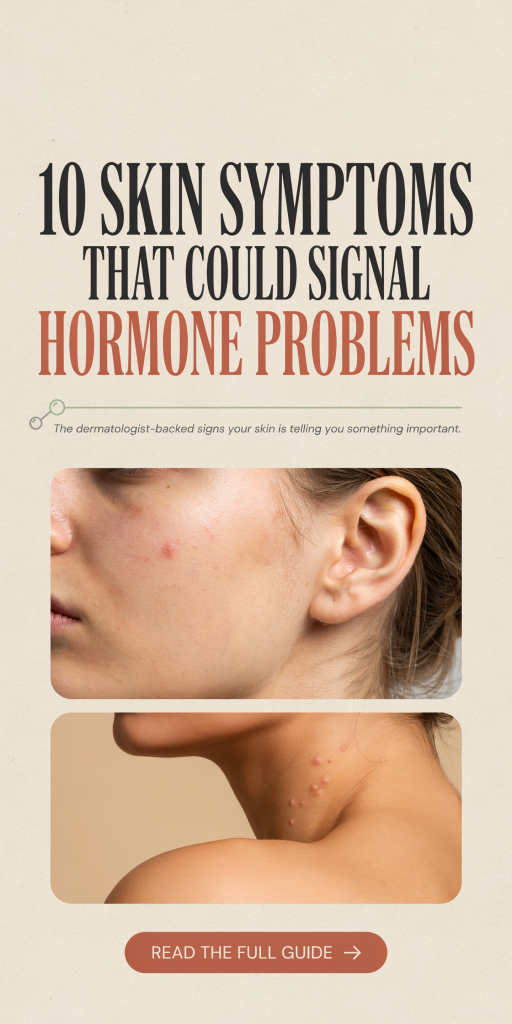
An abrupt shift toward oilier skin, rapid pore enlargement, or sudden increases in sebum production often signal androgenic influence. Sebaceous glands respond to androgen levels and local sensitivity: some people have glands that produce more oil with small hormonal changes. We often see these changes during puberty, menstrual cycle fluctuations, starting or stopping hormonal contraception, and in PCOS.
Excess oil contributes to acne, but it also affects skin texture and the visibility of pores. Lifestyle factors (diet, humidity) and topical product choices can exacerbate oiliness, so we first review skincare routines before jumping to endocrine testing. If oiliness is accompanied by other signs of androgen excess, irregular cycles, hirsutism, or sudden severe acne, evaluating circulating androgens is reasonable.
Treatment includes oil-regulating topicals (salicylic acid, niacinamide), retinoids to normalize follicular turnover, and considering hormonal therapy when appropriate. For people not seeking pregnancy who have documented androgen excess, combined oral contraceptives or anti-androgens can reduce sebum production and improve pore-related texture over months.
Slow Wound Healing, Easy Bruising, And New Stretch Marks (Cortisol And Insulin Clues)
When skin becomes thin, bruises easily, wounds take longer to close, and new purple or wide stretch marks (striae) appear without clear explanation, we think about excess glucocorticoid exposure. Cushing’s syndrome, from endogenous cortisol overproduction or prolonged exogenous steroid use, causes characteristic skin fragility, central weight gain, and purple striae on the abdomen, breasts, and thighs.
Insulin resistance and rapid weight fluctuations can also contribute to stretch mark formation and poor skin repair. High insulin levels promote skin matrix remodeling and may interact with other hormones to compromise dermal integrity. Also, chronic stress elevates cortisol intermittently and may subtly impair skin barrier and healing even without frank Cushing’s.
If we notice these signs, especially alongside systemic symptoms (muscle weakness, uncontrolled weight gain, mood changes), we pursue endocrine evaluation: late-night salivary cortisol, 24-hour urinary free cortisol, and dexamethasone suppression testing in appropriate cases. Addressing exogenous steroid use, improving metabolic health via diet and exercise, and coordinating care with endocrinology are key steps. Dermatologic strategies to support skin include topical retinoids to improve collagen and medical-grade moisturizers to strengthen the barrier.
Conclusion: When To Seek Testing Or See A Dermatologist/Endocrinologist
We’ve outlined 10 skin symptoms that commonly point toward hormonal involvement. The essential next step is pattern recognition: a single pimple or an occasional dry patch rarely justifies broad endocrine testing. But when several signs cluster, for example, new-onset acne plus irregular periods and increased facial hair, or diffuse hair thinning with fatigue and cold intolerance, we should escalate evaluation.
Practical thresholds for referral include: sudden or severe changes, symptoms that affect quality of life, signs suggesting systemic hormone excess (rapid weight gain, purple striae), or poor response to standard dermatologic care. Start with your primary care clinician or dermatologist: they can order targeted labs (TSH, thyroid panel, total/free testosterone, DHEA-S, fasting glucose/insulin) and coordinate with endocrinology when needed. Early recognition helps us treat the root cause, not just the skin’s surface, so we can get better, longer-lasting results.
If you’re unsure, take photos to document progression and bring them to the appointment, visual history is incredibly helpful. And remember: many hormone-linked skin issues respond well to a combined approach of lifestyle adjustments, topical care, and targeted medical therapy. We encourage proactive discussion with your care team when skin changes persist or cluster with other symptoms.