10 Healthy Frozen Foods You Can Find at Dollar Tree
Dollar Tree’s freezer section doesn’t get much attention. Most shoppers walk past it on the way to the snack aisle, which means they’re missing one of the more practical corners of the store. The selection is small and varies by location, but the items that consistently show up are genuinely useful — whole vegetables, fruit, and simple proteins that hold nutritional value and stretch a food budget further than almost anything else in the store.
Frozen food often gets treated as a nutritional compromise. It isn’t. Most frozen produce is harvested at peak ripeness and frozen within hours, locking in vitamins and minerals before degradation sets in. Fresh produce sitting in transit and on display shelves for days loses nutrients steadily. For many items, frozen is the smarter choice — and at Dollar Tree prices, it’s an easy one.
Here’s what’s worth grabbing from the freezer aisle.
1. Frozen peas
Frozen peas are one of the best all-around freezer staples available. They’re high in plant-based protein (about 8 grams per cup), fiber, vitamin K, folate, and thiamine. They thaw in minutes, require no chopping, and integrate into an enormous range of dishes — rice, pasta, soups, stir-fries, omelets, or simply heated as a side.
Dollar Tree carries them regularly, and the quality is consistent. Nutritionally, frozen peas are comparable or superior to fresh peas at a grocery store, which are almost always several days off the vine by the time they reach you.
2. Frozen corn
Corn has an undeserved bad reputation in some nutrition circles. Plain frozen corn — no sauce, no butter, no additives — is a good source of fiber, B vitamins (particularly thiamine and folate), and antioxidants including lutein and zeaxanthin, which support eye health. It’s also one of the few vegetables that actually holds up better frozen than fresh, since the natural sugars begin converting to starch almost immediately after picking.
Dollar Tree’s frozen corn bags are a reliable find. Use them in soups, grain bowls, tacos, succotash, or heated straight as a simple side.
3. Frozen green beans
Green beans are low in calories and high in vitamins C and K, folate, and manganese. They work as a side vegetable for almost any protein and hold their texture reasonably well from frozen when cooked properly — sautéed in a pan rather than boiled, they stay firm instead of going limp.
Dollar Tree carries frozen green beans at most locations. At $1.25 a bag, you’re looking at a vegetable side dish that costs less than almost any alternative, fresh or otherwise.
4. Frozen broccoli
Broccoli is one of the most studied vegetables for health benefits. It’s rich in sulforaphane — a compound formed when broccoli is chewed or chopped that has demonstrated cancer-preventive properties in research — along with vitamin C, vitamin K, folate, and fiber. The cruciferous vegetable family (broccoli, cauliflower, cabbage, Brussels sprouts) has among the strongest evidence for disease risk reduction of any food category.
Frozen broccoli florets show up regularly at Dollar Tree. Steam them, roast them from frozen on a sheet pan, or toss into soups and stir-fries. Roasting is the best method for frozen broccoli — it removes moisture and produces real browning instead of the steamed-to-mush result many people associate with frozen vegetables.
5. Frozen mixed vegetables
The classic mixed vegetable blend — peas, carrots, corn, green beans — is a reliable find in Dollar Tree freezers. It’s convenient, versatile, and nutritionally solid across the board. Carrots add beta-carotene; peas add protein; corn and green beans round out the fiber and micronutrient profile.
This is a particularly practical buy for households that struggle to keep a variety of vegetables on hand. One bag covers several vegetables at once, and it goes into soups, fried rice, casseroles, and pasta dishes without any prep work.
6. Frozen edamame
When available, frozen edamame is one of the most nutritionally dense items in the Dollar Tree freezer section. Edamame — immature soybeans — are a complete protein, meaning they provide all nine essential amino acids. A single cup delivers around 17 grams of protein along with fiber, folate, vitamin K, and manganese. They’re one of the few plant foods that function as a genuine protein source rather than a protein supplement.
Availability varies by location, but they’re worth checking for. Boil or microwave in the pod, add salt, and eat as a snack — or shell them into salads, grain bowls, or rice dishes.
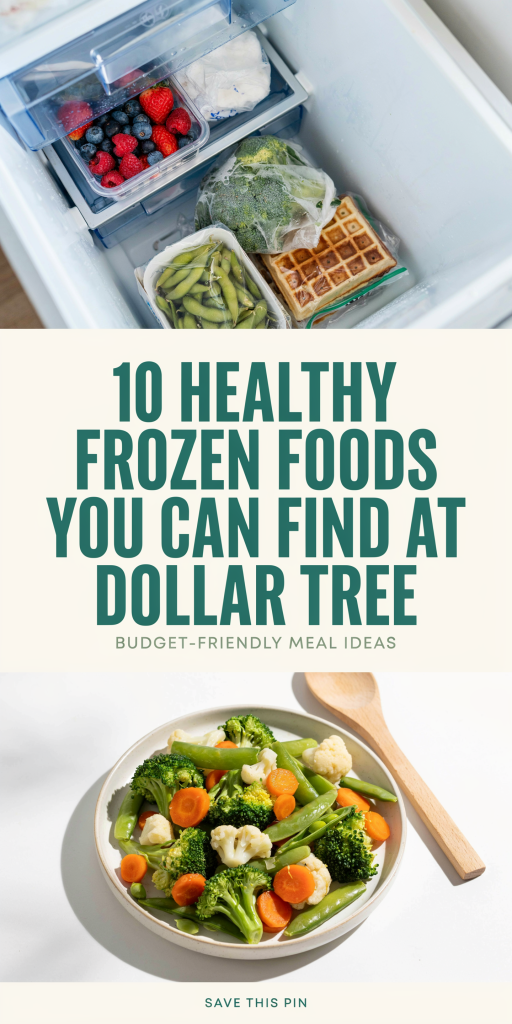
7. Frozen spinach
Frozen spinach is a workhorse ingredient that most people underuse. It’s extremely high in vitamin K, folate, iron, and magnesium — and because it’s sold compressed, a single bag represents a much larger volume of spinach than the equivalent in fresh leaves. It cooks down by more than 80 percent, so a bag that looks modest delivers a concentrated nutritional payload.
Use frozen spinach in smoothies (it blends smooth and you won’t taste it), soups, pasta sauces, egg dishes, and dips. It’s not a substitute for fresh spinach in salads, but for cooked applications it’s often preferable — and at Dollar Tree pricing, it’s one of the best nutritional values in the store.
8. Frozen fish fillets (plain, unbreaded)
Dollar Tree occasionally stocks plain frozen fish fillets — tilapia and swai are the most common. These aren’t premium fish, but they’re lean, low in saturated fat, and a reasonable source of protein when budget is the primary constraint. Plain and unbreaded is the key: breaded fish sticks or battered fillets add refined carbohydrates and sodium without adding nutrition.
Tilapia specifically has taken criticism for a less favorable omega-3 to omega-6 ratio compared to fatty fish like salmon, but as a lean protein source in an otherwise balanced diet, it’s a perfectly functional option. Season well and cook from frozen in a skillet or oven.
9. Frozen fruit blend (for smoothies)
Some Dollar Tree locations carry frozen fruit blends — typically strawberry, mango, or mixed berry — marketed for smoothie use. These are genuinely useful if you make smoothies at home. Frozen fruit is nutritionally equivalent to fresh, and for smoothie purposes it’s actually preferable since it eliminates the need for ice.
Berries in particular are worth prioritizing: blueberries, strawberries, and mixed berry blends are rich in anthocyanins and vitamin C. If you find unsweetened frozen fruit at your Dollar Tree, it’s a strong buy. Check the ingredient list — it should be just fruit, no added sugar or syrup.
10. Frozen brown rice or whole grain sides
Some Dollar Tree stores carry microwaveable frozen brown rice pouches — the kind that steam in the bag in 90 seconds. Brown rice is higher in fiber, magnesium, and B vitamins than white rice, with a lower glycemic impact. As a convenience item, the steam-in-bag format makes it genuinely useful for fast meals.
Availability on this one varies more than the straight vegetables, but it’s worth scanning the freezer section for. Paired with frozen edamame and frozen vegetables, a frozen brown rice pouch becomes a complete, fast, inexpensive meal with solid nutritional architecture.
A note on availability
Dollar Tree’s freezer section is smaller and less consistent than a full grocery store’s. Stock varies by location and changes frequently. The items on this list appear regularly enough to be worth looking for, but not every location carries every item at any given time. If your local store has a limited freezer section, the produce and canned goods aisles are still worth the visit — frozen vegetables are the strongest play here, but not the only one.
The bottom line
Dollar Tree’s freezer aisle is small but genuinely useful. Frozen peas, broccoli, spinach, mixed vegetables, and corn are all nutritionally sound, practically versatile, and priced at a level that makes stocking up an easy decision. The frozen food stigma is outdated — for most vegetables, frozen is as good or better than fresh, and at $1.25 a bag, there’s no reason to skip the freezer aisle on your next run.