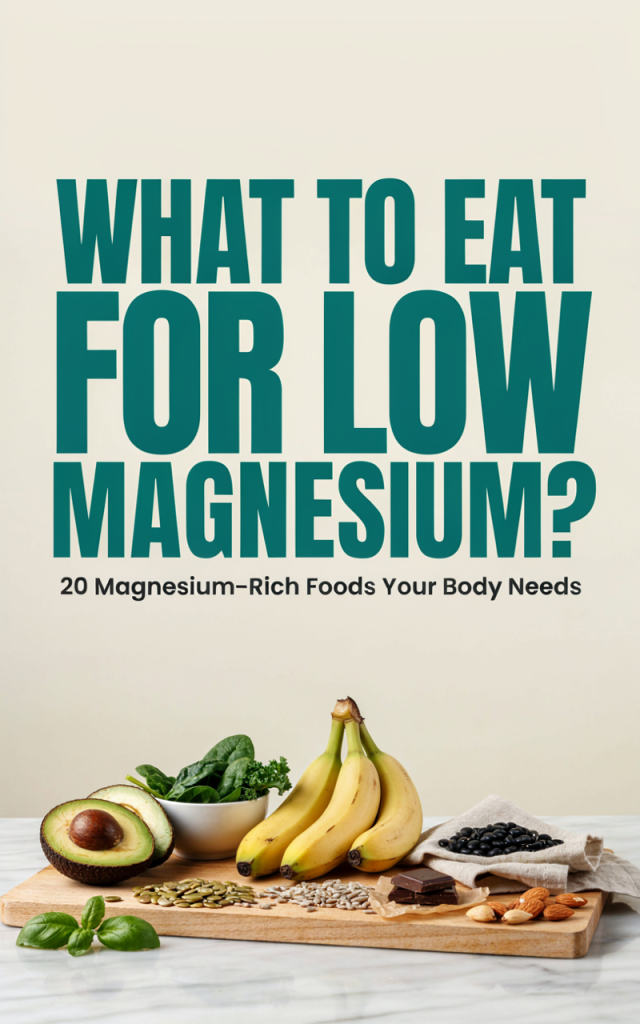
What Should I Eat for Low Magnesium? 20 Magnesium-Rich Foods Your Body Needs
Magnesium is an unsung hero of good health. It quietly helps power hundreds of biochemical reactions in your body — from making ATP (cellular energy) to supporting nerve and muscle function, balancing blood sugar, building strong bones, and promoting restful sleep. If you suspect low magnesium (feeling fatigued, muscle cramps, brain fog, or trouble sleeping), changing what you eat can make a big, measurable difference.
This guide walks you through why magnesium matters, how much you need, and exactly which foods to reach for. You’ll also find easy, delicious meal ideas and recipes that combine several magnesium-rich ingredients so you can start boosting your intake today.
Why Magnesium Matters
The role magnesium plays in the body
Magnesium is involved in over 300 enzymatic reactions, including:
– Energy production and metabolism (ATP formation)
– Muscle contraction and nerve impulse transmission
– DNA and protein synthesis
– Blood glucose regulation and insulin sensitivity
– Bone mineralization and calcium balance
Because it’s involved in so many systems, even a modest deficiency can affect energy, mood, sleep, and musculoskeletal health.
Signs and symptoms of low magnesium
Mild deficiency can be subtle. Look for:
– Fatigue, low energy, and muscle weakness
– Muscle cramps, twitches, or spasms
– Anxiety, irritability, or trouble sleeping
– Headaches or migraines
– Irregular heartbeat or palpitations (in more significant deficiency)
If you suspect a deficiency, talk to your healthcare provider. They can check blood magnesium and evaluate whether diet changes alone are enough or if supplements are needed.
How Much Magnesium Do You Need?
Recommended daily magnesium varies by age and sex:
– Adult men: about 400–420 mg/day
– Adult women: about 310–320 mg/day
– Pregnant women: slightly higher
Most people don’t reach these amounts with a typical Western diet, which is why prioritizing magnesium-rich foods is a practical first step.
20 Magnesium-Rich Foods Your Body Needs
Below are 20 foods that are particularly good sources of magnesium. Each item includes how it fits into meals and why it’s useful. Use these regularly to help meet daily needs.
- Pumpkin seeds (pepitas)
- Why: One of the highest magnesium sources per ounce, great as a snack or topping.
- How to use: Sprinkle on salads, yogurt, oatmeal, or eat roasted for a crunch.
- Almonds
- Why: A convenient snack rich in magnesium, healthy fats, and vitamin E.
- How to use: Eat raw, toss into salads, or blend into almond butter.
- Spinach (cooked)
- Why: Cooked leafy greens concentrate magnesium; also high in other minerals.
- How to use: Sauté as a side, add to soups, omelets, and smoothies.
- Swiss chard
- Why: Another magnesium-rich leafy green with a mild, versatile flavor.
- How to use: Sauté with garlic and olive oil or add to stews.
- Cashews
- Why: A creamy, magnesium-dense nut that also provides protein and healthy fats.
- How to use: Snack on them, add to stir-fries, or make cashew sauces.
- Black beans
- Why: Legumes like black beans supply magnesium, fiber, and plant protein.
- How to use: Add to salads, bowls, chili, or make black bean burgers.
- Edamame
- Why: Young soybeans that are protein-rich and a good source of magnesium.
- How to use: Boil and season for a snack, toss into salads or grain bowls.
- Tofu
- Why: Made from soy, tofu brings both magnesium and calcium in a low-carb package.
- How to use: Pan-fry, add to stir-fries or soups, or marinate and bake.
- Quinoa
- Why: A whole grain with a complete amino acid profile and solid magnesium content.
- How to use: Use as a base for salads, bowls, or replace rice in many recipes.
- Brown rice
- Why: Whole grain brown rice contains more magnesium than white rice.
- How to use: Pair with beans, vegetables, or seafood for balanced meals.
- Avocado
- Why: Creamy fruit with heart-healthy fats and modest magnesium levels.
- How to use: Mash on toast, add to salads or smoothies, or make guacamole.
- Salmon
- Why: Fatty fish contribute magnesium along with omega-3s and protein.
- How to use: Grill, roast, or pan-sear for main dishes or salads.
- Mackerel
- Why: Another oily fish rich in magnesium and healthy fats.
- How to use: Roast, pan-sear, or enjoy canned mackerel in salads.
- Dark chocolate (70–85% cocoa)
- Why: A delicious source of magnesium—choose high-cocoa content for best benefit.
- How to use: Enjoy a small square after meals or sprinkle cacao nibs on yogurt.
- Chia seeds
- Why: Tiny seeds packed with magnesium, fiber, and omega-3s.
- How to use: Mix into puddings, smoothies, and baked goods.
- Flaxseeds
- Why: High in magnesium and fiber; ground flaxseed is easiest to digest.
- How to use: Add to oatmeal, smoothies, or use as an egg substitute in baking.
- Sunflower seeds
- Why: Handy snack seeds that contribute magnesium plus vitamin E and protein.
- How to use: Sprinkle on salads, blend into seed butter, or roast lightly.
- Peanuts (or natural peanut butter)
- Why: Affordable, magnesium-containing nut option. Use natural PB for less sugar.
- How to use: Spread on whole grain toast, stir into sauces, or eat with fruit.
- Plain yogurt or kefir
- Why: Fermented dairy adds magnesium as well as probiotics and calcium.
- How to use: Eat as breakfast with fruit and seeds, or use in smoothies.
- Bananas
- Why: Well-known for potassium, bananas also provide magnesium and are easy to add to meals.
- How to use: Blend into smoothies, slice over cereal, or eat as a portable snack.
Note: Pairing magnesium sources with vitamin D, calcium, and adequate protein supports overall nutrient utilization. Also remember that food processing can reduce magnesium — choose less processed options when possible.
How to Build Magnesium-Rich Meals (Practical Tips)
- Combine seeds/nuts, a leafy green, and a whole grain for a magnesium-packed plate (e.g., spinach + quinoa + pumpkin seeds).
- Snacks are an opportunity: trail mix with nuts, seeds, and dark chocolate gives a concentrated magnesium boost.
- Use legumes as a protein base (black beans, lentils, edamame) — they’re economical and filling.
- Swap white rice for brown rice or quinoa to increase magnesium slightly.
- Keep a jar of roasted seeds and nuts ready for easy topping on yogurt, salads, and oatmeal.
Recipes & Meal Ideas (Easy, Magnesium-Rich)
Below are practical recipes that combine multiple magnesium-rich ingredients. Each recipe includes ingredients (bulleted list) and step-by-step instructions (numbered list) so you can make them now.
1) Magnesium Power Breakfast Bowl
Ingredients:
– 1/2 cup cooked quinoa
– 1/2 cup plain yogurt or kefir
– 1 small banana, sliced
– 1 tablespoon chia seeds
– 1 tablespoon pumpkin seeds
– 1 tablespoon almond butter or a handful of almonds
– A drizzle of honey or maple syrup (optional)
Instructions:
1. Spoon cooked quinoa into a bowl and top with yogurt or kefir.
2. Arrange banana slices on top.
3. Sprinkle chia seeds and pumpkin seeds evenly.
4. Add almond butter or scatter almonds.
5. Drizzle a little honey or maple syrup if you want extra sweetness. Stir together and enjoy.
Why it works: This bowl combines quinoa, yogurt, chia, pumpkin seeds, almonds, and banana to deliver magnesium, protein, probiotics, and satisfying texture.
2) Spinach & Tofu Stir-Fry with Edamame
Ingredients:
– 1 block firm tofu, pressed and cubed
– 4 cups baby spinach or chopped cooked spinach
– 1 cup shelled edamame (cooked)
– 2 tablespoons soy sauce or tamari
– 1 tablespoon sesame oil
– 1 clove garlic, minced
– 1 teaspoon grated fresh ginger
– 1 tablespoon toasted sesame seeds or chopped cashews (optional)
– Cooked brown rice or quinoa, to serve
Instructions:
1. Heat sesame oil in a large skillet over medium-high heat. Add tofu cubes and sauté until golden on all sides; remove and set aside.
2. In the same pan, add garlic and ginger; cook until fragrant (about 30 seconds).
3. Add spinach and edamame, sautéing until spinach wilts (2–3 minutes).
4. Return tofu to the pan and drizzle soy sauce or tamari; toss to combine and heat through.
5. Serve over brown rice or quinoa and sprinkle with sesame seeds or chopped cashews.
Why it works: This stir-fry blends tofu, spinach, and edamame for a magnesium-rich, protein-forward meal that’s quick and adaptable.
3) Quinoa, Black Bean & Avocado Salad
Ingredients:
– 1 cup cooked quinoa, cooled
– 1 cup cooked black beans (rinsed if canned)
– 1 ripe avocado, diced
– 1/2 cup cherry tomatoes, halved
– 1/4 cup red onion, finely chopped
– 2 tablespoons pumpkin seeds
– Juice of 1 lime
– 2 tablespoons olive oil
– Salt, pepper, and chopped cilantro to taste
Instructions:
1. In a large bowl, combine cooled quinoa and black beans.
2. Add diced avocado, cherry tomatoes, and red onion.
3. Drizzle lime juice and olive oil over the salad; toss gently to combine.
4. Season with salt, pepper, and cilantro.
5. Sprinkle pumpkin seeds on top just before serving for crunch.
Why it works: This salad is portable, filling, and combines quinoa, black beans, avocado, and pumpkin seeds — all magnesium-friendly choices.
4) Pumpkin Seed & Dark Chocolate Trail Mix
Ingredients:
– 1/2 cup raw pumpkin seeds
– 1/2 cup raw almonds or cashews
– 1/4 cup dark chocolate chips or chopped dark chocolate (70%+)
– 1/4 cup sunflower seeds
– 1/4 cup dried fruit (optional, like cherries or raisins)
– Pinch of sea salt (optional)
Instructions:
1. Combine all ingredients in a bowl and mix until evenly distributed.
2. Store in an airtight container for quick snacks.
3. Portion into small bags for on-the-go servings.
Why it works: This trail mix is a concentrated source of magnesium (pumpkin seeds, nuts, dark chocolate) plus satisfying crunch and sweetness. Keep portions moderate because nuts and chocolate are calorie-dense.
When to Consider Supplements
Food is the best first approach, but supplements may be appropriate if:
– You have a documented deficiency or symptoms that persist despite dietary changes.
– You have conditions that impair absorption (e.g., some gastrointestinal disorders).
– You’re on medications that deplete magnesium (like certain diuretics).
If considering a supplement:
– Talk to your healthcare provider first.
– Magnesium citrate, glycinate, or malate are commonly used and well-absorbed forms.
– Be aware that high doses can cause diarrhea; follow dosing guidance.
Tips to Improve Absorption and Retain Magnesium
- Limit highly processed foods: refining removes magnesium-rich bran and germ.
- Balance calcium and magnesium — both are important and can interact; aim for dietary balance.
- Avoid excessive alcohol, which can deplete magnesium.
- Cooking: steaming or lightly sautéing veggies preserves more magnesium than long boiling.
- Soaking nuts, seeds, and legumes before cooking can reduce phytates and improve mineral availability.
Frequently Asked Questions
Can I get enough magnesium on a plant-based diet?
Yes. Many plant foods — seeds, nuts, legumes, whole grains, and leafy greens — are rich in magnesium. Plant-based diets can provide more than adequate magnesium when adequately varied and minimally processed.
Is dark chocolate a healthy way to get magnesium?
Dark chocolate (70%+ cocoa) can contribute magnesium and antioxidants, but it’s calorie-dense. Use it as a small, enjoyable part of your diet rather than as a primary magnesium source.
How quickly will I notice improvements after increasing magnesium?
Some symptoms like muscle cramps or sleep may improve within days to weeks. Others (bone health, longer-term metabolic changes) take longer. Consistency is key.
Conclusion
If you’re wondering what to eat for low magnesium, focusing on whole, minimally processed foods is the most effective and enjoyable strategy. Incorporate a variety of magnesium-rich foods — seeds and nuts, leafy greens, legumes, whole grains, fatty fish, and small amounts of dark chocolate — to cover your needs and support overall health. Try the recipes above to get started, and remember: small, sustainable changes to your grocery list and meal planning can make a big difference in how you feel.
If symptoms persist or are severe, consult your healthcare provider for testing and personalized recommendations. You’re already taking a smart step by learning which foods help — keep going, and your body will thank you.