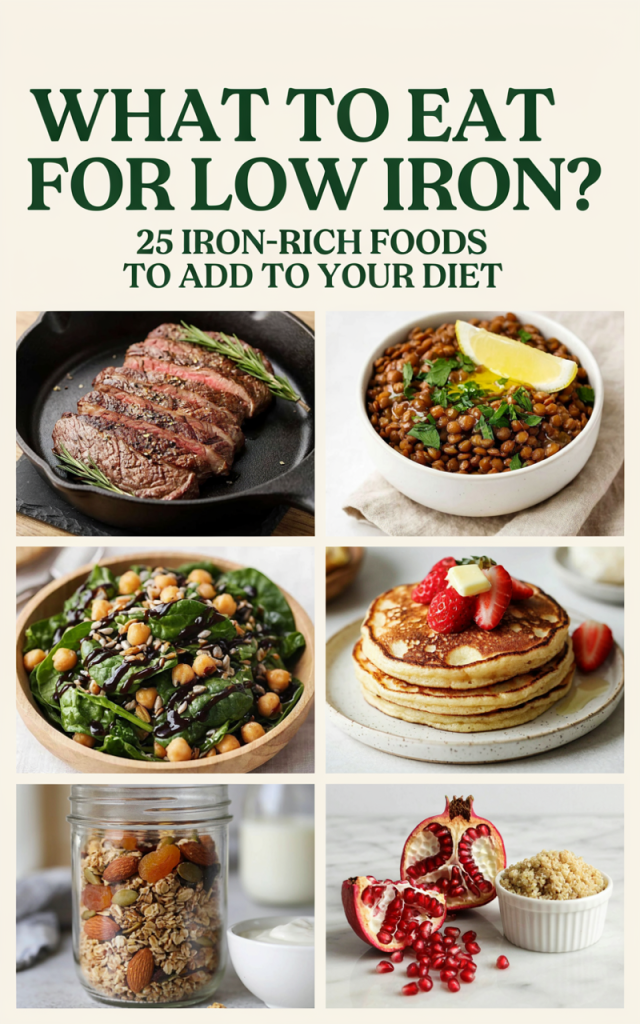
What Should I Eat for Low Iron? 25 Iron-Rich Foods to Add to Your Diet
Iron deficiency is one of the most common nutrient shortfalls worldwide. If you’ve been feeling tired, cold, lightheaded, or just not yourself, low iron could be part of the problem. Fortunately, food is a powerful, natural way to boost your iron stores. This guide gives you 25 iron-rich foods to add to your diet, explains how iron absorption works, offers practical meal ideas, and includes recipes that make it easy and delicious to eat for better iron.
Whether you’re managing a diagnosis of iron deficiency, pregnant, an athlete, or just want to optimize your energy, you’ll find evidence-based tips and approachable recipes to help you increase iron intake safely and effectively.
Why iron matters (and how much you need)
Iron is essential for:
– Making hemoglobin — the protein in red blood cells that carries oxygen.
– Producing myoglobin for muscle oxygen storage.
– Supporting energy metabolism, immune function, and cognitive performance.
General recommended daily intakes (approximate):
– Adult men: about 8 mg/day
– Adult women (19–50): about 18 mg/day
– Pregnant women: 27 mg/day
Needs vary by age, sex, life stage, and health conditions. Always discuss supplementation with your healthcare provider before starting iron pills.
Heme vs. non-heme iron: what’s the difference?
- Heme iron: Found in animal products (meat, poultry, fish). It’s absorbed more efficiently (around 15–35%) and is less affected by other dietary factors.
- Non-heme iron: Found in plants, fortified foods, and dairy alternatives. Absorption is more variable (around 2–20%) and can be boosted by pairing with vitamin C or reduced by compounds like phytates, calcium, polyphenols, and tannins (in tea/coffee).
Now, the list you came for—25 iron-rich foods that you can include regularly. I’ll note whether they are primarily heme or non-heme and give quick serving tips to improve absorption.
25 Iron-Rich Foods to Add to Your Diet
- Beef (lean cuts) — heme
- Serving tip: Pair with a citrus salad or bell peppers for vitamin C to maximize absorption.
- Beef liver — heme
- Extremely iron-dense; enjoy occasionally due to high vitamin A content.
- Lamb — heme
- Rich and flavorful; good in stews and grills.
- Pork (especially darker cuts) — heme
- Versatile—works in stir-fries with peppers for vitamin C.
- Chicken (dark meat) — heme
- Dark cuts (thighs, drumsticks) contain more iron than breast meat.
- Turkey (dark meat) — heme
- Great roasted or added to grain bowls with citrus dressing.
- Oysters — heme
- One of the most iron-rich seafoods; also high in zinc.
- Clams — heme
- Excellent source of iron and vitamin B12.
- Mussels — heme
- Mild, affordable shellfish high in iron.
- Sardines — heme
- Canned sardines are convenient and iron-packed; pair with lemon.
- Tuna — heme
- Fresh or canned; great in salads with vitamin C–rich vegetables.
- Salmon — heme
- Lower iron than red meat but still a valuable source plus omega-3s.
- Eggs — non-heme (but with some bioavailable iron)
- The yolk contains most of the iron; combine with vitamin C sources.
- Lentils — non-heme
- A top plant-based iron source; pair with tomato, lemon, or red pepper.
- Chickpeas — non-heme
- Use in salads, hummus, or stews with a squeeze of lemon.
- Black beans — non-heme
- Versatile for soups, burritos, and bowl meals; add salsa (vitamin C).
- Tofu — non-heme
- Often fortified and a concentrated source of iron; marinates soak up flavor.
- Tempeh — non-heme
- Fermented soy with good iron and digestive-friendly bacteria.
- Spinach — non-heme
- Cooked spinach concentrates iron; pair with citrus to aid absorption.
- Kale — non-heme
- Slightly lower in iron than spinach but still a great leafy source.
- Quinoa — non-heme
- A whole grain that provides iron plus a complete amino acid profile.
- Pumpkin seeds (pepitas) — non-heme
- Snack, salad topper, or blended into energy bites.
- Sesame seeds / tahini — non-heme
- Ground seeds are easier to digest and can be added to dressings and spreads.
- Molasses (blackstrap) — non-heme
- A spoonful provides concentrated iron—use sparingly as a sweetener.
- Dark chocolate (70% cocoa or higher) — non-heme
- A delicious treat that offers iron alongside antioxidants; enjoy in moderation.
How to eat these foods for better iron absorption
- Pair non-heme iron foods with vitamin C at every meal: citrus, bell peppers, strawberries, kiwi, tomatoes.
- Include heme-iron sources a few times per week if you eat animal products—heme iron enhances absorption of non-heme iron eaten at the same meal.
- Avoid tea and coffee within one hour before and after iron-rich meals (their tannins inhibit absorption).
- Limit high-calcium foods at the same time as iron-heavy meals (calcium can interfere with iron uptake).
- Soaking, fermenting, sprouting, and cooking can reduce phytates in legumes and grains, improving iron bioavailability.
- Cooking acidic foods in cast-iron cookware can add small amounts of iron to food.
Foods and habits that can reduce iron absorption
- Tea and coffee (tannins): wait at least an hour after meals to drink.
- High-calcium supplements or dairy at mealtime.
- Foods high in phytates (unsoaked grains/legumes), though preparation methods can reduce phytate content.
- Excessive fiber at the same meal may modestly reduce iron uptake.
If you are on medications, pregnant, or have specific health conditions (such as hemochromatosis), consult your healthcare provider before significantly changing iron intake or starting supplements.
Meal ideas and practical pairings
- Breakfast: Fortified whole-grain cereal topped with strawberries and pumpkin seeds.
- Lunch: Lentil and spinach salad with cherry tomatoes and lemon vinaigrette.
- Dinner: Grilled steak or roasted salmon with a side of sautéed kale and bell peppers.
- Snacks: Greek yogurt for protein (not at the exact same time as iron-rich meals if taking supplements) and a few dark chocolate squares or pumpkin-seed trail mix.
Below are four recipes/meal ideas you can use right away. Each recipe lists ingredients and step-by-step instructions.
Recipes & Meal Ideas
Iron-Boosting Lentil and Spinach Stew (Vegan, high in non-heme iron)
A warm, savory stew that pairs lentils and spinach with vitamin C–rich tomatoes and lemon to maximize iron absorption.
Ingredients:
– 1 cup dried brown or green lentils, rinsed
– 1 tbsp olive oil
– 1 medium onion, diced
– 2 cloves garlic, minced
– 1 tsp ground cumin
– 1 tsp smoked paprika
– 1 can (14 oz) diced tomatoes
– 4 cups low-sodium vegetable broth
– 4 cups fresh spinach (or 2 cups packed cooked spinach)
– Juice of 1 lemon (vitamin C)
– Salt and pepper to taste
– Optional: chopped red bell pepper (adds extra vitamin C)
Instructions:
1. Heat olive oil in a large pot over medium heat. Add onion and cook until soft, about 5 minutes.
2. Add garlic, cumin, and smoked paprika; cook for 1 minute until fragrant.
3. Stir in lentils, diced tomatoes (with juices), and broth. Bring to a boil, then reduce heat and simmer uncovered for 20–25 minutes until lentils are tender.
4. If using red bell pepper, stir it in 5–10 minutes before the lentils are done so it softens but stays bright.
5. Add fresh spinach and cook until wilted (2–3 minutes). If using cooked spinach, stir in and heat through.
6. Remove from heat and stir in lemon juice. Season with salt and pepper to taste. Serve warm.
Clams and Spinach Linguine (Seafood iron + vitamin C pairing)
A quick pasta dish that uses clams (high in heme iron) and baby spinach for added iron and greens.
Ingredients:
– 12 oz linguine or whole-grain pasta
– 2 tbsp olive oil
– 3 cloves garlic, minced
– 1/4 tsp red pepper flakes (optional)
– 2 lbs fresh clams, scrubbed (or 2 cans clams, drained)
– 1/2 cup dry white wine or low-sodium chicken broth
– 3 cups fresh baby spinach
– Zest and juice of 1 lemon
– Salt and pepper to taste
– Chopped parsley for garnish
Instructions:
1. Cook pasta according to package instructions until al dente. Reserve 1/2 cup pasta water and drain.
2. Meanwhile, heat olive oil in a large skillet over medium heat. Add garlic and red pepper flakes, and sauté for 30 seconds.
3. Add clams and white wine (or broth). Cover and cook for 5–7 minutes until clams open (discard any that remain closed). If using canned clams, add them with the liquid and simmer briefly.
4. Stir in spinach and cook until wilted. Add lemon zest and juice.
5. Toss the pasta into the skillet, adding reserved pasta water a little at a time to loosen the sauce. Season with salt and pepper.
6. Serve topped with chopped parsley and extra lemon wedges.
Tofu, Quinoa & Kale Iron Bowl with Tahini-Lemon Dressing (Plant-forward, iron-conscious)
A balanced bowl with plant-based iron sources and vitamin C from lemon and red pepper.
Ingredients:
– 1 cup quinoa, rinsed
– 2 cups water or broth
– 14 oz firm tofu, pressed and cubed
– 2 tbsp soy sauce or tamari
– 1 tbsp olive oil (for baking or pan-frying tofu)
– 3 cups chopped kale, tough stems removed
– 1 red bell pepper, sliced
– 2 tbsp pumpkin seeds (pepitas), toasted
– For the dressing:
– 2 tbsp tahini
– Juice of 1 lemon
– 1 tsp maple syrup or honey
– Warm water to thin as needed
– Salt to taste
Instructions:
1. Preheat oven to 400°F (200°C) if roasting tofu. Cook quinoa: bring water/broth to a boil, add quinoa, reduce to low heat, cover and simmer 15 minutes. Fluff with a fork and set aside.
2. Marinate cubed tofu in soy sauce for 5–10 minutes. Bake on a lined sheet for 20–25 minutes until golden, or pan-fry in olive oil until crisp on all sides.
3. Massage chopped kale with a pinch of salt for 1–2 minutes to soften.
4. In a small bowl, whisk tahini, lemon juice, maple syrup, and thin with warm water until pourable. Season with salt.
5. Assemble bowls: base of quinoa, top with tofu, kale, sliced red pepper, and pumpkin seeds. Drizzle with tahini-lemon dressing and serve.
No-Bake Dark Chocolate & Pumpkin Seed Energy Bites (Snack)
A portable, iron-friendly snack with pumpkin seeds and dark chocolate for a satisfying boost.
Ingredients:
– 1 cup pitted Medjool dates
– 1/2 cup pumpkin seeds (pepitas)
– 1/4 cup almond or peanut butter
– 2 tbsp unsweetened cocoa powder or 1 oz chopped dark chocolate (70%+)
– 1 tsp blackstrap molasses (optional, for extra iron)
– Pinch of salt
– Optional: extra pumpkin seeds for rolling
Instructions:
1. In a food processor, pulse dates until they form a sticky paste.
2. Add pumpkin seeds, nut butter, cocoa powder (or chopped dark chocolate), molasses, and salt. Pulse until mixture clumps together but still slightly textured.
3. Scoop tablespoon-sized amounts and roll into balls using your hands. If desired, roll balls in extra pumpkin seeds.
4. Refrigerate for at least 30 minutes to set. Store in an airtight container in the fridge for up to 1 week.
Tips for vegetarians and vegans
- Combine iron-rich plant foods (lentils, tofu, quinoa, seeds) with vitamin C sources at each meal.
- Use fermentation and sprouting to improve iron bioavailability in grains/legumes.
- Consider fortified foods (breakfast cereals, nutritional yeast) to help meet needs.
- If blood tests show low iron despite dietary efforts, talk to a clinician about whether supplementation is necessary.
When to test and when to supplement
- If you suspect iron deficiency (symptoms: fatigue, pale skin, shortness of breath, brittle nails, hair loss), ask your clinician for a full blood panel: CBC, ferritin, transferrin saturation.
- Ferritin is the best marker of iron stores; low ferritin indicates depleted iron.
- Iron supplements can cause GI side effects and should be taken under medical guidance with monitoring of blood levels to avoid iron overload.
Practical grocery list (based on the 25 foods)
- Beef or beef liver (if you eat red meat)
- Lamb, pork, or dark chicken/turkey cuts
- Oysters, clams, mussels, sardines, tuna, salmon (fresh or canned)
- Eggs
- Lentils, chickpeas, black beans
- Tofu, tempeh
- Spinach, kale
- Quinoa
- Pumpkin seeds, sesame seeds/tahini
- Blackstrap molasses
- Dark chocolate (70%+)
- Bell peppers, lemons, tomatoes, strawberries (vitamin C pairings)
Final words of encouragement
Building an iron-friendly diet is about consistent, small changes: swapping a handful of meals per week to include an iron-rich ingredient, pairing plant-based iron with vitamin C, and being mindful of inhibitors like tea or calcium at mealtimes. For most people, dietary adjustments make a big difference. If you are experiencing symptoms or have complex medical needs, partner with a registered dietitian or your healthcare provider to create a safe, effective plan.
Eating for iron can be tasty and satisfying. Start by adding one or two items from the 25 foods above into your weekly menu and try one of the recipes provided. Your energy, mood, and overall wellness will thank you.
If you’d like a customizable 7-day meal plan based on these foods (vegetarian, pescatarian, or omnivore), tell me your dietary preferences and I’ll draft one for you.