Cortisol Vs Cravings: Why You Can’t Stop Snacking — How Stress Hijacks Your Appetite And What To Do About It
We’ve all been there: a long day, our tolerance for frustration evaporates, and suddenly we’re elbow-deep in chips or raiding the cookie jar. That isn’t just willpower failing: it’s biology. In this text we’ll unpack cortisol’s role in fueling cravings, how appetite hormones and brain reward circuits cooperate with stress, and, most importantly, practical ways we can interrupt the loop.
We’ll move from clear, evidence-based explanations (what cortisol does and how it interacts with ghrelin, insulin, and dopamine) into short- and long-term tactics you can use today. Our aim is simple: help you understand why stress-driven snacking feels inevitable, and give you realistic, science-backed steps to regain control without punishing yourself.
How Stress Hormones Drive Snacking
Stress is not just an emotional state: it triggers a hormonal cascade that changes how our bodies think about food. The primary actor is cortisol, the body’s main glucocorticoid hormone released by the adrenal glands in response to perceived threats. Cortisol’s job is to mobilize energy: it increases blood glucose, alters fat storage, and modulates other appetite signals so we can respond to danger. In the modern world that danger is often deadlines, traffic, or relationship strain, not predators, so that surge of metabolic demand becomes mismatched with our actual needs.
From an evolutionary standpoint, cortisol-driven eating made sense: during or after stress, replenishing calories increased survival odds. Today, that mechanism works against us. Elevated cortisol amplifies hunger and shifts preferences toward energy-dense, high-sugar, high-fat foods. It also interacts with other systems, immune function, sleep, and mood, creating feedback loops that make cravings more frequent and intense.
We should also note that cortisol fluctuates daily (higher in the morning) and spikes during acute stressors. Chronic stress keeps cortisol elevated or dysregulated, and that persistent hormonal signal makes snacking feel like the only relief. Recognizing cortisol’s role is the first step: once we know the biology, targeted strategies become possible rather than piecemeal willpower tricks.
The Biology Behind Cravings: Ghrelin, Insulin, And Dopamine
Cortisol is only one actor: cravings are orchestrated by several hormones and neurotransmitters. Ghrelin, the “hunger hormone”, is secreted by the stomach and tells the brain we need food. Ghrelin levels rise before meals and fall after eating, but stress can amplify ghrelin signaling, making us feel hungry even when we aren’t energy-deficient.
Insulin, released in response to carbohydrates, regulates blood glucose. Rapid spikes in blood sugar (from sugary snacks or refined carbs) provoke a corresponding insulin surge that can dip glucose levels and trigger rebound hunger within an hour or two. Combine that with cortisol’s glucose-mobilizing effects and you’ve got a biochemical incentive to snack again.
Dopamine is the brain’s reward neurotransmitter. It doesn’t just make food pleasurable: it reinforces behaviors that produced pleasure previously. Stress amplifies the reward value of palatable foods, partly by modulating dopamine pathways. Over time we create conditioned links between stress and snacking: stress → snack → short-term mood lift → reinforcement of the behavior.
These systems don’t act in isolation. Cortisol affects ghrelin sensitivity and insulin dynamics, and dopamine shapes how strongly we remember the relief snacks provide. When we understand this network, cortisol raising baseline appetite, ghrelin signaling hunger, insulin causing glycemic rollercoasters, dopamine rewarding the behavior, we see why cravings feel biologically compelled rather than merely psychological.
Why Stress Makes High-Calorie Foods Irresistible
Stress biases us toward foods that deliver a quick, high-energy reward, think chocolate, fried foods, pastries. There are three interlocking reasons for this. First, these foods have concentrated calories that historically improved survival during scarcity. The brain’s valuation system still prioritizes dense energy sources when it senses threat.
Second, the sensory experience of high-fat and high-sugar foods produces stronger dopamine responses than bland or low-calorie alternatives. That immediate dopamine spike offers rapid relief from the negative affect associated with stress. We experience a micro-mood repair: tension falls, pleasure rises, and the brain logs the association.
Third, stress interferes with the prefrontal cortex, the brain’s executive center that handles self-control and long-term planning. Acute stress temporarily degrades our ability to inhibit impulses, so even if we intellectually prefer a salad, our behavioral control weakens in the heat of the moment.
Put together, cortisol raises appetite and shifts preferences, dopamine rewards the behavior, and impaired executive control reduces resistance. That’s why, even when we know better, high-calorie snacks often feel irresistible during stressful periods.
Brain Reward Pathways And Emotional Eating
Emotional eating is the behavioral expression of the neurochemical changes we described. The nucleus accumbens and ventral tegmental area, core elements of the mesolimbic dopamine system, encode how rewarding food is, especially under stress. When stress is chronic, heightened reward sensitivity can create persistent cue-reactivity: certain contexts, times of day, or feelings become triggers that automatically cue us toward food.
We should be careful not to moralize emotional eating. It’s adaptive, comforting food literally helps manage negative affect. But because the relief is short-lived and often followed by guilt, the cycle perpetuates itself. The more we use food to cope, the stronger the neural pathways linking stress to snacking become. Even memory processes are involved: we remember the relief and retrieval cues (a late-night TV show, a colleague’s comment), which primes future behavior.
Breaking these learned associations requires interventions that alter either the cue, the response, or the reward. Cognitive strategies, like reappraisal, can reduce emotional reactivity, while behavioral replacements (brief walks, breathing exercises) offer alternative rewards that don’t trigger insulin spikes or leave us feeling bloated and guilty.
Practical Strategies To Break The Cortisol–Cravings Cycle
If we accept that cravings are partly hormonal and partly learned, the next question is what to do in the moment and over time. The immediate goal is to reduce cortisol peaks, blunt the hormonal push to snack, and change the conditioned links between stress and food.
Start by identifying your common triggers, specific emotions, times, or situations that reliably lead to snacking. Awareness allows targeted responses rather than automatic eating. Combine that with environment design: keep tempting foods out of sight, pre-portion treats so one serving doesn’t become a binge, and stock your kitchen with protein- and fiber-rich options that stabilize blood sugar.
Behavioral strategies that reduce cortisol quickly are particularly useful: paced breathing (4–6 breaths per minute), progressive muscle relaxation, or brief mindfulness breaks can lower physiological arousal within minutes. Hydration also matters, thirst is sometimes misread as hunger, so drinking a glass of water before acting on a craving can blunt impulsive snacking.
We’ll get more practical in the next sub-section with immediate tactics for when cravings hit, but as a package these approaches, trigger awareness, environment tweaks, and quick stress-reduction tools, give us a fighting chance against stress-driven snacking.
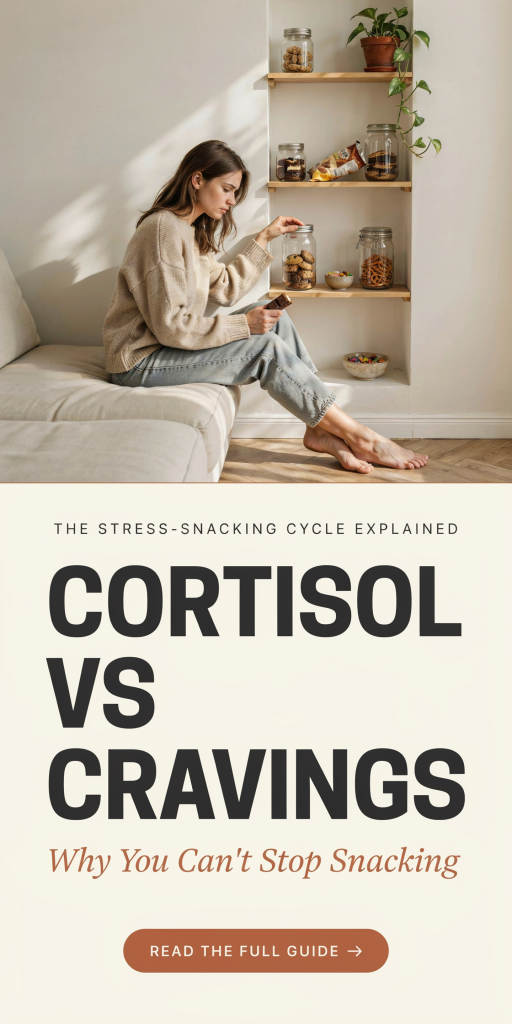
Short-Term Tactics: What To Do When A Stress-Driven Craving Hits
When a craving arrives, we don’t need to win by sheer force. We can use brief, evidence-based tactics that interrupt the cascade.
- Pause and label. Take a 60–90 second pause and name what you’re feeling: “I’m stressed and want something sweet.” Labeling emotions reduces amygdala reactivity and gives the prefrontal cortex a moment to re-engage.
- Use a 10–minute rule. Commit to waiting 10 minutes and do an alternative task, walk around the block, call a friend, stretch, or do a short breathing sequence. Many cravings dissipate or change intensity after that window.
- Choose protein or fiber-first. If hunger persists, pick a small portion of protein (Greek yogurt, a hard-boiled egg) or fiber (apple with nut butter) to stabilize blood sugar and blunt ghrelin signaling.
- Hydrate and move. A glass of water and a two-minute mobility routine both reduce cortisol acutely and shift attention.
- Keep a craving log. Note the time, emotion, context, and what you ate. Patterns emerge quickly and give us data to proactively change the environment or routines.
These tactics aren’t moralizing rules, they’re practical tools to create space between stress and the automatic snack response. Use them repeatedly and we’ll start to rewire the habit loop.
Long-Term Lifestyle Changes: Sleep, Movement, Nutrition, And Stress Resilience
Short-term tactics help, but lasting change requires altering baseline physiology and stress resilience. Four pillars deserve our attention.
- Sleep. Poor sleep elevates cortisol and ghrelin while lowering leptin (the satiety hormone), producing greater appetite and cravings for high-calorie foods. Aim for consistent sleep schedules and 7–9 hours per night. Even modest sleep improvement reduces late-night snacking impulses.
- Movement. Regular physical activity lowers baseline cortisol, improves insulin sensitivity, and enhances mood through endorphins and BDNF. We don’t need extreme workouts, consistent moderate exercise (30 minutes most days) is sufficient to produce meaningful hormonal shifts.
- Nutrition quality. Prioritize balanced meals with protein, healthy fats, fiber, and minimally processed carbohydrates. These combinations blunt post-meal glucose spikes, reduce insulin-driven rebounds, and promote sustained satiety. Plan for satisfying snacks that combine protein + fiber (e.g., hummus with veggies, cottage cheese and berries) so we’re less likely to reach for empty-calorie comfort foods.
- Stress-resilience practices. Build daily routines that reduce chronic stress: brief morning mindfulness, social connection, and weekly activities that replenish us (hobbies, nature time). Cognitive-behavioral approaches, reframing stressful thoughts, scheduled worry periods, also reduce persistent cortisol elevations.
Finally, consider professional support if stress or emotional eating feels out of control. Therapists trained in CBT or ACT, registered dietitians, and medical professionals can provide tailored plans and accountability. When we address lifestyle and mindset concurrently, cravings lose their biological and psychological momentum.
Conclusion
Understanding the biological machinery behind cravings, how cortisol, ghrelin, insulin, and dopamine interact, changes how we respond. It removes shame and replaces it with a plan: short-term tactics that interrupt the stress-to-snack sequence, and long-term lifestyle shifts that lower baseline cortisol and stabilize appetite.
We don’t need perfect willpower: we need systems. By redesigning our environment, practicing quick stress-reduction techniques, prioritizing sleep and balanced nutrition, and building daily resilience habits, we can reclaim control over snacking. Let’s treat cravings as signals to investigate and respond rather than failures to be punished, because once we do, the cycle loses much of its power.