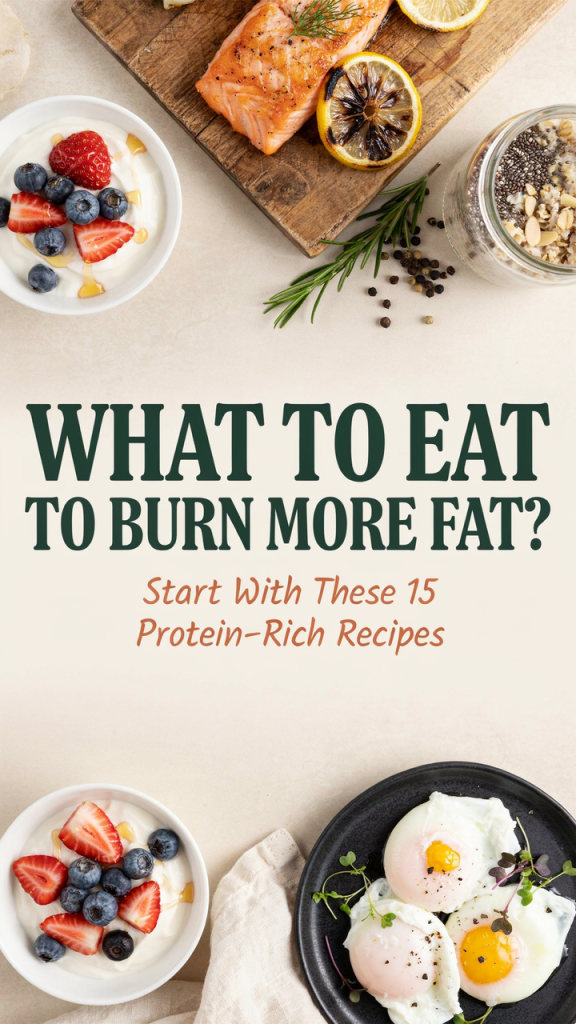
What Should I Eat to Burn More Fat? Start With These 15 Protein-Rich Recipes
Eating to support fat loss isn’t about extreme restriction — it’s about choosing nutrient-dense, satisfying foods that boost metabolism, preserve lean muscle, and keep hunger in check. Protein is one of the most powerful tools in that toolbox: it increases satiety, raises the thermic effect of food (the energy your body uses to digest), and helps retain muscle while you lose fat. Below you’ll find 15 protein-rich recipes — balanced, flavorful, and practical — to help you burn more fat without feeling deprived.
This guide explains the why behind the science, how to use these recipes within an overall plan, and gives step-by-step instructions so you can get cooking right away.
Why protein helps you burn more fat
- Protein boosts satiety more than carbs or fat, so you naturally eat fewer calories.
- It has a higher thermic effect (20–30% of calories used for digestion) compared with carbs (5–10%) and fats (0–3%). That means you burn more calories processing protein.
- Adequate protein protects against muscle loss during calorie deficit — preserving muscle keeps your resting metabolic rate higher.
- Protein supports recovery from workouts, allowing you to train harder and burn more calories overall.
Aim for roughly 0.6–1.0 grams of protein per pound of body weight (1.2–2.2 g/kg) depending on activity level and goals. These recipes are built to help you hit that target while staying full and satisfied.
How to use these recipes
- Rotate recipes across the week to keep meals interesting.
- Pair with non-starchy vegetables and moderate healthy fats for balanced plates.
- For fat loss, combine these meals with a slight calorie deficit (250–500 kcal/day) and resistance training 2–4 times per week.
- Use portion control: protein portions of 3–6 oz (85–170 g) cooked meat or the equivalent plant protein per meal are a good starting point.
Below are 15 protein-rich recipes — breakfast, lunch, dinner, snacks, and smoothies — each with ingredients and step-by-step instructions so you can start cooking immediately.
1. Greek Yogurt Berry Protein Parfait
Approx. protein: 20–28 g per serving
Ingredients
– 1 cup plain Greek yogurt (nonfat or 2%)
– 1/2 cup mixed berries (strawberries, blueberries, raspberries)
– 2 tbsp chopped nuts or seeds (almonds, walnuts, pumpkin seeds)
– 1 scoop (25–30 g) vanilla protein powder (optional for extra protein)
– 1 tsp honey or maple syrup (optional)
– 1 tbsp chia seeds (optional)
Instructions
1. In a bowl or jar, stir the protein powder into the Greek yogurt until smooth (if using).
2. Layer half the yogurt in the container, then add half the berries and half the nuts/seeds.
3. Add the remaining yogurt, top with berries, nuts, and chia seeds.
4. Drizzle honey if you want extra sweetness. Serve immediately or refrigerate for up to 12 hours.
2. Spinach-Feta Egg White Omelette
Approx. protein: 25–30 g per serving
Ingredients
– 4 egg whites + 1 whole egg (or 1 cup pasteurized egg whites)
– 1 cup fresh spinach, roughly chopped
– 2 tbsp crumbled feta cheese
– 1 tsp olive oil or cooking spray
– Salt and pepper to taste
– Optional: chopped tomato or onion
Instructions
1. Whisk the egg whites and whole egg with a pinch of salt and pepper.
2. Heat oil in a nonstick skillet over medium heat. Sauté onions (if using) until translucent, then add spinach and cook until wilted.
3. Pour the eggs over the spinach, tilt the pan so the eggs spread evenly.
4. Sprinkle feta over one half of the omelette. When the eggs are set, fold the omelette in half and slide onto a plate.
5. Serve with whole-grain toast or a side salad.
3. Cottage Cheese and Pineapple Power Bowl
Approx. protein: 20–28 g per serving
Ingredients
– 1 cup low-fat cottage cheese
– 1/2 cup fresh or canned pineapple chunks (in juice, drained)
– 2 tbsp chopped walnuts or pecans
– 1 tbsp ground flaxseed or hemp seeds
– Optional: a sprinkle of cinnamon or a drizzle of honey
Instructions
1. Spoon cottage cheese into a bowl.
2. Top with pineapple, nuts, flaxseed (or hemp), and a sprinkle of cinnamon.
3. Drizzle honey if desired and stir lightly. Serve chilled.
4. High-Protein Oat Pancakes (with protein powder)
Approx. protein: 25–35 g per serving (2–3 pancakes)
Ingredients
– 1 cup rolled oats
– 1 scoop vanilla or unflavored protein powder
– 1 banana, mashed
– 2 eggs
– 1/4 cup unsweetened almond milk (or milk of choice)
– 1 tsp baking powder
– 1/2 tsp cinnamon
– Cooking spray or 1 tsp coconut oil for the pan
Instructions
1. Blend oats in a food processor or blender until they become a fine flour.
2. In a bowl, combine oat flour, protein powder, baking powder, and cinnamon.
3. Whisk eggs, mashed banana, and almond milk in a separate bowl, then mix into dry ingredients to form a batter.
4. Heat a nonstick skillet over medium-low heat with cooking spray. Pour 1/4 cup batter per pancake.
5. Cook until bubbles form, flip, and cook until golden. Serve with fresh fruit or a dollop of Greek yogurt.
5. Turkey & Quinoa Power Bowl
Approx. protein: 30–40 g per serving
Ingredients
– 4 oz (115 g) lean ground turkey
– 1/2 cup cooked quinoa
– 1 cup mixed salad greens or baby spinach
– 1/4 cup cherry tomatoes, halved
– 1/4 avocado, sliced
– 1 tbsp olive oil
– 1 tsp lemon juice, salt, pepper, and paprika to taste
Instructions
1. Cook quinoa according to package directions and set aside.
2. In a nonstick skillet over medium heat, brown the turkey with paprika, salt, and pepper until fully cooked (about 6–8 minutes).
3. Toss salad greens with olive oil and lemon juice.
4. Layer quinoa, turkey, tomatoes, and avocado in a bowl on top of the greens.
5. Serve warm and enjoy.
6. Grilled Salmon with Lemon-Dill Quinoa
Approx. protein: 35–45 g per serving
Ingredients
– 5–6 oz salmon fillet
– 1/2 cup cooked quinoa
– 1 tbsp fresh dill, chopped (or 1 tsp dried)
– 1 tsp lemon zest + 1 tsp lemon juice
– 1 tsp olive oil
– Salt and pepper to taste
– Optional: steamed asparagus or green beans
Instructions
1. Preheat grill (or oven broiler) to medium-high. Pat salmon dry and season with salt, pepper, and lemon zest.
2. Grill salmon 4–6 minutes per side until flaky and cooked through. (If broiling, place under broiler 6–8 minutes).
3. While salmon cooks, toss cooked quinoa with dill, lemon juice, and olive oil. Season to taste.
4. Plate salmon over the quinoa and add steamed vegetables on the side.
5. Squeeze extra lemon over the salmon before serving.
7. Chicken, Broccoli & Bell Pepper Stir-Fry
Approx. protein: 32–40 g per serving
Ingredients
– 6 oz boneless, skinless chicken breast, thinly sliced
– 1 cup broccoli florets
– 1/2 red bell pepper, sliced
– 1/4 cup onion, sliced
– 1 tbsp low-sodium soy sauce or tamari
– 1 tbsp oyster sauce (optional)
– 1 tsp sesame oil
– 1 tsp olive oil or avocado oil
– 1 clove garlic, minced and 1/2 inch ginger, minced
Instructions
1. Heat oil in a wok or large skillet over medium-high heat. Add garlic and ginger, sauté 30 seconds.
2. Add chicken slices and stir-fry until nearly cooked through, about 4–5 minutes.
3. Add broccoli, bell pepper, and onion; continue cooking 3–4 minutes until veggies are crisp-tender.
4. Stir in soy sauce, oyster sauce, and sesame oil; toss to coat evenly.
5. Serve immediately over cauliflower rice or a small portion of brown rice.
8. Lentil and Vegetable Stew
Approx. protein: 18–24 g per serving (vegetarian)
Ingredients
– 1 cup dried green or brown lentils, rinsed
– 1 carrot, diced
– 1 celery stalk, diced
– 1/2 onion, diced
– 2 cups vegetable broth (low-sodium)
– 1 cup diced tomatoes (canned or fresh)
– 1 tsp ground cumin, 1/2 tsp smoked paprika
– 1 tbsp olive oil
– Salt and pepper to taste
– Optional: chopped parsley or spinach added at the end
Instructions
1. Heat olive oil in a large pot over medium heat. Sauté onion, carrot, and celery until softened (5–7 minutes).
2. Stir in cumin and smoked paprika for 30 seconds until fragrant.
3. Add lentils, diced tomatoes, and vegetable broth. Bring to a boil.
4. Reduce heat and simmer 25–30 minutes until lentils are tender. Add salt and pepper to taste.
5. Stir in chopped spinach or parsley just before serving for extra nutrients.
9. Tofu & Edamame Stir-Fry with Garlic-Ginger Sauce
Approx. protein: 22–30 g per serving (vegan)
Ingredients
– 7 oz (200 g) firm tofu, pressed and cubed
– 1/2 cup shelled edamame (frozen, thawed)
– 1 cup mixed vegetables (snap peas, bell pepper, carrots)
– 1 tbsp low-sodium soy sauce or tamari
– 1 tbsp rice vinegar, 1 tsp sesame oil
– 1 clove garlic minced, 1 tsp grated ginger
– 1 tsp cornstarch mixed with 1 tbsp water (optional for thickening)
– 1 tbsp oil for frying
Instructions
1. Press tofu to remove excess moisture, then cube.
2. Heat oil in a skillet over medium-high heat and fry tofu cubes until golden on all sides. Remove and set aside.
3. Add vegetables to the skillet and sauté until crisp-tender, 3–4 minutes.
4. Return tofu to the skillet along with edamame. Add soy sauce, rice vinegar, sesame oil, garlic, and ginger.
5. Stir in cornstarch slurry if you like a thicker sauce. Cook 1–2 minutes and serve over brown rice or cauliflower rice.
10. Shrimp & Zucchini Noodles with Pesto
Approx. protein: 28–34 g per serving
Ingredients
– 6 oz shrimp, peeled and deveined
– 2 medium zucchinis, spiralized into noodles
– 2 tbsp basil pesto (homemade or store-bought)
– 1 tsp olive oil
– 1 clove garlic, minced
– Salt, pepper, and crushed red pepper to taste
– Optional: grated Parmesan for garnish
Instructions
1. Heat olive oil in a skillet over medium heat, add garlic and shrimp. Cook shrimp 2–3 minutes per side until pink.
2. Remove shrimp, add zucchini noodles to the skillet and cook 1–2 minutes until just tender.
3. Reduce heat to low, return shrimp to the pan and stir in pesto until everything is evenly coated.
4. Season with salt, pepper, and crushed red pepper. Serve immediately with Parmesan if desired.
11. Black Bean & Sweet Potato Chili
Approx. protein: 18–24 g per serving (vegetarian)
Ingredients
– 1 medium sweet potato, peeled and cubed
– 1 can (15 oz) black beans, rinsed and drained
– 1/2 onion, diced
– 1 cup vegetable broth
– 1 can (14.5 oz) diced tomatoes
– 1 tsp chili powder, 1/2 tsp cumin
– 1 tbsp olive oil
– Salt and pepper to taste
– Optional: Greek yogurt or avocado for topping
Instructions
1. Heat oil in a pot and sauté onion until translucent.
2. Add cubed sweet potato, chili powder, and cumin; stir to coat.
3. Pour in diced tomatoes and vegetable broth. Bring to a boil, then simmer 15–20 minutes until sweet potatoes are tender.
4. Stir in black beans and heat through for another 5 minutes. Season to taste.
5. Serve with a dollop of Greek yogurt or sliced avocado.
12. Beef & Vegetable Lettuce Wraps
Approx. protein: 30–36 g per serving
Ingredients
– 6 oz lean ground beef (90% lean or leaner)
– 1/2 cup shredded carrots
– 1/2 cup bell pepper, diced
– 1 tbsp low-sodium soy sauce
– 1 tsp hoisin or a dash of honey (optional)
– 1 head butter or romaine lettuce, leaves separated
– 1 tsp sesame oil, 1 clove garlic minced
Instructions
1. Brown ground beef in a skillet with garlic and sesame oil. Drain any excess fat if needed.
2. Add carrots and bell pepper; cook until vegetables are tender-crisp, 3–4 minutes.
3. Stir in soy sauce and hoisin (or honey) and heat through.
4. Spoon beef mixture into lettuce leaves to form wraps. Fold and eat like tacos.
5. Serve with lime wedges or a side of steamed veggies.
13. Tuna & White Bean Salad
Approx. protein: 30–35 g per serving
Ingredients
– 1 can (5–6 oz) tuna in water, drained
– 1/2 cup canned white beans (cannellini), rinsed and drained
– 1/4 cup red onion, finely chopped
– 1 tbsp olive oil, 1 tsp lemon juice
– 1 tbsp chopped parsley
– Salt, pepper, and a pinch of red pepper flakes
Instructions
1. Flake tuna into a bowl and add white beans and chopped red onion.
2. Drizzle olive oil and lemon juice over the mixture. Add parsley and season to taste.
3. Toss gently to combine. Serve over mixed greens or on whole-grain toast for an open-faced sandwich.
14. Chickpea & Spinach Curry with Greek Yogurt
Approx. protein: 18–24 g per serving (vegetarian; higher protein if using Greek yogurt on top)
Ingredients
– 1 can chickpeas (15 oz), rinsed and drained
– 2 cups fresh spinach
– 1/2 onion, diced
– 1 can (14.5 oz) diced tomatoes
– 1 tsp curry powder, 1/2 tsp turmeric
– 1 tbsp olive oil
– 1/4 cup plain Greek yogurt for serving
– Salt and pepper to taste
Instructions
1. Heat oil in a pan and sauté onion until soft.
2. Add curry powder and turmeric and cook 30 seconds to release aroma.
3. Stir in tomatoes and chickpeas, simmer 10 minutes to allow flavors to meld.
4. Add spinach and cook until wilted. Season to taste.
5. Serve with a dollop of Greek yogurt and a side of brown rice or naan.
15. Protein Smoothie: Spinach, Banana & Pea Protein
Approx. protein: 25–35 g per serving
Ingredients
– 1 scoop pea protein powder (or whey if preferred)
– 1 cup unsweetened almond milk (or milk of choice)
– 1 banana (fresh or frozen)
– 1 cup fresh spinach
– 1 tbsp almond butter or peanut butter
– 1/2 cup ice (optional)
Instructions
1. Add all ingredients to a blender: milk, protein powder, banana, spinach, nut butter, and ice.
2. Blend until smooth and creamy, about 45–60 seconds.
3. Taste and adjust thickness with more milk or ice. Serve immediately.
Practical tips to maximize fat-burning results
H3: Balance protein with vegetables and healthy fats
– Pair each high-protein meal with plenty of non-starchy vegetables for fiber and volume, and include moderate healthy fats (olive oil, avocado, nuts) to improve satiety and support nutrient absorption.
H3: Time your protein around workouts
– Consuming protein within a few hours post-workout helps muscle repair and growth, which supports a higher metabolic rate.
H3: Stay hydrated and prioritize sleep
– Hydration supports metabolic processes and thermogenesis; poor sleep increases appetite and impairs fat loss hormones like leptin and ghrelin.
H3: Be consistent and patient
– Small, consistent changes produce sustainable fat loss. Use these recipes to make protein-rich eating habitual rather than temporary.
How to personalize portion sizes
- If you’re more active, aim for the higher end of the protein ranges listed. If you’re sedentary or trying to create a larger calorie deficit, choose smaller portions or combine recipes with lower-calorie vegetables.
- Track progress for 2–4 weeks and adjust portions based on energy, satiety, and rate of weight change.
Meal prep and time-saving ideas
- Batch-cook quinoa, grilled chicken, and hard-boiled eggs for quick assembly during the week.
- Freeze cooked portions of soups, stews, and chili for easy reheating.
- Pre-portion snack bowls (yogurt + nuts) for grab-and-go protein-rich snacks.
Conclusion
If your goal is to burn more fat, start by prioritizing protein across meals — it will help control appetite, preserve muscle, and raise the calories burned during digestion. These 15 protein-rich recipes give you a practical, delicious, and varied foundation to build a fat-loss–friendly meal plan. Mix and match breakfasts, lunches, dinners, and snacks while pairing them with vegetables, hydration, and consistent strength training.
Try 2–3 new recipes each week, track how you feel, and tweak portions to fit your goals. With flavorful meals that keep you full and energized, fat loss becomes a sustainable, achievable process — one healthy plate at a time. You’ve got this.