
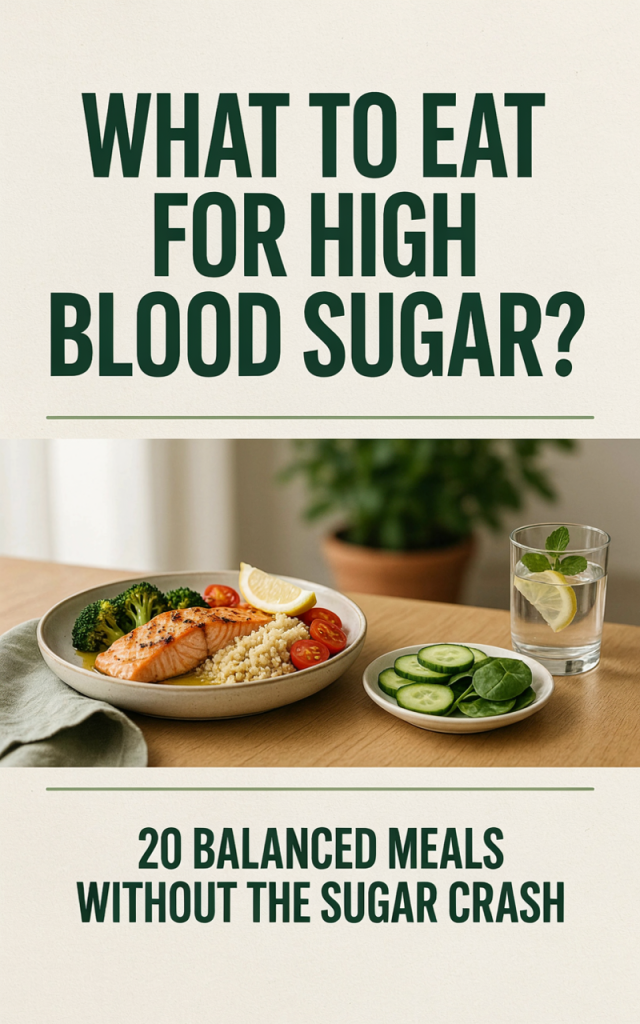
What Should I Eat for High Blood Sugar? 20 Balanced Meals Without the Sugar Crash
Introduction: Why the right meals matter for high blood sugar
If you’re managing high blood sugar—whether due to prediabetes, type 2 diabetes, or insulin resistance—what you eat matters more than just calories. The composition of a meal (carbohydrates, protein, fiber, and fat) strongly influences how quickly blood glucose rises and how long energy lasts. Meals that combine lean protein, healthy fats, and fiber-rich carbohydrates tend to blunt blood sugar spikes, reduce the risk of a mid-meal “sugar crash,” and help you feel satisfied longer.
This post gives you 20 balanced, diabetes-friendly meals designed to stabilize blood glucose, support overall nutrition, and stay delicious. Each entry includes a short rationale, a clear ingredients list, and step-by-step instructions so you can cook them at home. These are practical recipes and meal ideas—use them as a template and adapt portion sizes to your individual needs, blood sugar targets, and advice from your healthcare team.
Note: This article is informational, not medical advice. Talk with your doctor or registered dietitian to tailor these meals to your treatment plan.
20 Balanced Meals Without the Sugar Crash
1. Greek Yogurt Bowl with Berries and Walnuts
A protein- and probiotic-rich breakfast with low-glycemic berries and omega-3-containing walnuts.
Ingredients:
– 1 cup plain Greek yogurt (unsweetened)
– 1/3 cup mixed berries (blueberries, raspberries, or strawberries)
– 2 tbsp chopped walnuts
– 1 tsp chia seeds
– Optional: dash of cinnamon
Instructions:
1. Spoon Greek yogurt into a bowl.
2. Top with mixed berries and chopped walnuts.
3. Sprinkle chia seeds and cinnamon, if using. Stir gently and enjoy.
2. Spinach and Feta Omelet with Avocado
A low-carb, high-protein breakfast rich in healthy fats and fiber to stabilize morning glucose.
Ingredients:
– 2 eggs (or 1 egg + 2 egg whites)
– 1 cup fresh spinach, chopped
– 2 tbsp crumbled feta cheese
– 1/4 avocado, sliced
– 1 tsp olive oil
– Salt and pepper to taste
Instructions:
1. Heat oil in a nonstick skillet over medium heat; sauté spinach until wilted.
2. Whisk eggs with salt and pepper and pour over spinach.
3. Sprinkle feta on top, cook until set, fold omelet in half.
4. Plate and top with avocado slices.
3. Steel-Cut Oats with Flax and Cinnamon
A slow-digesting whole grain breakfast that provides sustained energy and soluble fiber.
Ingredients:
– 1/2 cup steel-cut oats
– 1 cup water + 1/2 cup unsweetened almond milk
– 1 tbsp ground flaxseed
– 1/2 tsp cinnamon
– 1/4 cup chopped apple or pear (optional)
– Pinch of salt
Instructions:
1. Combine oats, water, almond milk, and salt in a pot; bring to a simmer.
2. Cook on low for 15–25 minutes, stirring occasionally, until creamy.
3. Stir in flaxseed, cinnamon, and apple or pear if using. Serve warm.
4. Quinoa Salad with Chickpeas and Veggies
A fiber-rich plant-forward lunch with complete protein from quinoa and balanced carbs from chickpeas.
Ingredients:
– 1 cup cooked quinoa (cooled)
– 1/2 cup canned chickpeas, rinsed and drained
– 1/2 cup diced cucumber
– 1/2 cup cherry tomatoes, halved
– 2 tbsp chopped parsley
– 1 tbsp olive oil
– 1 tbsp lemon juice
– Salt and pepper to taste
Instructions:
1. In a bowl, combine quinoa, chickpeas, cucumber, tomatoes, and parsley.
2. Whisk olive oil, lemon juice, salt, and pepper; pour over salad.
3. Toss gently to combine and serve chilled or at room temperature.
5. Grilled Salmon with Roasted Brussels Sprouts
A high-protein, omega-3-rich dinner with non-starchy vegetables to keep blood sugar stable.
Ingredients:
– 4–6 oz salmon fillet
– 1 cup Brussels sprouts, halved
– 1 tbsp olive oil, divided
– 1/2 lemon
– Salt, pepper, and smoked paprika
Instructions:
1. Preheat oven to 425°F (220°C). Toss Brussels sprouts with 1/2 tbsp olive oil, salt, and pepper; roast 20–25 minutes.
2. Season salmon with salt, pepper, and smoked paprika.
3. Heat remaining olive oil in a skillet over medium-high heat; sear salmon 3–4 minutes per side until cooked through.
4. Plate salmon with roasted Brussels sprouts and squeeze lemon over top.
6. Turkey and Veggie Lettuce Wraps
A low-carb lunch or dinner that pairs lean protein with crunchy veggies and healthy fats.
Ingredients:
– 6 large butter lettuce leaves
– 6 oz ground turkey
– 1/2 bell pepper, diced
– 1/4 cup grated carrot
– 1 tbsp low-sodium soy sauce or tamari
– 1 tsp sesame oil
– Optional: chopped green onions, chili flakes
Instructions:
1. Cook ground turkey in a skillet with sesame oil until no longer pink.
2. Add bell pepper and carrot; cook until tender. Stir in soy sauce and heat through.
3. Spoon turkey mixture into lettuce leaves; top with green onions and chili flakes if desired. Roll and eat.
7. Lentil Soup with Kale and Turmeric
Slow-digesting lentils plus antioxidant-rich kale make a hearty, blood-sugar-friendly meal.
Ingredients:
– 1 cup dried lentils, rinsed
– 4 cups low-sodium vegetable broth
– 1 cup chopped kale
– 1 carrot, diced
– 1 celery stalk, diced
– 1 tsp turmeric
– 1 tbsp olive oil
– Salt and pepper to taste
Instructions:
1. Heat oil in a pot; sauté carrot and celery until softened.
2. Add lentils, broth, and turmeric; bring to a boil.
3. Reduce heat and simmer 20–25 minutes until lentils are tender.
4. Stir in kale and cook 5 minutes more. Season and serve.
8. Baked Chicken Breast with Cauliflower Mash
A satisfying low-carb dinner where cauliflower provides a creamy, low-glycemic substitute for potatoes.
Ingredients:
– 4–6 oz boneless, skinless chicken breast
– 1/2 head cauliflower, cut into florets
– 1 tbsp olive oil
– 1 clove garlic, minced
– 1 tbsp Greek yogurt (optional, for creaminess)
– Salt, pepper, dried thyme
Instructions:
1. Preheat oven to 400°F (200°C). Rub chicken with olive oil, salt, pepper, and thyme; bake 20–25 minutes until cooked.
2. Steam cauliflower until very tender, about 10–12 minutes.
3. Blend cauliflower with garlic and Greek yogurt until smooth; season to taste.
4. Serve chicken sliced over cauliflower mash.
9. Sardine and Avocado Toast on Whole-Grain Crispbread
Quick, protein- and omega-3-rich snack or light meal with fiber from whole-grain crispbread.
Ingredients:
– 1–2 crispbreads (low-sugar whole-grain)
– 1 small avocado, mashed
– 1 can sardines in water or olive oil, drained
– Lemon zest and pepper to taste
Instructions:
1. Spread mashed avocado on crispbread(s).
2. Top with sardines, lemon zest, and cracked black pepper.
3. Eat immediately to preserve crispness.
10. Tofu Stir-Fry with Broccoli and Bell Pepper
A plant-based complete protein with non-starchy vegetables and a light savory sauce.
Ingredients:
– 6 oz firm tofu, pressed and cubed
– 1 cup broccoli florets
– 1/2 bell pepper, sliced
– 1 tbsp low-sodium soy sauce or tamari
– 1 tsp rice vinegar
– 1 tsp sesame oil
– 1 tsp grated ginger
Instructions:
1. Heat sesame oil in a skillet; brown tofu cubes until golden on all sides.
2. Add broccoli and bell pepper; stir-fry until crisp-tender.
3. Mix soy sauce, vinegar, and ginger; pour over stir-fry and cook 1–2 minutes more.
4. Serve hot. Optionally add a small scoop of brown rice if you want more carbs.
11. Cottage Cheese with Tomato and Cucumber
A simple, protein-packed lunch that’s low in carbs and high in satiety.
Ingredients:
– 1 cup low-fat cottage cheese
– 1/2 cucumber, diced
– 1 medium tomato, diced
– 1 tbsp chopped basil or dill
– Salt and pepper to taste
Instructions:
1. Combine cottage cheese, cucumber, and tomato in a bowl.
2. Stir in herbs, season with salt and pepper.
3. Serve chilled.
12. Turkey Chili with Black Beans and Vegetables
A hearty, fiber-rich chili that pairs lean protein with legumes for long-lasting energy.
Ingredients:
– 8 oz ground turkey
– 1/2 cup canned black beans, rinsed
– 1/2 cup diced tomatoes (canned or fresh)
– 1/2 onion, diced
– 1 garlic clove, minced
– 1 tsp chili powder
– 1 tbsp olive oil
– Salt and pepper to taste
Instructions:
1. Heat oil in a pot; sauté onion and garlic until soft.
2. Add ground turkey and brown.
3. Stir in tomatoes, beans, and chili powder; simmer 15–20 minutes.
4. Season and serve hot. Garnish with a dollop of Greek yogurt if desired.
13. Shrimp and Zucchini Noodle “Scampi”
Low-carb, flavorful dinner with protein from shrimp and fiber from spiralized zucchini.
Ingredients:
– 6–8 oz shrimp, peeled and deveined
– 2 medium zucchinis, spiralized
– 1 tbsp olive oil
– 1 garlic clove, minced
– 1/4 lemon, juiced
– Red pepper flakes (optional)
– Salt and pepper
Instructions:
1. Heat olive oil in a skillet; sauté garlic until fragrant.
2. Add shrimp, cook until pink, about 2–3 minutes per side.
3. Toss in zucchini noodles and lemon juice; cook 1–2 minutes until just warmed.
4. Season and serve immediately to avoid soggy noodles.
14. Beef and Vegetable Kebabs with Quinoa Pilaf
Balanced plate with lean beef for iron and quinoa for complex carbs and fiber.
Ingredients:
– 6 oz lean beef, cubed
– 1/2 bell pepper, cut into chunks
– 1/2 small red onion, chunked
– 1/2 cup cooked quinoa
– 1 tsp olive oil
– Salt, pepper, and dried oregano
Instructions:
1. Thread beef, bell pepper, and onion onto skewers; season with salt, pepper, and oregano.
2. Grill or broil kebabs until beef is cooked to preference.
3. Serve with cooked quinoa drizzled with a bit of olive oil.
15. Black Bean and Sweet Potato Buddha Bowl
A fiber- and nutrient-dense bowl with low-glycemic sweet potato in moderate portions.
Ingredients:
– 1/2 cup roasted sweet potato cubes (cooled)
– 1/2 cup canned black beans, rinsed
– 1 cup mixed greens
– 1/4 avocado, sliced
– 1 tbsp olive oil and lemon juice dressing
– Salt and pepper
Instructions:
1. Arrange mixed greens in a bowl.
2. Top with sweet potato cubes, black beans, and avocado.
3. Drizzle with dressing and season. Toss slightly before eating.
16. Smoked Salmon and Cottage Cheese Wrap (Whole-Grain)
A portable, protein-rich lunch with healthy fats and fiber.
Ingredients:
– 1 small whole-grain wrap or flatbread
– 3–4 slices smoked salmon
– 1/2 cup cottage cheese
– 1/4 cup cucumber slices
– Handful of baby spinach
– Black pepper
Instructions:
1. Spread cottage cheese on the wrap.
2. Layer smoked salmon, cucumber, and spinach.
3. Roll tightly and slice in half.
17. Eggplant and Chickpea Stew with Turmeric
A warming, low-glycemic vegetarian dinner with lots of fiber and flavor.
Ingredients:
– 1 medium eggplant, cubed
– 1 cup canned chickpeas, rinsed
– 1 cup diced tomatoes
– 1 small onion, diced
– 1 tsp turmeric
– 1 tbsp olive oil
– Salt and pepper
Instructions:
1. Sauté onion in olive oil until translucent.
2. Add eggplant and cook until slightly softened.
3. Stir in chickpeas, tomatoes, and turmeric; simmer 15–20 minutes until flavors meld.
4. Season and serve hot.
18. Grilled Chicken Caesar Salad (Light Dressing)
A classic salad made blood-sugar-friendly by trimming carbs and choosing a lighter dressing.
Ingredients:
– 4–6 oz grilled chicken breast, sliced
– 3 cups romaine lettuce, chopped
– 2 tbsp grated Parmesan
– 1 tbsp plain Greek yogurt
– 1 tsp lemon juice
– 1 tsp Dijon mustard
– Salt and pepper
Instructions:
1. Whisk Greek yogurt, lemon juice, Dijon, salt, and pepper to make dressing.
2. Toss romaine with dressing and Parmesan.
3. Top with sliced grilled chicken and serve.
19. Almond-Crusted Cod with Asparagus
Lean fish coated with nuts for healthy fats, paired with fiber-rich asparagus.
Ingredients:
– 4–6 oz cod fillet
– 2 tbsp finely chopped almonds
– 1 egg white, beaten
– 1 tsp olive oil
– 1 cup asparagus spears
– Salt and pepper
Instructions:
1. Preheat oven to 400°F (200°C). Dip cod in egg white, press into chopped almonds.
2. Drizzle cod with olive oil, place on baking sheet; bake 12–15 minutes until flaky.
3. Roast or steam asparagus until tender; season and serve with cod.
20. Mushroom and Barley Risotto (Light)
A whole-grain risotto-like meal using barley for lower glycemic impact and mushrooms for umami.
Ingredients:
– 3/4 cup pearl barley
– 4 cups low-sodium vegetable broth
– 1 cup sliced mushrooms
– 1 small shallot, minced
– 1 tbsp olive oil
– 2 tbsp grated Parmesan (optional)
– Salt and pepper
Instructions:
1. Heat olive oil in a pot; sauté shallot and mushrooms until soft.
2. Add barley and stir to coat. Pour in broth 1 cup at a time, stirring occasionally, until barley is tender (about 25–30 minutes).
3. Stir in Parmesan if using, season, and serve warm.
How these meals help prevent the sugar crash (Practical tips)
- Combine macronutrients: Each meal balances protein, fiber, and healthy fats to slow digestion and blunt glucose spikes.
- Favor low-GI carbs: Whole grains, legumes, and non-starchy vegetables release glucose slowly.
- Control portions of starchy carbs: If adding rice, potatoes, or bread, keep servings modest and pair with protein/fiber.
- Avoid added sugars: Ditch sweetened drinks and sugary sauces. Read labels for hidden sugars.
- Time meals consistently: Regular meal timing helps your body manage blood glucose more predictably.
- Hydration and activity: Water and a short walk after meals can help lower post-meal glucose peaks.
- Monitor and personalize: Use a glucose meter or continuous glucose monitor (CGM) if recommended; everyone responds differently to foods.
Quick meal-prep strategies
- Batch-cook proteins: Roast several chicken breasts, bake salmon, or cook a pot of lentils to use across multiple meals.
- Pre-chop veggies: Store chopped peppers, carrots, and greens for fast salads and stir-fries.
- Portion and freeze: Prepare single-serving meals like chili or soup and freeze for busy days.
- Keep healthy staples on hand: Greek yogurt, canned beans, whole grains, nuts, and olive oil make quick balanced plates.
Conclusion: Choose balance, not deprivation
Managing high blood sugar doesn’t mean bland, restrictive eating. The right mix of protein, fiber, healthy fats, and minimally processed carbohydrates can keep your blood glucose steady, curb hunger, and help you feel energetic throughout the day. The 20 meals above are practical, varied, and designed to prevent the sugar crash while supporting overall nutrition. Use them as inspiration, adapt flavors and portions to your preferences and health goals, and consult your healthcare team for personalized guidance.
Small, consistent changes in meals and meal timing add up—start with one or two of these recipes this week and notice how you feel. You’re taking a powerful step toward better blood sugar control, and that matters.

