What Does a Balanced High-Protein Breakfast Look Like?
A balanced high-protein breakfast sets the tone for your day: it supports steady energy, helps control appetite, protects and builds muscle, and can improve focus and mood. But “high-protein” doesn’t mean you should skip carbs or fats—balance across macronutrients and fiber is what makes a breakfast both satisfying and nutritious. This article explains what a balanced high-protein breakfast actually looks like, how much protein to aim for, building principles, practical tips, and 12 concrete, tasty breakfast recipes you can make at home. Each recipe includes ingredients and step-by-step instructions so you can start tomorrow morning with confidence.
Why protein matters at breakfast
Protein is more than “muscle food.” At breakfast, it:
- Promotes satiety and reduces mid-morning snacking.
- Stimulates muscle protein synthesis—especially important after resistance training or overnight fasting.
- Helps regulate blood sugar by slowing carbohydrate absorption.
- Supports essential functions like immune health and hormone production.
Aim for a breakfast that provides a meaningful portion of your daily protein needs rather than only empty calories. For most adults, that’s roughly 20–40 grams of protein at breakfast, depending on body size, activity level, and goals.
How much protein should you target?
- Sedentary adults: 20–25 grams per meal is a good baseline.
- Active adults and those resistance-training: 25–40 grams per meal to support recovery and muscle maintenance.
- Older adults: aim toward the higher end (30–40 g) to counter age-related muscle loss.
These are general guidelines—individual needs vary. If you have specific medical conditions, consult a registered dietitian or healthcare professional.
What makes a breakfast “balanced”?
A balanced high-protein breakfast includes:
– A quality protein source (animal or plant).
– Whole-food carbohydrates for energy and fiber (fruit, whole grains, vegetables).
– Healthy fats to support satiety and nutrient absorption (avocado, nuts, seeds, olive oil).
– Fiber to promote fullness and stable blood sugar.
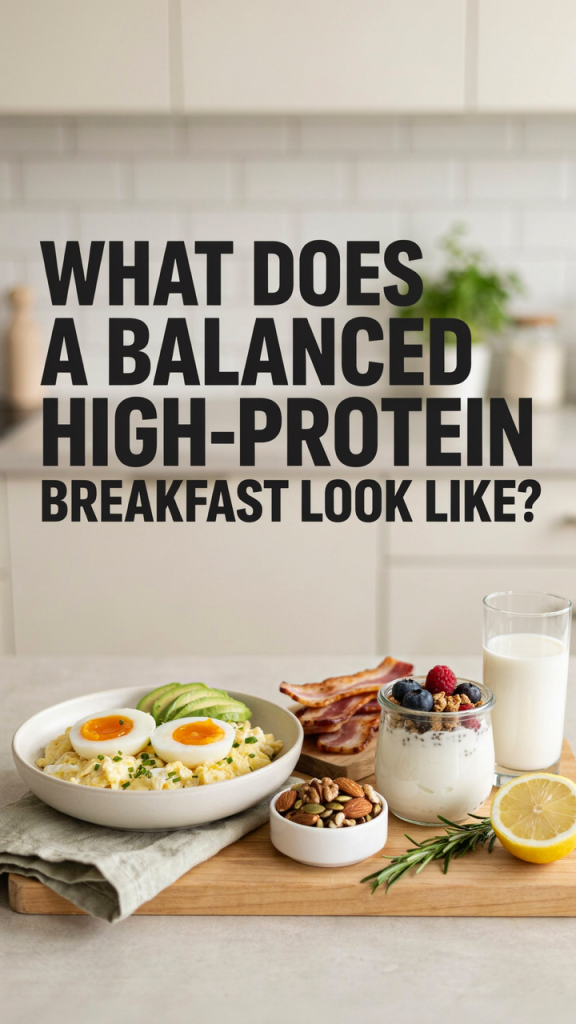
Think in plate terms: roughly one-quarter protein, one-quarter healthy fats (or small amounts distributed), and about half fiber-rich carbs and vegetables. That visual helps create a meal that’s both nutritious and sustainably filling.
Building rules: simple and flexible
H3: Key rules to build any balanced high-protein breakfast
– Start with a protein: eggs, Greek yogurt, cottage cheese, tofu, tempeh, poultry, fish, legumes, or a scoop of protein powder.
– Add whole-food carbs: oats, whole-grain bread, quinoa, fruit, or starchy vegetables.
– Include healthy fat and fiber: avocado, nuts, seeds, or olive oil plus vegetables or fruit.
– Aim for variety across the week to cover micronutrient needs.
– Keep portions realistic: balanced does not mean oversized.
H3: Quick swaps for dietary needs
– Vegetarian: eggs, dairy, legumes, soy, and whole grains.
– Vegan: tofu, tempeh, legumes, chickpea flour, nut/seed butters, and protein powders.
– Gluten-free: oats (certified GF), quinoa, rice-based recipes, chickpea pancakes.
– Dairy-free: use plant-based yogurts and milk, or cottage cheese alternatives.
12 High-Protein Breakfast Ideas and Recipes
Below are 12 complete breakfast recipes that balance protein, carbs, fats, and fiber. Each recipe lists ingredients and numbered instructions. Protein estimates are approximate per serving to help you choose according to your needs.
1) Veggie Omelette with Feta and Spinach
Estimated protein: ~25–28 g per serving
Ingredients:
– 3 large eggs (or 2 eggs + 1 egg white)
– 1 cup fresh spinach, roughly chopped
– 1/4 cup diced bell pepper
– 1–2 tbsp crumbled feta cheese
– 1 tsp olive oil or cooking spray
– Salt and pepper to taste
Instructions:
1. Whisk eggs with a pinch of salt and pepper.
2. Heat oil in a nonstick skillet over medium heat. Sauté bell pepper 2–3 minutes until softened.
3. Add spinach and cook until wilted.
4. Pour beaten eggs over vegetables, reduce heat to medium-low, and let set for 1–2 minutes.
5. Sprinkle feta on one half, fold the omelette, and cook another minute until eggs are cooked through.
6. Serve with a slice of whole-grain toast or half an avocado.
2) Greek Yogurt Parfait with Nuts & Berries
Estimated protein: ~20–28 g depending on yogurt choice
Ingredients:
– 1 cup plain Greek yogurt (choose 2% or 0% based on preference)
– 1/2 cup mixed berries (fresh or thawed)
– 2 tbsp chopped walnuts or almonds
– 2 tbsp rolled oats or granola (optional)
– 1 tsp honey or maple (optional)
Instructions:
1. Spoon half the yogurt into a bowl or jar.
2. Add half the berries and sprinkle with half the nuts and oats.
3. Layer the remaining yogurt, berries, and nuts.
4. Drizzle with honey if desired and serve immediately.
3) Green Protein Smoothie
Estimated protein: ~30 g (with protein powder)
Ingredients:
– 1 cup unsweetened almond milk (or preferred milk)
– 1/2 cup plain Greek yogurt
– 1 scoop whey or plant-based protein powder (20–25 g protein per scoop)
– 1 small banana or 1/2 cup frozen mango
– 1 cup fresh spinach
– 1 tbsp flaxseed or chia seeds
– Ice as desired
Instructions:
1. Add all ingredients to a blender.
2. Blend until smooth, adjusting thickness with extra milk or ice.
3. Taste and adjust sweetness; pour into a glass and enjoy within an hour.
4) Cottage Cheese Breakfast Bowl with Fruit and Seeds
Estimated protein: ~25–30 g
Ingredients:
– 1 cup low-fat cottage cheese
– 1/2 cup pineapple chunks or sliced peach
– 1 tbsp chia seeds or hemp seeds
– 1 tbsp chopped almonds
– A sprinkle of cinnamon (optional)
Instructions:
1. Spoon cottage cheese into a bowl.
2. Top with fruit, seeds, and nuts.
3. Sprinkle cinnamon if using, stir lightly, and eat chilled.
5) Protein Overnight Oats (Greek Yogurt + Oats)
Estimated protein: ~30–35 g
Ingredients:
– 1/2 cup rolled oats
– 1/2 cup plain Greek yogurt
– 1/2 cup milk (dairy or plant)
– 1 scoop protein powder (vanilla or unflavored)
– 1/2 cup berries
– 1 tbsp almond butter or chopped nuts
Instructions:
1. In a jar, combine oats, Greek yogurt, and milk.
2. Stir in protein powder until evenly mixed.
3. Add berries and almond butter on top, cover, and refrigerate overnight.
4. In the morning, stir and adjust consistency with more milk if needed. Top with extra fruit or nuts to serve.
6) Savory Chickpea Flour Pancake (Besan Cheela) with Veggies
Estimated protein: ~18–22 g per large pancake
Ingredients:
– 1 cup chickpea flour (besan)
– 1 cup water (more as needed)
– 1/2 cup finely chopped onion, tomato, and spinach or cilantro
– 1/2 tsp turmeric, 1/4 tsp cumin, salt and pepper to taste
– 1 tbsp olive oil for cooking
Instructions:
1. Whisk chickpea flour with water to a pourable pancake batter consistency; add spices.
2. Stir in chopped vegetables.
3. Heat oil in a skillet over medium heat.
4. Pour a ladle of batter, spread thin, and cook until edges set.
5. Flip and cook the other side 1–2 minutes until golden.
6. Serve with yogurt or chutney and a side of fruit.
7) Smoked Salmon and Avocado on Whole-Grain Toast
Estimated protein: ~20–24 g
Ingredients:
– 2 slices whole-grain bread, toasted
– 2–3 oz smoked salmon
– 1/2 avocado, mashed
– 1 tbsp light cream cheese or Greek yogurt (optional)
– Lemon wedge, dill, and black pepper
Instructions:
1. Spread cream cheese or a thin layer of Greek yogurt on toast if using.
2. Top with mashed avocado.
3. Layer smoked salmon slices, squeeze lemon, and sprinkle dill and pepper.
4. Serve with a side of sliced cucumber or tomatoes.
8) Tofu Scramble with Black Beans and Salsa (Vegan)
Estimated protein: ~25–28 g
Ingredients:
– 1 block (7–8 oz) extra-firm tofu, crumbled
– 1/2 cup cooked black beans
– 1/2 cup chopped bell pepper and onion
– 1 tbsp nutritional yeast (optional)
– 1/2 tsp turmeric, salt, pepper
– 1 tbsp olive oil
– 2 tbsp salsa and cilantro to serve
Instructions:
1. Heat oil in a skillet and sauté bell pepper and onion until softened.
2. Add crumbled tofu, turmeric, and nutritional yeast. Cook 3–5 minutes.
3. Stir in black beans and cook until warmed through.
4. Season with salt and pepper; serve with salsa and cilantro on top or on a whole-grain tortilla.
9) Quinoa Breakfast Bowl with Egg and Vegetables
Estimated protein: ~22–28 g
Ingredients:
– 1 cup cooked quinoa
– 1–2 large eggs (poached, fried, or soft-boiled)
– 1/2 cup sautéed mushrooms and spinach
– 1 tbsp olive oil
– Salt, pepper, and a splash of hot sauce (optional)
Instructions:
1. Reheat cooked quinoa in a skillet with a little olive oil.
2. Sauté mushrooms and spinach separately until tender.
3. Cook eggs to your liking.
4. Assemble quinoa in a bowl, top with vegetables and the egg, season, and serve.
10) Protein Pancakes (Banana, Oats, Egg, and Protein Powder)
Estimated protein: ~25–30 g for 2–3 pancakes
Ingredients:
– 1 ripe banana
– 2 eggs
– 1/3 cup rolled oats
– 1 scoop protein powder (optional)
– 1/2 tsp baking powder, a pinch of cinnamon
– 1 tsp coconut oil for cooking
– Berries or nut butter for topping
Instructions:
1. Blend banana, eggs, oats, protein powder, baking powder, and cinnamon until smooth.
2. Heat coconut oil in a nonstick skillet over medium heat.
3. Pour small rounds of batter and cook 2–3 minutes per side until golden.
4. Stack pancakes, top with berries or nut butter, and serve.
11) Breakfast Burrito with Turkey, Eggs, and Black Beans
Estimated protein: ~35–40 g
Ingredients:
– 1 whole-grain tortilla (large)
– 2 large eggs, scrambled
– 3–4 oz cooked lean turkey breast or turkey sausage
– 1/4 cup black beans
– 2 tbsp shredded cheese (optional)
– Salsa and spinach or mixed greens
Instructions:
1. Warm tortilla briefly in a skillet.
2. Scramble eggs and heat turkey and black beans together.
3. Layer eggs, turkey, beans, cheese, salsa, and greens on the tortilla.
4. Roll into a burrito and toast seam-side down in a skillet 1–2 minutes to seal. Slice and serve.
12) Chia Seed Pudding with Greek Yogurt and Protein Powder
Estimated protein: ~25–30 g (with added protein powder)
Ingredients:
– 3 tbsp chia seeds
– 1 cup milk (dairy or plant)
– 1/2 cup plain Greek yogurt
– 1 scoop protein powder (vanilla or unflavored)
– 1/2 cup sliced fruit and 1 tbsp nut butter or nuts
Instructions:
1. In a jar, whisk chia seeds with milk and protein powder until combined.
2. Let sit 10 minutes, stir again, then refrigerate at least 2 hours or overnight.
3. Before serving, stir in Greek yogurt and top with fruit and nut butter.
Practical tips, substitutions, and pantry staples
H3: Quick substitutions
– No Greek yogurt? Use cottage cheese or plant-based yogurt plus extra seeds for protein.
– No eggs? Try tofu scramble or chickpea pancake.
– No time in the morning? Prepare overnight oats, chia pudding, or pre-make burritos to reheat.
H3: Pantry staples to always have
– Eggs, plain Greek yogurt, cottage cheese
– Rolled oats, quinoa
– Canned beans (black, chickpea)
– Nut butters, nuts, seeds (chia, flax, hemp)
– Protein powder (whey or plant-based) for smoothies and recipes
– Canned tuna/salmon or smoked salmon for a quick protein boost
H3: Prep strategies
– Batch-cook quinoa or roasted veggies on weekends.
– Make a container of overnight oats or chia pudding for 3–4 days.
– Pre-chop veggies for omelettes and scrambles.
– Make breakfast “kits” (portioned nuts, fruit, and yogurt) to grab-and-go.
Who benefits most from a high-protein breakfast?
- People trying to lose or maintain weight often find protein reduces total daily calorie intake by decreasing hunger.
- Athletes and active people benefit from protein early in the day for muscle repair and energy.
- Older adults benefit from higher protein to preserve lean mass.
- Anyone who frequently snacks mid-morning can reduce cravings with a balanced protein-rich meal.
When to watch your intake
- Kidney disease and certain metabolic conditions may require protein adjustments—consult a healthcare provider.
- If you’re on a low-calorie plan, balance protein with calories from carbs and fats to avoid nutrient shortfalls.
Conclusion
A balanced high-protein breakfast is simple, flexible, and flavorful. It starts with a meaningful protein source and pairs it with fiber-rich carbs, healthy fats, and vegetables or fruit. Aim for roughly 20–40 grams of protein depending on your needs, and choose whole-food options where possible. Use the 12 recipes above as an easy rotation to keep mornings varied and satisfying—each one is built to deliver protein, steady energy, and long-lasting fullness. Start small: pick one recipe to try this week, tweak it to your taste, and watch how a balanced, protein-rich breakfast can transform your mornings. You’ve got this—breakfast is a powerful habit, and it’s one change that pays off all day long.