What Should I Eat If I’m Always Hungry?
Feeling hungry all the time is frustrating. It’s distracting, can sabotage weight and health goals, and makes social life — and productivity — harder. But constant hunger isn’t a moral failing or simply a lack of willpower. It’s usually a sign that something in your diet, routine, or biology needs adjustment.
This guide explains why you might be feeling hungry all the time, which foods and meal patterns are most effective at curbing persistent appetite, and practical recipes and strategies you can use starting today. Read on for science-backed, approachable advice to feel satisfied, energized, and in control.
Why am I always hungry? Common causes
Understanding the cause helps you pick the right solution. Here are common drivers of constant hunger:
Low protein intake
Protein is the most satiating macronutrient. Meals low in protein leave you hungry sooner.
Low fiber and low-volume meals
Fiber and high-water foods (vegetables, broth-based soups) add volume and slow digestion. Refined carbs and low-volume meals pass through quickly.
Too many simple carbohydrates
Sugary drinks, pastries, and white bread cause blood sugar spikes then crashes, triggering hunger sooner.
Inadequate healthy fats
Fat slows gastric emptying and supports long-lasting satiety. Diets too low in fat can leave you craving food more often.
Dehydration and thirst
Thirst can masquerade as hunger. Even mild dehydration can increase perceived hunger.
Sleep deprivation
Poor sleep raises ghrelin (hunger hormone) and lowers leptin (satiety hormone), increasing appetite.
Stress and emotional eating
Cortisol and emotional triggers can increase cravings, particularly for high-sugar or high-fat comfort foods.
High energy expenditure
If you exercise a lot or have a physically demanding job, you may simply need more calories — particularly protein and carbohydrate around workouts.
Medications and medical conditions
Certain drugs (some antidepressants, antipsychotics, corticosteroids) increase appetite. Conditions like hyperthyroidism, diabetes or malabsorption disorders may also cause increased hunger. If hunger is extreme, unexplained, or accompanied by weight loss, medical evaluation is important.
The core principles to stop feeling hungry all the time
Use these evidence-based principles as your checklist when designing meals and snacks:
- Prioritize protein at each meal (aim ~20–35 g per main meal; 10–20 g per snack depending on needs).
- Include fiber-rich carbohydrates (vegetables, legumes, whole grains) — aim for 25–38 g of fiber/day for most adults.
- Add a source of healthy fat (olive oil, avocado, nuts, seeds) to slow digestion.
- Choose high-volume, low-energy-dense foods (vegetables, broth-based soups, salads).
- Drink water regularly and begin meals with a glass of water.
- Structure meals and snacks to avoid extremes of hunger that lead to overeating; consider balanced snacks if you’re more active.
- Get adequate sleep and manage stress.
- Strength training preserves/grows muscle mass which helps regulate appetite and metabolic health.
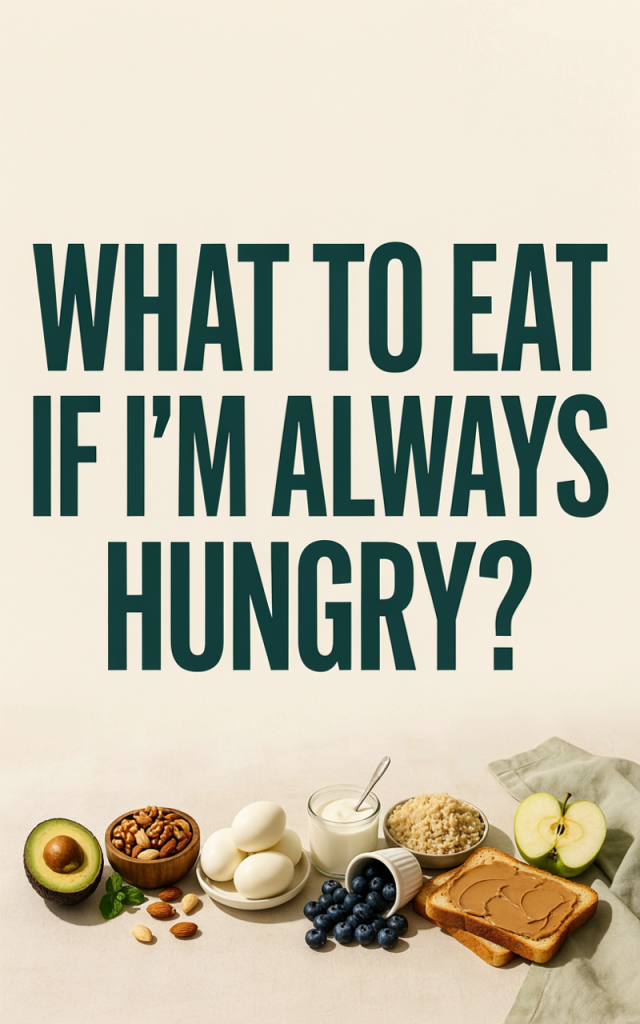
Foods to eat when you’re always hungry (high-satiety choices)
Below are categories of foods that reliably increase fullness, plus examples and how to use them.
Protein-rich foods
- Lean poultry, fish, eggs
- Greek yogurt, cottage cheese
- Tofu, tempeh, edamame
- Legumes: lentils, chickpeas, black beans
- Lean beef, pork, game meats
- Protein powders (whey, pea, soy) for convenience
Why: Protein increases fullness hormones and reduces ghrelin.
Fiber-rich whole foods
- Vegetables (broccoli, Brussels sprouts, leafy greens)
- Fruits (apples, pears, berries)
- Whole grains (oats, barley, brown rice, quinoa)
- Legumes and pulses
- Nuts, seeds
Why: Fiber increases volume, slows digestion, and stabilizes blood sugar.
Healthy fats (in moderation)
- Avocado
- Olive oil
- Nuts and nut butters
- Fatty fish (salmon, mackerel)
- Seeds (chia, flax, hemp)
Why: Fats slow gastric emptying and add flavor and caloric density to prevent early hunger. Use moderate amounts.
High-volume, low-calorie foods
- Leafy greens and cruciferous vegetables
- Vegetable-based soups
- Air-popped popcorn
- Zucchini, tomatoes, cucumber
Why: These add bulk without a lot of calories, promoting fullness.
Fermented and probiotic foods
- Yogurt with live cultures
- Kefir
- Kimchi, sauerkraut
Why: Gut health affects appetite regulation for some people.
Foods to limit when you’re constantly hungry
- Sugary drinks and fruit juices — liquid calories spike blood sugar.
- Refined grains and pastries — quick energy, quick hunger.
- Highly processed snack foods — often low in protein/fiber.
- Excess alcohol — lowers inhibitions and can spike appetite.
- Diet foods that remove fat but not replace protein/fiber — can leave you unsatisfied.
Meal and snack recipes that help you stay full
Below are practical, satisfying recipes and simple meal ideas designed to maximize fullness and nutrition. Each recipe lists ingredients and step-by-step instructions.
1) Protein Overnight Oats (High-protein breakfast)
Ingredients:
– 1/2 cup rolled oats
– 1 scoop (about 20–25 g) protein powder (vanilla or unflavored)
– 1/2–3/4 cup milk or fortified plant milk
– 1/2 cup Greek yogurt
– 1/2 cup mixed berries (fresh or thawed)
– 1 tbsp chia seeds
– Optional: 1 tsp honey or maple, pinch cinnamon
Instructions:
1. In a jar or bowl, combine oats, protein powder, chia seeds, and cinnamon.
2. Add milk and Greek yogurt; stir until combined.
3. Fold in berries and sweetener if using.
4. Cover and refrigerate overnight (or at least 4 hours). Stir before serving.
Why it works: Protein powder + Greek yogurt + fiber from oats and chia keep you full for hours.
2) Savory Chickpea & Veggie Bowl (Lunch)
Ingredients:
– 1 cup cooked chickpeas (canned, drained and rinsed OK)
– 1 cup cooked quinoa
– 2 cups mixed leafy greens
– 1/2 cup diced cucumber
– 1/2 cup cherry tomatoes, halved
– 1/4 avocado, sliced
– 2 tbsp olive oil + lemon juice or vinaigrette
– Salt, pepper, smoked paprika to taste
Instructions:
1. Assemble cooked quinoa as base in a bowl.
2. Add chickpeas and arrange greens, cucumber, tomatoes, and avocado on top.
3. Drizzle with olive oil and lemon or vinaigrette, season with salt, pepper, and paprika.
4. Toss lightly or eat layered.
Why it works: Legumes + whole grain + healthy fat + veggies = balanced, filling meal.
3) Hearty Lentil & Vegetable Soup (Dinner or big snack)
Ingredients:
– 1 cup dried brown or green lentils, rinsed
– 1 tbsp olive oil
– 1 onion, diced
– 2 carrots, diced
– 2 celery stalks, diced
– 3 cloves garlic, minced
– 4 cups low-sodium vegetable or chicken broth
– 1 can (14 oz) diced tomatoes
– 2 cups chopped kale or spinach
– 1 tsp cumin, salt and pepper to taste
Instructions:
1. Heat olive oil in a large pot over medium heat. Sauté onion, carrots, and celery until softened (5–7 min).
2. Add garlic and cumin; cook 1 more minute.
3. Add lentils, broth, and diced tomatoes. Bring to a boil, then reduce heat and simmer until lentils are tender (20–25 min).
4. Stir in chopped kale or spinach and simmer 2–3 more minutes. Season to taste.
Why it works: Lentils are high in protein and fiber; broth and veggies increase volume for low energy density.
4) Greek Yogurt Parfait (Snack or light breakfast)
Ingredients:
– 3/4 cup plain Greek yogurt
– 1/4 cup rolled oats or granola (choose high-fiber, low-sugar)
– 1/2 cup mixed berries
– 1 tbsp chopped nuts or seeds (almonds, walnuts, or pumpkin seeds)
– 1 tsp honey or cinnamon (optional)
Instructions:
1. Layer Greek yogurt in a bowl or jar.
2. Add oats/granola and berries on top.
3. Sprinkle nuts or seeds and drizzle honey or sprinkle cinnamon.
4. Enjoy immediately.
Why it works: High in protein (Greek yogurt) and texture from nuts and oats increases satisfaction.
5) Avocado Toast with Egg (Balanced snack or breakfast)
Ingredients:
– 1 slice whole-grain or sourdough bread, toasted
– 1/2 avocado, mashed
– 1 large egg (poached, fried, or soft-boiled)
– Salt, pepper, red pepper flakes (optional)
– 1 tsp olive oil or a squeeze of lemon
Instructions:
1. Toast bread to preference.
2. Mash avocado with salt, pepper, and lemon if using; spread on toast.
3. Top with cooked egg.
4. Drizzle a little olive oil and sprinkle red pepper flakes if you like heat.
Why it works: Protein from the egg + hearty whole grain + fat from avocado prolong fullness.
6) Quinoa, Black Bean & Veggie Salad (Make-ahead lunch)
Ingredients:
– 1 cup cooked quinoa
– 1 cup cooked black beans (or canned, rinsed)
– 1/2 bell pepper, diced
– 1/2 cup corn (fresh, frozen thawed, or canned)
– 2 tbsp chopped cilantro
– 2 tbsp olive oil, 1 tbsp lime juice
– Salt and cumin to taste
Instructions:
1. Combine quinoa, black beans, bell pepper, corn, and cilantro in a bowl.
2. Whisk olive oil, lime juice, salt, and cumin; pour over salad.
3. Toss and chill (or eat immediately).
Why it works: Balanced macronutrients with fiber and plant protein for lasting energy.
7) Roasted Mixed Nuts & Seeds (Satisfying snack)
Ingredients:
– 1 cup raw mixed nuts (almonds, walnuts, cashews)
– 1/4 cup seeds (pumpkin, sunflower)
– 1 tbsp olive oil
– 1/2 tsp smoked paprika or cinnamon and pinch of sea salt
Instructions:
1. Preheat oven to 350°F (175°C).
2. Toss nuts and seeds with olive oil and seasoning.
3. Spread on a baking sheet and roast for 8–10 minutes, stirring once, until fragrant.
4. Cool and store in an airtight container.
Why it works: Nuts and seeds provide protein, fiber, and healthy fats — very satiating in small portions. Portion control matters (about 1/4 cup serving).
8) Cottage Cheese & Fruit Bowl (Quick, high-protein snack)
Ingredients:
– 3/4 cup low-fat or full-fat cottage cheese
– 1/2 cup sliced peaches or pineapple (fresh or canned in juice, drained)
– 1 tbsp chia seeds or ground flax
– Optional: cinnamon or a few crushed nuts
Instructions:
1. Place cottage cheese in a bowl.
2. Top with fruit and chia seeds.
3. Sprinkle cinnamon or nuts if desired and serve.
Why it works: Cottage cheese is high in casein protein, which digests slowly and increases satiety.
Sample 1-day meal plan for someone who’s always hungry
- Breakfast: Protein Overnight Oats (recipe above) + 1 small piece of fruit
- Mid-morning snack: Cottage Cheese & Fruit Bowl
- Lunch: Savory Chickpea & Veggie Bowl
- Afternoon snack: Roasted Mixed Nuts & Seeds (1/4 cup) + an apple
- Dinner: Hearty Lentil & Vegetable Soup + side leafy green salad with olive oil
- Evening (if needed): Greek Yogurt Parfait
Adjust portion sizes and calorie totals based on your energy needs and activity level.
Practical strategies to curb hunger between meals
- Eat protein first at meals. If you’re pressed for time, a protein shake is better than skipping.
- Start meals with a salad or vegetable soup to reduce the calories consumed later.
- Drink a large glass of water or warm herbal tea when you feel sudden hunger to check if it’s thirst.
- Eat mindfully: slow down, chew thoroughly, and remove distractions. It takes ~20 minutes for fullness signals to register.
- Schedule balanced snacks if you’re very active or have long gaps between meals.
- Strength train 2–3 times a week to increase muscle mass, which helps regulate appetite and burn more calories at rest.
- Prioritize sleep (7–9 hours). Good sleep reduces craving for highly palatable foods.
- Plan and batch-cook to avoid impulsive, low-satiety choices when you’re very hungry.
When persistent hunger needs medical attention
See a healthcare provider if:
– You experience extreme hunger with unexplained weight loss.
– You have excessive thirst, frequent urination, or fatigue (signs of diabetes).
– You suspect medication-induced appetite changes.
– You have signs of malabsorption (loose stools, nutrient deficiencies).
Medical causes are less common than diet- and lifestyle-related causes, but it’s important to rule them out.
Summary and encouraging closing
If you’re always hungry, the solution is rarely to “eat less.” It’s to eat smarter: prioritize protein, fiber, and healthy fats; choose high-volume, low-calorie foods; hydrate and sleep well; manage stress; and include strength training. Small changes — like switching to Greek yogurt, adding a vegetable soup starter, or including a handful of nuts with a piece of fruit — can make a big difference in how full you feel throughout the day.
Start by trying one new habit this week: add protein to breakfast, swap a sugary snack for a balanced snack from the recipes above, or have a large glass of water before you reach for food. Track how your hunger and energy change over a week. If you continue to feel unrelentingly hungry despite these strategies, consult a healthcare professional for evaluation and tailored guidance.
You don’t have to suffer through constant hunger. With the right foods, structure, and small changes, you can feel satisfied, nourished, and energized — every day.