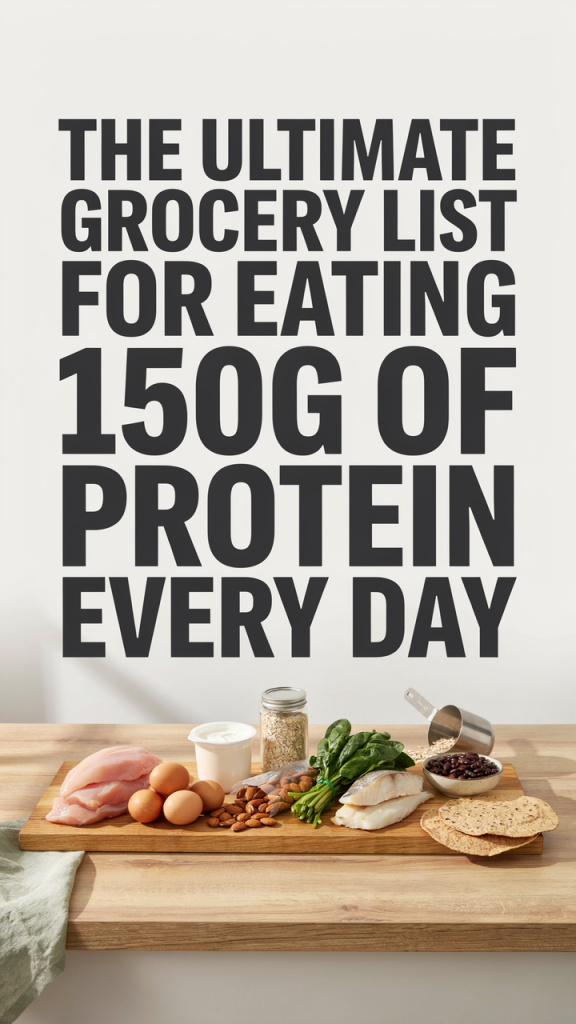
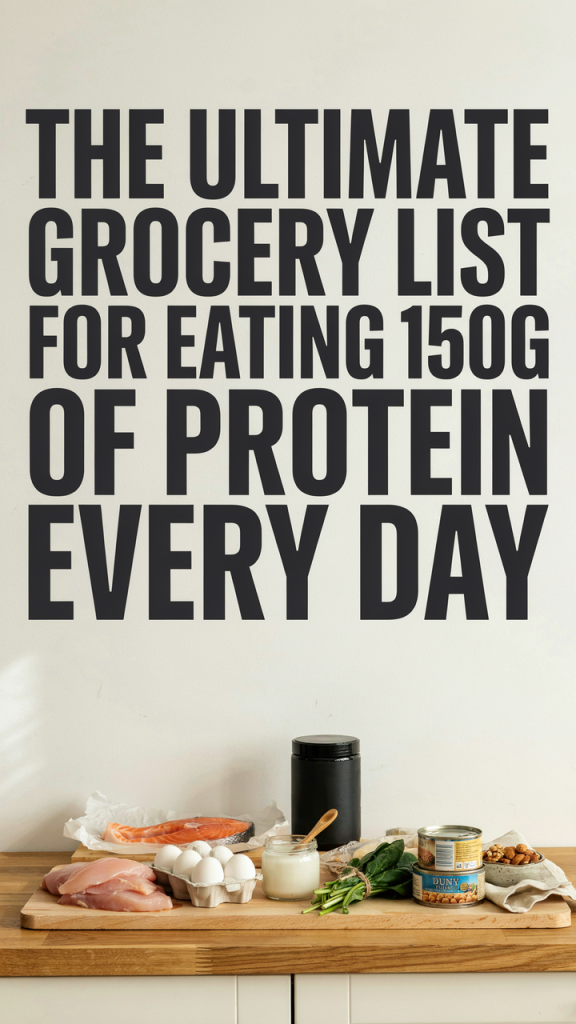
The Ultimate Grocery List for Eating 150g of Protein Every Day
Eating 150 grams of protein a day is a clear, achievable goal for athletes, people building muscle, those losing weight, or anyone prioritizing satiety and metabolic health. The key is not just knowing how much protein you need, but shopping smartly so every meal and snack makes hitting that target convenient, affordable, and tasty. This guide gives you an actionable, categorized grocery list, meal ideas, and full recipes you can prep and adapt. Follow it and you’ll be set up to reach 150g of protein every day—without stress.
Why 150g of protein? (and who benefits)
Protein supports muscle repair, immune function, hormones, and keeps you feeling full longer. For many adults, 150g is:
- Appropriate for active people or those doing resistance training who weigh 75–100 kg and aim for ~1.6–2.2 g/kg/day.
- Useful for those on calorie-restricted diets who want to preserve lean mass.
- Often higher than typical intakes, so thoughtful planning matters to avoid monotony or nutritional gaps.
This guide assumes you want variety, ease of preparation, and budget-friendliness while maintaining high protein intake.
How to use this grocery list
- Shop by category: buy a mix of animal and plant proteins to balance nutrients.
- Batch-cook key items (chicken breasts, ground turkey, chickpeas) to simplify daily assembly.
- Use protein-dense snacks and powders for quick boosts.
- Rotate items weekly to prevent boredom.
Below sections list protein-rich groceries with protein per typical serving, storage tips, and quick cooking notes.
The Ultimate Grocery List (categorized)
Animal Proteins (fresh/frozen)
- Chicken breast — ~26g protein per 100g (3.5 oz)
- Notes: Lean, versatile. Freeze portions, grill or bake at 200°C/400°F for ~20–25 min, or shred for salads/tacos.
- Turkey breast (or ground turkey) — ~29g per 100g (breast)
- Notes: Great for lean burgers, meatballs, chili.
- Lean beef (sirloin, flank) — ~26–31g per 100g
- Notes: Iron-rich; quick pan-sear or broil slices for fajitas.
- Pork loin/tenderloin — ~25–27g per 100g
- Notes: Lean and flavorful; roast or quick-pan cook.
- Salmon fillet — ~22–25g per 100g
- Notes: High in omega-3s. Bake, grill, or pan-sear.
- Tuna (fresh steak) — ~30g per 100g
- Notes: Excellent for searing or grilling.
Canned & Jarred Proteins
- Canned tuna (in water) — ~20–25g per 100g (drained)
- Notes: Extremely convenient. Good for salads, sandwiches.
- Canned salmon — ~20–25g per 100g
- Notes: Use in patties or salads; contains bones for calcium if not removed.
- Canned chicken — ~20–25g per 100g
- Notes: Ready-to-eat, great for quick casseroles or dips.
- Canned beans (chickpeas, black beans, kidney) — ~7–9g per 100g (cooked)
- Notes: Budget-friendly plant proteins. Use in salads, stews.
Dairy & Eggs
- Large eggs — ~6–7g per egg
- Notes: Extremely versatile; boil, scramble, or bake.
- Greek yogurt (0% or low-fat) — ~10g per 100g (plain)
- Notes: Use in smoothies, sauces, parfaits.
- Skyr (Icelandic yogurt) — ~10–11g per 100g
- Notes: Thick texture, high protein.
- Cottage cheese — ~11–12g per 100g
- Notes: Great for snacks, toppings, or baked dishes.
- Milk (cow or fortified plant) — ~3–8g per cup (varies)
- Notes: Use in shakes and oats; higher protein milks available.
Plant-Based Proteins (dry/fresh)
- Tofu (firm) — ~8–12g per 100g
- Notes: Press, marinate, pan-fry, or bake.
- Tempeh — ~19g per 100g
- Notes: Fermented soy; firm texture and nutty flavor.
- Seitan — ~25g per 100g
- Notes: Wheat-based protein for those who tolerate gluten.
- Lentils (dry) — ~9g per 100g cooked
- Notes: Fast-cooking red/puy lentils for soups and salads.
- Chickpeas (canned or dried) — ~7–9g per 100g cooked
- Notes: Roast for snacks or use in hummus.
- Edamame (shelled) — ~11g per 100g
- Notes: Quick microwave steam; great as snack.
- Quinoa — ~4–5g per 100g cooked
- Notes: Complete protein among grains.
Protein Powders & Supplements
- Whey protein concentrate/isolate — ~20–25g per scoop (varies)
- Notes: Fast-digesting, useful post-workout.
- Casein protein — ~20–25g per scoop
- Notes: Slower-digesting for evening shakes.
- Pea protein powder — ~20–25g per scoop
- Notes: Good plant-based option.
- Collagen peptides — ~8–10g per scoop
- Notes: Useful for joint/skin support but low in essential amino acids compared to whole protein powders.
Frozen & Prep-Friendly Items
- Frozen shrimp — ~24g per 100g
- Notes: Quick-cooking source; defrost and sauté.
- Frozen edamame — ~11g per 100g
- Pre-cooked grilled chicken strips — ~20–25g per 100g
- Notes: Convenient for salads and wraps.
- Turkey meatballs (frozen) — ~15–20g per serving
- Notes: Heat & eat protein boost.
Nuts, Seeds & Nut Butters
- Almonds — ~21g per 100g
- Notes: High-calorie; use sparingly for protein boosts.
- Peanut butter — ~25g per 100g
- Notes: Use in smoothies or on rice cakes.
- Chia seeds — ~17g per 100g
- Notes: Good for breakfasts; add to yogurt.
- Pumpkin seeds — ~30g per 100g
- Notes: Crunchy topical protein addition.
High-Protein Snacks & Convenience
- Beef jerky (low-sugar) — ~30g per 100g
- Notes: Long shelf life, handy to reach protein quotas.
- Roasted chickpeas — ~8–9g per 100g
- Protein bars — ~10–20g per bar (check label)
- Notes: Useful for travel days—read ingredient lists.
Pantry Essentials & Flavor Builders
- Olive oil, avocado oil (for cooking)
- Soy sauce, tamari (for flavor)
- Mustard, hot sauce, sriracha
- Spices: smoked paprika, garlic powder, cumin, chili flakes
- Stock or bone broth — adds flavor and some protein
Grocery List Checklist (quick copy-paste for shopping)
- Chicken breast (fresh or frozen)
- Ground turkey
- Salmon fillets
- Canned tuna & salmon
- Eggs
- Greek yogurt / Skyr
- Cottage cheese
- Tofu, tempeh
- Lentils, chickpeas, canned beans
- Quinoa
- Whey or pea protein powder
- Frozen shrimp
- Beef jerky or smoked salmon
- Almonds, peanut butter
- Edamame (frozen)
- Spices & cooking oils
Sample daily plans to reach 150g protein
Below are three adaptable sample days. Each includes explicit meal/recipe ideas. Recipes included below are fully written with ingredient lists and stepwise instructions.
Day A — Balanced athlete (approx. 150–160g)
- Breakfast: Greek Yogurt Power Parfait (30g)
- Mid-morning snack: Protein shake with whey + peanut butter (35g)
- Lunch: Grilled chicken quinoa bowl (50g)
- Snack: Cottage cheese + almonds (15g)
- Dinner: Pan-seared salmon + green veg (25–30g)
Recipe: Greek Yogurt Power Parfait
Ingredients:
– 1 cup (240g) plain Greek yogurt (~22g protein)
– 1/4 cup (30g) rolled oats
– 1 tbsp peanut butter (~3–4g protein)
– 1/4 cup mixed berries
– 1 tsp honey or sweetener (optional)
Instructions:
1. Layer Greek yogurt in a bowl or jar.
2. Stir in peanut butter until blended.
3. Top with oats and berries.
4. Drizzle honey if using. Serve immediately.
Recipe: Protein Shake with Whey + Peanut Butter
Ingredients:
– 1 scoop whey protein (~24g protein)
– 1 cup (240ml) milk or milk alternative (choose higher-protein dairy for extra)
– 1 tbsp peanut butter (~4g protein)
– 1/2 banana or ice (optional)
Instructions:
1. Add all ingredients to a blender.
2. Blend until smooth.
3. Pour into a shaker bottle or glass and enjoy.
Recipe: Grilled Chicken Quinoa Bowl
Ingredients:
– 150g cooked chicken breast (~39g protein)
– 1 cup cooked quinoa (~8g protein)
– 1 cup steamed broccoli
– 1/2 avocado
– 1 tbsp olive oil, lemon juice, salt, pepper
Instructions:
1. Season and grill or pan-sear chicken until internal temp 74°C/165°F. Slice.
2. Assemble cooked quinoa in a bowl, add broccoli and sliced chicken.
3. Top with avocado and drizzle with olive oil and lemon.
4. Season with salt and pepper.
Day B — Lower carb, higher fat (approx. 150g)
- Breakfast: Spinach & feta omelette with 3 eggs + 150g cottage cheese (48g)
- Snack: Beef jerky + edamame (30g)
- Lunch: Tuna salad with mayo, celery, hard-boiled egg (45g)
- Dinner: Grilled pork tenderloin + asparagus (25–27g)
Recipe: Spinach & Feta Omelette
Ingredients:
– 3 large eggs (~18–21g protein)
– 1/2 cup fresh spinach, chopped
– 2 tbsp crumbled feta
– 1 tsp olive oil or butter
– Salt & pepper
Instructions:
1. Heat oil in a nonstick skillet over medium heat; sauté spinach until wilted.
2. Beat eggs with salt and pepper; pour over spinach.
3. Sprinkle feta on top and cook until eggs are set.
4. Fold omelette and serve with cottage cheese on the side.
Recipe: Quick Tuna Salad
Ingredients:
– 1 can tuna in water, drained (~20–25g protein)
– 1 hard-boiled egg, chopped (~6g)
– 1 celery stalk, diced
– 1 tbsp mayonnaise or Greek yogurt
– Salt, pepper, lemon juice
Instructions:
1. In a bowl, combine tuna, chopped egg, and celery.
2. Mix in mayo or Greek yogurt; season with salt, pepper, and a squeeze of lemon.
3. Serve on lettuce, whole-grain bread, or with crackers.
Day C — Vegetarian (approx. 150g)
- Breakfast: High-protein smoothie with pea protein, Greek yogurt & chia (40g)
- Snack: Edamame + cottage cheese (25g)
- Lunch: Tempeh stir-fry with quinoa (45g)
- Snack: Roasted chickpeas + a small handful of almonds (15g)
- Dinner: Lentil soup with added tofu (25g)
Recipe: High-Protein Smoothie (Vegetarian)
Ingredients:
– 1 scoop pea protein (~20g protein)
– 1 cup plain Greek yogurt (~20g)
– 1 tbsp chia seeds (~2–3g)
– 1 cup spinach, 1/2 cup frozen berries, water or milk to blend
Instructions:
1. Add all ingredients to blender.
2. Blend until smooth and creamy.
3. Adjust thickness with water or milk and serve chilled.
Recipe: Tempeh Stir-Fry with Quinoa
Ingredients:
– 200g tempeh (~38g protein)
– 1 cup cooked quinoa (~8g)
– 1 bell pepper, sliced
– 1 cup broccoli florets
– 2 tbsp soy sauce or tamari
– 1 tbsp sesame oil
– 1 tsp minced garlic, 1 tsp minced ginger
Instructions:
1. Cube tempeh and sauté in sesame oil until golden.
2. Add garlic and ginger, then vegetables; stir-fry until tender-crisp.
3. Pour soy sauce, toss to coat.
4. Serve over cooked quinoa.
Full recipes for meal prep (explicitly listed and ready)
Below are three complete recipes designed for batch cooking and easy protein totals.
Recipe 1: Turkey & Lentil Chili (4 servings)
Ingredients:
– 1 lb (450g) lean ground turkey (~100g cooked contains ~29g/100g)
– 1 cup dry brown or green lentils (yields ~2.5 cups cooked; ~45g protein total)
– 1 can (14 oz) crushed tomatoes
– 1 onion, diced
– 2 cloves garlic, minced
– 1 bell pepper, diced
– 2 tbsp chili powder, 1 tsp cumin, salt and pepper
– 2 cups low-sodium chicken or vegetable stock
– 1 tbsp olive oil
Instructions:
1. Rinse lentils and set aside. Heat oil in a large pot over medium heat.
2. Sauté onion and bell pepper until softened. Add garlic and cook 1 minute.
3. Add ground turkey, breaking it up; cook until browned.
4. Stir in lentils, tomatoes, spices, and stock. Bring to a simmer.
5. Cover and simmer 25–30 minutes until lentils are tender; season to taste.
6. Divide into 4 portions. Each portion provides approximately 35–40g protein depending on turkey/lentil ratios.
Recipe 2: Baked Salmon & Chickpea Salad (2 servings)
Ingredients:
– 2 salmon fillets (150g each) (~33g protein per fillet)
– 1 can chickpeas, drained and rinsed (~15g protein total)
– 2 cups mixed greens
– 1/2 cucumber, diced
– 1 tbsp olive oil, lemon juice, salt, pepper, dill or parsley
Instructions:
1. Preheat oven to 200°C/400°F. Season salmon and bake 12–15 minutes until flaky.
2. Toss chickpeas, greens, and cucumber with olive oil and lemon juice.
3. Place baked salmon on top of salad and garnish with herbs.
4. Each plate yields ~40–45g protein.
Recipe 3: High-Protein Veggie & Tofu Bake (4 servings)
Ingredients:
– 400g firm tofu, pressed and cubed (~32–48g protein depending on brand)
– 2 cups cooked quinoa (~8g total per cup cooked)
– 1 cup edamame (frozen, shelled) (~17g)
– 1 cup diced tomatoes or marinara
– 1 cup spinach
– 1 tbsp olive oil, garlic powder, salt, pepper
Instructions:
1. Preheat oven to 180°C/350°F. Toss tofu cubes with oil, garlic powder, salt, and pepper.
2. Spread tofu on baking sheet and roast 20–25 minutes until golden.
3. In a large bowl, mix cooked quinoa, edamame, spinach, and tomatoes.
4. Fold roasted tofu into the mixture, transfer to baking dish, and bake 10 minutes to meld flavors.
5. Divide into 4 portions. Each portion provides ~25–30g protein.
Meal-prep strategies to make 150g/day easy
- Batch-cook 3–4 chicken breasts and portion into 150g servings (about 39g protein each).
- Pre-portion Greek yogurt, cottage cheese, and protein powder scoops.
- Roast chickpeas and tempeh for grab-and-go snacks.
- Use shakes when short on time—protein powder + milk + nut butter can supply 30–40g in a minute.
- Track protein per meal for a few days to learn your typical totals; adjust portion sizes (e.g., add another scoop of protein powder or an extra egg) until 150g becomes second nature.
How to calculate and adjust protein counts
- Use a food scale for accuracy. Labels report per 100g or per serving.
- Protein from plant sources often requires slightly higher intake to match amino acid profiles—mix sources (e.g., legumes + grains) for completeness.
- If weight changes or activity levels change, adjust targets by 0.2–0.4 g/kg accordingly.
Troubleshooting & tips
- Boredom: rotate spices, switch proteins weekly, and try different cuisines (Mexican, Mediterranean, Asian).
- Budget: buy frozen chicken, bulk lentils, canned tuna, and store-brand protein powders.
- Digestive issues: spread protein evenly across meals; avoid extreme large single meals. If dairy causes bloating, choose lactose-free or plant options.
- Vegetarians/Vegans: emphasize tempeh, seitan (if gluten-tolerant), lentils, chickpeas, and combine with pea protein powders.
Conclusion
Hitting 150 grams of protein a day is entirely achievable with a thoughtful grocery list, simple meal-prep strategies, and a few go-to recipes. Stock your kitchen with a balance of animal and plant proteins, keep convenient high-protein snacks and powders on hand, and batch-cook core ingredients like chicken, legumes, and tofu. Over time you’ll learn which combinations satisfy your taste and training needs while making the math of protein effortless. Start with one week of shopping from this list, try the sample meal plans and recipes, and you’ll be well on your way to consistently hitting 150g—stronger, fuller, and more confident in the kitchen.