
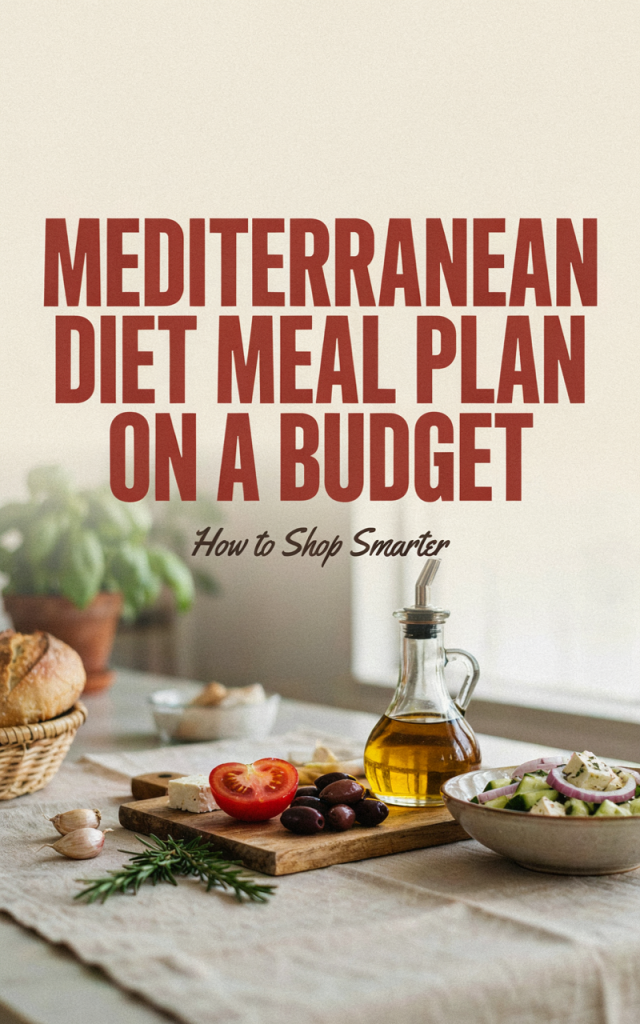
Mediterranean Diet Meal Plan on a Budget: How to Shop Smarter
The Mediterranean eating pattern is widely admired for its emphasis on whole grains, vegetables, legumes, olive oil, fish, and modest amounts of dairy and lean protein. But many people assume it’s expensive or time-consuming. The good news: you can follow the flavors and principles of the Mediterranean diet without a big grocery bill. With a few planning habits and smart shopping moves, you can build a flexible, budget-friendly meal plan that’s satisfying, flavorful, and easy to repeat.
Ready to make Mediterranean eating easier? Get the 30-Day Mediterranean Meal Plan System with a complete 30-day calendar, 53 recipes, grocery lists, preparation guidance, and three bonus guides. You can also add the 30-page Quick-Meal Vault for fast, practical meal ideas.
This article walks you through practical strategies to shop smarter, stock a thrifty pantry, and prepare affordable Mediterranean-style meals. You’ll get a sample weekly plan, easy recipes you can make today, and concrete tips to cut costs without sacrificing quality.
Core principles of a budget-friendly Mediterranean meal plan
Focus on these practical principles to keep costs down while staying true to Mediterranean flavors and ingredients:
- Prioritize plant foods: Vegetables, fruits, legumes, and whole grains are typically less expensive per serving than animal protein.
- Use fish, poultry, and eggs strategically: Make them accent proteins rather than the central ingredient every meal.
- Buy whole ingredients: Whole grains, dry beans, and whole produce tend to be cheaper and more versatile than processed convenience items.
- Cook in batches: Large pots of soups, stews, grains, and beans save both money and time.
- Let herbs, spices, lemon, and olive oil add flavor: A little olive oil, garlic, lemon, and a few dried herbs go a long way to make simple foods taste like Mediterranean favorites.
- Be flexible: Swap ingredients based on sales, seasonality, or what you already have in the pantry.
Pantry staples to buy on a budget
Stocking a modest pantry of staples sets up affordable, quick meals. Aim to build these items over time rather than buying everything at once.
- Extra-virgin olive oil (small bottle to start)
- Canned tomatoes (diced, crushed, or whole)
- Canned tuna and canned sardines (in water or olive oil)
- Dry beans and lentils (buy bulk if possible)
- Canned chickpeas (for convenience)
- Brown rice, long-grain rice, or bulgur
- Whole-wheat pasta or regular pasta
- Rolled oats
- Onions and garlic (cheap and flavor-building)
- Potatoes and sweet potatoes
- Seasonal fresh produce and frozen vegetables
- Lemons (or bottled lemon juice as backup)
- Plain yogurt (Greek or regular depending on preference)
- Nuts and seeds in small quantities (walnuts, almonds, sunflower seeds)
- Dried herbs and spices: oregano, thyme, paprika, cumin, red pepper flakes, black pepper
- Vinegars: red wine vinegar, balsamic vinegar
- Salt and pepper
Having these basics on hand reduces impulse purchases and allows you to assemble meals from a few inexpensive ingredients.
How to shop smarter: step-by-step strategies
Here are actionable shopping strategies you can apply before, during, and after shopping to keep costs down.
1. Plan meals around what’s on sale and seasonal produce
Before you shop, check your grocery store’s weekly flyer or app and note sales on essentials like canned tomatoes, frozen vegetables, or whole-grain staples. Seasonal produce is usually cheaper and fresher—build your meals around what’s affordable at the market.
2. Make a meal plan and shopping list
A simple plan for 3–7 days prevents impulse buys. Write a list grouped by aisle or recipe, and stick to it. Include backup staples (rice, beans, pasta) in case fresh items are out of stock or more expensive.
3. Buy in bulk for nonperishables
If you have storage space, buy dry beans, lentils, oats, rice, and whole-grain pasta in bulk. Unit price usually drops significantly when you buy larger quantities.
4. Choose frozen and canned produce wisely
Frozen fruits and vegetables are often frozen at peak ripeness and can be less expensive than fresh. Canned tomatoes and beans are budget-friendly and high-value for Mediterranean-style sauces, stews, and salads. Rinse canned beans to reduce sodium.
5. Use whole proteins and stretch them
Buy whole chickens or larger cuts of meat and break them down yourself; use bones to make broth. Stretch costly proteins by combining them with beans, grains, and vegetables—e.g., a small amount of cooked fish added to a pasta with vegetables.
6. Compare unit prices and shop store brands
Check unit prices (price per ounce/gram) to compare cost-effectiveness. Store-brand olive oil, canned goods, and grains can be as good as name brands at lower cost.
7. Shop ethnic markets and farmers’ markets
Ethnic grocers often have lower prices on spices, grains, and legumes. Farmers’ markets sometimes discount produce at the end of the day—ask vendors about reduced prices on slightly imperfect produce.
8. Use loyalty programs and coupons selectively
Store loyalty discounts and digital coupons can cut costs, but don’t buy something just because it’s on sale. Apply coupons for items you already planned to buy.
9. Minimize food waste
Track what you throw away and adjust future purchases. Use leftovers creatively—rotate them into bowls, sandwiches, frittatas, or soups.
Weekly budget-friendly Mediterranean meal plan (sample)
This 7-day sample prioritizes plant-forward meals, simple proteins, and leftovers. Quantities can be adjusted to household size.
Day 1
– Breakfast: Oatmeal with chopped apple, cinnamon, and a spoonful of yogurt
– Lunch: Chickpea salad (see recipe below)
– Dinner: One-pot tomato and lentil stew with whole-wheat bread
– Snack: Carrot sticks and hummus
Day 2
– Breakfast: Greek yogurt with frozen berries and a drizzle of honey
– Lunch: Leftover lentil stew over rice
– Dinner: Tuna and olive pasta with a side salad (recipe below)
– Snack: A small handful of almonds
Day 3
– Breakfast: Toast with smashed avocado and lemon
– Lunch: Vegetable and white bean soup (make a big pot)
– Dinner: Vegetable frittata (recipe below) with mixed greens
– Snack: Sliced cucumber and tomatoes with olive oil and vinegar
Day 4
– Breakfast: Savory oats with sautéed spinach and a poached egg
– Lunch: Tuna salad wrap with lettuce and cucumber
– Dinner: Roasted seasonal vegetables, bulgur, and a dollop of yogurt
– Snack: Pear or apple
Day 5
– Breakfast: Overnight oats with banana and a sprinkle of nuts
– Lunch: Chickpea salad on whole-wheat pita
– Dinner: Baked whole chicken thighs with potatoes and lemon-herb dressing
– Snack: Hummus and pita chips
Day 6
– Breakfast: Yogurt with toasted oats and sliced fresh fruit
– Lunch: Leftover roasted vegetables and grains bowl
– Dinner: Quick shrimp (or white fish) sauté with garlic, tomatoes, and spinach over rice
– Snack: Olives and cheese (small portion)
Day 7
– Breakfast: Smoothie with frozen fruit, spinach, and yogurt
– Lunch: Leftover soup or stew
– Dinner: Homemade pizza on whole-wheat crust with tomatoes, olives, and a sprinkle of cheese
– Snack: A small square of dark chocolate and strawberries
This plan emphasizes batch cooking (soups, stews, roasted vegetables) and repurposes leftovers across meals for savings and simplicity.
Ready to make Mediterranean eating easier? Get the 30-Day Mediterranean Meal Plan System with a complete 30-day calendar, 53 recipes, grocery lists, preparation guidance, and three bonus guides. You can also add the 30-page Quick-Meal Vault for fast, practical meal ideas.
Simple, affordable Mediterranean recipes
Below are three easy recipes that are budget-friendly and rely on pantry staples and seasonal produce.
Mediterranean Chickpea Salad
Serves: 4 | Prep: 10 minutes | No cooking if using canned chickpeas
Ingredients:
– 2 cans (15 oz) chickpeas, drained and rinsed
– 1 medium cucumber, diced
– 1 cup cherry tomatoes, halved (or 1 large tomato, diced)
– 1/4 red onion, thinly sliced
– 1/4 cup parsley, chopped (or 2 tbsp dried if fresh not available)
– 2 tbsp extra-virgin olive oil
– Juice of 1 lemon
– Salt and pepper to taste
– Optional: 1/4 cup crumbled feta or olives
Instructions:
1. In a large bowl, combine chickpeas, cucumber, tomatoes, red onion, and parsley.
2. Whisk olive oil, lemon juice, salt, and pepper in a small bowl or jar.
3. Pour dressing over salad and toss to combine.
4. Add feta or olives if using. Chill for 15 minutes if you have time to let flavors meld.
Tips: This salad stores well for 2–3 days and makes a great lunch over greens or stuffed into a pita.
Tuna, Olive, and Tomato Pasta
Serves: 4 | Prep: 10 minutes | Cook: 15 minutes
Ingredients:
– 12 oz pasta (whole-wheat or regular)
– 1 can (5–6 oz) tuna in olive oil, drained (reserve a bit of oil if desired)
– 1 can (14 oz) diced tomatoes or 2 cups fresh cherry tomatoes halved
– 1/4 cup pitted olives, sliced
– 1 clove garlic, minced
– 2 tbsp olive oil (or use reserved tuna oil)
– 1/2 tsp dried oregano
– Salt and pepper to taste
– Fresh parsley or basil for garnish (optional)
– Red pepper flakes (optional)
Instructions:
1. Cook pasta according to package directions. Reserve 1/2 cup pasta water before draining.
2. While pasta cooks, heat olive oil in a skillet over medium heat. Add garlic and sauté 30 seconds until fragrant.
3. Add diced tomatoes, olives, and oregano. Simmer 5–7 minutes until slightly reduced.
4. Stir in tuna and heat through, breaking tuna into chunks. If sauce is thick, add reserved pasta water a splash at a time.
5. Toss cooked pasta into sauce, mix well, and season with salt, pepper, and red pepper flakes.
6. Garnish with herbs and serve.
Tips: Use canned sardines or mackerel instead of tuna for variety and value.
Vegetable Frittata (Great for Leftovers)
Serves: 4 | Prep: 10 minutes | Cook: 20–25 minutes
Ingredients:
– 8 large eggs
– 1/4 cup milk or water
– 1 cup mixed cooked vegetables (roasted peppers, onions, spinach, zucchini)
– 1 small potato, thinly sliced and cooked (optional)
– 1/2 cup grated cheese (optional)
– 2 tbsp olive oil
– Salt and pepper to taste
– Fresh herbs for garnish (optional)
Instructions:
1. Preheat oven to 375°F (190°C) if finishing under the broiler or oven.
2. In a bowl, whisk eggs with milk or water, salt, and pepper.
3. Heat an ovenproof skillet over medium heat and add olive oil. Sauté any raw vegetables until tender.
4. Add cooked vegetables and potatoes evenly over the skillet. Pour egg mixture on top.
5. Cook on the stovetop until edges start to set (about 5–7 minutes). Sprinkle cheese over the top if using.
6. Transfer skillet to oven and bake 8–12 minutes until the center is set, or place under broiler for 2–3 minutes to brown the top. Let cool slightly before slicing.
Tips: Frittatas are perfect for using leftover roasted vegetables and can be eaten warm or cold.
Meal prep and storage tips for saving time and money
- Batch-cook grains and legumes: Cook a big pot of brown rice, bulgur, or beans and portion them for the week.
- Roast a tray of vegetables: Roasted veggies are versatile—add to bowls, omelets, sandwiches, or salads.
- Make a big pot of soup or stew: Many Mediterranean-style soups freeze well in individual portions.
- Portion snacks: Divide nuts, olives, and cut vegetables into snack-sized containers to avoid overeating and reduce spoilage.
- Label and date: Use masking tape or labels to track freshness and avoid throwing food away.
- Use airtight containers: Good storage preserves quality and prevents freezer burn.
Smart substitutions and batch-cooking ideas
- No fresh basil? Use 1/4 teaspoon dried basil or parsley.
- No fresh lemon? Substitute 1–2 tablespoons red wine vinegar for brightness in dressings.
- Short on olive oil budget: Use a flavorless vegetable oil for high-heat cooking and reserve olive oil for dressings and finishing.
- Run out of cheese: Add a spoonful of tahini or a sprinkle of nutritional yeast for umami.
- Stretch shrimp or fish: Mix with chickpeas or white beans in a stew to make the protein go further.
- Batch idea: Cook a large pot of tomato-lentil stew. Use it as a lunchtime bowl over grains, a pasta sauce, or a filling for wraps.
Ready to make Mediterranean eating easier? Get the 30-Day Mediterranean Meal Plan System with a complete 30-day calendar, 53 recipes, grocery lists, preparation guidance, and three bonus guides. You can also add the 30-page Quick-Meal Vault for fast, practical meal ideas.
Final thoughts
Eating in a Mediterranean style doesn’t require expensive specialty items or fancy cooking skills. By focusing on affordable staples—grains, legumes, seasonal produce, canned fish, and eggs—and learning shopping strategies like buying in bulk, choosing frozen when appropriate, and planning meals around sales, you can build a satisfying, wallet-friendly meal plan.
Start small: pick one or two pantry staples to add to your next grocery list, cook a large pot of a basic stew or grain, and use leftovers creatively. Over time, these habits reduce food waste, simplify grocery trips, and make delicious Mediterranean-style meals a manageable part of your routine.
With planning, flexibility, and a few essential ingredients, you can enjoy the flavors and variety of the Mediterranean pattern while keeping your grocery budget under control.
