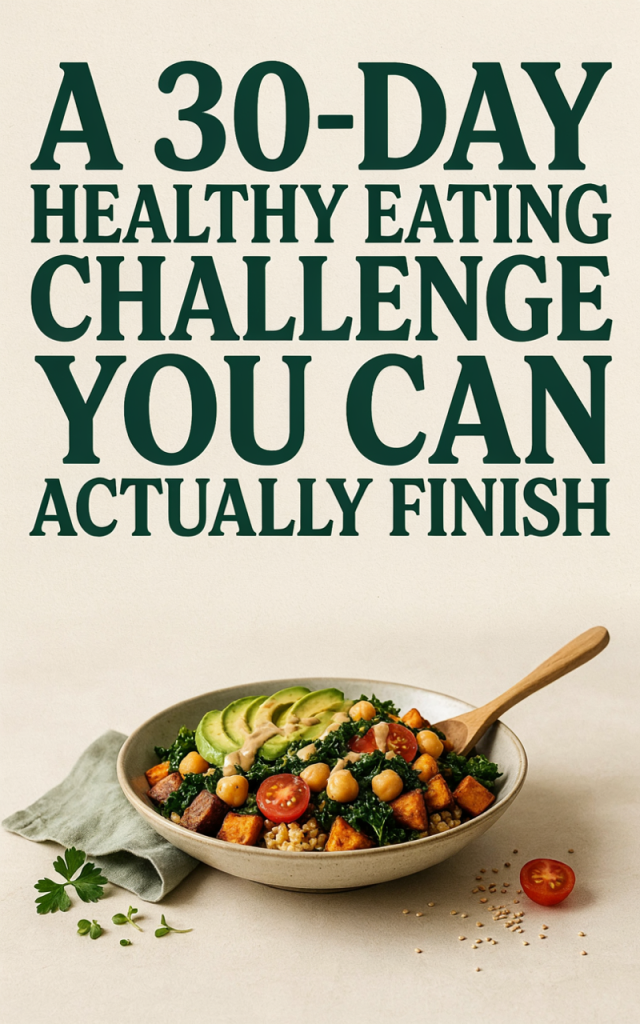
A 30-Day Healthy Eating Challenge You Can Actually Finish
Small, consistent changes beat a dramatic overhaul you can’t maintain. This 30-day healthy eating challenge gives you manageable daily actions that build into better habits without feeling restrictive. Each day asks for one concrete, realistic tweak — something you can do even on a busy schedule — so progress adds up without stress.
Ready to make Mediterranean eating easier? Get the 30-Day Mediterranean Meal Plan System with a complete 30-day calendar, 53 recipes, grocery lists, preparation guidance, and three bonus guides. You can also add the 30-page Quick-Meal Vault for fast, practical meal ideas.
The challenge leans on practical principles found in the Mediterranean eating pattern — lots of vegetables, beans, whole grains, nuts, olive oil, and moderate seafood — but it’s flexible to fit different diets, budgets, and tastes. No calorie-counting, no strict rules: just smart swaps, better balance, and habits you can keep beyond the 30 days.
How this challenge works
- One simple action per day. Do it that day and move on. You don’t need to be perfect on other days to succeed.
- Build habits by repeating favorite actions across the month. If a day’s idea works especially well, feel free to repeat it.
- Focus on food quality and structure rather than perfection. Emphasize whole foods, fiber, and hydration.
- Track progress with non-scale metrics: energy, sleep, mood, ability to concentrate, how clothes fit, and how often you choose plants over processed foods.
Below are 30 realistic, specific daily actions. Do them in order or pick and choose. Each item includes quick tips to help you apply it right away.
The 30-day checklist: one doable action per day
- Day 1 — Start with breakfast protein
Add a source of protein to your breakfast (Greek yogurt, eggs, tofu, cottage cheese, or a scoop of nut butter). Protein at breakfast helps you feel satisfied longer. - Day 2 — Add one extra vegetable serving
Pick one meal where you add an extra cup or handful of vegetables — spinach in your omelet, extra salad at lunch, or roasted broccoli at dinner. - Day 3 — Swap refined grain for a whole one
Replace white bread, pasta, or rice with a whole-grain version or farro, barley, brown rice, or whole-wheat pasta. - Day 4 — Drink an extra glass of water
Add one additional 8–12 oz (250–350 ml) glass of water today. Carry a reusable bottle and sip throughout the day. - Day 5 — Plan one meatless meal
Try a plant-forward dinner like a bean chili, lentil soup, or chickpea salad. Plant-based meals are typically higher in fiber. - Day 6 — Cook with olive oil
Use extra-virgin olive oil for sautéing or dressings instead of butter or processed spreads. It adds flavor and is a central fat in the Mediterranean pattern. - Day 7 — Snack prep for the week
Wash and cut vegetables, portion hummus, and pre-portion nuts or yogurt so healthy snacks are ready when you’re hungry. - Day 8 — Make half your plate vegetables
At lunch or dinner, fill at least half your plate with vegetables — cooked, roasted, or raw. - Day 9 — Add a whole-fruit dessert
Choose fresh fruit instead of processed sweets after a meal. Try berries, an orange, or baked apple with a dash of cinnamon. - Day 10 — Try a new grain or legume
Cook something you rarely eat: farro, bulgur, freekeh, black lentils, or adzuki beans. Variety improves nutrient intake. - Day 11 — Reduce sugary drinks
Replace soda or sweetened beverages with sparkling water, unsweetened iced tea, or water flavored with citrus or cucumber. - Day 12 — Portion-control your plate
Use smaller plates or visually divide your plate: 25% protein, 25% whole grains/starch, 50% vegetables. - Day 13 — Add a heart-healthy snack
Eat a small handful of unsalted nuts, a piece of fruit with nut butter, or a few olives and whole-grain crackers. - Day 14 — Make a colorful salad
Build a salad with at least three colors (greens, red pepper, orange carrot, purple cabbage) and a simple olive oil + lemon dressing. - Day 15 — Practice mindful eating for one meal
Turn off screens, chew slowly, notice hunger/fullness cues, and savor flavors. Aim to eat without distraction. - Day 16 — Swap dessert one night for yogurt and fruit
Combine plain or Greek yogurt with fresh fruit and a sprinkle of seeds or granola. - Day 17 — Batch-cook a base ingredient
Roast a tray of vegetables, cook a pot of beans or quinoa, or make a pot of tomato sauce—ingredients you can use all week. - Day 18 — Include fish or seafood once this week
Try salmon, sardines, trout, or a seafood dish. If you don’t eat fish, choose another omega-rich option like walnuts or ground flaxseed. - Day 19 — Reduce highly processed foods
Swap a packaged ready-meal or snack for a whole-food alternative: fresh fruit, homemade soup, or a grain bowl. - Day 20 — Try a simple vegetable-forward dinner recipe
Make a stir-fry, sheet-pan dinner, or hearty grain bowl focused on vegetables plus a protein. - Day 21 — Eat slowly and put fork down between bites
Aim to eat a meal in 20 minutes or more. Pauses help digestion and satisfaction. - Day 22 — Make a fiber-rich swap
Add beans to salads or soups, choose whole fruit instead of juice, or add ground flaxseed to yogurt or smoothies. - Day 23 — Prep a lunch to take with you
Pack a balanced lunch with protein, whole grains, and vegetables so you avoid convenience options. - Day 24 — Add herbs and spices, reduce salt
Flavor food with fresh herbs, garlic, lemon, or spice blends instead of extra salt or pre-salted sauces. - Day 25 — Try a new vegetable or fruit
Buy something unfamiliar at the market and prepare it simply — roast, sauté, or add raw to salads. - Day 26 — Swap a refined sweet snack for dark chocolate or fruit + nuts
Choose a small piece of dark chocolate (70% cocoa or higher) or a fruit and nut combo instead of candy or pastries. - Day 27 — Eat an extra probiotic-rich food
Include fermented foods like plain yogurt, kefir, sauerkraut, kimchi, or miso in a meal. - Day 28 — Eat breakfast within two hours of waking
Aim to fuel your morning; choose a balanced option with carbs, protein, and a little fat. - Day 29 — Make one meal Mediterranean-inspired
Combine vegetables, beans or legumes, whole grains, olive oil, herbs, and a moderate portion of fish or poultry if you like. - Day 30 — Reflect and plan next steps
Review what worked: which tweaks you enjoyed and can keep. Decide on 3 changes to continue monthly.
Weekly planning, shopping, and pantry staples
Good habits are easier when your kitchen supports them. Spend 30–60 minutes each weekend to plan simple meals, shop with intention, and prep a few items.
Pantry staples to keep on hand:
– Extra-virgin olive oil and a pantry oil you use for high-heat cooking (avocado or light olive oil)
– Dried or canned beans (black beans, chickpeas, lentils)
– Whole grains (brown rice, quinoa, oats, farro)
– Canned tomatoes
– Nuts and seeds (almonds, walnuts, flaxseed, chia)
– Whole-grain pasta and crackers
– Low-sodium broths and vinegars (balsamic, apple cider)
– Spices and dried herbs (oregano, cumin, smoked paprika)
– Canned tuna/salmon or shelf-stable fish (if you eat seafood)
– Nut or seed butter
Shopping tips:
– Buy seasonal produce — it’s usually cheaper and tastier.
– Read labels: fewer ingredients and recognizable names often mean less processing.
– Choose frozen vegetables and fruit for convenience and low waste.
– When buying packaged items, compare serving sizes and sodium/sugar content.
Three easy recipes to try
Below are three simple recipes that tie into the challenge. They’re quick, flexible, and rooted in whole foods.
Mediterranean Chickpea Salad (serves 2–4)
Ingredients:
– 1 can (15 oz) chickpeas, drained and rinsed
– 1 cup cherry tomatoes, halved
– 1 small cucumber, diced
– 1/4 red onion, thinly sliced
– 1 cup chopped parsley (or mixed fresh herbs)
– 1/4 cup crumbled feta (optional)
– 2 tablespoons extra-virgin olive oil
– Juice of 1 lemon
– Salt and pepper to taste
Instructions:
1. Combine chickpeas, tomatoes, cucumber, red onion, and parsley in a large bowl.
2. In a small bowl, whisk olive oil, lemon juice, salt, and pepper.
3. Pour dressing over the salad and toss to combine. Sprinkle feta on top if using.
4. Taste and adjust seasoning. Serve immediately or chill for an hour to meld flavors.
Quick tips: Add a handful of arugula or baby spinach if you want more greens; serve over whole-grain couscous or brown rice for a heartier meal.
One-Pan Lemon-Herb Salmon with Roasted Vegetables (serves 2)
Ingredients:
– 2 salmon fillets (4–6 oz each)
– 2 cups mixed vegetables (broccoli florets, sliced bell peppers, cherry tomatoes, or green beans)
– 2 tablespoons extra-virgin olive oil
– 1 lemon (zest and juice)
– 1 garlic clove, minced
– 1 teaspoon dried oregano or chopped fresh herbs (parsley, dill)
– Salt and pepper to taste
Instructions:
1. Preheat the oven to 425°F (220°C). Line a baking sheet with parchment.
2. Toss vegetables with 1 tablespoon olive oil, a pinch of salt, and pepper; spread in a single layer on the sheet.
3. Roast vegetables for 10 minutes.
4. Meanwhile, mix remaining olive oil, lemon zest, lemon juice, minced garlic, oregano, salt, and pepper.
5. Remove sheet from oven, push vegetables to the sides and place salmon fillets skin-side down in the center. Brush salmon and vegetables with the lemon-herb mixture.
6. Return to the oven and roast 8–12 minutes, until salmon is cooked through and vegetables are tender-crisp.
7. Serve with a wedge of lemon and a side of whole grain or a simple salad.
Substitutions: Use firm white fish if you prefer. Swap vegetables for whatever you have on hand.
Berry-Oat Overnight Jar (single serving)
Ingredients:
– 1/2 cup rolled oats
– 1/2 cup milk or plant-based milk
– 1/4 cup plain yogurt (optional)
– 1 tablespoon chia seeds or ground flaxseed
– 1/2 cup mixed berries (fresh or frozen)
– 1 teaspoon honey or maple syrup (optional)
– A sprinkle of nuts or granola for crunch
Instructions:
1. In a jar or bowl, combine oats, milk, yogurt (if using), chia seeds, and sweetener if desired.
2. Stir in the berries. Seal the jar and refrigerate overnight.
3. In the morning, stir and add a little extra milk if too thick. Top with nuts or granola and enjoy.
This is portable, customizable, and gives a balanced mix of fiber, carbs, and protein when yogurt or nuts are included.
Ready to make Mediterranean eating easier? Get the 30-Day Mediterranean Meal Plan System with a complete 30-day calendar, 53 recipes, grocery lists, preparation guidance, and three bonus guides. You can also add the 30-page Quick-Meal Vault for fast, practical meal ideas.
Track progress without the scale
Focus on non-scale victories that reflect sustainable habit change:
– Energy levels and mental clarity during the day
– Sleep quality and how quickly you fall asleep
– Digestion and regularity
– How your clothes fit or feel
– Strength and stamina (can you climb stairs easier?)
– Mood and stress around meals (are you less reactive? more mindful?)
– Frequency of whole-food meals vs. convenience meals
Keep a simple journal: note one improvement each week. Little wins build motivation.
Adapting the challenge to your needs
Not everyone eats the same way. Here’s how to tailor the challenge:
- Vegetarian/Vegan: Swap animal proteins for beans, tofu, tempeh, seitan, or lentils. Focus on combining plant proteins with grains and nuts/seeds for variety.
- Gluten-free: Choose quinoa, brown rice, buckwheat, millet, and certified gluten-free oats.
- Food allergies: Substitute safe alternatives (sunflower seed butter instead of peanut butter, coconut yogurt instead of dairy).
- Limited time: Use ready-to-eat options like pre-washed greens, canned beans (rinsed), and frozen vegetables. One-pan meals and sheet-pan roasting save time.
- Tight budget: Buy beans, oats, carrots, cabbage, eggs, and frozen fruit — they’re cost-effective and nutritious. Plan simple meals around these staples.
If you’re pregnant, breastfeeding, or have specific medical conditions, adapt portion sizes and food choices to professional advice from a registered dietitian or healthcare provider.
Sticking to it: behavior tips that help
- Batch prepare: Cook grains and beans once, use across multiple meals.
- Keep healthy options visible: Store cut fruit in the front of the fridge, keep a bowl of fruit on the counter.
- Make small swaps: Replace mayo with Greek yogurt in dressings or use avocado.
- Keep treats in moderation: Allowing occasional treats makes healthy eating sustainable.
- Meal templates: Use a template (grain + veg + protein + healthy fat) to build meals fast.
- Social ease: When eating out, choose dishes with vegetables, ask for dressings on the side, and balance choices across the day.
After 30 days: keep what works
The goal isn’t perfection; it’s learning what improves how you feel and what you can realistically maintain. At the end of the month:
– Pick 3 habits you enjoyed and plan how to keep them.
– Set simple reminders (calendar, phone alarms, sticky notes).
– Repeat the challenge or create a new 30-day focus (e.g., more plant-based dinners, better meal prep).
Ready to make Mediterranean eating easier? Get the 30-Day Mediterranean Meal Plan System with a complete 30-day calendar, 53 recipes, grocery lists, preparation guidance, and three bonus guides. You can also add the 30-page Quick-Meal Vault for fast, practical meal ideas.
Conclusion
This 30-day healthy eating challenge is about realistic, sustainable steps — not an all-or-nothing reset. By adding one practical change each day and keeping meals centered on vegetables, whole grains, beans, nuts, olive oil, and lean proteins or fish, you’ll build dependable habits that fit your life. Use the recipes and prep tips as springboards, track non-scale progress, and adapt the plan to your preferences. By day 30, you’ll have new routines and clear choices you can stick with long term.