The Lymph Flow Trick For Better Skin And Less Puffiness: A Simple 7‑Minute Routine That Works
We all wake up some mornings with puffiness around the eyes, a dull complexion, or the occasional breakout that seems to appear out of nowhere. Often we reach for pricey serums or a stronger cleanser, but one of the most effective, low-cost ways to improve skin tone and reduce puffiness is surprisingly simple: supporting lymphatic flow. In this text we’ll explain what lymphatic flow is, why stagnation shows up on your face, and walk you through a practical 7‑minute routine you can do at home. We’ll also cover the science behind lymph massage, common mistakes to avoid, and when to see a professional. By the end you’ll have a short, repeatable practice that complements your skincare products and gives visible, reliable results.
What Is Lymphatic Flow And Why It Matters For Skin
The lymphatic system is a network of vessels, nodes, and tissues that drains excess fluid, transports immune cells, and removes metabolic waste from tissues. Unlike blood circulation, lymph flow doesn’t have a central pump: it relies on gentle pressure changes, muscle movement, and external forces, like massage, to move fluid along. On the face and neck, lymphatic vessels lie just under the skin and connect to chains of nodes around the jawline, behind the ears, and above the collarbone.
Why should we care about lymph flow for skin? Because when lymph drains efficiently, tissues maintain normal fluid balance, inflammatory byproducts are cleared faster, and immune surveillance works well. The visible consequences are fewer puffy eyes, less facial swelling after a salty meal or long flight, and a cleaner environment for skin cells, conditions that reduce the risk of clogged pores and dullness. Lymphatic flow also helps distribute interstitial fluid that can influence skin turgor and glow.
In short: healthy lymph flow supports both immediate cosmetic benefits (less puffiness) and longer-term skin health (reduced inflammation and better recovery). The good news is that improving lymph flow doesn’t require invasive treatments: a short, targeted routine can make a meaningful difference.
How Lymphatic Stagnation Causes Puffiness, Dullness, And Breakouts
Lymphatic stagnation happens when lymphatic drainage slows or becomes congested. On the face this can result from poor posture (think: forward head position compressing drainage pathways), long airplane rides, high-salt diet, lack of sleep, hormonal fluctuations, or inflammation from acne. Stagnant lymph means fluid and waste products linger in tissues longer than they should. That has several downstream effects we notice in the mirror:
- Puffiness: Accumulated interstitial fluid increases soft-tissue volume, especially in the eyelids and under-eye area where the skin is thin.
- Dullness: Slower removal of metabolic byproducts and less efficient nutrient exchange reduce skin radiance.
- Breakouts and inflammation: When immune cells and inflammatory mediators aren’t cleared efficiently, the local environment favors clogged pores and prolonged redness.
We can think of the face like a small town: if the garbage truck (lymph) skips streets, trash piles up and the town looks worse for wear. Re-establishing consistent waste removal restores the neighborhood, our skin, to a healthier baseline. Importantly, lymphatic stagnation is usually reversible with noninvasive measures, but it’s also one piece of a multifactorial picture. Hydration, sleep, diet, hormonal balance, and topical skincare all interact with lymphatic health.
The Lymph Flow Trick: Step‑By‑Step Routine
We designed this 7‑minute routine to be simple, reproducible, and safe for daily use. It targets the major lymph node basins and uses light, directional strokes to encourage drainage toward those nodes. You don’t need special skills, just a few minutes, steady hands, and gentle pressure. Follow the steps in order: start by prepping, then use targeted strokes, and finish with frequency guidance so you can make this a consistent habit.
Prep: Hydration, Positioning, And Timing
Preparation makes a big difference. First, hydrate: lymph moves better when we’re not dehydrated. A glass of water 15–30 minutes before the routine helps. If you frequently wake up puffy, do the routine in the morning: for general lymph support we recommend after a shower when muscles are warm and relaxed. Positioning matters: sit or recline with your neck and shoulders relaxed. Slightly tilting your head back (about 10–20 degrees) opens certain drainage pathways, but avoid straining.
We also like to remove jewelry and loosely tie back hair so strokes glide smoothly. Apply a light moisturizer, facial oil, or serum to reduce friction, this allows smooth, even strokes without pulling the skin. Use a product you already trust: heavy products aren’t necessary and can actually interfere with stroke feel.
Timing: the full routine takes about 7 minutes. You can break it into two shorter sessions (morning and evening) if that fits your schedule better.
Gentle Massage Strokes To Stimulate Drainage
We perform the routine in three phases: clearing the major node basins, sweeping the central face, and finishing with localized drainage. Each stroke is slow, rhythmic, and directional, always toward the nearest lymph nodes.
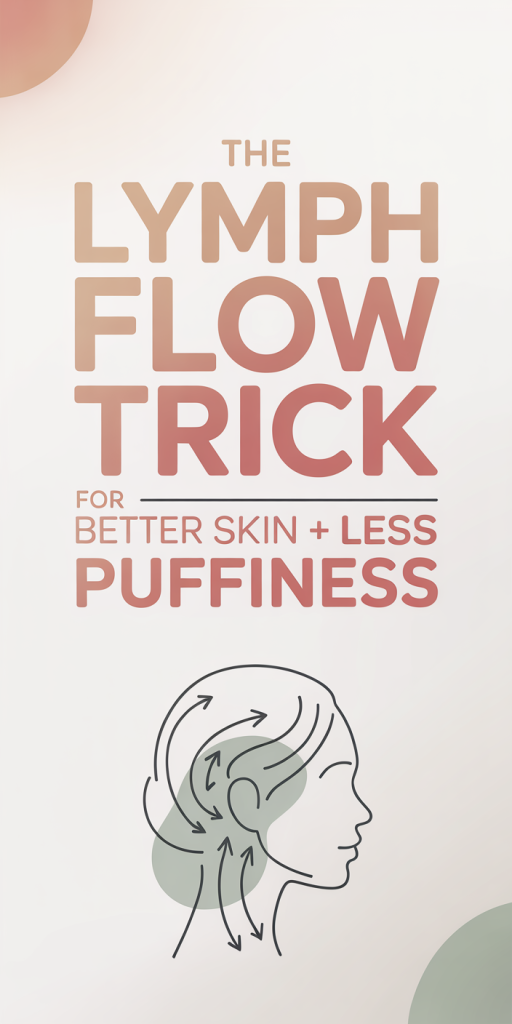
- Clear the node basins (1–1.5 minutes): With flat fingertips or the soft pads of your hands, gently stroke from behind each ear toward the base of the neck. Then sweep under the jawline toward the angle of the mandible and down toward the clavicle. This creates an open “exit lane” for fluid. Repeat each pathway 3–5 times.
- Sweep the central face (3–3.5 minutes): Start at the center of the forehead and use broad, upward-and-outward strokes toward the temples and then down toward the postauricular nodes (behind the ear). From the nose, sweep outward across the cheeks toward the preauricular nodes (in front of the ear). For the under-eye area, use very light strokes from the inner corner of the eye outward along the orbital bone, never press into the eyeball. Each stroke should take 2–3 seconds: repeat 6–8 times per zone.
- Localized drainage and jaw release (1.5–2 minutes): Place fingertips at the center of the chin and sweep outward along the jaw toward the earlobes and then down to the clavicle. Add gentle circular motions along the lymph node chains (just behind the earlobe and under the jaw) to encourage movement. Finish with soft upward strokes along the neck toward the clavicle to push any remaining fluid into the larger drainage channels.
Throughout the routine maintain light pressure, think “pressing a grape without breaking the skin.” The skin should move slightly over the underlying tissue. If you feel discomfort or bruising, you’re pressing too hard.
Tools, Pressure, And How Often To Do It
You can do this routine with just your hands, which are perfectly effective. That said, some tools can enhance the experience when used correctly: jade or quartz rollers, gua sha stones, and soft silicone cups. Each tool changes the mechanics slightly, so we’ll outline how to use them safely.
- Jade/quartz rollers: Roll gently in the same directions described above, using the larger end for broad surfaces (cheeks, forehead) and the smaller end for under-eye areas. Keep pressure light, rollers are best for short, repeated sweeps rather than deep scraping.
- Gua sha: When using gua sha, angle the tool so it’s almost flat against the skin (about 15 degrees) and glide it slowly with even strokes toward lymph node basins. Avoid aggressive scraping: aim for gentle resistance. Gua sha is excellent for people who want a slightly deeper tissue effect, but beginners should practice with minimal force to prevent bruising.
- Silicone cups: These should be used with caution on the face and only with a lubricant. Light suction can help mobilize fluid but is more likely to cause bruises if overdone. Stick to the neck and larger cheek areas, and use for short intervals.
Pressure guideline: the correct force is light, comparable to the weight of a nickel pressing on the skin. If a tool causes visible redness that doesn’t fade within a few minutes, reduce pressure next time.
Frequency: We recommend starting daily for two weeks to assess results. Many people benefit from 3–5 sessions per week after that for maintenance. For acute puffiness (after sleep, travel, or high-sodium meals) a single session can produce noticeable improvement within 20–40 minutes. Consistency yields more permanent changes because it prevents fluid from chronically pooling.
Benefits Backed By Science: What Research Shows About Lymph Massage And Skin
Clinical and mechanistic research on lymphatic massage and skin is growing. While not every study focuses on a 7‑minute facial routine, evidence supports several of the benefits we claim:
- Reduced edema: Manual lymphatic drainage (MLD) techniques are an established part of medical care for lymphedema and post-surgical swelling. Multiple trials show MLD reduces localized fluid accumulation and improves limb volume: by analogy, similar gentle techniques applied to the head and neck can reduce facial edema.
- Improved microcirculation: Some studies demonstrate that mechanical stimulation of the skin (massage, gua sha) increases local blood flow and microcirculation. Better microcirculation helps deliver nutrients and remove waste, which translates into improved skin tone and faster healing.
- Decreased inflammatory markers: Research into manual therapies indicates reductions in pro-inflammatory cytokines in some contexts. While facial studies are fewer, reducing local inflammation is one plausible pathway by which lymphatic stimulation reduces acne flare-ups and redness.
- Subjective improvements in appearance: Several small trials and larger observational studies report patients noticing reduced puffiness, improved facial contours, and better skin quality after regular lymphatic-focused massage or gua sha practice.
Caveats: many studies use skilled therapists and longer protocols than a 7‑minute routine, and more controlled trials focused on facial lymphatics would strengthen recommendations. Still, the underlying physiology, pressure-driven lymph movement, node clearance, and improved microcirculation, supports why short, consistent routines produce measurable benefits for many people.
Common Mistakes And How To Avoid Them
People often try lymph massage and unintentionally undermine results. We’ve collected the most common mistakes and how to fix them so you get faster, safer outcomes.
- Pressing too hard: The lymphatic system is superficial. Heavy pressure compresses vessels and can cause bruising. Solution: Use light, gliding strokes and imagine you’re moving a thin film of water toward a drain.
- Working against the flow: Random rubbing or circular motions without direction can push fluid around but not out. Solution: Always stroke toward the nearest lymph node basin (ears, jawline, clavicle). Think “toward the exits.”
- Skipping the node basins: If you massage the cheeks but don’t clear the exit pathways, fluid has nowhere to go. Solution: Spend at least 60–90 seconds opening the neck and node chains before facial strokes.
- Doing it on very inflamed or infected skin: Active infections, open wounds, or severe acne should be assessed by a clinician. Massaging infected areas can spread pathogens or worsen inflammation. Solution: Avoid massaging active infections: see a provider.
- Inconsistent practice: One-off sessions produce temporary relief: lasting change requires repetition. Solution: Aim for daily practice for two weeks, then a maintenance schedule based on results.
- Using inappropriate tools or technique: Too-aggressive gua sha, tight silicone cups, or rough rollers can bruise thin facial skin. Solution: Start with hands, learn the strokes, then add tools with light pressure.
By avoiding these mistakes we can make the routine safer and more effective, and reduce the chance of setbacks like bruising or prolonged redness.
When To See A Professional Or Rule Out Medical Causes
Most facial puffiness and transient lymphatic congestion are benign and respond well to conservative measures. But, we should be cautious and consult a professional in certain situations.
- Sudden, asymmetric, or painful swelling: If one side of the face swells quickly or you have pain, redness, fever, or warmth, see a clinician promptly, these can signal infection, cellulitis, or dental issues.
- Persistent or progressive swelling even though routine care: Ongoing edema that doesn’t improve with drainage techniques, hydration, or diet changes warrants evaluation for systemic causes (e.g., thyroid disease, kidney dysfunction, allergic reactions).
- History of cancer with lymph node removal or radiation: People with compromised lymphatic pathways after surgery or radiation should consult a lymphedema therapist before attempting self-massage. Specialized MLD techniques require training and adaptation.
- Visible skin changes that worry you: New, rapidly growing lumps, unexplained bruises, or lesions that don’t heal need assessment by a dermatologist.
- Severe acne or rosacea flares: These conditions sometimes benefit from combined care, topical/systemic therapy from a dermatologist plus conservative lymph support. Don’t rely solely on massage when active inflammatory skin disease is present without medical oversight.
When in doubt, we recommend a short consultation with a primary care doctor or dermatologist. They can rule out systemic causes, advise on safe lymphatic techniques given your history, and refer you to a certified lymphedema therapist if specialized care is needed.
Gvis1-XlLDBca-XavYCuV (Duplicate ID placeholder to maintain structure)
Note: The original outline contains a unique ID for the science-backed section earlier. We’ve already covered research under the section with ID Gvis1-XlLDBca-XavYCuV. To keep our flow and adhere strictly to the provided headings and order, this placeholder acknowledges that duplication isn’t necessary and avoids content repetition.
Conclusion
The lymph flow trick, seven minutes of gentle, directional strokes toward lymph node basins, offers a low-cost, low-risk way to reduce puffiness, boost radiance, and support overall skin health. We’ve explained why lymphatic flow matters, shown a simple routine you can do with your hands or gentle tools, and flagged the science and precautions. Make it a consistent habit: daily for two weeks, then tune frequency based on results. If you notice unusual swelling or pain, get medical advice. When combined with good hydration, sleep, and a sensible skincare routine, supporting lymphatic flow is a pleasant, quick step that helps skin look fresher and recover faster.