Which Breakfast Foods Have The Most Protein? The Ultimate Guide To High‑Protein Morning Meals In 2026
We all know breakfast is called the most important meal of the day, but it’s not just about eating something. The protein content of our morning meal can shape energy, appetite, mood, and how our bodies build or preserve muscle. In this guide we’ll walk through why protein at breakfast matters, how much to aim for depending on goals and age, and the highest‑protein animal and plant options you can reach for. We’ll also give practical portion sizes, pairing tips, and ready‑to‑use breakfast ideas that hit common protein targets (20–40 g) without turning mornings into a nutrition math class. Whether you’re strength training, trying to lose weight, or just want to stay focused until lunch, this is our 2026 roadmap to a stronger, more satisfying AM plate.
Why Protein At Breakfast Matters For Energy, Appetite, And Muscle
Protein at breakfast does more than help muscles, it changes the entire morning experience. When we eat protein early, we typically feel fuller longer because protein slows gastric emptying and increases satiety hormones like peptide YY and GLP‑1. Practically, that means fewer mid‑morning cravings and less impulsive snacking, which can help us manage calories without feeling deprived.
From a cognitive and energy standpoint, protein provides amino acids needed for neurotransmitter synthesis and steady blood sugar support when combined with a little fiber and healthy fat. That steadier energy can improve concentration for work or school and blunt the energy crashes that follow high‑sugar breakfasts.
For anyone doing resistance or endurance training, the post‑fast window is ideal for delivering amino acids to muscle. Starting the day with protein, ideally including a source of leucine (the amino acid that triggers muscle protein synthesis), helps preserve lean mass and supports recovery. That’s especially important as we age: older adults have a blunted anabolic response to protein, so getting a meaningful dose in the morning helps counter muscle loss.
Finally, protein helps regulate appetite hormones and metabolic rate. Thermogenesis from digesting protein is higher than for carbs or fat, so a higher‑protein breakfast slightly raises energy expenditure and can help with weight management when paired with overall healthy intake. In short: protein at breakfast affects fullness, focus, and functional outcomes like muscle maintenance and metabolic health, so it’s worth prioritizing.
How Much Protein Should You Aim For In The Morning? Guidelines By Goal And Age
There isn’t a single “right” number for everyone, but practical morning targets depend on total daily needs, goals, and age. Here are evidence‑informed ranges we use when advising different people.
- General health (sedentary or lightly active adults): Aim for 20–30 g of protein at breakfast. That provides a solid portion of the typical 0.8–1.0 g/kg/day baseline and helps with satiety and cognition.
- Weight loss or appetite control: 25–35 g. A higher breakfast protein dose increases fullness and reduces overall daily calorie intake in many studies, especially when combined with fibrous carbs and healthy fats.
- Strength training or muscle gain: 30–40 g. To maximize muscle protein synthesis, especially after overnight fasting, we prefer 0.25–0.40 g/kg of body weight per meal, often falling in the 30–40 g range for many people. That ensures a strong anabolic signal when paired with total daily protein of 1.6–2.2 g/kg.
- Older adults (50+): 30–40 g. With age, the muscle protein synthesis response weakens, so older adults benefit from somewhat larger protein doses per meal to preserve lean mass and function.
- Athletes with heavy morning training: 40+ g may be appropriate pre‑ or post‑session, depending on session length and intensity. If training fasted, a post‑session meal with 30–40 g helps recovery.
Keep in mind portion practicality: aiming for a protein‑rich food plus a protein‑dense add‑on (e.g., Greek yogurt plus walnuts, eggs plus cottage cheese) is often easier than relying on a single food to hit the target. We recommend spreading protein evenly across meals when possible rather than consuming almost all in one evening sitting.
Top Animal‑Based Breakfast Foods Highest In Protein (Eggs, Dairy, Meat, Fish)
Animal proteins are typically complete, meaning they contain all essential amino acids, making them efficient for meeting morning protein goals. Here’s a prioritized list of common animal‑based breakfast items with practical portion sizes and approximate protein per portion so you can build meals quickly.
- Eggs (whole): 1 large egg ≈ 6–7 g protein. Two eggs deliver about 12–14 g. Eggs are versatile, scrambled, hard‑boiled, or turned into an omelet with veggies for added volume.
- Egg whites: 1/4 cup (about 2 large whites) ≈ 7 g. Whites concentrate protein without fat: a great option if we want a leaner meal.
- Greek yogurt (plain, nonfat): 6 oz (170 g) ≈ 15–18 g protein. Thick texture and tangy flavor make it a popular base for fruit, nuts, or granola.
- Skyr/cottage cheese: 1/2 cup cottage cheese ≈ 12–14 g: 6 oz skyr ≈ 15–18 g. Cottage cheese pairs well with fruit or savory toppings like tomato and pepper.
- Milk: 1 cup (8 oz) ≈ 8 g. While lower than yogurt, milk is an easy mixer for protein shakes, oats, or cereal.
- Whey protein powder: 1 scoop ≈ 20–30 g (varies). Fast‑absorbing and convenient, perfect for smoothies, stirred into oats, or mixed with milk.
- Smoked salmon or lox: 3 oz ≈ 15–17 g. A flavorful choice on a whole‑grain bagel or with scrambled eggs: also supplies omega‑3 fats.
- Lean breakfast meats (chicken sausage, turkey bacon, lean ham): 3 oz ≈ 15–20 g. Check labels for sodium, many processed breakfast meats are high in salt.
- Cottage ham or roast chicken leftovers: 3 oz ≈ 20–25 g. Using leftovers is a time‑saving trick to boost breakfast protein.
- Cheese: 1 oz hard cheese ≈ 6–8 g. A little can add both protein and flavor.
Putting items together: two eggs (14 g) + 6 oz Greek yogurt (17 g) = ~31 g, a robust breakfast for many goals. For minimal prep days, a whey shake (25 g) plus a banana and nut butter makes a quick ~34 g meal.
Top Plant‑Based Breakfast Foods Highest In Protein (Legumes, Grains, Seeds, Alternatives)
Plant proteins vary in amino acid profiles, but smart combinations deliver complete protein and high totals. Below we list practical plant‑based options, portion sizes, and approximate protein so we can mix and match efficiently.
- Tofu (firm): 3.5 oz (100 g) ≈ 8–10 g. Pan‑fried tofu scramble is a classic egg alternative: pressing and seasoning helps texture and flavor.
- Tempeh: 3 oz ≈ 15–18 g. Tempeh is fermented soy with a nutty flavor, great cubed and sautéed or crumbled into breakfast bowls.
- Edamame: 1/2 cup shelled ≈ 8–9 g. Toss into savory bowls or blend into a spread.
- Lentils: 1/2 cup cooked ≈ 8–9 g. Use in a savory breakfast hash or make a spiced lentil patty.
- Black beans / chickpeas: 1/2 cup cooked ≈ 7–9 g. Black bean breakfast tacos or chickpea omelette (besan) are filling choices.
- Quinoa: 1 cup cooked ≈ 8 g. Higher in protein than most grains and contains all essential amino acids, use as a hot cereal with nuts and fruit.
- Oats: 1/2 cup dry (cooked) ≈ 5–7 g. Oats pair well with milk or a scoop of protein powder to boost protein.
- Nut butters: 2 tbsp ≈ 6–8 g. Peanut, almond, or mixed butters are calorie‑dense but efficient protein boosters.
- Almonds and other nuts: 1 oz ≈ 5–6 g. Use as toppings for yogurt or oats for extra protein and crunch.
- Hemp seeds: 3 tbsp ≈ 10 g. One of the best plant sources of complete protein, sprinkle over smoothies, yogurt, or cereal.
- Chia seeds: 2 tbsp ≈ 4–5 g. While lower in protein per serving, chia adds fiber and helps create satisfying puddings.
- Plant protein powders (pea, rice, soy blends): 1 scoop ≈ 15–25 g. A practical way to hit higher targets, especially for those training or with limited morning appetite.
Combining grains and legumes (like quinoa + black beans) or sprinkling hemp seeds on oatmeal helps ensure a complete amino acid profile and gets us closer to those 20–40 g targets. For strict vegans or those relying on minimal animal products, a protein shake plus solid food (e.g., tempeh + quinoa bowl) is often the easiest path to higher totals.
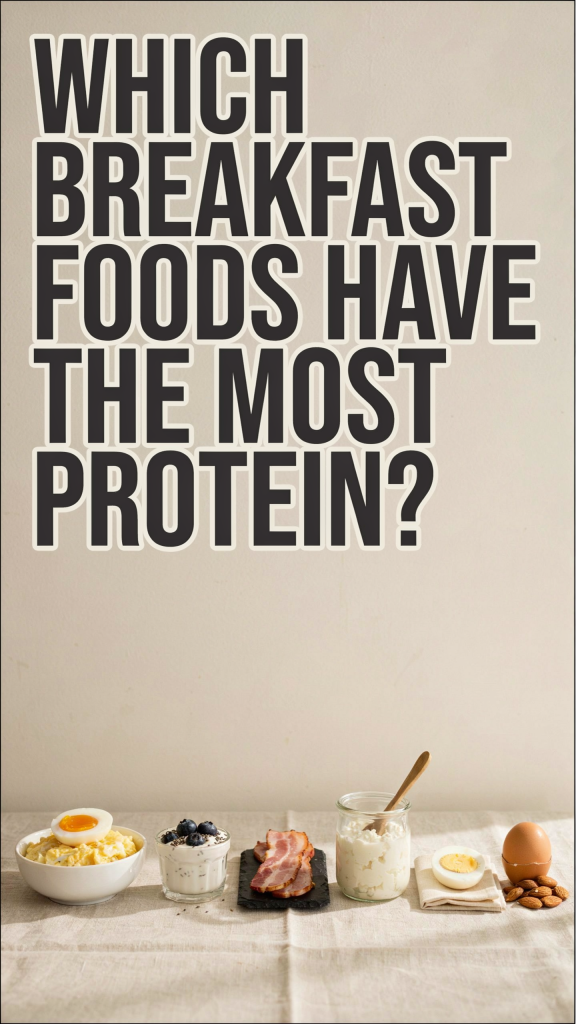
How To Build A High‑Protein Breakfast: Portions, Pairings, And Timing
Constructing a high‑protein breakfast is less about complex recipes and more about simple building blocks and strategic pairings. Here’s how we approach it.
- Start with a protein anchor: pick one high‑protein item (eggs, Greek yogurt, tofu scramble, tempeh, a scoop of whey or plant protein). This should deliver roughly 15–25 g on its own.
- Add a second protein or concentrated protein booster: combine the anchor with another source, nuts, seeds, cottage cheese, beans, or protein powder, to reach your target. For example, eggs + cottage cheese, or oats + whey.
- Include fiber and some healthy fat: fiber (fruit, vegetables, whole grains) slows digestion and supports stable blood sugar: fat (avocado, nuts, olive oil) improves satiety and taste. These don’t need to be large, just enough to round out the meal.
- Watch portion practicality: if we aim for 30 g, avoid relying on many tiny sources. One or two solid sources are easier to prepare and track.
- Timing and distribution: if we train in the morning, a small pre‑work protein snack (15–20 g) followed by a 20–30 g post‑workout meal works well. If we don’t train, a single 25–35 g breakfast is effective. Spreading total daily intake evenly (roughly equal protein at each meal) supports muscle protein synthesis better than packing protein into one meal.
- Prep strategies: batch‑cook hard‑boiled eggs, make a big batch of tempeh crumb, portion Greek yogurt with toppings, or premix overnight oats with protein powder. Convenience increases adherence.
- Sodium and added sugar: choose minimally processed items when possible. Processed breakfast meats and flavored yogurts can add a lot of sodium and sugar: plain yogurt and whole foods let us control those.
Below we give concrete sample breakfasts and simple swaps you can make quickly.
Sample High‑Protein Breakfasts And Meal Ideas (20–40g Protein Targets)
20–25 g options
- Greek yogurt parfait: 6 oz plain Greek yogurt (15–18 g) + 2 tbsp hemp seeds (≈6–7 g) + berries.
- Two eggs + 1 slice whole grain toast + 1 oz cheese: eggs (14 g) + cheese (6–8 g) ≈ 20–22 g.
25–35 g options
- Protein oatmeal: 1/2 cup oats (6 g) cooked with 1 cup milk (8 g) + 1 scoop whey (20–25 g), use half‑scoop to hit midrange: alternatively add 2 tbsp peanut butter (+7–8 g).
- Tofu scramble bowl: 150 g firm tofu (12–15 g) + 1/2 cup edamame (8 g) + vegetables ≈ 25 g.
30–40 g options
- Smoked salmon bagel: 3 oz salmon (15–17 g) + 2 tbsp cream cheese (2–3 g) + 1 large egg (6–7 g) ≈ 25–28 g, add a small cup of Greek yogurt on the side to push toward 35 g.
- Tempeh breakfast tacos: 3 oz tempeh (15–18 g) + black beans 1/2 cup (7–9 g) + corn tortillas ≈ 30–35 g.
- Smoothie rider: 1 scoop protein powder (20–25 g) + 1 cup milk (8 g) + 2 tbsp hemp seeds (6–7 g) ≈ 35–40 g.
High‑training or large appetite (40+ g)
- Large plate: 3 eggs (18–21 g) + 3 oz chicken breast or turkey sausage (20–25 g) + 1/2 cup cottage cheese (12–14 g) = 50+ g, scale based on needs.
Tips for composability
- Pair a dairy or egg with plant protein: eggs + black beans, Greek yogurt + chia/hemp, or cottage cheese + nuts are quick and nutritious.
- Use protein powders strategically for convenience: add to oats, yogurt, or make a quick smoothie, especially helpful when mornings are rushed.
- Keep portable high‑protein snacks on hand: hard‑boiled eggs, single‑serve Greek yogurt, jerky (check sodium), or pre‑measured nut butter packs.
These examples help us meet common morning targets without overcomplicating meals, adjust portions slightly to meet individual calorie and protein goals.
Simple Swaps And Add‑Ins To Boost Protein Without Adding Too Many Calories
Small changes often create the biggest impact. Here are practical swaps and add‑ins that raise breakfast protein while keeping calories reasonable.
- Swap regular yogurt for Greek yogurt: increases protein per ounce without much change in volume or prep.
- Stir 1 scoop protein powder into oatmeal or yogurt: adds 15–25 g fast. We prefer unflavored or vanilla for versatility.
- Add 2–3 tbsp hemp seeds to cereal or smoothies: ≈6–10 g protein and healthy fats.
- Replace half the oats with soy or pea protein oat blend: keeps texture similar but boosts protein.
- Use egg whites to supplement whole eggs: one cup liquid egg whites ≈ 25 g protein, use with 1–2 whole eggs for flavor and yolk nutrients.
- Top with 2 tbsp nut butter instead of 1: yields an extra 4–8 g protein (watch calories).
- Mix cottage cheese into pancakes or toast: 1/2 cup blended into batter or used as a spread adds 12–14 g.
- Incorporate beans into savory breakfast dishes: 1/2 cup adds 7–9 g: works well in breakfast bowls or on toast.
- Choose lean meats when using breakfast meat: turkey bacon or chicken sausage for protein with less saturated fat.
We recommend picking one swap per meal to keep taste and calories balanced. Small, consistent changes are easier to maintain and can significantly increase daily protein without making breakfast feel like a diet chore.
Sample High‑Protein Breakfasts And Meal Ideas (20–40g Protein Targets)
Note: This subheading repeats sample ideas for quick reference and modular building, use it as a checklist when planning.
- Quick 20 g: 2 hard‑boiled eggs (12–14 g) + 1 oz almonds (6 g) = ~20 g.
- Quick 25 g: 6 oz skyr or Greek yogurt (15–18 g) + 2 tbsp hemp seeds (6–7 g) = ~25 g.
- Smoothie 30 g: 1 scoop whey (25 g) + 1/2 cup milk (4 g) + handful spinach = ~29 g.
- Savory 35 g: Tofu scramble (150 g tofu ≈ 12–15 g) + 1/2 cup cooked lentils (8–9 g) + 1 oz cheese (6–8 g) ≈ 30–35 g.
- On‑the‑go 30–40 g: Protein bar (check label: 15–20 g) + single‑serve Greek yogurt (12–15 g) = 27–35 g.
We like to keep a mental template: anchor + booster + fiber. Anchors are eggs, yogurt, tofu, tempeh, or a scoop of protein: boosters are seeds, cottage cheese, nut butter, beans, or an extra serving of dairy/meat: fiber is fruit, veggies, or whole grains. Combining these gives a flexible system that fits schedules and goals without sacrificing flavor.