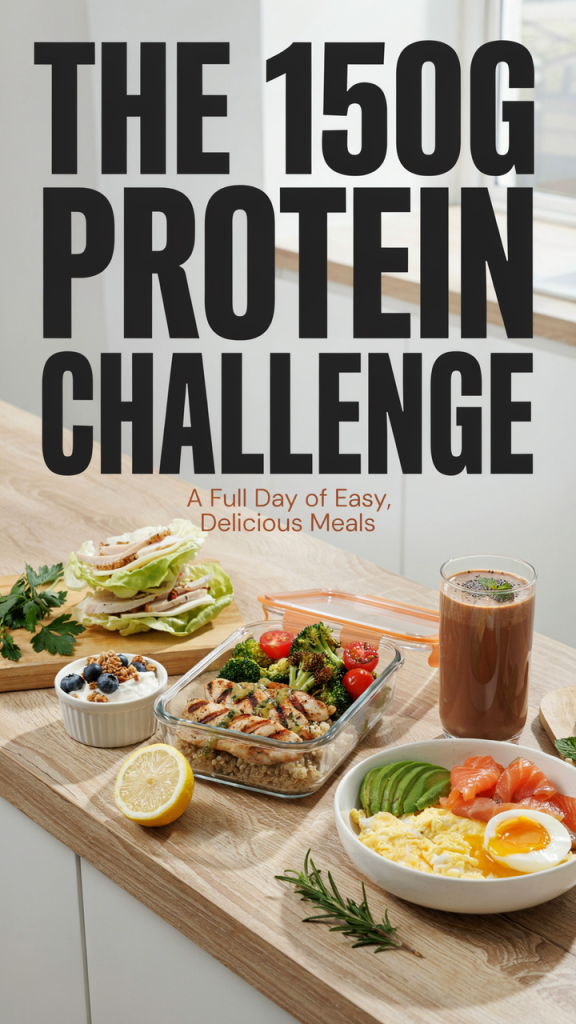
The 150g Protein Challenge: A Full Day of Easy, Delicious Meals
If you’ve been curious about boosting your daily protein to support muscle growth, recovery, satiety, or just better overall nutrition, welcome to the 150g Protein Challenge. This one-day meal plan is practical, flavorful, and realistic—designed for busy people who want to hit a high-protein target without eating dry chicken and plain powders all day. Below you’ll find a full day of recipes (breakfast through dessert), exact ingredient lists, step-by-step instructions, approximate protein counts, swap ideas for different diets, and tips to make this approach sustainable long-term.
Why 150 grams? For many active adults, 150g is a meaningful target: it supports resistance training and muscle maintenance for people weighing roughly 75–100 kg (165–220 lb), and it’s also a good goal for anyone increasing protein to manage appetite or lose fat while protecting lean mass. Your individual needs can vary—read the “Adjusting the Challenge” section below for customizations.
Table of contents
– Why 150 grams of protein?
– How this challenge works
– Full day meal plan overview
– Recipes (ingredients + instructions)
– Breakfast: Smoked Salmon Egg-White Omelette with Whole Grain Toast
– Mid‑morning snack: Greek Yogurt Berry Bowl
– Lunch: Turkey & Quinoa Power Bowl
– Afternoon snack: Chocolate Banana Protein Smoothie
– Dinner: Lemon Garlic Salmon, Lentils & Broccoli
– Optional dessert: High-Protein Chocolate Mug Cake
– Swap options for vegetarians and vegans
– Timing, meal prepping, and practical tips
– Adjusting calories and protein for your needs
– Conclusion: Your 150g Protein Challenge — how to make it yours
Why 150 grams of protein?
Protein does more than build muscle. It:
– Supports recovery and strength gains after resistance training
– Keeps you full longer, reducing snacking and overeating
– Helps maintain muscle during calorie deficits
– Has a higher thermic effect than carbs or fat (burns more calories during digestion)
150 grams is a practical target that’s high enough to deliver these benefits for many active people, yet achievable in a single day with smart food choices and minimal extreme measures.
How this challenge works
This plan gives you five eating occasions across the day: breakfast, mid-morning snack, lunch, afternoon snack, and dinner (plus an optional dessert). Each recipe includes:
– A bulleted ingredients list
– A numbered set of instructions
– An approximate protein estimate for the full recipe
Protein amounts are approximate and depend on exact brands and portion sizes; I list realistic values to help you plan. If you need to hit exactly 150g, you can tweak portions (e.g., slightly reduce a protein powder scoop, reduce a meat portion by 1 oz, etc.).
Full day meal plan overview (approximate protein)
- Breakfast: Smoked Salmon Egg-White Omelette with Whole Grain Toast — ~39 g
- Mid-morning snack: Greek Yogurt Berry Bowl — ~24 g
- Lunch: Turkey & Quinoa Power Bowl — ~45 g
- Afternoon snack: Chocolate Banana Protein Smoothie — ~25 g
- Dinner: Lemon Garlic Salmon, Lentils & Broccoli — ~32 g
- Optional dessert: High-Protein Chocolate Mug Cake — ~10 g (if you want a sweet cap)
Daily total (without dessert): ~165 g (this plan intentionally provides a bit more than 150 g to account for rounding and to show how easy it is to reach the goal; you can reduce portion sizes to hit precisely 150 g).
Now let’s walk through each recipe. Every recipe below includes ingredients and step-by-step instructions.
Breakfast: Smoked Salmon Egg-White Omelette with Whole Grain Toast
Approximate protein: 39 g
Ingredients
– 2 large whole eggs
– 3 large egg whites (from carton or separated)
– 2 oz (about 60 g) smoked salmon, sliced
– 1 tsp olive oil or cooking spray
– 1 small handful baby spinach (optional)
– 1 slice whole grain bread, toasted
– Salt and pepper to taste
– Fresh dill or chives (optional, for garnish)
– Lemon wedge (optional)
Instructions
1. Whisk the whole eggs and egg whites together in a bowl with a pinch of salt and pepper.
2. Heat a nonstick skillet over medium heat and add the olive oil or spray.
3. If using spinach, sauté it quickly until wilted (about 30 seconds), then pour the egg mixture into the skillet.
4. Cook gently, lifting edges with a spatula so uncooked egg flows underneath. When almost set, arrange smoked salmon slices on one half of the omelette.
5. Fold the omelette and slide onto a plate. Garnish with dill or chives and squeeze a little lemon if desired.
6. Toast the whole grain bread and serve alongside the omelette.
Notes: This breakfast is high in protein thanks to the eggs and smoked salmon. If you prefer zero smoke flavor, substitute with 3 oz cooked turkey bacon or 3 oz grilled chicken for similar protein.
Mid-morning snack: Greek Yogurt Berry Bowl
Approximate protein: 24 g
Ingredients
– 1 cup (about 245 g) nonfat or low-fat Greek yogurt
– 2 tbsp chia seeds or ground flax (optional)
– 1/4 cup fresh berries (blueberries, raspberries, or sliced strawberries)
– 2 tbsp chopped almonds or walnuts
– 1 tsp honey or maple syrup (optional)
Instructions
1. Spoon Greek yogurt into a bowl.
2. Stir in chia seeds or ground flax if using.
3. Top with fresh berries and chopped nuts.
4. Drizzle a little honey or maple syrup if desired and enjoy.
Notes: Greek yogurt is an efficient way to add high-quality protein. Choose plain varieties to avoid added sugars, and sweeten lightly yourself.
Lunch: Turkey & Quinoa Power Bowl
Approximate protein: 45 g
Ingredients
– 5 oz (about 140 g) cooked lean turkey breast (grilled or roasted, sliced)
– 1/2 cup cooked quinoa
– 1 cup mixed salad greens
– 1/4 cup edamame (shelled, cooked)
– 1/4 avocado, sliced
– 1–2 tbsp crumbled feta (optional)
– 1–2 tbsp olive oil + 1 tbsp lemon juice or your favorite vinaigrette
– Salt and pepper to taste
Instructions
1. If you don’t have cooked turkey, pan-sear or grill turkey breast slices until internal temperature reaches 165°F (74°C), then slice.
2. Cook quinoa according to package directions (usually 1 part quinoa to 2 parts water, simmer 15 minutes).
3. In a bowl, layer mixed greens, quinoa, edamame, and avocado.
4. Top with sliced turkey breast and sprinkle crumbled feta if using.
5. Drizzle olive oil and lemon juice or vinaigrette, season with salt and pepper, and toss gently.
Notes: You can swap turkey for chicken breast, canned tuna (drained), or a plant-based high-protein alternative. Edamame adds extra protein and texture.
Afternoon snack: Chocolate Banana Protein Smoothie
Approximate protein: 25 g
Ingredients
– 1 scoop (about 30 g) chocolate whey or plant-based protein powder (check label for grams protein; many provide 20–25 g)
– 1 medium banana (fresh or frozen)
– 1 cup unsweetened almond milk or skim milk
– 1 tbsp natural peanut or almond butter
– 4–6 ice cubes (if using fresh banana)
– Optional: 1 tbsp cocoa powder or 1 tbsp oats for texture
Instructions
1. Combine all ingredients in a blender.
2. Blend on high until smooth and creamy, add water or extra milk to reach desired consistency.
3. Pour into a glass and enjoy.
Notes: If you need more protein, use Greek yogurt or extra protein powder. For vegan options, choose a plant-based protein powder that provides 20+ g per scoop.
Dinner: Lemon Garlic Salmon, Lentils & Broccoli
Approximate protein: 32 g
Ingredients
– 5 oz (about 140 g) cooked salmon fillet (fresh or baked)
– 1/2 cup cooked lentils
– 1 cup steamed broccoli
– 1 tbsp olive oil
– 1 clove garlic, minced
– 1 tsp lemon zest + 1 tbsp lemon juice
– Salt and pepper to taste
Instructions
1. Preheat oven to 400°F (200°C) if baking salmon. Season salmon with salt, pepper, lemon zest, and a little olive oil.
2. Bake salmon 10–12 minutes until opaque and flaky (timing depends on thickness). Or pan-sear 3–4 minutes per side on medium-high heat.
3. Meanwhile, heat olive oil in a pan, add minced garlic and sauté for 30 seconds, then add cooked lentils to warm through. Season with salt, pepper, and a squeeze of lemon juice.
4. Steam or roast broccoli until tender-crisp.
5. Plate salmon atop or beside lentils and broccoli. Finish with an extra squeeze of lemon.
Notes: Salmon provides omega-3 fats and high-quality protein. Lentils add fiber and plant protein. If you prefer a leaner fish, use cod or halibut with a slight protein decrease.
Optional dessert: High-Protein Chocolate Mug Cake
Approximate protein: 10 g
Ingredients
– 3 tbsp oat flour or whole wheat pastry flour
– 1 scoop (about 20–25 g) chocolate protein powder (choose a scoop that adds 8–12 g protein)
– 1/2 tsp baking powder
– 1 tbsp unsweetened cocoa powder
– 1 egg (or 1/4 cup egg whites)
– 2 tbsp milk or milk alternative
– 1 tsp maple syrup or sweetener of choice (optional)
– Small handful dark chocolate chips (optional)
Instructions
1. In a microwave-safe mug, mix oat flour, protein powder, baking powder, and cocoa powder.
2. Add egg (or egg whites), milk, and sweetener, stirring until smooth.
3. Fold in a few chocolate chips if using.
4. Microwave on high for 60–90 seconds (timing varies by microwave) until set but still moist.
5. Let cool for a minute and enjoy warm.
Notes: Great for curbing sweet cravings while boosting protein. If you need more protein, use more protein powder (but adjust liquid).
Swaps and variations: vegetarian, vegan, dairy-free options
- Vegetarian: Replace meat with tofu, tempeh, edamame, cottage cheese, or extra Greek yogurt. Example: use 6 oz firm tofu at lunch and add 1/2 cup cooked lentils for extra protein.
- Vegan: Use plant-based protein powder for smoothies and mug cake, swap Greek yogurt for soy yogurt (higher protein than coconut yogurt), and use tempeh or seitan for meals. Seitan is very protein-dense (~21 g per 3 oz).
- Dairy-free: Use dairy-free protein powder, almond milk, and skip Greek yogurt; replace with high-protein nut-based or soy alternatives.
Timing, meal prepping, and practical tips
- Spread protein across the day: aim for 20–40 g per meal/snack to maximize muscle protein synthesis and satiety.
- Batch cook proteins: roast a few chicken/turkey breasts, bake salmon portions, or cook a big pot of lentils/quinoa on Sunday for easy assembly.
- Pack portable snacks: single-serve Greek yogurt cups, cottage cheese tubs, protein bars (choose low-sugar), hard-boiled eggs, and pre-portioned nut packs.
- Use powders strategically: protein powders are convenient for quick 20–30 g boosts without extra volume.
- Hydrate: increased protein intake can feel heavy if you’re low on water; balance with adequate fluids.
Adjusting calories and protein for your needs
- Want exactly 150 g? Reduce one serving slightly—e.g., use 4 oz chicken instead of 5 oz, or use 3/4 scoop protein powder in a shake.
- If you weigh less or have lower activity levels, a lower protein target (0.8–1.2 g/kg bodyweight) may be appropriate.
- If you’re trying to bulk, keep protein at 1.6–2.2 g/kg and add calories from carbs and healthy fats.
Common questions
- Is 150 g safe? For most healthy adults, 150 g is safe if kidney function is normal and you maintain hydration. If you have kidney disease or other medical conditions, consult your healthcare provider.
- Will I gain fat? Protein itself isn’t fattening—calorie balance matters. If you consume more calories than you burn, you’ll gain weight, but high protein favors muscle retention.
- Can I do this long-term? Yes. Vary your foods, rotate protein sources, and listen to your appetite to keep the approach sustainable.
Conclusion
The 150g Protein Challenge is less about perfection and more about a practical, enjoyable approach to getting more high-quality protein into your day. The meals in this plan are flavorful, straightforward to prep, and flexible: swap proteins to suit tastes or dietary needs, batch-cook to save time, and use protein powders as a convenient tool—not a crutch.
This sample day shows it’s entirely possible to reach—and even exceed—150 grams of protein with whole foods and simple recipes. Start with this plan for a day or a week, adjust portions to hit your personal target, and notice how your energy, recovery, and satiety improve. Ready to try it? Pick a prep day, shop the ingredients, and take the challenge—your next-level nutrition starts with a single day of better choices.
If you’d like a printable shopping list, a calorie-adjusted version, or a vegetarian/vegan variant tuned to exactly 150 g, tell me your calorie target or dietary preferences and I’ll customize the plan.