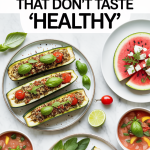
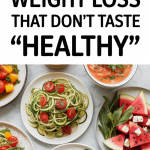
Summer Recipes For Weight Loss That Don’t Taste “Healthy”: 12 Flavor-First Dishes To Enjoy All Season
Summer invites lighter plates, but too often “healthy” gets translated into bland. We don’t buy that, flavor is what keeps us consistent, satisfied, and on track with weight-loss goals. In this guide we’ll show how to make summer recipes for weight loss that actually taste indulgent: bright, savory, and built around texture and umami so you don’t feel deprived. Expect 12 flavor-first dishes (breakfasts, lunches, dinners, snacks, and sides), practical meal-prep tips, and portioning strategies that help us maintain a calorie deficit without sacrificing enjoyment. These recipes lean on smart swaps, high-satiety ingredients, and bold dressings, so the scale moves while our taste buds celebrate. Let’s dig in.
Why Flavor Matters More Than Labels For Summer Weight Loss
We often treat the words “weight-loss” and “flavor” as opposing forces, like one must be sacrificed for the other. In reality, flavor is the adherence engine for any eating plan. When food tastes good, we stick with it. When it’s enjoyable, we don’t snack mindlessly later because we feel deprived. That’s critical in summer, when social events, outdoor grilling, and produce temptations are all around us.
Here’s why prioritizing taste helps weight loss:
- Satiety beats restriction: High-flavor food signals satisfaction. A tangy dressing, char from the grill, or a hit of herbaceousness can make a modest portion feel indulgent. That reduces cravings and late-night snacking.
- Energy density vs. satisfaction: We can’t ignore calories, but calorie density isn’t the whole story. A 350-calorie grilled fish dinner with vibrant salsa will often curb appetite better than a 250-calorie bowl of tasteless “diet” food.
- Sustainability: Weight loss is a long game. We want meals we actually want to eat five days a week, not once and give up. Flavor-first dishes fit into social life, travel, and cookouts without feeling clinical.
Finally, summer ingredients naturally support this approach. Ripe tomatoes, citrus, fresh herbs, and seafood bring intense flavor with relatively low calories. If we combine those with protein and fiber, we get meals that are both satisfying and conducive to steady weight loss. The rest of this article shows practical recipes and techniques that put flavor first, without blowing your calorie budget.
The Principles Behind Tasty, Satisfying, Weight-Loss–Friendly Summer Meals
Before we jump into recipes, let’s outline the rules we follow so every dish stays flavorful and weight-loss friendly.
- Prioritize protein and fiber
Protein (eggs, Greek yogurt, chicken, shrimp, legumes) and fiber (veggies, fruits, whole grains) keep us full longer. Each recipe centers on at least one solid protein source and a fiber-rich component to reduce hunger between meals.
- Use fat strategically
We don’t remove fat, we dose it. Healthy fats (olive oil, avocado, a pat of butter) boost flavor and absorption of fat-soluble vitamins but are calorie-dense. We use small amounts for big taste: a drizzle of herb oil or a lemon-garlic butter used sparingly.
- Leverage acid and heat
Acid (citrus, vinegars) brightens and enhances perceived sweetness. Heat (grilling, charring, broiling) creates Maillard flavors that scream indulgent. Together they make simple ingredients sing.
- Layer umami and texture
A sprinkle of toasted seeds, a little grated Parmesan, or a fermented condiment (like a touch of miso or soy) adds savory depth. Texture, crunchy, creamy, silky, keeps each bite interesting and satisfying.
- Volume with low-calorie items
We bulk plates with low-cal produce, mixed greens, cucumbers, zucchini ribbons, summer squash, so portions look generous without adding many calories.
- Smart swaps, not denial
We replace heavy components with lighter equivalents that keep mouthfeel: Greek yogurt instead of sour cream, spiralized veg for some pasta servings, or cauliflower rice for half a rice portion.
Following these principles will make our summer recipes for weight loss realistic, sustainable, and delicious, the exact balance we need to succeed.
Breakfast That Feels Indulgent: Savory Greek Yogurt Pancake Stack (Make-Ahead)
We think breakfast sets the tone. A savory pancake stack keeps carbs moderate, adds protein, and reads like a treat thanks to herbs, a tangy spread, and a runny egg if you like. Because it’s make-ahead, it fits busy summer mornings.
Why it works for weight loss
Greek yogurt boosts protein and tang, reducing the need for added fat. Whole-grain or oat flour provides fiber, and savory add-ins (herbs, scallions, grated zucchini) increase volume and micronutrients. The stack delivers satisfaction without excess calories.
Quick overview
- Makes: 4 servings
- Prep: 15 minutes, plus resting
- Cook: 15–20 minutes
Ingredients (high-level)
- 1 cup plain Greek yogurt (nonfat or 2%)
- 1 cup oat or whole-wheat flour
- 2 large eggs
- 1/2 cup grated zucchini (squeezed dry)
- 2 tbsp finely chopped chives or scallion
- 1 tsp baking powder, pinch of salt
- Olive oil spray for pan
- Toppings: lemony herbed spread (Greek yogurt mixed with lemon zest, dill, and salt), optional soft-poached egg, microgreens, smoked paprika
Why the make-ahead trick matters
We can cook a big batch of pancakes, cool them, and stack parchment between layers in the fridge. Reheat in a skillet to recover crispness, you’ll get that indulgent edge without morning labor. Portion them with a dollop of the herbed spread and a side of sliced tomatoes or grilled peaches.
Serving tips and calorie control
A sensible serving is 3–4 small pancakes plus 2 tbsp of the herbed spread and a poached egg if desired. That combination gives ~25–30g protein and plenty of flavor, usually under 400–450 calories depending on egg inclusion. If we want fewer carbs, serve two pancakes with a larger salad or grilled veg on the side.
We find that starting the day with something savory and textured reduces mid-morning cravings far better than a sweet, low-protein alternative. That’s the kind of win we want in a summer weight-loss plan.
Lunch That Keeps You Full: Grilled Citrus Chicken Salad Wrap With Creamy Herb Dressing
Lunch in summer should be portable, cool, and packed with contrast, bright citrus, smoky char, crunchy veg, and a creamy element that feels indulgent. A grilled citrus chicken salad wrap does all that while staying weight-loss friendly.
Why this is a lunch winner
Grilled chicken provides lean protein: whole-grain wraps or large butter lettuce leaves reduce refined carbs: citrus and fresh herbs add big flavor without calories: a yogurt-based dressing gives creaminess with less fat than mayonnaise.
Ingredients snapshot (serves 4)
- 1.25 lb boneless skinless chicken breasts or thighs, marinated in juice of 1 orange and 1 lime, 1 tbsp olive oil, smoked paprika, salt, pepper, and garlic
- 4 whole-grain wraps or 8 large Bibb lettuce leaves
- 2 cups shredded cabbage or romaine
- 1 cup sliced cucumber, 1 cup cherry tomatoes halved
- 1/4 cup chopped cilantro or parsley
- 1 avocado, thinly sliced (optional)
- Creamy herb dressing: 1/2 cup plain Greek yogurt, 1 tbsp olive oil, 2 tbsp lemon juice, 2 tbsp chopped herbs, 1 small clove garlic, salt and pepper
Assembly and portion control
We grill the marinated chicken until just cooked, rest it, then slice thin. For each wrap: layer 3–4 oz chicken, a generous handful of greens and chopped veg, 1–2 tbsp dressing, and a few slices of avocado if using. Folding technique matters, tuck and roll tightly to keep the salad contained.
Calories and satiety
A properly built wrap is typically 350–450 calories depending on wrap choice and avocado. If we want to shave calories, use lettuce leaves instead of wraps and reduce the olive oil in the dressing. Pair the wrap with a side of grilled fruit or a small cup of chilled vegetable soup for extra volume.
Make-ahead notes
Grill a batch of chicken and portion into 3–4 oz servings. Keep dressing separate until ready to eat to prevent sogginess. This lunch reheats well and travels great, perfect for picnics or desk days when we need something reliably satisfying.

Dinner That Feels Like A Treat: Zesty Shrimp And Veggie Foil Packs With Lemon-Garlic Butter
Dinner should feel like a reward after a day of being active. Shrimp cooks fast, takes on flavor easily, and pairs with tons of summer veg. Foil packs lock in juices and make clean-up effortless, ideal for weeknights and backyard dining.
Why shrimp foil packs are perfect
Shrimp is low in calories but high in protein, which makes it excellent for weight loss. The lemon-garlic butter provides indulgent mouthfeel, but because it’s distributed across packets and combined with high-volume vegetables, the per-serving fat and calorie counts remain reasonable.
High-level ingredients (4 servings)
- 1.5 lb large shrimp, peeled and deveined
- 2 cups zucchini, sliced into half-moons
- 1 cup bell peppers, sliced
- 1 cup cherry tomatoes
- 1 small red onion, thinly sliced
- 2 tbsp minced garlic
- 2 tbsp olive oil
- Zest and juice of 1 lemon
- 2 tbsp butter (cut into 4 small pats to top packets)
- 2 tbsp chopped parsley, salt, pepper, red pepper flakes (optional)
Assembly and cooking
Toss shrimp and veg with olive oil, lemon zest, garlic, salt, and pepper. Divide onto four sheets of heavy-duty foil, place a pat of butter on each, seal packets, and grill or bake at 400°F for 10–12 minutes until shrimp are opaque. Finish with a squeeze of lemon and chopped parsley.
Controlling calories while keeping taste
Each packet contains enough veggies to bulk the plate: limiting butter to 1/2 tbsp (or using a light butter alternative) keeps the packet indulgent but not calorie-heavy. Serve over a small scoop of cauliflower rice or 1/2 cup cooked quinoa if we want extra carbs for active evenings.
Serving ideas and variations
- Add a spoonful of harissa or chimichurri for a flavor punch without much extra calorie cost.
- Swap shrimp for firm white fish or tofu for plant-based protein.
- Pair with a side salad tossed in a light vinaigrette to round out the meal.
This dish exemplifies our approach: bold flavor, simple technique, and macro-wise choices that support weight loss without making dinner feel like punishment.
Snacks And Sides That Don’t Taste “Healthy” (But Won’t Blow Your Calorie Budget)
Snacking can derail progress, or it can rescue it, if we choose satisfying options. Here are snack and side ideas that read indulgent but are portion-conscious and high in satiety.
- Spicy roasted chickpeas
Roasted until crunchy, tossed with smoked paprika, cayenne, and a touch of honey. One 1/2-cup serving is about 120–150 calories and delivers fiber and protein to curb cravings.
- Cucumber rounds with whipped feta and lemon
Blend 3 oz feta with 2 tbsp Greek yogurt and lemon zest until fluffy. Spoon onto cucumber rounds. The spread feels rich but is used sparingly: 10 rounds are typically under 200 calories.
- Grilled corn and cilantro-lime slaw (lightened)
We shave some kernels off the cob, toss with shredded cabbage, a squeeze of lime, cilantro, and a tablespoon of yogurt-based dressing. Volume is high: calories stay low. It hits that sweet/smoky grilled-corn craving without the mayo-laden heaviness.
- Watermelon, jicama, and Tajín
The mix of juicy sweetness, crunchy jicama, and a chili-lime sprinkle keeps us snacking happily for minimal calories.
- Mini caprese skewers with balsamic reduction
Cherry tomato, small mozzarella ball (bocconcini), basil leaf, drizzle a teaspoon of reduced balsamic (or use balsamic glaze sparingly). Easy to portion and perfect for entertaining.
- Air-fried “chips”, zucchini or eggplant
Thinly sliced, brushed lightly with oil, seasoned, and air-fried until crisp. Serve with a Greek yogurt-based ranch to keep it creamy without too much fat.
Portioning tips for snacks and sides
- Pre-portion: Use small containers so we don’t mindlessly graze.
- Pair protein + fiber: Snacks that combine both (chickpeas, Greek yogurt dips, cheese with fruit) hold us longer.
- Keep “treat” components small: A drizzle of honey, a shave of Parmesan, or a tiny pat of butter goes a long way for flavor.
These options keep summer snacking fun and social while supporting our calorie targets and reducing the urge to overeat later in the day.
Simple Meal-Prep And Portioning Strategies For Summer Success
Delicious food won’t help if we don’t plan. Summer schedules can be chaotic, trips, BBQs, later dinners, so a few practical prep and portion habits keep us steady.
- Cook once, eat multiple ways
Grill a batch of citrus chicken (or shrimp) and use it in wraps, salads, or atop grain bowls. Change sauces and accoutrements to avoid boredom: chimichurri one day, yogurt-herb dressing the next.
- Portion as you cook
Weigh or eyeball protein portions into 3–4 oz servings before refrigerating. Use clear containers so we can visually estimate calories quickly. That reduces temptation to double-portion at dinner.
- Make flavor components, not whole meals
Prepare dressings, salsas, herb oils, and compound butters in jars. They elevate simple bases (plain grilled veggies, baked fish) and let us control added fats by spooning precisely.
- Use low-effort tools
An air fryer crisps with minimal oil, a sheet-pan lets us roast protein and veg together, and a grill imparts big flavor that reduces the need for heavy sauces.
- Batch breakfasts and freeze
Make pancake stacks or savory muffins and freeze in individual portions. Reheat in toaster or oven to regain texture.
- Visual portion cues
Use plate divisions: half non-starchy veg, one-quarter lean protein, one-quarter whole grain or starchy veg. It’s quick and effective when we’re not weighing everything.
- Plan for social events
If we know we’ll enjoy a BBQ or patio dinner, plan lighter meals earlier in the day and add a protein-focused snack beforehand to avoid overeating.
- Track loosely for awareness
We don’t obsess, but a week of tracking portions helps calibrate serving sizes. After that we typically rely on hunger and visual cues.
Applying these strategies makes it possible to eat boldly flavored summer meals while maintaining a sustainable calorie deficit. The prep work is minimal compared to the payoff: enjoyable meals that keep us on track.
Conclusion
Flavor is the missing link in most weight-loss plans, especially in summer. By centering protein and fiber, using fat and acid strategically, and leaning into heat and umami, we can build summer recipes for weight loss that don’t taste “healthy” at all. The savory Greek yogurt pancake stack, citrus chicken wraps, zesty shrimp foil packs, and the snacks we suggested show how variety and pleasure keep us consistent. With simple meal-prep habits and mindful portioning, we can enjoy backyard gatherings and sunny weekends without undoing progress. Let’s make this summer one of great food and steady results.