10 Best Low-Glycemic Foods For People With Diabetes: Practical Picks, Portions, And Meal Ideas For 2026
Managing blood sugar doesn’t have to feel like a constant list of “don’ts.” When we focus on low-glycemic foods, we give ourselves practical, science-backed tools to steady glucose, reduce cravings, and enjoy real meals. This guide, updated for 2026, walks us through the best low-glycemic choices, explains how to read the glycemic index and glycemic load, and delivers portion guidance plus meal ideas you can use this week. We’ll stick to evidence-based picks (vegetables, legumes, whole grains, nuts, seeds, lean proteins, dairy, and certain fruits) and keep things actionable: what to buy, how much to eat, and simple swaps that make grocery shopping and cooking far easier. Whether you’re newly diagnosed or refining your meal plan, these ten low-glycemic foods will help us build balanced plates that support healthy blood sugar without sacrificing flavor.
Why Low-Glycemic Foods Matter For Diabetes Management
Understanding why low-glycemic foods matter changes how we approach every meal. The glycemic index (GI) ranks carbohydrate-containing foods by how quickly they raise blood glucose compared with a reference (glucose or white bread). Low-GI foods (generally GI ≤ 55) release glucose more slowly, producing gentler post-meal blood sugar rises. For people with diabetes, that translates to fewer large glucose spikes, lower insulin demand, and often improved long-term outcomes like reduced HbA1c. But GI alone isn’t the whole story, practical meal planning also requires attention to portion size, total carbohydrates, fiber, protein, and fats.
We should also remember why steady blood sugar matters beyond numbers. Fewer spikes mean less fatigue after meals, more predictable medication effects, and reduced appetite surges that can lead to overeating. In population studies and randomized trials, dietary patterns emphasizing low-GI foods, especially when combined with higher fiber and balanced macronutrients, have been linked to improved glycemic control and metabolic markers. That makes low-glycemic choices a useful component of diabetes self-management, not a restrictive fad. In the sections that follow we’ll highlight ten go-to foods, explain how to interpret GI with glycemic load (GL), and give realistic portions and meal ideas so we can apply this to everyday life.
How To Read Glycemic Index And Glycemic Load (And Use Them Together)
If GI tells us how quickly a food raises blood sugar, glycemic load (GL) tells us how much of an impact a typical portion will have. GL is calculated as: (GI × grams of available carbohydrate per serving) ÷ 100. That means a high-GI food eaten in a tiny amount can have a low GL, and conversely, a moderate-GI food in a very large portion can produce a significant blood sugar effect.
Practical rules we use:
- Favor low GI (≤55) foods when possible, but always check GL for realistic portions, GL ≤10 is considered low, 11–19 moderate, and ≥20 high.
- Prioritize fiber-rich carbohydrates: fiber lowers effective available carbs and slows absorption.
- Combine carbs with protein and healthy fat: this reduces the overall post-meal glucose rise and extends satiety.
- Be aware of preparation: cooking time, ripeness (for fruit), and processing can increase GI. For example, al dente pasta has a lower GI than overcooked pasta: ripe bananas have higher GI than firmer ones.
We also encourage using continuous glucose monitors (CGMs) or frequent self-monitoring when possible to see how individual responses vary, GI and GL are helpful guides, but personal biology and medication regimens change outcomes. In short: use GI for food selection, GL for portion decisions, and real-world glucose data to fine-tune.
Top Low-Glycemic Vegetables And Leafy Greens (1–3)
Vegetables are front-line allies for blood sugar control, providing fiber, micronutrients, and volume without high carbohydrate loads. Here are three low-glycemic standouts we rely on.
- Leafy Greens (spinach, kale, Swiss chard)
- Why we pick them: Practically zero available carbs per typical serving, excellent fiber, vitamins A, C, K, magnesium, and potassium.
- Portion guidance: 2 cups raw leafy greens count as one cup cooked equivalent: aim for at least 2–3 cups raw per day.
- Meal idea: Make a quick sauté with garlic, lemon, and a splash of olive oil: toss in a scoop of cooked lentils for a warm salad that balances carbs and protein.
2. Cruciferous Vegetables (broccoli, cauliflower, Brussels sprouts)
- Why we pick them: Low GI and low GL, high in fiber and sulforaphane (an antioxidant linked to metabolic benefits).
- Portion guidance: 1 cup cooked cruciferous vegetables is a reasonable side portion, usually GL remains very low.
- Meal idea: Roast broccoli and cauliflower with crushed red pepper and a sprinkle of parmesan: add a serving of grilled salmon for a complete meal.
3. Bell Peppers and Zucchini
- Why we pick them: Colorful bell peppers add vitamin C and antioxidants, zucchini brings volume and very low carbs. Both have low GI and versatile uses.
- Portion guidance: 1 cup chopped peppers or zucchini (cooked or raw) is an easy scoop into omelets, salads, or stir-fries.
- Meal idea: Stuff halved bell peppers with a mix of quinoa, black beans, diced tomatoes, and herbs, portion-controlled and balanced.
These vegetables give us bulk and nutrition while keeping glycemic impact minimal. They’re staples for building low-GI plates that feel satisfying.
Nutrient-Dense Legumes And Pulses (4–6)
Legumes and pulses are among the best carbohydrate sources for people with diabetes: moderate to low GI, high fiber, and rich in plant protein. Here are three we recommend.
- Lentils (brown, green, red)
- Why we pick them: Lentils have a low GI (typically 21–29 for many varieties) and impressive fiber and protein per serving. They slow digestion and reduce insulin response.
- Portion guidance: 1/2 cup cooked lentils (about 100–120 grams) gives 9–12 grams of fiber and 9–10 grams of protein, an excellent side or base.
- Meal idea: A lentil and vegetable stew with tomatoes, carrots, and a dollop of plain Greek yogurt on top: pair with a side salad for extra greens.
2. Chickpeas (garbanzo beans)
- Why we pick them: Chickpeas have a moderate to low GI depending on preparation (often 28–35), and they’re versatile, whole, mashed, or as flour (besan). They promote fullness and have a gentle glucose impact.
- Portion guidance: 1/2 cup cooked chickpeas (~120 g) is a typical serving, use them in salads, stews, or roasted as a snack.
- Meal idea: Make a Mediterranean bowl: mixed greens, 1/2 cup chickpeas, olives, cucumber, cherry tomatoes, a tablespoon of tahini, and grilled chicken or tofu.
3. Black Beans and Kidney Beans
- Why we pick them: Low GI and dense with resistant starch and soluble fiber, which help blunt post-meal glucose.
- Portion guidance: 1/2 cup cooked beans: avoid extremely large portions in one sitting to manage total carbs.
- Meal idea: Black bean and vegetable chili with bell peppers and onions, serve over a small portion of brown rice or cauliflower rice to keep GL low.
Legumes also support heart health by lowering LDL cholesterol: since cardiovascular disease is a major risk for people with diabetes, beans are a two-fold win. We recommend incorporating legumes several times per week, rotating types to maintain variety.
Whole Grains, Nuts, And Seeds That Won’t Spike Blood Sugar (7–8)
Whole grains, nuts, and seeds provide sustained energy, fiber, and healthy fats, when chosen and portioned wisely, they’re friendly to blood sugar control. Two key grain/seed categories stand out.
- Rolled Oats (steel-cut or old-fashioned) and Barley
- Why we pick them: Steel-cut oats and barley are lower GI than instant oats. Their soluble fiber (beta-glucan) slows carbohydrate absorption and improves insulin sensitivity in some studies.
- Portion guidance: 1/3 to 1/2 cup dry oats (which yields about 1 cup cooked) is a practical breakfast portion, pair with protein (milk, yogurt, or protein powder) and a tablespoon of nuts or seeds. Barley can replace rice in pilafs, use roughly 1/2 cup cooked per serving to manage GL.
- Meal idea: Overnight oats made with plain Greek yogurt, chia seeds, cinnamon, and a few chopped walnuts: top with a handful of berries.
2. Nuts and Seeds (almonds, walnuts, chia, flax)
- Why we pick them: Almost zero glycemic impact, high in monounsaturated and polyunsaturated fats, plant protein, and fiber. Frequent nut consumption is linked to better glycemic control and lower cardiovascular risk.
- Portion guidance: A typical portion is 1 ounce (about 23 almonds or 2 tablespoons of seeds). Nuts are calorie-dense, so portion control matters, measure instead of mindless snacking.
- Meal idea: Toss a tablespoon of chopped pistachios and chia seeds into cottage cheese or a salad for crunch and sustained energy.
Whole grains, nuts, and seeds help us replace refined carbs while keeping meals satisfying. We emphasize minimally processed grains and raw or dry-roasted nuts without added sugars or salts.
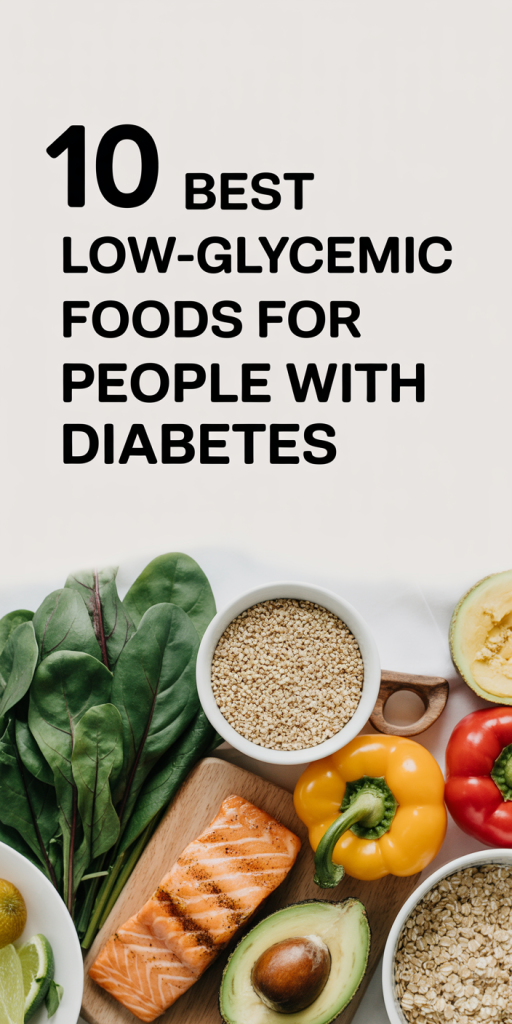
Protein, Fatty Fish, Fruits, And Dairy: Low-Glycemic Options For Balanced Meals (9–10)
To complete balanced meals, we pair low-glycemic carbs with quality protein, healthy fats, and select fruits and dairy that have low glycemic effects. Here are two final groupings that round out our top ten list.
- Fatty Fish and Lean Proteins (salmon, sardines, chicken breast, tofu)
- Why we pick them: Proteins and fats don’t raise blood sugar directly and slow carbohydrate absorption when eaten together. Fatty fish like salmon and sardines provide omega-3s that support cardiovascular health, critically important for people with diabetes.
- Portion guidance: Aim for 3–4 ounces (85–115 g) cooked protein per meal as a baseline. For fish, two servings per week of fatty fish is a common recommendation.
- Meal idea: Pan-seared salmon with a lemon-herb dressing, served beside steamed broccoli and 1/2 cup cooked barley.
2. Low-Glycemic Fruits and Dairy (berries, apples, cherries: plain Greek yogurt, cottage cheese)
- Why we pick them: Many fruits contain fiber and have lower GI than tropical fruits: berries, apples, and cherries are excellent choices. Plain Greek yogurt and cottage cheese provide protein and probiotics with very low glycemic impact compared with flavored dairy products.
- Portion guidance: One small apple or 1/2 to 3/4 cup berries per serving is reasonable. For dairy, 3/4 to 1 cup plain Greek yogurt or 1/2 cup cottage cheese is a useful measure.
- Meal idea: Mix 3/4 cup plain Greek yogurt with 1/2 cup berries, 1 tablespoon chopped walnuts, and a dusting of cinnamon for breakfast or a snack.
Combining these proteins, fatty fish, fruits, and dairy items with our earlier vegetables, legumes, grains, and nuts produces meals that are nutrient-dense, flavorful, and blood sugar-friendly. We avoid sweetened yogurts, fruit juices, and overly ripe tropical fruits when managing glycemic load.
Protein, Fatty Fish, Fruits, And Dairy: Low-Glycemic Options For Balanced Meals (9–10)
(continued)
A few additional tips on pairing and timing:
- Always pair carbohydrates with protein or healthy fat to blunt glucose rises. For instance, pair an apple with 1 ounce of cheese or a tablespoon of almond butter.
- Spread carbohydrate intake across the day: large boluses at a single meal will raise GL even with low-GI foods.
- Choose intact foods over sweetened, processed options, whole fruit over fruit juice: plain yogurt over flavored varieties.
We’ll now turn these building blocks into concrete meal ideas and shopping tips so we can use them immediately.
Practical Meal Ideas, Portion Control, And Grocery-Store Shopping Tips
The best nutrition plan is the one we can actually follow. Here are meal templates, portion cues, and shopping strategies that help us translate the previous sections into everyday meals.
Meal templates (easy swaps and building blocks):
- Breakfast: 3/4 cup plain Greek yogurt + 1/2 cup berries + 1 tablespoon chia seeds + 1 tablespoon chopped nuts. Alternate with steel-cut oats topped with cinnamon and 1 tablespoon nut butter.
- Lunch: Big salad (2–3 cups mixed greens) + 1/2 cup cooked lentils or chickpeas + 3–4 ounces grilled chicken or tofu + 1 tablespoon olive oil + vinegar. Add 1 small apple if desired.
- Dinner: 3–4 ounces fatty fish or lean protein + 1 cup nonstarchy vegetables (roasted or steamed) + 1/2 cup cooked barley or 1/2 cup black beans.
- Snacks: 1 ounce of almonds, 1 small pear with 1 tablespoon peanut butter, or 1/2 cup cottage cheese with cucumber slices.
Portion control cues we use (no scale needed):
- Protein: palm-sized portion (3–4 oz cooked) per meal.
- Starchy carbs/legumes: about a cupped handful or 1/2 cup cooked per serving.
- Nuts/seeds: thumb-sized portion (about 1 oz or 2 tablespoons).
- Vegetables: aim for at least 1–2 fists of nonstarchy vegetables per meal.
Grocery-store shopping tips:
- Shop the perimeter first: produce, fresh fish, dairy, and meats tend to be outside the aisles and are less processed.
- Read labels: watch for added sugars in canned beans, yogurt, or sauces. Choose cans with no-salt or low-sodium and no added sugar.
- Buy frozen vegetables and berries: they’re nutrient-dense, convenient, and often cheaper, perfect for busy weeks.
- Keep staples: canned or dried beans, rolled oats, plain Greek yogurt, canned tuna or salmon, olive oil, nuts, and seeds. These allow quick low-GI meals in minutes.
Cooking and prep tips:
- Batch-cook lentils, beans, and whole grains on the weekend to simplify weeknight meals.
- Use herbs, citrus, and spices for flavor rather than sugar-laden sauces.
- When eating out, ask for sauces on the side, choose grilled or roasted preparations, and request double vegetables instead of fries.
Finally, we recommend tracking meals and glucose responses for a couple weeks, this helps identify which combinations work best for each of us. Small adjustments, like adding a tablespoon of olive oil or choosing barley over white rice, can make measurable differences in post-meal glucose.
Conclusion
Choosing low-glycemic foods gives us a practical, flexible strategy to stabilize blood sugar while still enjoying varied, satisfying meals. Our top ten picks, leafy greens and cruciferous vegetables, bell peppers and zucchini, lentils, chickpeas, black beans, rolled oats and barley, nuts and seeds, fatty fish and lean proteins, and low-glycemic fruits and plain dairy, form a toolkit we can mix and match daily. Pair these foods with portion awareness, protein, and healthy fats, and we’ll reduce post-meal spikes and support long-term metabolic health. Start by swapping one refined carbohydrate at a time, small changes add up. If you use medications or insulin, coordinate any major diet changes with your healthcare team and consider monitoring with a CGM or glucometer as you adjust. These low-GI choices make diabetes management more predictable and, honestly, a lot more delicious.