Reset In 5 Days: A Practical Detox Meal Plan To Cleanse Naturally And Feel Renewed
We’ve all had those moments when our energy lags, our digestion feels sluggish, and we vow to “clean up” our eating. A short, focused reset can be the fastest, safest way to recalibrate without extreme restrictions. In this guide we share a practical 5-day detox meal plan designed to reset the body naturally, no expensive supplements, no fasting gimmicks, just whole foods, hydration, and simple kitchen strategies. Over five days we’ll reduce inflammatory triggers, support digestion and liver function, rehydrate cells, and give our microbiome a gentle nudge toward balance. This isn’t a quick-fix weight-loss crash: it’s a reset that helps us notice how food affects our energy, mood, and sleep so we can make smarter choices afterward. Read on for the why, the how, a day-by-day plan with swaps and portion guidance, and realistic tips for maintaining the benefits after Day 5.
Why A Short, Natural Detox Works — Benefits And What To Expect
A brief, natural detox works because it removes common dietary stressors and replaces them with nutrient-dense, easy-to-digest foods that support the body’s existing detox pathways. We’re not trying to “detoxify” with miracle pills: our liver, kidneys, lungs, skin, and gut already perform continuous detox work. What a short reset does is reduce the burden these systems face and supply the cofactors they need, think antioxidants, fiber, and hydration.
Key benefits we typically see after a short reset
- Improved digestion: Less bloating, fewer reflux episodes, and more regular bowel movements when we prioritize fiber, water, and fermented foods.
- Increased energy and mental clarity: Stabilizing blood sugar and cutting back on alcohol, refined carbs, and heavy dairy often leads to steadier energy across the day.
- Reduced inflammation and clearer skin: Whole-foods-based anti-inflammatory meals can reduce inflammatory markers and benefit skin health within days for many people.
- Better sleep and mood: Stabilized meals and reduced stimulants (caffeine late in the day, sugar spikes) can improve sleep onset and daytime mood.
What to expect physically and mentally
Expect a transition period. In the first 24–48 hours some people notice headaches, mild fatigue, or cravings, especially if we’re cutting back on caffeine, sugar, or processed foods. Those symptoms generally subside as blood sugar stabilizes and hydration improves. Energy and digestion typically show noticeable improvement by Day 3.
Who should avoid a short detox or consult first
A short detox is safe for most healthy adults, but we must be cautious with certain groups: pregnant or breastfeeding people, children and adolescents, anyone with an eating disorder history, people with diabetes on medication, and those on medications metabolized by the liver (statins, certain antidepressants). If we fall into any of these categories, or have chronic kidney, liver, or heart disease, we should consult our healthcare provider before starting.
Evidence and realistic expectations
Scientific evidence supports short dietary changes for improving markers like blood pressure, blood sugar, and inflammation when the diet shifts from processed to whole foods. But detoxes aren’t magic: sustainable health improvements come from adopting cleaner habits after the reset, not from the reset alone. Our goal is a practical reboot that helps us make clearer choices going forward.
How To Prepare: Shopping List, Kitchen Prep, Timing, And Safety Notes
Preparation is the single most important factor for succeeding with a short detox. When we do the planning, the day-to-day decisions become frictionless and temptations shrink.
Shopping list essentials
Produce (prioritize organic when possible): leafy greens (spinach, kale, arugula), cruciferous veg (broccoli, cauliflower), carrots, beets, cucumbers, bell peppers, lemons, apples, berries, avocadoes, fresh herbs (cilantro, parsley).
Proteins & pantry: canned or dried beans (lentils, chickpeas), extra-firm tofu, wild-caught salmon or sustainably sourced fish (if including fish), plain Greek yogurt or unsweetened plant-based yogurt, eggs (if tolerated).
Whole grains & healthy carbs: quinoa, brown rice, rolled oats, sweet potatoes.
Healthy fats: extra-virgin olive oil, avocado oil, raw nuts and seeds (almonds, walnuts, chia, flax).
Ferments & functional additions: sauerkraut or kimchi (low-sugar), miso, kombucha (low-sugar), ginger, turmeric, apple cider vinegar.
Herbs, spices & staples: sea salt, black pepper, cumin, coriander, cinnamon, garlic, low-sodium vegetable or bone broth.
Beverages: filtered water, herbal teas (peppermint, ginger, dandelion), green tea (moderate), lemon.
Kitchen prep checklist
- Batch cook grains: prepare a large pot of quinoa or brown rice to use across meals.
- Roast a sheet pan of mixed vegetables (seasoned lightly with olive oil and salt) to add to bowls and breakfasts.
- Pre-chop snack vegetables and store in airtight containers so they’re grab-ready.
- Make a double batch of a simple dressing (olive oil, lemon, mustard, a touch of honey) to keep salads interesting.
- Soak and cook beans in advance or open and rinse canned beans for convenience.
Timing and daily schedule suggestions
- If we drink caffeine, plan to taper rather than quit cold turkey, reduce amounts and avoid after midday to prevent headaches and sleep disruption.
- Aim for three balanced meals and 1–2 light snacks to keep blood sugar stable.
- Hydration: start each morning with 12–16 oz of water with lemon. Aim for 2.2–3.0 liters (about 8–12 cups) of fluid daily, including herbal teas and soups, adjust for body size and activity level.
- Movement: gentle activity is best, walking, yoga, or light strength training to support lymphatic flow and mood.
Safety notes and practical cautions
- Medication interactions: certain herbs (like high-dose turmeric) can interact with blood thinners: grapefruit interacts with some statins. Check with our prescriber if we’re on meds.
- Blood sugar: people taking insulin or sulfonylureas should not change eating patterns without medical supervision.
- Electrolytes: if we’re very active or experience lightheadedness, add a pinch of salt and a source of potassium (banana, avocado, or broth) to prevent imbalance.
- Food sensitivities: adapt the plan to avoid foods that trigger significant reactions (dairy, gluten, nuts). We can substitute with tolerated alternatives.
If we prepare thoughtfully, the five days are manageable and even restorative rather than restrictive.
5-Day Meal Plan Overview: Principles, Portion Guidance, And Swaps
Principles that guide the 5-day plan
- Whole foods first: focus on minimally processed vegetables, fruits, whole grains, legumes, nuts, seeds, and lean proteins.
- Fiber and prebiotics: include soluble and insoluble fiber to support bowel regularity and feed healthy gut bacteria, oats, apples, onions, garlic, leeks, asparagus, and legumes.
- Antioxidants and anti-inflammatories: berries, leafy greens, turmeric, ginger, and cruciferous vegetables.
- Gentle protein and healthy fats: plant proteins and small amounts of fish or poultry for those who eat animal products: olive oil, avocado, nuts.
- Fermented foods: a tablespoon or two of sauerkraut or a small serving of yogurt to support microbial diversity.
- Hydration and electrolytes: soups, broths, and mineral-rich water for consistent hydration.
Portion guidance (easy-to-remember plate method)
- Half the plate: non-starchy vegetables (raw or cooked).
- One-quarter: lean protein or plant protein (3–6 oz cooked for most adults, or 1–1.5 cups beans/legumes).
- One-quarter: whole grains or starchy vegetables (½–1 cup cooked quinoa, brown rice, or 1 medium sweet potato).
- Fats: 1–2 tablespoons of olive oil, ¼ avocado, or a small handful of nuts/seeds per meal.
- Snacks: aim for 150–250 calories combining fiber + protein (an apple with 1 tbsp almond butter, Greek yogurt with berries, or hummus with carrots).
Swaps and customization
- Dairy: swap dairy milk for unsweetened plant milk: choose plain yogurt or eliminate if sensitive.
- Gluten: choose gluten-free oats and gluten-free grains like quinoa if we’re avoiding gluten.
- Vegetarian/Vegan: replace fish/chicken with baked tofu, tempeh, lentils, and extra legumes.
- Low-FODMAP: for those with IBS, reduce high-FODMAP foods, substitute garlic with garlic-infused oil, choose firm tofu, omit beans, and focus on tolerated veggies.
- Alcohol and caffeine: avoid alcohol during the five days: limit caffeine to one moderate cup of green tea or coffee in the morning if we need it, tapering as necessary.
Meal timing and flexibility
We recommend three meals and up to two small snacks daily to stabilize blood sugar and energy. If intermittent fasting suits us and we’re medically cleared, we can compress eating into an 8–10 hour window, but maintain nutrient density during that period. Remember, the aim is a gentle reset, not rigid deprivation. If social occasions arise, choose the closest match to the plan (vegetable-forward meal, lean protein, and skip dessert) and resume the plan the next meal.
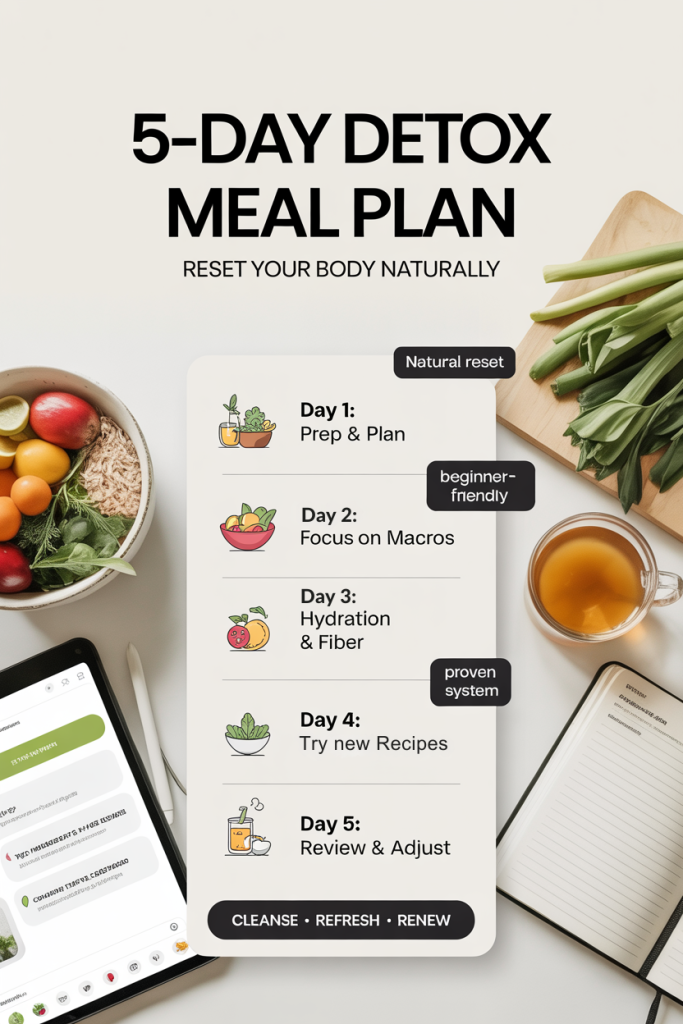
Days 1–2: Gentle Reset Menus (Hydration, Light Meals, Fiber Focus)
Day 1, Hydration and gentle fiber
Morning
- Warm lemon water (12 oz) with a pinch of sea salt.
- Breakfast: Overnight oats made with rolled oats, unsweetened almond milk, 1 tbsp chia seeds, cinnamon, and ½ cup mixed berries.
Mid-morning snack
- Sliced cucumber and a small handful of raw almonds (10–12).
Lunch
- Big mixed green salad: baby spinach, arugula, shredded carrots, grated beet, ½ cup cooked quinoa, ¾ cup chickpeas, dressing of olive oil + lemon + mustard.
Afternoon snack
- Green tea and an apple with 1 tbsp almond butter.
Dinner
- Baked salmon (4 oz) or marinated tofu, steamed broccoli and cauliflower, and ½ cup roasted sweet potato.
- Finish with a small spoonful of sauerkraut or a few tablespoons of plain yogurt.
Why Day 1 works: We focus on hydration, soluble fiber, and easy proteins to reduce digestive load while still feeling satisfied.
Day 2, Gentle elimination and fermented support
Morning
- Warm ginger water or peppermint tea.
- Breakfast: Savory vegetable porridge, rolled oats cooked with water, stirred with sautéed spinach, mushrooms, and a soft-cooked egg (or tofu scramble), topped with a sprinkle of seeds.
Mid-morning
- Pear and a small piece of ginger candy (optional) or a few walnuts.
Lunch
- Lentil and vegetable soup (homemade or low-sodium), side salad with lemon-olive oil dressing.
Afternoon
- Kombucha (low-sugar) or herbal tea and carrot sticks with hummus (2–3 tbsp).
Dinner
- Stir-fry: tofu or white fish with bok choy, bell peppers, garlic-infused oil, and a side of brown rice (½ cup cooked).
- Optional: a spoonful of kimchi or sauerkraut for probiotics.
Why Days 1–2 are gentle: These menus are intentionally light on processed carbs and heavy dairy, include fiber to stimulate bowel regularity, and introduce fermented foods to support the microbiome. We also encourage moderate protein and a focus on vegetables to reduce systemic inflammation. If we experience headaches from caffeine reduction, increase water, add a pinch of salt to mineralize fluids, and consider one small cup of coffee in the morning.
Days 3–4: Nourish And Support (Balanced Plant Proteins, Greens, Ferments)
By Day 3 we should feel less foggy and notice more regular digestion. These days are about consolidating gains, adding slightly denser nourishment while keeping meals anti-inflammatory and gut-supportive.
Day 3, Building supportive proteins and more vegetables
Morning
- Hydration: lemon water with a dash of turmeric.
- Breakfast: Green smoothie, spinach, half a banana, ½ cup frozen berries, 1 tbsp chia, 1 scoop plant protein or plain yogurt, unsweetened plant milk. Add a small piece of ginger for digestion.
Mid-morning
- Handful of mixed nuts and a few slices of apple.
Lunch
- Buddha bowl: brown rice or cauliflower rice, roasted chickpeas, shredded cabbage, steamed kale, avocado slices, and a tahini-lemon dressing.
Afternoon
- Herbal tea and a small portion of fermented vegetable salad (2–3 tbsp).
Dinner
- Baked trout or tempeh with a citrus-herb marinade, roasted Brussels sprouts, and a side of quinoa (½–¾ cup cooked).
Why Day 3 helps: Higher plant-protein inclusion with continued fermented foods supports microbial diversity and offers sustained energy.
Day 4, Focus on anti-inflammatory fats and leafy greens
Morning
- Warm water and a small glass of diluted kombucha (if tolerated).
- Breakfast: Savory chickpea pancake (besan/two-ingredient chickpea batter) topped with avocado and salsa, or scrambled eggs with spinach.
Mid-morning
- Celery sticks with 2 tbsp hummus.
Lunch
- Warm salad: roasted butternut, sautéed greens, toasted pepitas, and a small portion of grilled chicken or tempeh. Olive oil and apple cider vinegar dressing.
Afternoon
- Green tea and fresh berries.
Dinner
- Miso soup base with tofu, wakame, scallions, shiitake mushrooms, and a side of steamed bok choy. Small serving of brown rice if hungry.
Why Days 3–4 are pivotal: These days feed the mitochondria and liver with B vitamins, magnesium, polyphenols, and omega-3 precursors. We maintain fermented foods for the microbiome and emphasize healthy fats to support neurotransmitters and satiety.
Practical tweaks for both days
- If we feel low energy after workouts, add a ¼–½ cup extra cooked whole grain or a banana.
- If we’re vegetarian or vegan, increase portion sizes of legumes and seeds to meet protein needs.
- Continue to monitor hydration and include bone or vegetable broth if sodium dips or we feel lightheaded.