
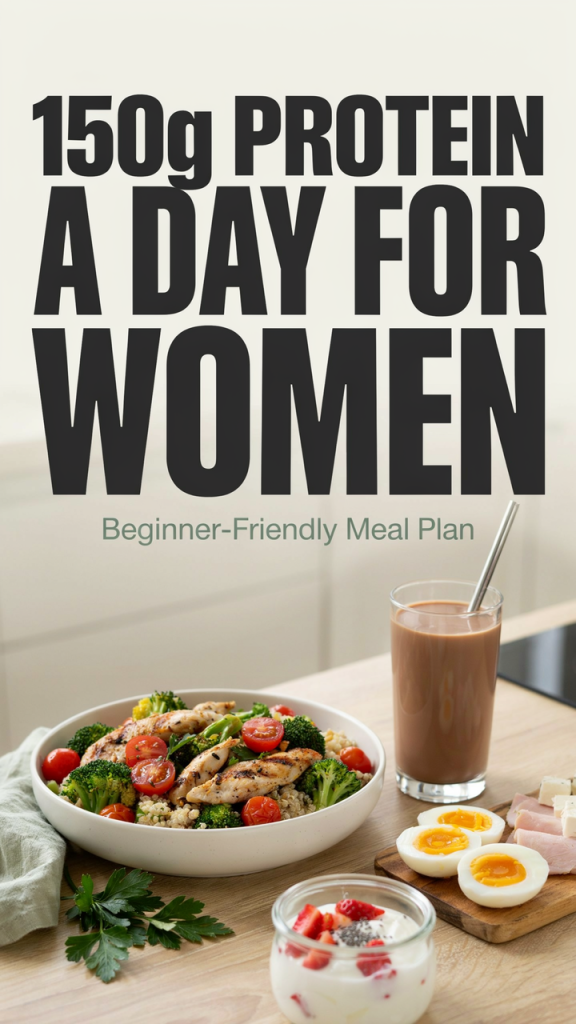
150g of Protein a Day for Women: A Beginner-Friendly Meal Plan
Eating 150 grams of protein a day can sound intimidating—especially if you’re new to tracking macros or balancing meals around protein. But for many women who are strength training, recovering from illness, aiming to preserve muscle while losing fat, or simply wanting to feel fuller longer, 150g can be an appropriate and achievable daily target. This guide breaks the approach down into friendly, practical steps, gives two fully worked sample days (omnivore and vegetarian), includes easy recipes with ingredient lists and step-by-step instructions, and offers meal-prep and safety tips so you can make this consistent without stress.
Below you’ll find clear protein math, shopping lists, timing tips, and alternatives so the plan fits your taste, budget, and schedule. Let’s get started.
Why 150g of protein? Who is it for?
H2: The rationale in simple terms
- Protein is essential for muscle repair and growth, hormone balance, immune health, and satiety.
- 150g/day represents a higher-than-average intake that supports active lifestyles (regular strength training or moderate-to-high activity), some weight-loss strategies that prioritize muscle retention, and recovery needs.
- This target is not universal. It’s often used by women who weigh ~70–90 kg (154–198 lb) and are aiming for roughly 1.6–2.2 g/kg bodyweight, or by anyone whose goals and professional guidance indicate higher protein.
H2: Safety and personalization
- Most healthy adults tolerate this level fine, but if you have kidney disease, severe liver issues, or certain metabolic conditions, consult your healthcare provider before starting.
- If 150g feels like a jump from your current intake, increase it gradually over 1–2 weeks and focus on whole-food sources first.
- Hydration matters: higher protein means more nitrogen to process; stay well-hydrated.
How to reach 150g without feeling overwhelmed
H3: Simple principles
- Aim for 4–6 protein-rich eating occasions per day (meals + snacks).
- Combine concentrated protein sources (lean meats, fish, dairy, soy, protein powder) with modest amounts from grains, nuts, beans, or seeds.
- Prioritize a protein source at every meal and most snacks.
H3: Protein-per-meal target (easy math)
- If you eat 4 meals: ~37–38g per meal.
- If you eat 5 meals/snacks: ~30g per eating occasion.
- If you eat 6 smaller meals: ~25g per occasion.
Below are two beginner-friendly, fully worked sample days (omnivore and vegetarian) that hit ~150g. Each recipe/meal includes ingredients and instructions plus estimated protein amounts. Use these as templates—swap proteins or portions to match your needs.
Sample Day 1 — Omnivore: ~150g protein
Daily goal: 150g protein (numbers are estimates; adjust slightly based on product labels)
- Breakfast — Protein Smoothie Bowl: ~41g
- Mid-morning Snack — Greek Yogurt + Almonds: ~20g
- Lunch — Grilled Chicken & Quinoa Bowl: ~43g
- Afternoon Snack — Cottage Cheese & Berries: ~21g
- Dinner — Seared Salmon + Lentils & Greens: ~25g
- Daily total ≈ 150g
Breakfast — Power Protein Smoothie (≈41g)
Ingredients
– 1 scoop whey protein powder (24 g protein)
– 1 cup (240 ml) 2% milk (approx. 8 g protein)
– 1/2 cup rolled oats, dry (approx. 5 g protein)
– 1 tbsp peanut butter (approx. 4 g protein)
– 1 small banana and ice (optional, for texture)
Instructions
1. Add milk, protein powder, oats, peanut butter, banana (if using), and ice to a blender.
2. Blend until smooth and creamy, pausing to scrape down the sides as needed.
3. Pour into a bowl or large glass. Top with a sprinkle of cinnamon or a few berries if desired.
4. Enjoy immediately.
Notes: Swap milk for 1 cup unsweetened soy milk for similar protein; use plant-based protein powder if preferred.
Mid-morning Snack — Greek Yogurt + Almonds (≈20g)
Ingredients
– 1 single-serving container (170–200 g) plain nonfat Greek yogurt (≈17–24 g protein; estimate 20 g)
– 10 raw almonds (≈3–4 g protein)
Instructions
1. Spoon Greek yogurt into a small bowl.
2. Top with almonds (whole or chopped) for crunch.
3. Optionally add a teaspoon of honey and cinnamon.
Lunch — Grilled Chicken & Quinoa Bowl (≈43g)
Ingredients
– 120 g cooked grilled chicken breast (approx. 37 g protein)
– 3/4 cup cooked quinoa (approx. 6 g protein)
– 1 cup mixed greens (spinach/lettuce)
– 1/2 cup roasted vegetables (bell pepper, zucchini, etc.)
– 1 tbsp olive oil + lemon juice or preferred dressing
Instructions
1. If chicken is not pre-cooked: season chicken breast with salt, pepper, and garlic powder; grill or pan-sear until internal temperature reaches 74°C (165°F), let rest, then slice.
2. Cook quinoa according to package directions (1 part quinoa to 2 parts water, simmer ~15 min).
3. Assemble bowl with quinoa, sliced chicken, greens, and roasted veggies.
4. Drizzle with olive oil and lemon juice or your dressing. Toss lightly and serve.
Afternoon Snack — Cottage Cheese & Berries (≈21g)
Ingredients
– 3/4 cup low-fat cottage cheese (≈21 g protein)
– 1/2 cup fresh berries (strawberries/blueberries)
– Optional: sprinkle of cinnamon or a few chopped walnuts
Instructions
1. Spoon cottage cheese into a bowl.
2. Top with berries and optional garnish.
3. Stir and eat chilled.
Dinner — Pan-Seared Salmon with Lentils & Garlic Greens (≈25–26g)
Ingredients
– 85 g (3 oz) salmon fillet (approx. 21 g protein)
– 1/4 cup cooked green or brown lentils (approx. 4–5 g protein)
– 2 cups leafy greens (spinach or Swiss chard)
– 1 tsp olive oil, garlic, salt, pepper, lemon wedge
Instructions
1. Heat a non-stick skillet with 1 tsp olive oil over medium-high heat. Season salmon with salt and pepper.
2. Place salmon skin-side down (if skin on), sear 3–4 min, flip, and cook another 3–4 min until cooked through. Remove and rest.
3. In the same pan, sauté garlic for 30 sec, add greens, and cook until wilted. Season to taste.
4. Warm lentils (pre-cooked) briefly in a small saucepan or microwave.
5. Plate salmon over greens with a side of lentils. Squeeze lemon on top and serve.
Notes: If you need more dinner protein, increase salmon portion to 100–120 g.
Sample Day 2 — Vegetarian (Lacto-Ovo-Soy) — ~150g protein
Daily goal: 150g protein
- Breakfast — Greek Yogurt & Hemp Seed Bowl: ~36g
- Mid-morning Snack — Edamame + Almonds: ~20g
- Lunch — Lentil & Tofu Salad: ~30g
- Afternoon Snack — Protein Shake (plant or whey): ~24g
- Dinner — Tempeh Stir-Fry: ~28g
- Evening Snack — Cottage Cheese: ~12g
- Daily total ≈ 150g
Breakfast — Greek Yogurt + Hemp Seed Power Bowl (≈36g)
Ingredients
– 1 cup (240 g) plain nonfat Greek yogurt (≈24 g protein)
– 2 tbsp hemp seeds (≈6 g protein)
– 1/4 cup cooked quinoa or oats (≈3–4 g protein)
– 1/2 cup mixed berries
Instructions
1. Spoon yogurt into a bowl.
2. Stir in cooked quinoa/oats if using.
3. Sprinkle hemp seeds and berries on top.
4. Mix and enjoy.
Mid-morning Snack — Shelled Edamame + Almonds (≈20g)
Ingredients
– 1 cup shelled edamame (cooked) (≈17 g protein)
– 6–8 raw almonds (≈3 g protein)
Instructions
1. If edamame is frozen, steam or microwave per package instructions and season lightly.
2. Combine with almonds in a small container or bowl.
3. Snack chilled or warm.
Lunch — Warm Lentil & Tofu Salad (≈30g)
Ingredients
– 1 cup cooked lentils (≈18 g protein)
– 150 g extra-firm tofu, pressed and cubed (≈12 g protein)
– 1 cup mixed greens and raw veggies (tomato, cucumber)
– 1 tbsp olive oil, lemon juice, salt, pepper
Instructions
1. Press tofu 15–30 minutes to remove excess water, then dice into cubes.
2. Sear tofu cubes in 1 tbsp olive oil over medium-high heat until golden on all sides (6–8 min). Season to taste.
3. Warm lentils if they’re chilled.
4. Toss greens and veggies with lemon juice, olive oil, salt, and pepper.
5. Combine lentils and tofu on top of salad and serve.
Afternoon Snack — Quick Protein Shake (≈24g)
Ingredients
– 1 scoop protein powder (whey or plant, approx. 24 g protein)
– 1 cup unsweetened soy milk or water (if soy milk, adds ~7 g; use water if you want lower calories)
– Ice
Instructions
1. Combine protein powder and soy milk (or water) in a shaker or blender.
2. Shake or blend until smooth.
3. Drink chilled.
Dinner — Tempeh & Veggie Stir-Fry (≈28g)
Ingredients
– 150 g tempeh, cubed (≈28 g protein)
– 1 cup mixed stir-fry vegetables (broccoli, bell pepper, carrots)
– 1 tbsp soy sauce or tamari
– 1 tsp sesame oil or olive oil
– 1 clove garlic, minced
Instructions
1. Heat oil in a skillet or wok over medium-high heat.
2. Add tempeh cubes; brown on all sides (~5–7 min).
3. Add minced garlic and vegetables, stir-fry until veggies are tender-crisp (~4–5 min).
4. Add soy sauce/tamari and toss to coat. Serve hot.
Evening Snack — Cottage Cheese (≈12g)
Ingredients
– 1/2 cup low-fat cottage cheese (≈12–14 g protein)
– Optional: sliced cucumber or a few cherry tomatoes
Instructions
1. Spoon cottage cheese into a small bowl.
2. Add optional veggies or a sprinkle of black pepper.
3. Eat chilled.
Grocery list for a high-protein week (guideline)
- Whey or plant protein powder
- Greek yogurt (plain, nonfat)
- Cottage cheese
- Eggs
- Chicken breast
- Salmon or other fish
- Tempeh, tofu, or other soy products
- Lentils (dry or canned)
- Quinoa, rolled oats
- Almonds, peanut butter, hemp seeds, chia seeds
- Milk or soy milk
- Fresh or frozen edamame
- Mixed fresh vegetables and salad greens
- Fruit for bowls and snacks (berries, banana)
- Olive oil, basic spices, soy sauce
Buy higher-protein options of staples when possible (e.g., high-protein yogurt, higher-protein milk alternatives).
Meal prep tips to make 150g/day realistic
- Cook proteins in bulk: grill several chicken breasts, bake a tray of salmon, or roast firm tofu/tempeh at the start of the week.
- Pre-portion protein snacks (cottage cheese cups, Greek yogurt tubs + almonds).
- Use protein powder strategically to fill gaps—smoothies and quick shakes are practical for busy days.
- Pack bowls: combine a cup of cooked quinoa, a protein portion (chicken, tofu), and veggies in one container.
- Freeze individual portions of cooked lentils, quinoa, or cooked chicken for quick reheating.
Timing, appetite, and hunger cues
- Don’t force large portions if you’re not hungry. Spread protein through the day into more frequent, smaller meals/snacks.
- If you experience reduced appetite, focus on calorie-dense, high-protein foods (full-fat Greek yogurt, nut butters, smoothies).
- Use resistance training to help your body utilize extra protein for muscle adaptation and repair.
Common questions
H3: Will this make me bulky?
No—protein supports muscle retention and growth when combined with resistance training. “Bulky” usually requires a specific calorie surplus and training plan most women do not naturally achieve by eating protein alone.
H3: Can I get to 150g without supplements?
Yes—it’s possible with whole foods (meat, fish, dairy, legumes, soy). Protein powders are just a convenient tool to make the math easier.
H3: How accurate do I need to be?
Aim for consistency rather than perfection. Use food labels and a tracking app for a few days to learn portion sizes, then approximate from that baseline.
Final notes and safety reminder
- These sample days are templates—adjust portion sizes, swap proteins, and tune calories depending on your weight, activity level, and taste.
- If you have underlying health conditions (especially renal disease), check with your physician or a registered dietitian before increasing protein.
- Focus on whole foods, hydrate, and include fiber-rich vegetables and whole grains to support digestion.
Conclusion
H2: You can do this—one meal at a time
Hitting 150g of protein per day is an achievable goal with planning, smart swaps, and a few steady habits. Start by ensuring a protein source at every meal, use a protein-rich snack or shake to fill gaps, and prep simple components (grilled chicken, cooked lentils, Greek yogurt portions) so you’re never scrambling. Whether you prefer omnivore or vegetarian patterns, the sample days above show practical, tasty ways to reach ~150g without extreme measures.
Remember: consistency beats perfection. Begin with one high-protein meal change or add a protein-rich snack each day and build from there. If you’d like, save this post, pick the sample day that fits your preferences, and try it for one week. Small, sustainable steps lead to stronger, healthier results. You’ve got this.


