Why More Women Are Aiming for 150g of Protein (And How to Do It)
Protein has moved from a niche topic in gym culture to mainstream nutrition conversation—and for good reason. More women are intentionally targeting 150 grams of protein per day to support stronger muscles, better body composition, improved energy, and long-lasting fullness. Whether your goal is to build strength, lose fat without sacrificing lean mass, or simply feel more energetic throughout the day, a higher-protein approach can be a powerful tool.
This article explains why 150g is becoming a popular target, who it’s appropriate for, how to safely reach it, and practical, delicious recipes to make hitting that number realistic—without feeling like a chore. Read on for evidence-based guidance, meal plans, and step-by-step recipes you can start using today.
Why 150 grams? What does that number mean?
150 grams of protein a day is a simple round number that’s higher than the general population recommendation (0.8 g/kg body weight) and aligns with many athletic and body composition-focused targets. Here’s why it resonates:
- For an average active woman (60–75 kg), 150g equates to about 2.0–2.5 g/kg—levels commonly recommended for strength training, hypertrophy, and fat-loss programs to preserve and build muscle.
- It delivers enough protein per meal (when spread across 3–6 feedings) to stimulate muscle protein synthesis efficiently. Research suggests ~20–40 g of high-quality protein per meal hits the anabolic “leucine threshold” needed for muscle growth and maintenance.
- Practically, 150g/day is an achievable target with planning and a few high-protein choices (lean meats, dairy, legumes, protein powders), and it produces noticeable benefits for many women within weeks.
Benefits of higher protein intake for women
- Improved body composition: Higher protein supports muscle retention during calorie deficits and aids fat loss.
- Better recovery and strength gains: Protein supplies amino acids required for muscle repair after resistance training.
- Increased satiety: Protein-rich meals reduce hunger, helping with appetite control and fewer energy dips.
- Higher thermic effect: Digesting protein burns more calories than carbs or fats, offering a small metabolic advantage.
- Stabilized blood sugar: Protein slows carbohydrate absorption and can reduce post-meal glucose spikes.
Is 150g safe for women?
For most healthy women, 150g per day is safe. Important caveats:
– If you have kidney disease, protein needs must be individualized—consult a doctor or renal dietitian first.
– Total calories matter: If you’re consuming excessive calories from protein and other macronutrients, weight gain can occur. Protein is calorie-containing too (4 kcal/g).
– Stay hydrated and pair higher protein with adequate fiber to support digestion.
If you’re unsure, work with a registered dietitian who can tailor intake to your medical history, activity level, and goals.
How to practically reach 150g without constant counting
- Aim for 25–40g of protein at each main meal and include focused protein snacks. Three meals + two snacks can easily add to 150g.
- Use high-quality protein sources: lean meats, poultry, fish, eggs, Greek yogurt, cottage cheese, tofu, tempeh, legumes, seitan, and protein powders.
- Include one concentrated protein source per meal (e.g., chicken breast, whey shake, large portion Greek yogurt).
- Plan ahead: batch-cook protein (grilled chicken, baked tofu, hard-boiled eggs) to make assembly fast.
- Use protein-enriched foods: skyr/Greek yogurt, high-protein bread, cottage cheese, and fortified plant milks.
- Combine plant proteins (beans + rice, hummus + whole grain pita) to optimize amino acid profiles.
- Leverage protein powder for fast increases—especially convenient post-workout or as portable shakes.
Sample daily plan that hits ~150g
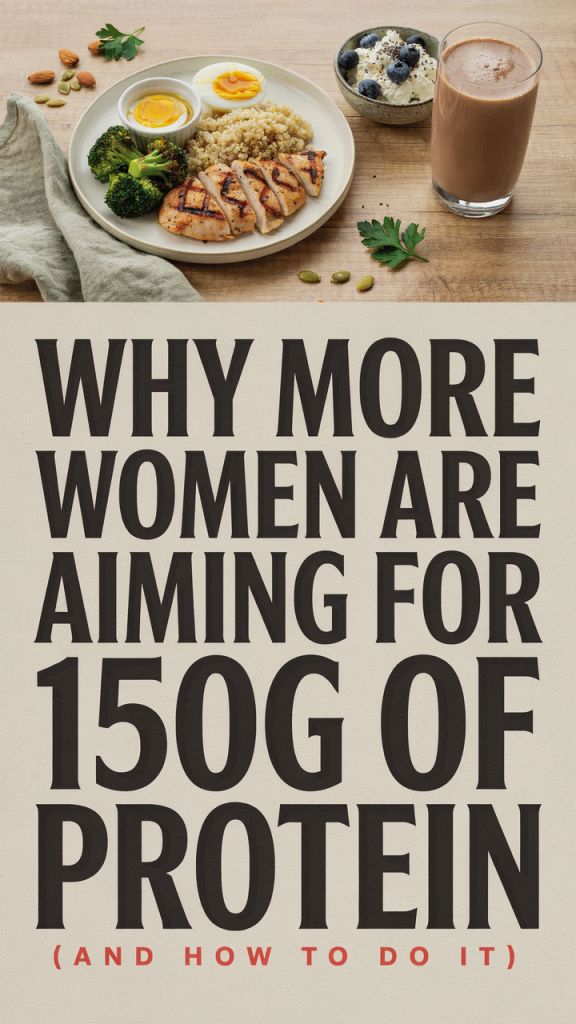
Here’s a realistic, balanced day that totals around 150 grams of protein. Each recipe below includes ingredients and cooking steps so you can make them at home.
- Breakfast: Power Protein Smoothie — ~45g protein
- Mid-morning snack: Greek Yogurt Protein Parfait — ~20g
- Lunch: Chicken Quinoa Power Bowl — ~40g
- Afternoon snack: Cottage Cheese & Almond Snack — ~15g
- Dinner: Salmon & Lentil Salad — ~30g
Total protein ≈ 150g (actual totals vary slightly based on brands/portions).
Recipes to get you to 150g
Below are recipes for each meal in the sample day. Each recipe lists ingredients and step-by-step instructions so you can prepare them easily.
Power Protein Smoothie (~45g protein)
Ingredients
– 1 scoop whey or vegan protein powder (25–30g protein per scoop)
– 1 cup (240 ml) low-fat milk or fortified soy milk (8 g protein)
– 3/4 cup (170 g) plain Greek yogurt (15 g protein)
– 1/2 banana (for texture and sweetness)
– 1 tbsp natural peanut butter or almond butter (optional, for flavor)
– 1 cup ice or a few frozen berries
– Optional: 1 tbsp ground flax or chia for fiber
Instructions
1. Add milk and Greek yogurt to the blender first to help blend smoothly.
2. Scoop in protein powder and add banana, peanut butter (if using), and frozen berries/ice.
3. Blend on high for 30–60 seconds until smooth.
4. Taste and adjust sweetness with a splash of honey or a few drops of vanilla extract if needed.
5. Pour into a large glass and enjoy immediately.
Protein estimate: ~45 g (depending on protein powder used).
Greek Yogurt Protein Parfait (~20g protein)
Ingredients
– 1 cup (240 g) plain Greek yogurt (20 g protein)
– 1/3 cup fresh berries (blueberries/strawberries)
– 2 tbsp granola or chopped nuts for crunch
– 1 tsp honey or maple syrup (optional)
– Optional: 1 tbsp chia seeds
Instructions
1. Scoop Greek yogurt into a bowl or jar.
2. Layer berries over the yogurt and sprinkle granola or nuts on top.
3. Drizzle with honey if desired and sprinkle chia seeds for extra fiber.
4. Stir when ready to eat.
Protein estimate: ~20 g.
Chicken Quinoa Power Bowl (~40g protein)
Ingredients
– 4 oz (115 g) cooked chicken breast, sliced (≈26 g protein)
– 1/2 cup cooked quinoa (about 4 g protein)
– 1/2 cup canned chickpeas, drained (≈6 g protein)
– 1 cup mixed greens (spinach, arugula)
– 1/4 avocado, sliced
– 2 tbsp feta cheese (optional)
– Dressing: 1 tbsp olive oil, 1 tbsp lemon juice, salt and pepper
Instructions
1. If you don’t have cooked chicken, season 4 oz chicken breast with salt and pepper and grill or pan-sear 4–6 minutes per side until internal temperature reaches 165°F (74°C). Let rest and slice.
2. Cook quinoa according to package instructions (typically 1/4 cup dry quinoa per 1/2 cup cooked).
3. Assemble mixed greens in a bowl, then add quinoa, chickpeas, and sliced chicken.
4. Top with avocado and sprinkle feta if using.
5. Whisk dressing ingredients and drizzle over the bowl. Toss and serve.
Protein estimate: ~40 g.
Cottage Cheese & Almond Snack (~15g protein)
Ingredients
– 1/2 cup low-fat cottage cheese (≈14 g protein)
– 10–12 raw almonds, chopped (≈3 g protein)
– A few slices of apple or cucumber for dipping
– Optional: sprinkle cinnamon or a drizzle of honey
Instructions
1. Spoon cottage cheese into a small bowl.
2. Top with chopped almonds and sprinkle cinnamon or add honey if desired.
3. Use apple slices or cucumber to scoop and eat.
Protein estimate: ~15 g.
Salmon & Lentil Salad (~30 g protein)
Ingredients
– 4 oz (115 g) cooked salmon fillet, flaked (≈25 g protein)
– 1/2 cup cooked green or brown lentils (≈9 g protein)
– 2 cups mixed salad greens
– 1/2 cup chopped cucumber and bell pepper
– Dressing: 1 tbsp olive oil, 1 tbsp red wine vinegar, 1 tsp Dijon mustard, salt & pepper
Instructions
1. Cook lentils according to package instructions and drain. Let cool slightly.
2. If you don’t have pre-cooked salmon, bake a salmon fillet at 400°F (200°C) for 12–15 minutes depending on thickness until flaky.
3. In a large bowl, combine salad greens, cucumber, bell pepper, lentils, and flaked salmon.
4. Whisk dressing ingredients and pour over salad. Toss gently and serve.
Protein estimate: ~30–34 g (depending on lentil and salmon portions).
Quick swaps and extra recipes (for variety)
Below are short recipe ideas you can use to swap meals while preserving the protein target. Each entry includes ingredients and brief instructions.
Tofu & Veggie Stir-Fry (~30g protein)
Ingredients
– 200 g extra-firm tofu, pressed and cubed (≈20 g protein)
– 2 cups mixed vegetables (broccoli, bell pepper, snap peas)
– 1 tbsp soy sauce, 1 tsp sesame oil, garlic, and ginger
– 1/2 cup cooked brown rice (≈3 g protein)
Instructions
1. Pan-fry tofu cubes until golden on all sides.
2. Stir-fry vegetables with garlic and ginger, add soy sauce and sesame oil.
3. Add tofu and cooked rice to the pan, mix and heat through.
Protein estimate: ~25–30 g.
Turkey & Hummus Wrap (~30g protein)
Ingredients
– 3–4 oz sliced turkey breast (≈20–25 g protein)
– 1 whole-grain wrap (≈4–6 g protein)
– 2 tbsp hummus (≈2 g protein)
– Lettuce, tomato, cucumber
Instructions
1. Spread hummus on the wrap.
2. Layer turkey and vegetables, roll up tightly.
3. Slice in half and enjoy.
Protein estimate: ~25–30 g.
Tips for success and troubleshooting
- Track for a week: Use an app or a food diary to estimate how close you are to 150g; you’ll likely find easy wins.
- Protein timing: Spread protein evenly across meals to maximize muscle protein synthesis—aim for 25–40 g per sitting.
- Use convenience wisely: Pre-cooked rotisserie chicken, canned tuna, single-serve Greek yogurts, and protein bars are helpful in busy weeks.
- Vegetarians/vegans: Focus on tofu, tempeh, seitan, legumes, soy products, and protein powders. Combining plant proteins across the day reaches the amino-acid targets.
- Manage calories: If weight loss is the goal, prioritize lean protein sources and control portions of high-fat proteins (nuts, fatty cuts, full-fat dairy).
- Stay hydrated: Metabolizing protein requires water—drink throughout the day.
- Listen to your body: If you experience digestive changes (bloating, constipation), increase fiber, adjust fat intake, or spread protein more evenly.
Strength training and protein: a powerful pair
Protein intake and resistance training work synergistically. Strength training increases the body’s demand for amino acids, and adequate dietary protein provides them. If muscle gain or strength is your goal, couple a progressive resistance program (2–4 sessions weekly) with your higher-protein diet to see optimal results.
Final considerations
- Personalization is key: 150g is a strong target for many active women, but individual needs vary by body weight, goals, medical history, and activity level.
- Monitor progress: If you’re gaining unwanted fat, reassess calories; if you’re not gaining strength, consider slightly increasing protein or training intensity.
- Consult professionals: For medical conditions, during pregnancy, or if you have complex dietary needs, consult a registered dietitian or physician before making large shifts in protein intake.
Conclusion
Aiming for 150 grams of protein a day is more than a gym trend—it’s a strategic, evidence-backed approach many women are using to build muscle, preserve lean mass, manage hunger, and support overall metabolic health. With practical strategies like concentrated protein at each meal, smart use of dairy and protein powders, and a bit of meal prep, hitting 150g can be both realistic and enjoyable.
Use the recipes in this article as a starting point, adapt portions to your needs, and pair the diet with strength training for the best results. If you’re thinking about making the jump to higher protein, start gradually, track how you feel, and reach out to a nutrition professional if you need a personalized plan. You’re capable of more than you think—150g could be the tool that helps you unlock stronger, healthier results.