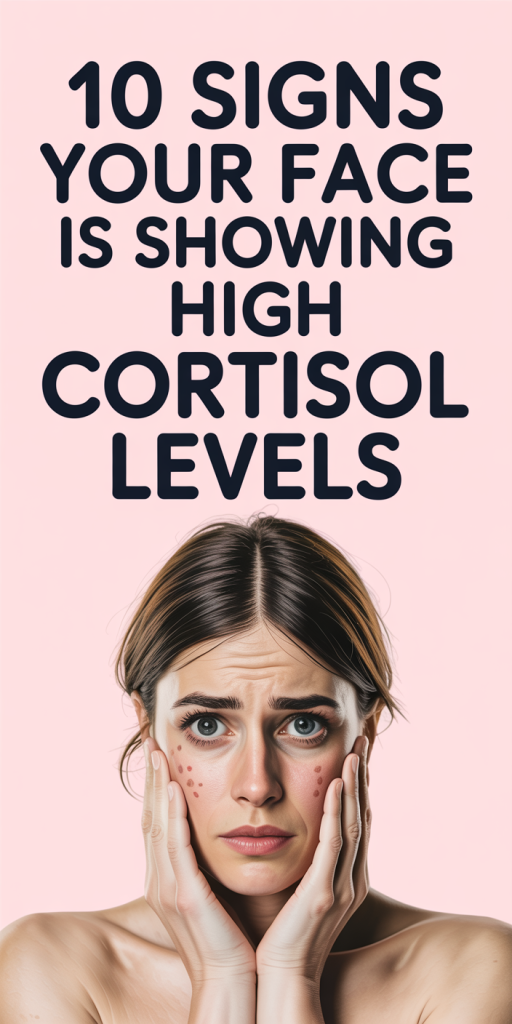
10 Signs Your Face Is Showing High Cortisol Levels
Cortisol, widely known as the “stress hormone,” is a steroid hormone produced by the adrenal glands that sits at the center of the body’s stress response system. In the right amounts, it is indispensable: it regulates metabolism, modulates the immune system, controls blood pressure, and prepares the body to respond to physical or psychological threats [^1]. Cortisol follows a natural circadian rhythm, peaking in the early morning to help us wake and declining through the evening to allow rest [^2].
The problem arises when cortisol levels remain chronically elevated. Persistently high cortisol, whether caused by a medical condition such as Cushing’s syndrome, long-term use of corticosteroid medications, or unrelenting psychological stress, can have wide-ranging consequences for the body [^3]. Among the most visible and telling of these consequences are changes to the face and skin. The face, with its dense network of blood vessels, sebaceous glands, and connective tissue, is particularly sensitive to hormonal fluctuations, making it one of the first places where the effects of excess cortisol become apparent.
The following ten signs represent the most well-documented facial and skin manifestations of high cortisol levels, drawing on clinical research and expert guidance from endocrinologists and dermatologists.
1. Moon Face: Rounding and Puffiness of the Facial Contour
Perhaps the most iconic sign of chronically elevated cortisol is a progressive rounding and fullness of the face, clinically termed moon facies. This occurs because excess cortisol promotes fat redistribution, directing adipose tissue to accumulate in the cheeks, temples, and jowls, giving the face a distinctly round, full-moon appearance [^4]. Unlike ordinary facial puffiness caused by a salty meal or poor sleep, moon face develops gradually and persists over time.
Endocrinologists at the University of Colorado note that while facial swelling can have many causes, persistent facial rounding accompanied by other symptoms — such as weight gain in the abdomen, thinning limbs, or purple stretch marks — should prompt evaluation for Cushing’s syndrome [^3]. The condition is most commonly caused by long-term use of corticosteroid medications, though it can also result from tumors of the adrenal or pituitary glands [^5].
2. Facial Plethora: Persistent Redness and Flushing
A chronically flushed, ruddy complexion — known medically as facial plethora — is another hallmark sign of hypercortisolism. Research published in the Reviews in Endocrine and Metabolic Disorders demonstrates that this redness is caused by increased perfusion, or blood flow, to the face under the influence of excess glucocorticoids [^6]. The redness tends to be diffuse, affecting the cheeks, nose, and forehead, and is notably distinct from the temporary flushing of embarrassment or exercise.
Importantly, facial plethora is considered one of the earliest and most characteristic signs of Cushing’s syndrome, and it is also among the first to resolve following successful treatment [^6]. The connection between cortisol and facial redness is also relevant for individuals with rosacea, as stress-induced cortisol spikes have been identified as a significant trigger for rosacea flares, with studies showing that up to 79 percent of rosacea patients name emotional stress as a top cause of facial flushing [^7].
3. Acne and Increased Oiliness
The relationship between cortisol and acne is well established. Elevated cortisol levels stimulate the skin’s sebaceous glands to produce excess sebum, the natural oil that lubricates the skin [^8]. When sebum production is excessive, pores become clogged, creating an environment where bacteria thrive and inflammation develops — the classic recipe for acne breakouts. This explains the common observation that skin tends to break out during periods of intense stress.
Beyond simple stress-related acne, the facial acne associated with Cushing’s syndrome is often more severe and is attributed to the combined effects of elevated cortisol and increased adrenal androgen secretion [^6]. Women and adolescents with Cushing’s syndrome frequently present with notable facial acne as one of their primary complaints, making it an important clinical indicator.
4. Thinning Skin and Increased Fragility
One of the more insidious effects of high cortisol on the face is the progressive thinning of the skin. Cortisol suppresses the expression of genes responsible for producing type-I and type-III collagen, the structural proteins that give skin its thickness and resilience [^9]. Over time, this leads to a condition known as skin atrophy, where the skin becomes noticeably thinner, more translucent, and more fragile.
Thin skin is not merely a cosmetic concern. It is more susceptible to tearing from minor trauma, and the underlying blood vessels become more visible, giving the skin a papery, aged appearance. Glucocorticoid-induced skin atrophy has been extensively documented in both clinical and research settings, with changes observed across all layers of the skin [^10].
5. Easy Bruising
Closely related to skin thinning, easy bruising is a well-recognized sign of hypercortisolism. When cortisol degrades the collagen that supports the walls of small blood vessels, those vessels become fragile and rupture easily in response to even minor bumps or pressure [^11]. The resulting bruises — which may appear without any recollection of an injury — tend to be larger and more persistent than ordinary bruises.
Easy bruising is considered a particularly specific indicator of Cushing’s syndrome and is listed among the key diagnostic criteria used by clinicians [^5]. Unlike bruising caused by blood-thinning medications or nutritional deficiencies, cortisol-related bruising is typically accompanied by other signs of hypercortisolism, helping to distinguish its cause.
6. Slow Wound Healing
High cortisol levels compromise the skin’s ability to repair itself. The hormone suppresses key components of the immune response and interferes with the production of collagen and other proteins essential for wound closure [^12]. Research has consistently shown that individuals under chronic stress, and by extension those with elevated cortisol, experience significantly slower healing of cuts, abrasions, and other skin injuries.
A landmark study found that perceived stress and cortisol levels were reliable predictors of wound healing speed, with higher cortisol correlating directly with delayed recovery [^12]. On the face, this may manifest as blemishes, minor cuts, or skin irritations that seem to linger far longer than they should, leaving behind post-inflammatory marks that take weeks to fade.
7. Hirsutism: Unwanted Facial Hair Growth
In women, one of the more distressing facial signs of high cortisol is hirsutism — the growth of coarse, dark, terminal hair in areas typically associated with male hair patterns, including the upper lip, chin, and sideburns [^13]. This occurs because excess cortisol stimulates the adrenal glands to produce androgens (male sex hormones), which in turn activate hair follicles in androgen-sensitive areas of the face [^6].
Hirsutism is a recognized symptom of Cushing’s syndrome and is also associated with polycystic ovary syndrome (PCOS), a condition that can itself be exacerbated by chronically elevated cortisol [^14]. The presence of facial hair growth in women, particularly when accompanied by acne and irregular menstrual cycles, warrants a thorough hormonal evaluation.
8. Dark Circles and Sunken Eyes
While dark under-eye circles have many causes, chronic stress and high cortisol contribute to their development through several mechanisms. First, elevated cortisol disrupts the normal sleep-wake cycle, leading to poor sleep quality and the fatigue-related hollowing and discoloration beneath the eyes [^15]. Second, high cortisol can increase blood volume and dilate blood vessels, making the delicate, thin-skinned vessels beneath the eyes more prominent and visible [^16].
Over time, cortisol-induced collagen breakdown also reduces the thickness of the skin around the eyes, making the underlying vasculature even more apparent. The result is a persistently tired, shadowed appearance that does not resolve with a single good night’s sleep — a sign that the underlying hormonal imbalance needs to be addressed.
9. Premature Aging: Wrinkles, Fine Lines, and Loss of Volume
The face of someone with chronically high cortisol often appears older than their biological age. This is because cortisol activates enzymes called matrix metalloproteinases (MMPs), which actively break down collagen and elastin — the two proteins most responsible for keeping skin firm, plump, and smooth [^17]. As these structural proteins are degraded, the skin loses its elasticity, fine lines deepen into wrinkles, and the face loses the volume and contour associated with youth.
This process is compounded by the fact that cortisol also generates systemic inflammation, which produces free radicals that damage skin cells and DNA [^17]. The combined effect of structural protein breakdown and oxidative cellular damage accelerates the visible aging of the face in ways that even the most diligent skincare routine cannot fully counteract without addressing the underlying hormonal issue.
10. Skin Dryness, Dullness, and Impaired Barrier Function
Finally, high cortisol can compromise the skin’s natural barrier function, leading to dryness, dehydration, and a dull, lackluster complexion. The inflammatory response triggered by chronic cortisol elevation disrupts the skin’s ability to retain moisture, as inflamed skin loses water more rapidly than healthy skin [^8]. This results in a tight, rough texture and a loss of the natural radiance that characterizes well-hydrated skin.
Furthermore, cortisol-induced immune suppression can increase the skin’s susceptibility to superficial fungal infections and exacerbate existing inflammatory skin conditions such as eczema, psoriasis, and seborrheic dermatitis [^6]. These conditions, when they affect the face, contribute to redness, flaking, and persistent irritation that further diminishes the skin’s appearance.
When to Seek Medical Attention
The table below summarizes the ten facial signs of high cortisol, their underlying mechanisms, and their clinical significance.
| Sign | Underlying Mechanism | Clinical Significance |
|---|---|---|
| Moon Face | Fat redistribution to the face | Key indicator of Cushing’s syndrome |
| Facial Plethora | Increased blood perfusion | Early and characteristic sign of hypercortisolism |
| Acne | Excess sebum production; androgen stimulation | Common in Cushing’s; worsened by chronic stress |
| Thinning Skin | Collagen gene suppression; skin atrophy | Increases fragility and visible aging |
| Easy Bruising | Collagen loss in vessel walls | Specific indicator of hypercortisolism |
| Slow Wound Healing | Immune suppression; impaired collagen synthesis | Prolongs skin injury recovery |
| Hirsutism | Adrenal androgen excess | Affects women; associated with PCOS |
| Dark Circles | Sleep disruption; vascular prominence | Reflects fatigue and skin thinning |
| Premature Aging | MMP activation; collagen/elastin breakdown | Accelerated wrinkle and fine line formation |
| Dryness and Dullness | Impaired skin barrier; inflammation | Reduces moisture retention and radiance |
It is important to note that experiencing one or two of these signs in isolation is not necessarily cause for alarm, as many have common, benign explanations. However, if several of these signs appear together, persist over time, or are accompanied by systemic symptoms such as unexplained weight gain, muscle weakness, high blood pressure, or irregular menstruation, a consultation with a primary care physician or endocrinologist is strongly recommended [^3].
Screening for high cortisol typically involves a combination of blood tests, 24-hour urine cortisol measurements, and late-night salivary cortisol tests [^1]. Early diagnosis and treatment of the underlying cause — whether it is a medication side effect, a pituitary or adrenal tumor, or a lifestyle-related issue — can lead to significant improvement in both health outcomes and skin appearance.
Conclusion
The face serves as a remarkably expressive indicator of internal hormonal health. Chronic elevation of cortisol, whether from medical conditions or prolonged psychological stress, leaves a distinct and recognizable imprint on facial appearance — from the characteristic rounding of moon face and the persistent flush of plethora, to the subtler signs of premature aging and skin dryness. Understanding these signs is not about self-diagnosing from social media trends, but about recognizing when the body may be sending a meaningful signal that warrants professional attention. A healthy lifestyle that prioritizes sleep, stress management, regular exercise, and a balanced diet remains the most effective foundation for keeping cortisol in its optimal range and maintaining a healthy, vibrant complexion.
References
[^1]: Cleveland Clinic. (2025, February 17). Cortisol: What It Is, Function, Symptoms & Levels. https://my.clevelandclinic.org/health/articles/22187-cortisol
[^2]: University of Colorado Anschutz Medical Campus. (2024, November 25). Do You Think You Have a ‘Cortisol Face’? What You Should Know About This TikTok Trend. https://news.cuanschutz.edu/department-of-medicine/cortisol-face
[^3]: University of Colorado Anschutz Medical Campus. (2024, November 25). Do You Think You Have a ‘Cortisol Face’? What You Should Know About This TikTok Trend. https://news.cuanschutz.edu/department-of-medicine/cortisol-face
[^4]: Cleveland Clinic. (2024, June 24). Moon Face: Causes & Treatment. https://my.clevelandclinic.org/health/symptoms/moon-face
[^5]: Mayo Clinic. (2023, June 7). Cushing syndrome — Symptoms and causes. https://www.mayoclinic.org/diseases-conditions/cushing-syndrome/symptoms-causes/syc-20351310
[^6]: Stratakis, C. A. (2016). Skin manifestations of Cushing’s syndrome. Reviews in Endocrine and Metabolic Disorders, 17(3), 283–286. https://pmc.ncbi.nlm.nih.gov/articles/PMC5181654/
[^7]: Baumann, L. (2019, April 15). Is Stress a Trigger for Rosacea? https://www.lesliebaumannmd.com/is-stress-a-trigger-for-rosacea
[^8]: Westlake Dermatology. (2021, March 11). Stress And Your Skin: How Cortisol Affects The Skin. https://www.westlakedermatology.com/blog/how-stress-is-damaging-your-skin/
[^9]: Schoepe, S., Schäcke, H., May, E., & Asadullah, K. (2006). Glucocorticoid therapy-induced skin atrophy. Experimental Dermatology, 15(6), 406–420. Referenced via: https://pmc.ncbi.nlm.nih.gov/articles/PMC5181654/
[^10]: PMC / NCBI. (2020, December 30). Glucocorticoid-Induced Skin Atrophy: The Old and the New. https://pmc.ncbi.nlm.nih.gov/articles/PMC7779293/
[^11]: The Endocrine Center. (n.d.). I Have a New Bruise Every Day — Could I Have Cushing’s Syndrome? https://www.endocrinecenter.com/blog/i-have-a-new-bruise-every-day-could-i-have-cushings-syndrome
[^12]: Broadbent, E., Petrie, K. J., Alley, P. G., & Booth, R. J. (2003). Psychological stress impairs early wound repair following surgery. Psychosomatic Medicine. Referenced via: https://www.sciencedirect.com/science/article/abs/pii/S0306453003001446
[^13]: Cleveland Clinic. (2022, July 8). Hirsutism: What It Is, In Women, Causes, PCOS & Treatment. https://my.clevelandclinic.org/health/diseases/14523-hirsutism
[^14]: UCI Health. (2024, August 28). The skinny on ‘cortisol face’. https://www.ucihealth.org/blog/2024/08/cortisol-face
[^15]: Thorne. (2024, September 9). The Impacts Of Stress: How Cortisol Shapes Us From The Inside Out. https://www.thorne.com/take-5-daily/article/the-impacts-of-stress-how-cortisol-shapes-us-from-the-inside-out
[^16]: Cymbiotika. (2025, March 3). Does Stress Cause Dark Eye Circles? Understanding the Connection. https://cymbiotika.com/blogs/health-hub/does-stress-cause-dark-eye-circles-understanding-the-connection
[^17]: Tamjidi Skin Institute. (n.d.). How Stress & Cortisol Accelerate Aging. https://www.tamjidiskininstitute.com/how-stress-cortisol-accelerate-aging/