1 Secret to Better Circulation: The Simple Daily Habit That Transforms Blood Flow in 2026
Circulation is the quiet engine that powers every part of our bodies, from thinking clearly to healing a scraped knee. Yet most advice about circulation focuses on medicines or supplements, when the single most effective strategy is something we can do without a prescription: daily purposeful movement. In this text we’ll explain why circulation matters far beyond heart health, unpack the physiology so it actually makes sense, and give practical, evidence-informed routines you can use today. No extreme workouts, no expensive equipment, just reliable habits that improve blood flow, reduce risk, and make us feel better in 2026 and beyond.
Why Circulation Matters: Health Benefits Beyond Heart Health
When we talk about circulation most people picture the heart and arteries, and rightly so. But circulation is much more than a cardiovascular headline: it’s the delivery system for oxygen, nutrients, immune cells, hormones, and heat. Improved blood flow shows up across many systems in surprisingly tangible ways.
Cognitive function: Better cerebral perfusion supports attention, memory consolidation, and mental stamina. We notice this when a brisk walk clears the fog after long work sessions: that’s increased blood flow delivering oxygen and glucose to key brain regions.
Wound healing and immunity: Blood transports immune cells and clotting factors to injured tissue. Faster, more efficient circulation speeds repair and reduces infection risk. In practice, people with sluggish circulation often report slower healing of cuts or bruises.
Muscle performance and recovery: When muscles receive steady, timely blood flow they generate force more efficiently and clear metabolic byproducts (like lactate) faster. That means less soreness and a quicker return to activity.
Temperature regulation: Blood redistributes heat, helping us stay warm in cold environments and cool in heat via skin perfusion and sweating. Poor circulation can make temperature extremes feel more intense, especially in extremities.
Metabolic health and glucose control: Microcirculation, blood flow through the smallest vessels, matters for insulin delivery and glucose uptake. Improving circulation supports metabolic flexibility and can aid long-term metabolic health.
Mood and sleep: It’s easy to overlook, but better circulation influences neurotransmitter dynamics and sleep quality. Regular movement that enhances blood flow often correlates with more stable moods and deeper sleep.
Risk reduction: Finally, consistent improvements in circulation lower the risk of chronic conditions tied to vascular dysfunction, not only heart attacks and strokes, but also peripheral artery disease and some forms of cognitive decline. We don’t want to overpromise: movement is a powerful preventive strategy, not a cure-all. But when combined with sensible lifestyle choices, improving circulation is one of the most cost-effective ways we can protect health across the lifespan.
The 1 Secret Explained: Daily Movement With Purpose
The single most important, evidence-backed habit for improving circulation is what we call “purposeful movement”, short, regular periods of activity designed to stimulate blood flow throughout the body. Purposeful movement differs from incidental movement (like standing up to get coffee) because it intentionally targets circulation through rhythm, muscle engagement, and posture variety.
Why this matters: the heart is only part of the equation. Muscles act as pumps, especially in the legs: when they contract they squeeze veins and push blood back toward the heart. Adding breathing patterns and brief intensity spikes enhances arterial dilation, increasing blood flow to tissues. Doing this repeatedly throughout the day compounds into measurable improvements in vascular function.
We emphasize daily because vascular adaptations are use-dependent: the body responds to regular, manageable stimuli. Sporadic extreme exercise can help, but it doesn’t replace the steady benefits of frequent, purposeful movement. And importantly, this habit is adaptable, we can scale it to fitness level, time constraints, and mobility limitations.
Practical takeaway: Rather than waiting for a long workout, we recommend inserting multiple short, purposeful movement sessions into your day. These sessions are intentional, measurable, and aimed specifically at improving circulation, not just burning calories.
How Purposeful Movement Improves Circulation: Physiology Made Simple
We’ll simplify the mechanics into three clear pathways so it’s easy to remember how purposeful movement helps circulation.
- The skeletal muscle pump and venous return
Muscle contractions, particularly in the calves and thighs, compress deep veins and physically push blood toward the heart. Valves inside the veins prevent backflow, so repeated contractions act like a peristaltic pump. When we sit for long periods, this pump is idle, venous pooling increases, and we feel heaviness or swelling. Short, repeated bouts of purposeful movement reactivate the pump and maintain venous tone.
- Endothelial function and nitric oxide signaling
The endothelium (inner lining of blood vessels) senses changes in shear stress, the friction of blood flow. Purposeful increases in flow and rhythmic pulses stimulate endothelial cells to release nitric oxide, a powerful vasodilator. Nitric oxide relaxes smooth muscle in arterial walls, improving vessel flexibility and lowering peripheral resistance. Over time, better endothelial responsiveness reduces blood pressure variability and improves tissue perfusion.
- Microcirculation and capillary recruitment
Microcirculation is where the oxygen and nutrient exchange actually happen. During purposeful movement, metabolic demand in working muscles causes local vasodilation and recruits previously underperfused capillaries. This improves oxygen extraction, speeds metabolite clearance, and promotes angiogenesis (formation of new capillaries) with consistent practice.
Secondary mechanisms worth noting:
- Autonomic balance: Regular movement positively influences autonomic tone, enhancing parasympathetic recovery and reducing chronic sympathetic overdrive that narrows vessels.
- Hemorheology: Activity favors healthier blood viscosity and platelet function, lowering clot risk in most adults.
Putting it together: These mechanisms aren’t isolated: they interact. The muscle pump improves venous return, which raises stroke volume and cardiac output transiently: endothelial signaling improves vessel responsiveness: microcirculatory changes ensure tissues actually receive what’s delivered. That is why short, repeated sessions of purposeful movement produce outsized benefits compared with the same duration of passive standing.
Practical Daily Routines: 7-Minute Micro-Workouts You Can Do Anywhere
We built these 7-minute micro-workouts to be practical, scalable, and effective for circulation. Each routine follows a simple structure: warm-up (1 minute), circulation-focused blocks (5 minutes), and gentle cool-down (1 minute). You can do any routine seated, standing, or mixed depending on mobility.
Routine A, Desk Break (chair or standing)
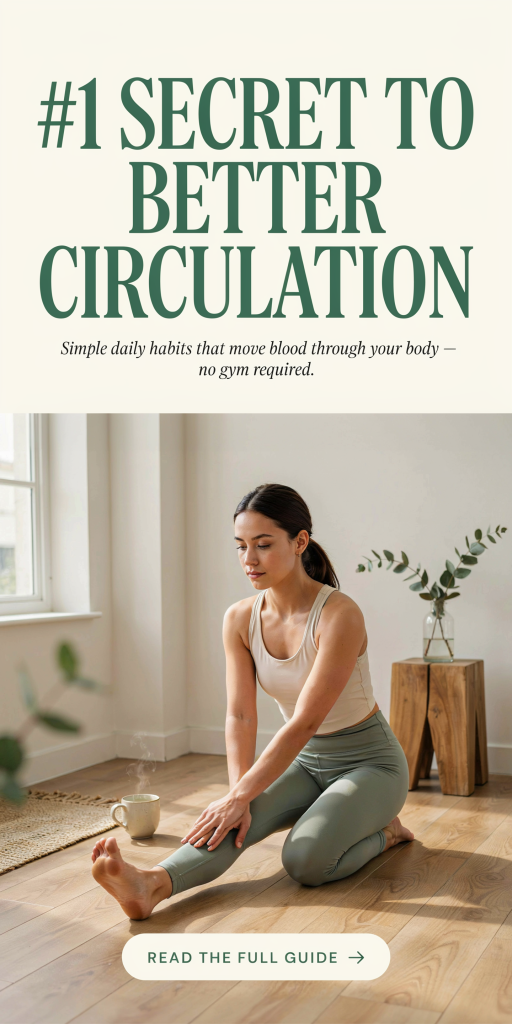
- Seated march or heel raises, 60 seconds (alternating knees or rising onto toes) to activate calves.
- Leg pump series, 30 seconds per leg: extend knee and flex ankle repeatedly.
- Seated glute squeezes, 45 seconds: squeeze buttocks for 3–4 seconds, release.
- Arm pump + shoulder rolls, 45 seconds: rapid pumping motion with arms overhead or by sides.
- Standing mini-sprint in place, 60 seconds brisk (or high-knees if able) to spike heart rate.
- Gentle seated forward fold and diaphragmatic breaths, 60 seconds to normalize.
Routine B, Hallway or Stair Option
- Easy walk or march, 60 seconds to prime breathing.
- Step-ups, 90 seconds alternating feet (use a single step: pace moderate).
- Calf raise cluster, 45 seconds: slow 3-second up, quick down.
- 20-second stair sprint or brisk uphill march, 20 seconds high intensity.
- Walk and shake-out, 65 seconds slow walk, swing arms, breathe.
Routine C, Seated for Mobility or Limited Space
- Ankle circles and pumps, 60 seconds per foot (alternate) to stimulate lower-leg flow.
- Seated knee extensions, 60 seconds alternating legs.
- Seated torso twists and deep breathing, 60 seconds to open thoracic circulation.
- Hand squeezes and wrist pumps, 30 seconds to assist upper-limb venous return.
- Gentle calf massage or self-compression, 60 seconds per leg if convenient.
How to use them: Aim for 4–6 of these micro-workouts across the day. Start with 2–3 if new to movement. Combine different routines to avoid monotony. Track subjective outcomes, less leg swelling, more energy, clearer thinking, as well as objective markers like resting heart rate or ability to climb stairs without breathlessness.
Modifications: For pregnancy, balance concerns, or joint pain, we recommend lower-impact options (seated versions, slower tempos). For high fitness levels, increase intensity or duration of the high-effort bursts. Most wearable devices can help us monitor intensity: we prefer perceived exertion to keep prescription simple and accessible.
When To Combine Movement With Other Strategies (Nutrition, Hydration, Sleep)
Movement is foundational, but circulation responds best to several synergistic supports. Here’s how to combine strategies effectively.
Hydration: Blood volume and plasma viscosity affect flow. Even mild dehydration thickens blood and can impair microcirculation. We recommend consistent fluid intake throughout the day, water first, electrolyte-containing beverages when we’re sweating heavily or during long-duration activity. Aim for thirst-guided hydration and check urine color as a simple metric.
Nutrition: Specific nutrients support vascular health. Nitrates (from beetroot, leafy greens) enhance nitric oxide availability and can acutely improve endothelial function. Omega-3 fatty acids reduce inflammation and aid blood rheology. Antioxidant-rich foods (berries, dark chocolate in moderation) help protect endothelial cells. We don’t endorse mega-dosing: instead, focus on a balanced diet rich in whole foods.
Salt and blood pressure: For some people, reducing excess sodium helps circulation by lowering blood pressure and easing arterial strain. But we must balance against risks of under-consuming sodium in certain populations (athletes, those on diuretics). Individualize with professional guidance.
Sleep and circadian rhythm: Sleep regulates autonomic tone and hormonal cascades that influence vascular function. Poor sleep increases sympathetic activity and inflammation, which narrows vessels and impairs flow. Prioritizing 7–9 hours of consistent sleep improves the gains we get from movement.
Compression and recovery tools: Graduated compression stockings can help people with venous insufficiency or during prolonged travel. Cryotherapy, contrast baths, and foam rolling assist in recovery and microcirculatory restoration for athletes, though evidence varies. Use these tools strategically rather than as daily crutches.
Supplements and medications: Some supplements (e.g., beetroot juice, L-arginine in specific contexts) have short-term evidence for improving circulation. Prescription medications (antihypertensives, anticoagulants, vasodilators) may be necessary for underlying conditions. We recommend discussing any supplement or medication change with a clinician, especially if taking other drugs.
Who Should Take Precautions: Risks, Red Flags, and When To See A Doctor
Purposeful movement is safe for most people, but precautions matter. We want to be practical about red flags and when to escalate care.
Immediate warning signs (stop activity and seek urgent care):
- Chest pain, pressure, or squeezing that’s new or severe.
- Sudden severe shortness of breath, fainting, or near-fainting.
- Sudden weakness or numbness in face, arm, or leg, especially on one side (possible stroke).
Signs that warrant prompt medical evaluation before starting a new routine:
- Known coronary artery disease, recent heart attack (within weeks to months), or unstable angina.
- Uncontrolled high blood pressure (systolic >180 mmHg or diastolic >110 mmHg) until it’s managed.
- Significant arrhythmias (irregular heartbeats) or recent syncope without clear cause.
- Active deep vein thrombosis (DVT) or recent history of pulmonary embolism.
- Severe anemia or uncontrolled metabolic conditions that cause intolerable exertion.
Chronic conditions requiring tailored approaches:
- Peripheral artery disease (PAD): Movement helps but should be supervised: supervised exercise programs can be especially effective for claudication symptoms.
- Diabetes with neuropathy: We must ensure skin integrity and monitor wounds, walking through pain or numbness risks injury.
- Pregnancy: Most purposeful movement is safe, but modify intensity and avoid supine exercises after the first trimester: consult prenatal care providers.
Medication interactions and bleeding risk: If we’re on blood thinners, some activities carry higher bleeding risk (contact sports). If using vasodilators or antihypertensives, we should watch for lightheadedness on standing and adjust intensity accordingly.
Practical screening: If in doubt, a simple check-in with a primary care clinician will clarify safety. A graded approach, low-intensity micro-sessions increasing over weeks, is sensible for most. And remember: subjective signals like unusual chest discomfort, dizziness, severe limb pain, or rapidly worsening swelling deserve immediate evaluation.
Conclusion
Circulation is fundamental to health, yet improving it doesn’t require complex interventions. Our #1 secret, daily purposeful movement, leverages simple physiology: muscle pumps, endothelial signaling, and capillary recruitment. By inserting brief, intentional micro-workouts across the day and combining them with good hydration, balanced nutrition, and sufficient sleep, we can create steady, meaningful improvements in blood flow.
Start small and be consistent. Four to six 7-minute sessions scattered through our day will often outperform a single sporadic marathon workout. If we have health concerns, we’ll tailor the plan with clinicians. But for most of us, purposeful movement is an accessible, high-impact habit that pays dividends for energy, recovery, and long-term vascular health.