What Should I Eat in the Morning to Boost My Metabolism?
Introduction
Everyone wants a metabolism that works in their favor — one that helps them feel energetic, supports fat loss or maintenance, and makes the most of the food you eat. The breakfast you choose can be a powerful lever. Eating the right foods in the morning can raise the thermic effect of food (the energy your body uses to digest and process food), preserve or build lean muscle, improve hunger control, and partner with caffeine or certain bioactive compounds to produce a modest metabolic lift.
This article breaks down what to eat in the morning to boost your metabolism — the why, the how, and the what. You’ll get evidence-based nutrient guidance, a list of top metabolism-boosting foods, multiple breakfast recipes (with ingredients and step-by-step instructions), practical timing and portion tips, and lifestyle habits that amplify any metabolic gains. Read on for actionable, encouraging guidance to make your mornings work for you.
How breakfast affects metabolism: the basics
- Thermic effect of food (TEF): All foods require energy to digest, absorb, and store. Protein has the highest TEF (approximately 20–30% of calories used for processing), carbs are intermediate (5–10%), and fat is lowest (0–3%). That means a higher-protein breakfast gives a greater short-term metabolic boost.
- Muscle preservation and growth: Morning protein helps maintain and build lean muscle mass — the tissue that burns more calories at rest than fat tissue. Combining protein with resistance exercise is especially effective.
- Appetite and energy balance: A balanced breakfast with protein, fiber, and some healthy fat stabilizes blood sugar and reduces large mid-morning cravings that can lead to overeating later.
- Bioactive compounds: Caffeine (in coffee) and catechins (in green tea) produce small but meaningful increases in metabolic rate and fat oxidation for some people. Capsaicin from chili peppers also modestly raises energy expenditure.
Key nutrients to prioritize in the morning
Hitting the right combination of nutrients — not just calories — matters.
Protein
- Why: Highest thermic effect, preserves muscle, increases satiety.
- Sources: eggs, Greek yogurt, cottage cheese, lean meats, protein powders, legumes.
Fiber and whole grains
- Why: Slows digestion and reduces insulin spikes; increases fullness.
- Sources: oats, whole-grain bread, berries, chia seeds, flax.
Healthy fats
- Why: Provide sustainable energy and help with nutrient absorption and satiety.
- Sources: avocado, nuts, seeds, olive oil, fatty fish.
Caffeine and green tea catechins
- Why: Boost metabolic rate and fat oxidation for some people; also increase alertness.
- Sources: coffee, green tea, matcha.
Spices and bioactives
- Why: Compounds like capsaicin (chili) and cinnamon may modestly help glucose control and metabolic rate.
- Sources: chili flakes, cayenne, cinnamon.
Hydration
- Why: Drinking water, especially cool water, stimulates circulation and a small metabolic increase. Hydration supports overall energy metabolism.
Best foods to eat in the morning to boost metabolism
Below are metabolism-friendly breakfast foods and how they help.
- Eggs — high-quality protein and leucine to protect muscle and increase TEF.
- Greek yogurt — concentrated protein and probiotics; great with fiber toppings.
- Cottage cheese — slow-digesting casein protein; satisfying.
- Oats — soluble fiber (beta-glucan) for fullness and steady energy.
- Berries — antioxidants and fiber with low sugar load.
- Leafy greens — low-calorie, nutrient-dense, add volume and micronutrients.
- Salmon or other fatty fish — provides protein and omega-3s, which support metabolic health.
- Lean turkey or chicken — high protein, low fat.
- Legumes (beans, lentils) — plant protein and fiber that increases TEF and satiety.
- Nuts and seeds — healthy fats and a small metabolic cost to digest; eat in moderation.
- Avocado — monounsaturated fats for sustained energy.
- Coffee — caffeine increases energy expenditure and alertness.
- Green tea / matcha — catechins + caffeine support fat oxidation.
- Chili peppers or hot sauce — capsaicin increases thermogenesis briefly.
- Cinnamon — helps glucose control and flavor without extra sugar.
- Water with lemon — rehydration and a modest metabolic bump, especially if cold.
Metabolism-boosting breakfast recipes
Below are practical, tasty recipes designed to maximize morning nutrition for metabolic support. Each recipe lists ingredients as bullets and instructions as numbered steps.
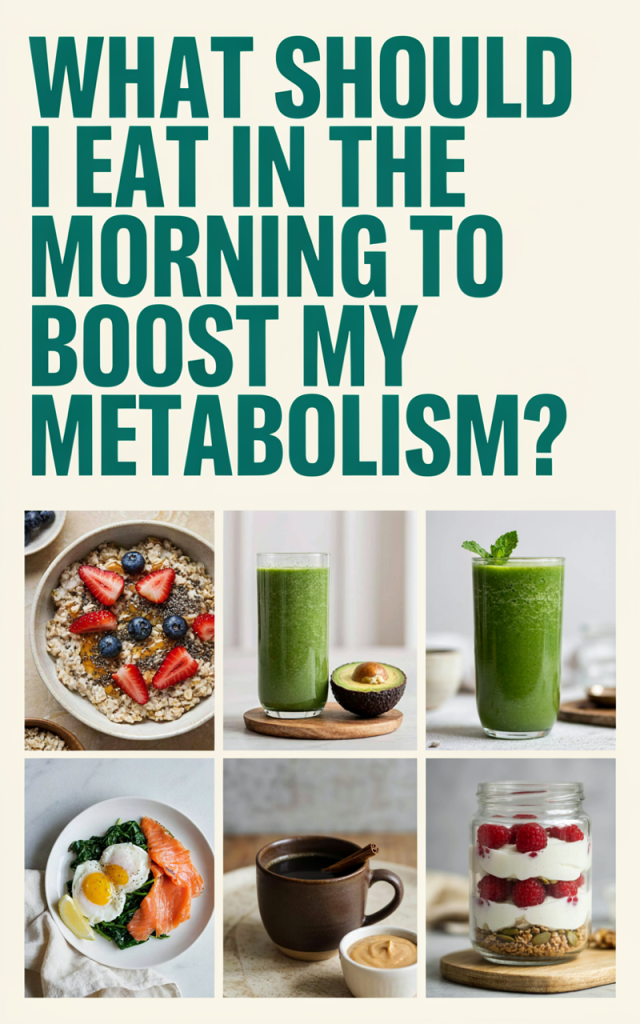
1) High-Protein Green Smoothie
Ingredients
– 1 scoop (20–30 g) whey or plant-based protein powder (vanilla or unflavored)
– 1 cup unsweetened Greek yogurt or 1 cup unsweetened almond milk + 1/2 cup Greek yogurt
– 1 handful fresh spinach (about 1 cup)
– 1/2 medium banana (for sweetness and texture)
– 1/2 cup frozen berries (blueberries or mixed berries)
– 1 tablespoon chia seeds or ground flaxseed
– 1/2 cup cold water or ice
– Optional: 1/2 teaspoon cinnamon, 1/2 teaspoon matcha powder
Instructions
1. Add the liquid base (almond milk/water/Greek yogurt) and protein powder to the blender first.
2. Add spinach, banana, frozen berries, chia or flaxseed, and any optional spices.
3. Blend on high until smooth (about 30–60 seconds). Add more water to reach your desired consistency.
4. Taste and adjust sweetness if needed with a small amount of honey or stevia (ideally keep it minimal).
5. Drink immediately for best texture and nutrient absorption.
2) Veggie Egg Scramble with Salsa
Ingredients
– 2 whole eggs + 2 egg whites (or 3 whole eggs)
– 1 cup mixed vegetables (spinach, bell peppers, onions, mushrooms)
– 1/4 avocado, sliced
– 2 tablespoons salsa (fresh or low-sugar)
– 1 teaspoon olive oil or cooking spray
– Salt and pepper to taste
– Optional: pinch of chili flakes or fresh herbs
Instructions
1. Whisk the eggs and egg whites with a pinch of salt and pepper.
2. Heat olive oil in a nonstick skillet over medium heat. Sauté vegetables until softened (3–4 minutes).
3. Pour the beaten eggs over the veggies and gently stir, folding until eggs are cooked through but still moist (about 2–3 minutes).
4. Plate the scramble and top with salsa and sliced avocado. Sprinkle with chili flakes or herbs if desired.
5. Serve with a slice of whole-grain toast or a small portion of oats for carbs if needed.
3) Greek Yogurt Berry Parfait
Ingredients
– 1 cup plain Greek yogurt (2% or full-fat for satiety)
– 1/2 cup mixed berries (fresh or frozen, thawed)
– 2 tablespoons chopped nuts (almonds or walnuts)
– 1 tablespoon chia seeds
– 1 teaspoon cinnamon
– 1 teaspoon honey or maple syrup (optional)
Instructions
1. Spoon half the Greek yogurt into a bowl or jar.
2. Layer half the berries on top of the yogurt.
3. Sprinkle half the nuts and half the chia seeds over the berries.
4. Repeat the layers with remaining yogurt, berries, nuts, and chia seeds.
5. Drizzle with a small amount of honey if you prefer extra sweetness. Sprinkle cinnamon and enjoy.
4) Overnight Oats with Cinnamon and Protein
Ingredients
– 1/2 cup rolled oats
– 1/2 cup unsweetened almond milk (or milk of choice)
– 1/3 cup Greek yogurt (for extra protein)
– 1 tablespoon chia seeds
– 1/2 teaspoon cinnamon
– 1/2 cup fresh fruit (sliced apple or berries)
– 1 tablespoon chopped nuts or nut butter
Instructions
1. In a jar or bowl, combine oats, almond milk, Greek yogurt, chia seeds, and cinnamon. Stir to combine.
2. Press fresh fruit into the top and close the jar. Refrigerate overnight (or at least 4 hours).
3. In the morning, stir the oats. Add a little extra milk if too thick.
4. Top with chopped nuts or a swirl of nut butter for healthy fat and extra protein.
5. Enjoy cold or warmed for 30–60 seconds in the microwave.
5) Smoked Salmon and Avocado Whole-Grain Toast
Ingredients
– 1 slice whole-grain or sprouted bread, toasted
– 1/3 ripe avocado, mashed
– 2–3 slices smoked salmon
– 1 tablespoon plain Greek yogurt or a squeeze of lemon
– Fresh dill or chives, chopped
– Salt and pepper to taste
– Optional: capers or thinly sliced red onion
Instructions
1. Toast the bread until golden and firm.
2. Mash avocado in a small bowl and season with salt, pepper, and a squeeze of lemon if using.
3. Spread the mashed avocado on the toast.
4. Layer smoked salmon over the avocado.
5. Add a dollop of Greek yogurt or a few capers, then garnish with fresh dill or chives.
6. Serve with a side of mixed greens or a green tea.
6) Cottage Cheese Fruit Bowl with Nuts and Cinnamon
Ingredients
– 1 cup low-fat or full-fat cottage cheese
– 1/2 cup sliced pineapple, peach, or berries
– 1 tablespoon chopped almonds or walnuts
– 1 tablespoon ground flaxseed
– 1/2 teaspoon cinnamon
– Optional: drizzle of honey
Instructions
1. Spoon cottage cheese into a bowl.
2. Top with fresh fruit and sprinkle with chopped nuts and flaxseed.
3. Add cinnamon and a small drizzle of honey if desired.
4. Mix slightly and enjoy with whole-grain crackers or a slice of toast if extra carbs are needed.
7) Spicy Turkey Breakfast Wrap
Ingredients
– 1 whole-grain or low-carb tortilla
– 3–4 ounces cooked turkey breast, thinly sliced (leftover or quickly seared)
– 1/2 cup sautéed spinach or mixed greens
– 1/4 avocado, sliced
– 1 tablespoon low-fat cheese or a smear of Greek yogurt
– 1 teaspoon hot sauce or a sprinkle of chili flakes
– Salt and pepper to taste
Instructions
1. Warm the tortilla briefly in a skillet or microwave to make it pliable.
2. Layer turkey slices down the center of the tortilla.
3. Add sautéed spinach, avocado slices, and cheese or Greek yogurt.
4. Drizzle hot sauce or sprinkle chili flakes, then season with salt and pepper.
5. Fold the sides and roll into a wrap. Serve warm.
8) Matcha Green Tea Latte (Metabolism-Friendly)
Ingredients
– 1 teaspoon ceremonial or culinary matcha powder
– 2/3 cup hot water (not boiling, about 80°C / 176°F)
– 1/3 cup unsweetened milk or milk alternative
– Optional: 1/4 teaspoon vanilla, cinnamon, or a small amount of honey
Instructions
1. Sift matcha into a bowl or mug to avoid lumps.
2. Add hot water and whisk briskly with a bamboo whisk or small frother until frothy and smooth.
3. Heat (or froth) milk and pour it into the matcha mixture. Stir to combine.
4. Add vanilla or cinnamon for extra flavor. Sweeten minimally if needed.
5. Sip slowly alongside a protein-rich bite like a boiled egg or Greek yogurt.
Quick metabolism-supporting breakfast ideas (no recipes needed)
- Boiled eggs + whole-grain toast + a piece of fruit.
- Greek yogurt + granola (low-sugar) + berries.
- Protein pancake (protein powder + oats + egg) topped with nut butter.
- Lentil or chickpea-based breakfast bowl with veggies and tahini.
- Leftover grilled salmon on a bed of arugula with lemon.
Each of these ideas focuses on protein, fiber, or healthy fats and can be prepared quickly.
Timing, portions, and practical tips
- Prioritize protein: Aim for at least 20–30 grams of protein in your morning meal if your goal is to preserve or build muscle and support metabolism.
- Include fiber: Add fruit, oats, chia, or veggies to slow digestion and reduce insulin spikes.
- Keep healthy fats moderate: Fats increase satiety but are calorie-dense. Include a small portion (1–2 tablespoons/nuts/half an avocado).
- Hydrate first: Drink 300–500 mL (about 10–17 oz) of water when you wake to rehydrate and slightly stimulate metabolism — cold water may give a tiny extra boost.
- Use caffeine strategically: If you tolerate caffeine, a cup of coffee or green tea can enhance energy and metabolic rate. Avoid excessive sugar in coffee drinks.
- Match calories to activity: If you exercise in the morning, add more carbs to fuel performance (e.g., whole-grain toast, oats, banana). Post-workout protein supports muscle recovery.
- Don’t overdo spicy foods or stimulants if you’re sensitive; small doses of capsaicin or caffeine are effective without causing jitteriness.
Lifestyle habits that amplify morning-food effects
- Strength training: Regular resistance exercise builds muscle and raises resting metabolic rate over time.
- Non-exercise activity thermogenesis (NEAT): Small movements (walking, taking stairs) increase daily calorie burn. Do this after breakfast if possible.
- Sleep: Poor sleep impairs glucose metabolism and appetite hormones. Aim for consistent, quality sleep.
- Stress management: Chronic stress can alter hormones that affect appetite and fat storage. Morning routines that include mindfulness or breathing can help.
- Consistency: Metabolic adaptations happen over weeks and months. Make sustainable changes you can maintain.
Common myths and clarifications
- Myth: Skipping breakfast helps you lose weight. Reality: Skipping may reduce calories for some, but it often leads to overeating later and can lower energy and muscle protein balance. A protein-rich breakfast is generally more helpful for metabolism and appetite control.
- Myth: Eating every 2–3 hours boosts your metabolism compared to 3 meals. Reality: Total daily calories and macronutrient composition matter more than meal frequency for long-term weight control. If frequent meals help you manage hunger and protein intake, they can be useful.
- Myth: You can “speed up” metabolism dramatically with one food. Reality: Foods like protein, green tea, and chili increase metabolism modestly. The cumulative effect of better food choices, exercise, and sleep is what provides meaningful change.
Who might need to tailor these recommendations?
- People with medical conditions: Diabetes, thyroid disorders, adrenal disorders, or digestive issues may require personalized plans. Work with your healthcare provider.
- Pregnant or breastfeeding people: Protein and calorie needs are higher — adjust portions accordingly.
- Athletes or heavy exercisers: May need more carbohydrates in the morning to fuel performance.
- Caffeine-sensitive individuals: Green tea or decaffeinated coffee may be better choices.
Practical shopping list (metabolism-focused)
- Eggs, Greek yogurt, cottage cheese
- Rolled oats, whole-grain bread, quinoa
- Fresh berries, bananas, apples
- Spinach, kale, bell peppers, mushrooms
- Avocados, nuts (almonds, walnuts), chia seeds, flaxseed
- Smoked salmon, turkey breast, canned tuna
- Green tea, matcha, coffee
- Olive oil, cinnamon, chili flakes
Conclusion
If your goal is to boost metabolism through morning eating, focus on balance: prioritize protein, include fiber-rich carbs, add a little healthy fat, hydrate, and use metabolism-friendly beverages like coffee or green tea if they suit you. Combine those food choices with consistent strength training, adequate sleep, and daily movement for the biggest impact.
Start simple: pick one of the recipes above — a high-protein smoothie, Greek yogurt parfait, or egg scramble — and aim to make it part of a regular routine for a few weeks. Small, consistent changes compound. You’ll likely notice better energy, improved hunger control, and gradual metabolic benefits. Be patient, stay consistent, and tailor the plan to your preferences and activity level — your metabolism will thank you.