
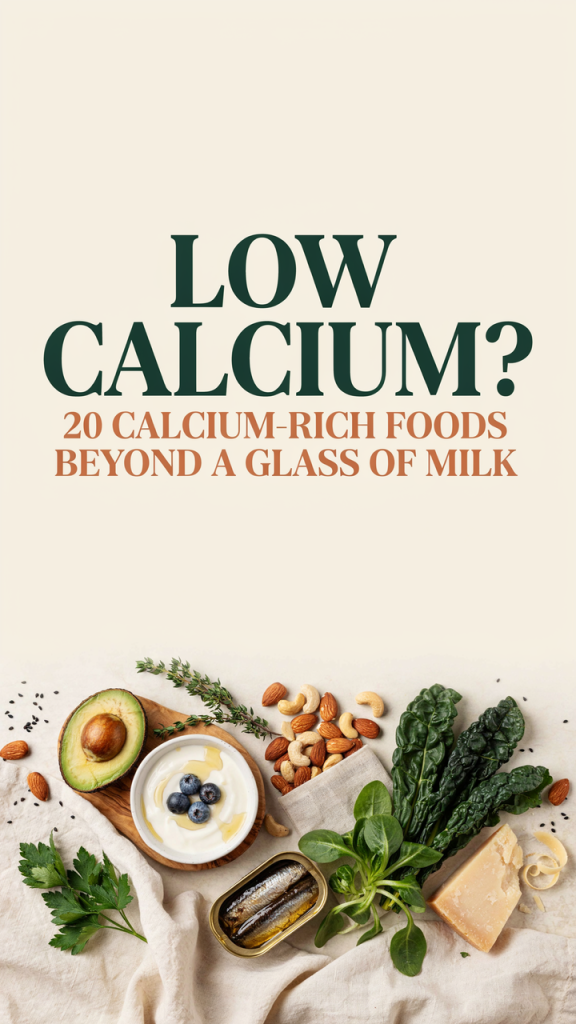
What Should I Eat for Low Calcium? 20 Calcium-Rich Foods Beyond a Glass of Milk
Calcium is essential for strong bones, nerve function, muscle contraction, and more. If you’ve been told you have low calcium or you’re looking to increase intake without relying on a daily glass of milk, you’re in the right place. This guide covers 20 calcium-rich foods (not including plain milk), explains how to get the most from them, and offers practical recipes and meal ideas to help you eat more calcium deliciously and sustainably.
Whether you’re lactose-intolerant, vegan, or simply want more variety, these foods and strategies will help you close the calcium gap while also supporting overall health.
Quick overview: Why calcium matters and how much you need
- Adults 19–50 years: 1,000 mg/day (U.S. recommendations).
- Women 51+ and everyone 71+: 1,200 mg/day.
- Children and teens require higher amounts during growth spurts.
Calcium balance depends on intake, vitamin D status (which helps absorption), and factors such as sodium, caffeine, and certain plant compounds (oxalates, phytates) that can reduce absorption. Always consult your healthcare provider if you suspect a deficiency or before starting supplements.
20 Calcium-Rich Foods (Beyond a Glass of Milk)
Below are 20 foods that provide meaningful calcium — each item includes practical tips for eating more of it. Values are approximate and vary by brand, preparation, and portion size.
1. Yogurt (plain, low-fat or Greek)
Approximate calcium: ~200–400 mg per cup
Notes: Yogurt is one of the best non-milk dairy options because it’s often rich in calcium and contains probiotics. Choose plain yogurt and add fruit or honey to control sugar.
2. Hard Cheeses (cheddar, parmesan)
Approximate calcium: ~200–330 mg per ounce (varies by type)
Notes: Cheese is concentrated in calcium. Use in moderation because of fat and sodium, but it’s a convenient calcium boost.
3. Fortified Plant Milks (soy, almond, oat)
Approximate calcium: ~200–400 mg per cup (check label)
Notes: Fortified non-dairy milks can match or exceed cow’s milk calcium when fortified. Read nutrition facts to pick brands with added calcium and vitamin D.
4. Calcium-Set Tofu
Approximate calcium: ~200–430 mg per 1/2 cup (varies)
Notes: Tofu set with calcium salts is an excellent plant-based source. Use in stir-fries, scrambles, and smoothies.
5. Canned Sardines (with bones)
Approximate calcium: ~300–350 mg per 3 oz (with bones)
Notes: Small fish eaten with their bones are calcium-dense. Sardines are also high in vitamin D and omega-3s.
6. Canned Salmon (with bones)
Approximate calcium: ~180–250 mg per 3 oz
Notes: Like sardines, canned salmon with bones supplies well-absorbed calcium and vitamin D—great for salads and sandwiches.
7. Collard Greens (cooked)
Approximate calcium: ~200–270 mg per cooked cup
Notes: Collards are among the best leafy greens for calcium with relatively low oxalate content, so absorption is good.
8. Turnip Greens (cooked)
Approximate calcium: ~150–200 mg per cooked cup
Notes: Flavorful and versatile — add to stews, sautés, or grain bowls.
9. Kale (cooked)
Approximate calcium: ~90–150 mg per cooked cup
Notes: Kale’s calcium is bioavailable and pairs well with vitamin C-rich foods to support absorption.
10. Bok Choy (cooked)
Approximate calcium: ~75–160 mg per cooked cup
Notes: Mild, tender, and great in stir-fries or soups.
11. White Beans (cannellini, navy)
Approximate calcium: ~160–175 mg per cooked cup
Notes: Beans are an easy way to add calcium and fiber; toss into salads, soups, or stews.
12. Blackstrap Molasses
Approximate calcium: ~100–170 mg per tablespoon
Notes: A spoonful in oatmeal or smoothies can add calcium plus iron and potassium. Use sparingly due to sugar content.
13. Chia Seeds
Approximate calcium: ~150–180 mg per ounce (2 tbsp)
Notes: Chia gels, puddings, and smoothies are an easy calcium-rich addition, also packed with fiber and omega-3s.
14. Sesame Seeds / Tahini
Approximate calcium: ~85–130 mg per tablespoon (sesame seeds/tahini)
Notes: Sprinkle sesame seeds on salads or make tahini dressings for a concentrated calcium lift.
15. Almonds
Approximate calcium: ~70–80 mg per ounce (about 23 almonds)
Notes: A portable snack; almond butter works in smoothies, toast, and sauces.
16. Dried Figs
Approximate calcium: ~100–120 mg per 1/2 cup
Notes: Sweet and chewy, dried figs are a tasty calcium-rich snack or salad topper.
17. Fortified Orange Juice
Approximate calcium: ~300 mg per cup (when fortified)
Notes: A convenient calcium source; choose versions fortified with calcium and vitamin D, and mind the sugar content.
18. Edamame (cooked)
Approximate calcium: ~60–100 mg per cup (shelled)
Notes: Young soybeans are also high in protein and make a great snack, salad topper, or side.
19. Broccoli (cooked)
Approximate calcium: ~40–100 mg per cooked cup
Notes: While not the highest, broccoli contributes calcium and vitamin C, which helps absorption.
20. Amaranth (cooked)
Approximate calcium: ~100–120 mg per cooked cup
Notes: A high-calcium pseudo-grain. Use cooked amaranth as porridge or mix into pilafs.
How to improve calcium absorption
- Get enough vitamin D: sunlight exposure and dietary sources (fortified foods, fatty fish) or supplements if needed.
- Pair calcium with vitamin C-rich foods (citrus, strawberries, bell peppers) to improve absorption when eating plant sources.
- Limit excess sodium and caffeine, which can increase calcium excretion.
- Spread calcium through the day — absorption is better with smaller, frequent amounts than one very large dose.
- Be mindful of oxalate-rich foods (spinach, rhubarb, beet greens) which bind calcium; they still count but have lower absorption.
When to consider supplements or testing
If diet changes aren’t enough or you have osteoporosis, low blood calcium, or absorption problems, your clinician may recommend supplements or further testing. Never exceed recommended doses without medical supervision, especially because high calcium intake from supplements can have risks.
Recipes & Meal Ideas — Easy Ways to Add Calcium
Below are practical recipes that use the foods above. Each recipe lists ingredients as bullets and instructions as a numbered list.
Recipe 1: Tofu, Broccoli & Bok Choy Stir-Fry (serves 2–3)
Ingredients:
– 12 oz calcium-set tofu, pressed and cubed
– 2 cups broccoli florets (cooked or raw)
– 2 cups bok choy, sliced
– 2 tbsp low-sodium soy sauce or tamari
– 1 tbsp toasted sesame oil
– 1 clove garlic, minced
– 1 tsp grated ginger
– 1 tsp sesame seeds (optional)
– 1 tbsp olive oil for cooking
Instructions:
1. Heat oil in a large skillet or wok over medium-high heat.
2. Add cubed tofu and sear until golden on all sides, about 4–5 minutes. Remove tofu and set aside.
3. In the same pan, add garlic and ginger, sauté 30 seconds until fragrant.
4. Add broccoli and bok choy, stir-fry 3–5 minutes until tender-crisp.
5. Return tofu to the pan, add soy sauce and sesame oil, and toss to coat.
6. Cook 1–2 minutes more to meld flavors. Sprinkle sesame seeds before serving.
Why this helps: Combines calcium-set tofu, calcium-containing broccoli and bok choy in one satisfying dish.
Recipe 2: Sardine & Avocado Toast (serves 1)
Ingredients:
– 1 slice whole-grain bread, toasted
– 1 small ripe avocado
– 1 can sardines in olive oil (3 oz), drained but keep small bones
– 1 tbsp lemon juice
– Pinch of salt and pepper
– Optional: red pepper flakes, chopped parsley
Instructions:
1. Mash avocado with lemon juice, salt, and pepper.
2. Spread avocado mixture over toasted bread.
3. Top with sardines, breaking into pieces; the bones are edible and high in calcium.
4. Garnish with red pepper flakes or parsley and serve immediately.
Why this helps: Sardines (with bones) provide a concentrated calcium boost plus vitamin D and healthy fats.
Recipe 3: Kale, White Bean & Tahini Salad (serves 2)
Ingredients:
– 4 cups chopped kale, stems removed
– 1 can (15 oz) white beans (cannellini), drained and rinsed
– 2 tbsp tahini
– 1 tbsp lemon juice
– 1 tbsp olive oil
– 1 small garlic clove, minced
– 1/4 cup toasted sesame seeds or almonds for crunch
– Salt and pepper to taste
Instructions:
1. Massage chopped kale with a pinch of salt for 1–2 minutes until softened.
2. Whisk tahini, lemon juice, olive oil, and garlic in a small bowl; add water 1 tsp at a time if too thick.
3. Toss kale with white beans, pour dressing over, and mix well.
4. Top with toasted sesame seeds or chopped almonds before serving.
Why this helps: Combines white beans, tahini (sesame), and kale—three calcium contributors—in a fiber-rich salad.
Recipe 4: Chia & Fig Yogurt Parfait with Almonds (serves 1)
Ingredients:
– 1 cup plain yogurt (dairy or fortified plant yogurt)
– 2 tbsp chia seeds
– 4–5 dried figs, chopped
– 2 tbsp sliced almonds
– 1 tsp honey or maple syrup (optional)
– 1/4 cup water or milk to soak chia (optional)
Instructions:
1. If desired, soak chia seeds in water or milk for 5–10 minutes until gelled.
2. Layer half the yogurt in a glass or bowl.
3. Add a layer of chia seeds and chopped figs.
4. Top with remaining yogurt and sprinkle sliced almonds.
5. Drizzle honey or maple syrup if using. Serve immediately.
Why this helps: Yogurt, chia, almonds, and figs all add calcium and texture to a simple, nutrient-dense breakfast or snack.
Recipe 5: Fortified Orange & Chia Smoothie (serves 1–2)
Ingredients:
– 1 cup fortified orange juice
– 1/2 cup fortified plant milk (soy or almond)
– 1 banana (frozen preferred)
– 1 tbsp chia seeds
– 1/2 cup frozen mango or berries
– Optional: 1 tbsp almond butter or 1/2 cup silken calcium-set tofu for extra protein
Instructions:
1. Add all ingredients to a blender.
2. Blend until smooth and creamy.
3. Pour into glasses and enjoy immediately.
Why this helps: Uses fortified orange juice and plant milk plus chia seeds to give a calcium-rich, vitamin D–complemented beverage.
Meal planning tips to boost calcium daily
- Breakfast: Yogurt parfait with chia and figs, or fortified cereal with fortified milk/plant milk.
- Lunch: Kale and white bean salad, or sardine sandwich on whole-grain bread.
- Snack: Almonds, dried figs, or edamame.
- Dinner: Tofu stir-fry with bok choy and broccoli, or canned salmon pasta with greens.
- Drinks: Fortified orange juice or fortified plant milks instead of sugary beverages.
Spread your calcium intake across meals to maximize absorption; for example, aim for 300–500 mg per eating occasion rather than one giant dose.
Foods that can interfere with calcium absorption
- High-oxalate foods (spinach, rhubarb, beet greens) — they contain lots of calcium, but much is bound and less available for absorption.
- High-phytate foods (some legumes, whole grains) — soaking, sprouting, or cooking can reduce phytate levels.
- Excess sodium and caffeine can increase calcium excretion.
- Large amounts of unbalanced protein without calcium can also increase calcium loss.
This doesn’t mean avoiding these foods — many are healthy — but combine them strategically (e.g., serve spinach with a citrus dressing to help).
Quick shopping list (based on the 20 items)
- Yogurt or fortified plant yogurt
- Hard cheese (optional)
- Calcium-fortified plant milk and fortified orange juice
- Calcium-set tofu
- Canned sardines and canned salmon (with bones)
- Kale, collard greens, turnip greens, bok choy
- White beans and edamame
- Chia seeds, sesame seeds or tahini, almonds
- Dried figs, blackstrap molasses
- Broccoli and amaranth (or teff if available)
Final thoughts and action steps
Addressing low calcium doesn’t have to mean only drinking more milk. There are many delicious, nutrient-rich options — from sardines and calcium-set tofu to leafy greens, seeds, and fortified beverages — that can help you meet your needs. Combine food choices strategically, focus on vitamin D and lifestyle factors, and spread calcium intake throughout the day.
Action steps:
1. Pick two or three foods from the 20-item list you enjoy and add them to your weekly menu this week.
2. Try one recipe above and adapt it to your tastes.
3. Discuss calcium targets and any supplement needs with your healthcare provider if your diet alone isn’t sufficient.
Remember: consistent, varied food choices plus lifestyle support (sunlight, weight-bearing exercise) are the best foundations for healthy bones and balanced calcium levels. Stay encouraged — small changes add up to real improvements.

