What Should I Eat Before Bed to Support Weight Loss?
Introduction
Many people wonder whether late-night snacking ruins weight-loss progress — and if so, what, if anything, is safe to eat before bed. The short answer: what you eat before bed can matter, but it’s not magic. Weight loss still depends primarily on total daily calories, quality of diet, and sleep and activity patterns. That said, choosing the right pre-bed foods can support appetite control, preserve muscle, improve sleep quality, and make it easier to stick to a calorie deficit. This article explains the science, offers clear rules of thumb, lists practical food choices, and provides 10 simple pre-bed snack/mini-meal recipes that are friendly to weight-loss goals.
Table of contents
– How late-night eating affects weight loss
– Principles for choosing pre-bed foods
– What to avoid before bed
– 10 bedtime-friendly snacks and mini-meals (recipes included)
– Timing, portions, and practical tips
– When to get personalized advice
– Conclusion
How late-night eating affects weight loss
There’s no single “evil” time stamp on food. Several mechanisms explain why pre-bed eating is often discussed in weight-loss circles:
- Calories still count. If the calories you eat before bed push you beyond your daily energy needs, you won’t lose weight.
- Sleep and hormones. Poor sleep raises ghrelin (hunger hormone) and reduces leptin (satiety hormone), increasing appetite and favoring weight gain. A light, sleep-friendly snack can sometimes improve sleep and help regulate appetite the next day.
- Meal timing and metabolism. Total daily energy expenditure is dominated by basal metabolic rate; the thermic effect of food and non-exercise activity also matter. Eating late doesn’t drastically slow your metabolism, but very large and late meals can disrupt sleep and digestion.
- Muscle preservation. If you’re in a calorie deficit and doing resistance training, consuming a modest amount of protein before bed can support overnight muscle protein synthesis.
- Blood sugar and cravings. A balanced pre-bed snack (protein + fiber/low-GI carb + small healthy fat) can prevent overnight blood sugar dips that cause morning overeating.
In short: timing alone isn’t the main driver of weight change. But thoughtful pre-bed choices can support sleep, satiety, and muscle — all useful for losing weight and keeping it off.
Principles for choosing pre-bed foods
When deciding what to eat before bed to support weight loss, use these principles:
- Prioritize protein: 10–30 g of protein before bed (depending on body size and daily intake) can help preserve lean mass and increase fullness.
- Keep portions modest: aim for 100–250 calories depending on your daily targets and how hungry you are.
- Favor low-GI carbohydrates: slow-digesting carbs (oats, berries, whole grains) can stabilize blood sugar.
- Include fiber and/or healthy fats: both slow digestion and increase satiety, but watch calories from fats (they’re calorie-dense).
- Choose sleep-supporting components: small amounts of tryptophan-rich foods (milk, turkey), magnesium (nuts, seeds, leafy greens), or warm beverages (decaffeinated herbal tea or warm milk) may help sleep.
- Avoid stimulants and alcohol: caffeine later in the day can reduce sleep quality; alcohol disrupts restorative sleep.
- Consider individual tolerance: if you have reflux, IBS, or diabetes, tailor choices accordingly.
What to avoid before bed
Avoid these at night if your goal is weight loss and good sleep:
- Large, high-calorie meals that push you beyond your daily calorie goal.
- Sugary desserts and refined carbs that spike blood sugar and disrupt hunger later.
- Heavy, greasy, spicy meals that can cause indigestion and poor sleep.
- Caffeinated beverages (coffee, many teas, energy drinks) in the late afternoon/evening.
- Excessive alcohol — it may make you sleepy but fragments sleep and increases next-day hunger.
10 Bedtime-Friendly Snacks and Mini-Meals (recipes included)
Below are 10 practical pre-bed foods with ingredients and simple instructions. Each is designed to be modest in calories, rich in protein or fiber, and sleep-friendly. Adjust portion sizes to fit your daily calorie needs.
1) Greek Yogurt + Berries + Chia
Why it’s good: High-quality protein (casein/whey), fiber from berries and chia, and low added sugar make this filling and muscle-preserving.
Ingredients
– 3/4 cup (170 g) plain nonfat or low-fat Greek yogurt
– 1/4 cup (30 g) mixed berries (blueberries, raspberries, or strawberries)
– 1 teaspoon chia seeds
– Optional: a sprinkle of cinnamon or a few drops of vanilla extract
Instructions
1. Spoon Greek yogurt into a bowl.
2. Top with berries, sprinkle chia seeds and cinnamon or vanilla if using.
3. Stir and enjoy immediately.
Approximate nutrition: ~150–200 kcal, 15–20 g protein (varies by yogurt)
2) Cottage Cheese + Cucumber + Black Pepper
Why it’s good: Cottage cheese is rich in casein protein that digests slowly overnight; cucumber adds bulk with few calories.
Ingredients
– 3/4 cup (170 g) low-fat cottage cheese
– 1/2 cup sliced cucumber
– Freshly ground black pepper and a pinch of salt (optional)
– Optional: chopped fresh herbs (dill or chives)
Instructions
1. Combine cottage cheese and cucumber in a small bowl.
2. Season with pepper, salt, and herbs if desired.
3. Mix and eat chilled.
Approximate nutrition: ~150–180 kcal, 14–18 g protein
3) Turkey & Avocado Roll-Ups
Why it’s good: Lean protein plus a small amount of healthy fat keeps you satisfied without a big calorie load.
Ingredients
– 3–4 slices of lean deli turkey (nitrate-free if possible)
– 1/4 small avocado, sliced
– Handful of baby spinach
– Optional: squeeze of lemon or pinch of black pepper
Instructions
1. Lay turkey slices flat. Place avocado slices and a few spinach leaves on each slice.
2. Roll tightly and secure with a toothpick if needed.
3. Eat 3–4 rolls as a light snack.
Approximate nutrition: ~150–200 kcal, 12–18 g protein
4) Warm Milk with Cinnamon (Sleep-Friendly)
Why it’s good: Warm milk provides a small amount of protein and tryptophan; cinnamon adds flavor with minimal calories to promote relaxation.
Ingredients
– 1 cup (240 ml) low-fat milk or unsweetened fortified plant milk (soy has more protein)
– 1/4 teaspoon ground cinnamon
– Optional: 1/2 teaspoon honey (if you need a touch of sweetness; skip if cutting calories)
Instructions
1. Warm milk on the stove or in the microwave until just steaming (do not boil).
2. Stir in cinnamon and honey if using.
3. Sip slowly 20–30 minutes before bed.
Approximate nutrition: ~100–150 kcal, 6–8 g protein (varies by milk)
5) Small Protein Smoothie (Casein or Whey)
Why it’s good: Controlled portion of protein with a small serving of low-GI fruit. Use casein protein for slower overnight digestion if preferred.
Ingredients
– 1/2 cup unsweetened almond milk or water
– 1/2 scoop casein or whey protein powder (choose unflavored/low-sugar)
– 1/4 small banana or 1/4 cup frozen berries
– Handful of spinach (optional)
– Ice if desired
Instructions
1. Combine all ingredients in a blender.
2. Blend until smooth.
3. Pour into a small glass and drink slowly.
Approximate nutrition: ~120–180 kcal, 12–20 g protein
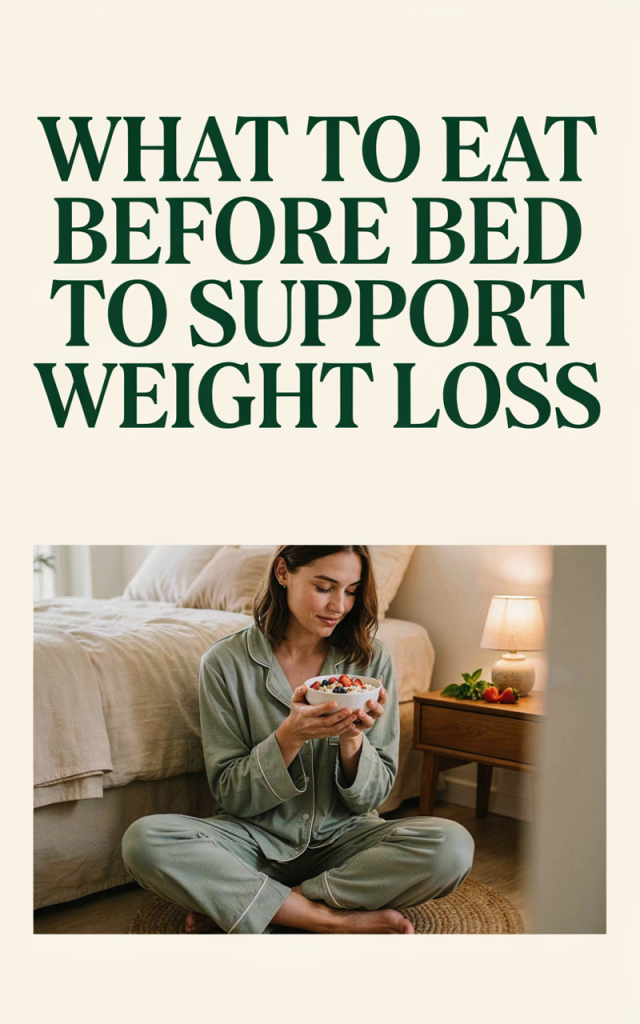
6) Oatmeal with Almond Butter and Cinnamon
Why it’s good: Slow-digesting carbs from oats, a small amount of healthy fat and protein from nut butter, and cinnamon to stabilize flavor.
Ingredients
– 1/4 cup (20 g) dry old-fashioned oats
– 1/2 cup water or unsweetened milk
– 1 teaspoon almond butter
– 1/4 teaspoon ground cinnamon
– Optional: a few sliced strawberries
Instructions
1. Combine oats and water/milk in a microwave-safe bowl; microwave for ~1–1.5 minutes or cook on the stove until creamy.
2. Stir in almond butter and cinnamon.
3. Top with strawberries if desired and cool briefly before eating.
Approximate nutrition: ~170–230 kcal, 5–7 g protein
7) Apple Slices + 10–12 Almonds
Why it’s good: Fiber from the apple plus healthy fats and modest protein in almonds provide satiety with a small calorie load.
Ingredients
– 1 small apple, sliced
– 10–12 raw almonds
Instructions
1. Core and slice the apple.
2. Pair apple slices with almonds and eat slowly.
Approximate nutrition: ~150–170 kcal, 4–6 g protein
8) Hard-Boiled Egg + Cherry Tomatoes
Why it’s good: Eggs are a high-quality protein source; tomatoes add fiber and volume with very few calories.
Ingredients
– 1 hard-boiled egg
– 6–8 cherry tomatoes
– Optional: pinch of salt and pepper or a sprinkle of paprika
Instructions
1. Peel the hard-boiled egg and slice in half or quarters.
2. Arrange with cherry tomatoes on a plate, season if desired.
3. Eat as a quick, protein-rich snack.
Approximate nutrition: ~90–120 kcal, 6–7 g protein
9) Tuna & Whole-Grain Crackers
Why it’s good: Lean, slow-digesting protein (tuna in water) with minimal whole-grain carbs to avoid a big blood sugar spike.
Ingredients
– 2 oz (56 g) canned tuna in water, drained
– 3–4 small whole-grain crackers
– Optional: squeeze of lemon, cracked pepper, or a teaspoon of plain yogurt instead of mayo
Instructions
1. Flake the drained tuna into a small bowl, add lemon and pepper or a small spoonful of yogurt.
2. Place tuna on crackers and eat immediately.
Approximate nutrition: ~150–180 kcal, 15–20 g protein
10) Edamame with Sea Salt
Why it’s good: Edamame is a plant-based complete protein with fiber; it’s easy to portion and satisfying without being heavy.
Ingredients
– 3/4 cup (90–100 g) shelled, steamed edamame (or 1 cup in pods)
– Pinch of sea salt
– Optional: squeeze of lemon
Instructions
1. Steam or microwave edamame according to package directions.
2. Sprinkle with sea salt and lemon if desired.
3. Eat warm or cool.
Approximate nutrition: ~120–150 kcal, 10–12 g protein
Timing, portions, and practical tips
- When to eat: Aim to finish your snack 30–90 minutes before bed. If you have reflux, leave a longer gap (2–3 hours) between eating and lying flat.
- Calorie target: Keep pre-bed snacks generally between 100–250 kcal depending on your energy needs and hunger.
- Protein target: 10–30 g of protein before bed is reasonable to support overnight muscle protein synthesis; lean toward higher amounts if you’re very active or in a stronger deficit.
- Hydration: Drink water during the evening but avoid excessive fluids right before bed to prevent nocturnal awakenings to urinate.
- Track and adjust: If you notice pre-bed snacks cause morning hunger or weight stalls, reduce portion size or skip them some nights. Conversely, if they help you avoid late-night binges, they may be beneficial.
- Consider training timing: If you exercise in the evening, a slightly larger protein + carb snack after training helps recovery and may be appropriate before bed.
- Be mindful of total macros: A pre-bed snack should fit into your daily macro goals, not add on top of them.
When to get personalized advice
- If you have diabetes or blood sugar issues, discuss bedtime snacks with a healthcare professional so you can monitor impacts on overnight glucose.
- If you have GERD, IBS, or other digestive conditions, certain foods (spicy, fatty, citrus) may worsen symptoms at night.
- If you’re pregnant or breastfeeding, calorie and nutrient needs are different — consult your provider.
- If weight loss stalls despite consistent habits, consider working with a registered dietitian to audit total intake, sleep, stress, and activity.
Conclusion
What you eat before bed can support weight loss — but it won’t substitute for a consistent calorie deficit, good sleep, and regular physical activity. The best bedtime choices combine modest portions with protein, fiber or low-GI carbs, and a bit of healthy fat to promote fullness and protect muscle overnight. Choose snacks that fit your taste, schedule, and calorie goals: Greek yogurt with berries, cottage cheese, a small turkey-and-avocado roll-up, warm milk, or a handful of edamame are all good options. Keep portions sensible (roughly 100–250 calories), avoid sugary and heavy foods that disrupt sleep, and personalize based on how you feel and perform the next day.
Try a few of the 10 recipes above over the next week and notice which help you sleep better and prevent morning overeating. Small, consistent choices at night can help make the hard work of weight loss a little easier — and more sustainable. If you’d like, I can help you pick 3 nightly snacks tailored to your calorie target and dietary preferences.