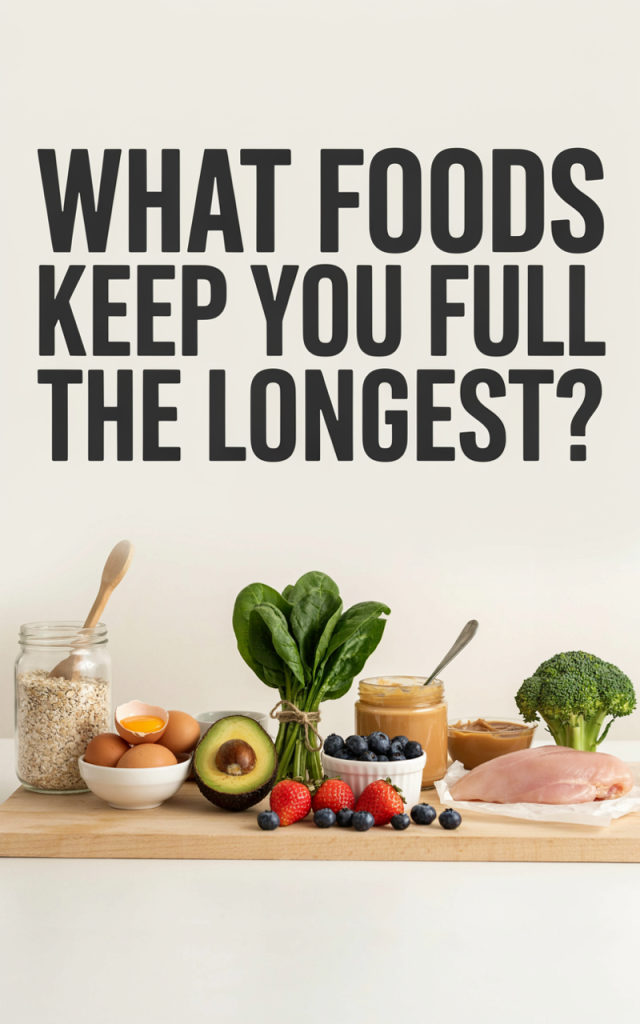
What Foods Keep You Full the Longest?
Feeling hungry all the time? You’re not alone. Many people mistake hunger for a lack of willpower or a diet that’s “not working,” when the real issue is that their meals aren’t designed to maximize lasting fullness. Choosing the right foods — and combining them thoughtfully — can dramatically reduce snacking, curb overeating, and make healthy eating feel effortless.
In this guide you’ll learn how satiety (feeling full) works, which foods keep you full the longest, practical meal and snack recipes that satisfy for hours, and evidence-backed strategies to extend fullness between meals. Whether you want to lose weight, build better eating habits, or simply stop thinking about food all day, this post gives clear, actionable steps that actually work.
How satiety (fullness) works
Before listing the best foods, it helps to understand why some foods keep you full and others leave you hungry shortly after eating.
Key drivers of satiety
- Protein: The most satiating macronutrient. Protein increases levels of hormones that promote fullness (like peptide YY and GLP-1) and reduces ghrelin, the hunger hormone.
- Fiber: Slows digestion, adds bulk, and increases the time food stays in your stomach and gut — signaling fullness.
- Healthy fats: High in calories per gram but slow gastric emptying (food leaves your stomach more slowly), which prolongs fullness.
- Low-glycemic carbohydrates: Foods that produce a slow, steady rise in blood sugar prevent rapid drops in blood sugar that can trigger hunger.
- Volume and water content: High-volume, water-rich foods (vegetables, fruits, soups) fill the stomach with few calories.
- Food structure and chewing: Solid foods and foods that require chewing tend to be more filling than liquids because of increased oral processing and slower consumption.
- Thermic effect: Protein requires more energy to digest, which can modestly increase fullness after meals.
Understanding these mechanisms helps you pick and combine foods that keep you full the longest.
Top foods that keep you full the longest
Below are categories and specific foods that are consistently linked to greater satiety. Use these as building blocks for meals and snacks.
Eggs
Eggs are high in protein and contain fat, a combo that keeps you full. They’re versatile for breakfast, lunch, or dinner.
Greek yogurt and skyr
Thick, strained yogurts have more protein per serving than regular yogurt. Combine with fruit or seeds for fiber and healthy fats.
Cottage cheese
High-protein, low-calorie, and very filling. Great savory or sweet.
Legumes (lentils, chickpeas, black beans)
Rich in protein and fiber, legumes slow digestion and maintain steady blood sugar. They’re excellent in stews, salads, and dips.
Oats and steel-cut oatmeal
Oats are high in soluble fiber (beta-glucan) that forms a gel in the gut, promoting fullness and slowing absorption.
Potatoes (boiled)
Surprisingly filling thanks to a combination of water, resistant starch (when cooled), and volume. The “satiety index” ranks boiled potatoes highly.
Whole grains (barley, quinoa, brown rice)
Provide fiber, protein, and structure. Quinoa also supplies complete protein.
Lean meats and fatty fish (salmon, tuna)
Animal proteins are highly satiating. Fatty fish add heart-healthy omega-3s that also slow digestion.
Nuts and seeds (almonds, chia, flax)
Provide protein, fiber, and healthy fats. Small portions go a long way in reducing hunger.
Avocado
High in monounsaturated fats and fiber, avocado promotes long-lasting fullness and satisfies cravings for richness.
High-volume vegetables (broccoli, spinach, carrots)
Low-calorie but filling due to water and fiber. Great to bulk up any meal.
Whole fruits (apples, pears, berries)
Contain fiber and water; eating whole fruit is more filling than drinking juice.
Popcorn (air-popped)
Low in calories per volume, crunchy, and satisfying as a snack when unsweetened and lightly seasoned.
Edamame
Young soybeans with a good balance of protein and fiber, excellent as a snack or salad addition.
Cottage cheese and fruit or nut butter pairings
Combining protein with healthy fats and fiber-rich fruit prolongs satiety.
How to combine foods for maximum fullness
- Always include protein: Aim for 20–40 grams per main meal depending on your needs.
- Add fiber-rich carbs: Veggies, whole grains, legumes, and whole fruit.
- Include a serving of healthy fat: Nuts, seeds, avocado, olive oil.
- Prioritize volume: Add a salad, broth-based soup, or extra veggies before your main course to reduce appetite.
- Prefer solid over liquid calories for maximum fullness.
Practical meal and snack ideas (recipes)
Below are recipe ideas that combine protein, fiber, healthy fats, and volume for long-lasting fullness. Each recipe lists ingredients and step-by-step instructions.
1) Overnight Oats with Greek Yogurt & Chia
Ingredients:
– 1/2 cup rolled oats
– 1/2 cup plain Greek yogurt
– 1/2 cup unsweetened almond milk (or milk of choice)
– 1 tbsp chia seeds
– 1/2 cup mixed berries (fresh or frozen)
– 1 tsp honey or maple syrup (optional)
– Pinch of cinnamon
Instructions:
1. In a jar or bowl, combine oats, Greek yogurt, almond milk, chia seeds, and cinnamon.
2. Stir well, then fold in the berries and sweetener if using.
3. Cover and refrigerate overnight (or at least 4 hours).
4. In the morning, stir once more and top with extra berries, nuts, or a spoonful of nut butter if desired.
2) Hearty Lentil & Vegetable Stew
Ingredients:
– 1 cup dried green or brown lentils, rinsed
– 1 tbsp olive oil
– 1 onion, diced
– 2 carrots, diced
– 2 celery stalks, diced
– 3 cloves garlic, minced
– 1 can (14 oz) diced tomatoes
– 4 cups vegetable broth
– 1 tsp ground cumin
– 1 tsp smoked paprika
– 2 cups chopped kale or spinach
– Salt and pepper to taste
– Lemon wedges and fresh parsley for serving
Instructions:
1. Heat olive oil in a large pot over medium heat. Add onion, carrots, and celery; sauté until softened (5–7 minutes).
2. Add garlic, cumin, and smoked paprika; cook for 1 minute until fragrant.
3. Add lentils, diced tomatoes, and vegetable broth. Bring to a boil, then reduce heat to a simmer.
4. Simmer uncovered for 25–30 minutes, or until lentils are tender.
5. Stir in kale or spinach and cook until wilted (2–3 minutes).
6. Season with salt, pepper, and a squeeze of lemon. Serve hot with whole-grain bread or a side salad.
3) Apple Slices with Almond Butter and Chia
Ingredients:
– 1 large apple, sliced
– 2 tbsp almond butter
– 1 tsp chia seeds
– Sprinkle of cinnamon (optional)
Instructions:
1. Arrange apple slices on a plate.
2. Spoon almond butter into a small bowl and stir in chia seeds.
3. Dip apple slices into the almond butter mixture or spread lightly and sprinkle with cinnamon.
4. Enjoy as a quick, portable snack.
4) Baked Salmon with Quinoa & Roasted Broccoli
Ingredients:
– 2 salmon fillets (4–6 oz each)
– 1 cup quinoa, rinsed
– 2 cups water or broth
– 1 head broccoli, cut into florets
– 2 tbsp olive oil, divided
– 1 lemon, sliced
– Salt, pepper, and garlic powder to taste
Instructions:
1. Preheat oven to 425°F (220°C). Toss broccoli with 1 tbsp olive oil, salt, and pepper. Spread on a baking sheet.
2. Place salmon fillets on the baking sheet, drizzle with remaining olive oil, season with salt, pepper, and garlic powder, and top with lemon slices.
3. Roast salmon and broccoli for 12–15 minutes, until salmon flakes and broccoli is browned at edges.
4. Meanwhile, in a small pot, bring quinoa and water/broth to a boil. Reduce heat to low, cover, and simmer 15 minutes until liquid is absorbed. Fluff with a fork.
5. Serve salmon over quinoa with roasted broccoli on the side.
5) Classic Hummus and Veggie Plate
Ingredients:
– 1 cup cooked chickpeas (or 1 can, drained and rinsed)
– 2 tbsp tahini
– 2 tbsp olive oil
– 1 clove garlic
– Juice of 1 lemon
– 1/2 tsp ground cumin
– Salt to taste
– Water to thin if needed
– Carrot sticks, cucumber slices, bell pepper strips, and whole-grain crackers for dipping
Instructions:
1. In a food processor, combine chickpeas, tahini, olive oil, garlic, lemon juice, cumin, and salt.
2. Blend until smooth, adding water a tablespoon at a time to reach desired consistency.
3. Transfer to a bowl and drizzle with extra olive oil and a sprinkle of paprika if desired.
4. Serve with fresh vegetables and crackers.
6) Egg, Avocado & White Bean Toast
Ingredients:
– 1 slice whole-grain bread, toasted
– 1/2 ripe avocado
– 1/3 cup canned white beans (cannellini), rinsed and drained
– 1 large egg, cooked to preference (poached, fried, or soft-boiled)
– Salt, pepper, and red pepper flakes
Instructions:
1. Mash avocado on toasted bread.
2. Mash beans lightly and layer over the avocado.
3. Top with the cooked egg.
4. Season with salt, pepper, and red pepper flakes. Serve immediately.
7) Green Protein Smoothie (Meal Replacement)
Ingredients:
– 1 cup unsweetened almond milk (or milk of choice)
– 1 scoop protein powder (20–30 g protein)
– 1 cup spinach
– 1/2 banana (frozen)
– 2 tbsp oats
– 1 tbsp almond butter
– Ice as needed
Instructions:
1. Add all ingredients to a blender.
2. Blend until smooth, adding ice to reach desired thickness.
3. Pour into a large glass and drink slowly to maximize fullness.
8) Chicken, Quinoa & Chickpea Power Salad
Ingredients:
– 1 cup cooked quinoa
– 1 cup cooked, shredded chicken breast
– 1/2 cup canned chickpeas, rinsed
– 1 cup cherry tomatoes, halved
– 1/2 cucumber, diced
– 2 cups mixed greens
– 2 tbsp olive oil
– Juice of 1 lemon
– Salt, pepper, and fresh herbs (parsley or mint)
Instructions:
1. In a large bowl, combine quinoa, chicken, chickpeas, tomatoes, cucumber, and mixed greens.
2. Whisk olive oil, lemon juice, salt, pepper, and herbs in a small bowl.
3. Pour dressing over salad and toss to combine.
4. Serve chilled or at room temperature.
Tips to increase fullness without increasing calories too much
- Start meals with a broth-based vegetable soup or salad to reduce how much you eat at the main course.
- Drink a glass of water 15–20 minutes before a meal; sometimes mild thirst is mistaken for hunger.
- Prioritize protein at each meal (eggs, dairy, legumes, lean meats, tofu).
- Add non-starchy vegetables liberally for volume and fiber.
- Avoid sugary beverages and high-GI snacks that spike blood sugar and trigger rebound hunger.
- Plan snacks that combine protein + fiber + fat (e.g., hummus + veggies, apple + nut butter).
- Eat slowly and mindfully: chewing more and pausing mid-meal lets fullness signals register.
Common mistakes people make
- Relying on juice or smoothies as a meal replacement without adding protein and fiber.
- Choosing low-fat processed foods that remove fat but not the calories that keep you satisfied.
- Skipping breakfast or spreading calories unevenly (very low morning intake often leads to overeating later).
- Equating low calorie with filling — small, calorie-dense foods (like sugary bars) can leave you hungry soon after.
Meal timing, portions, and personalization
There’s no single perfect eating schedule for everyone. Some people feel best with three solid meals; others prefer smaller, protein-rich meals more frequently. The key is portioning meals to include sustained-energy components: protein, fiber, healthy fats, and volume. Track how you feel for a week — note hunger levels, energy, and cravings — and adjust protein and fiber upwards if you’re often hungry.
Quick shopping list for satiety-friendly groceries
- Eggs, Greek yogurt, cottage cheese
- Canned or dried legumes (lentils, chickpeas, black beans)
- Rolled oats and steel-cut oats
- Quinoa, barley, brown rice
- Salmon, chicken, lean beef or tofu
- Avocados, nuts, almond or peanut butter
- Fresh vegetables (spinach, broccoli, carrots, bell peppers)
- Whole fruits (apples, berries, pears)
- Chia seeds, flaxseeds, tahini
Conclusion
If your goal is to feel full for longer, the solution isn’t deprivation or complicated diets — it’s intelligent food choices and balance. Prioritize protein, fiber, healthy fats, whole foods, and volume from vegetables and water-rich foods. Combine these elements into versatile meals and snacks like lentil stews, yogurt-and-oat breakfasts, legumes-and-grain salads, or salmon with quinoa and roasted vegetables. With the strategies and recipes above, you can reduce mid-day cravings, keep hunger at bay, and enjoy satisfying meals that support your health goals.
Start small: swap a sugary breakfast for overnight oats with Greek yogurt, add a serving of legumes to your lunch, or replace a processed snack with apple slices and almond butter. Those small changes compound into big improvements in how you feel, your energy, and your ability to stick with a healthy eating pattern. You’ve got this — eat well, stay satisfied, and let your food work for you.