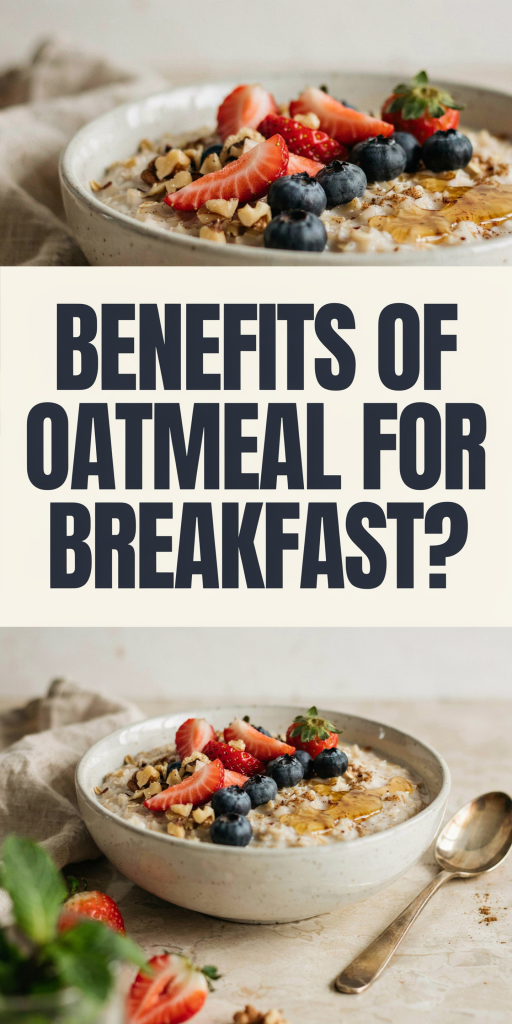
What Are the Benefits of Oatmeal for Breakfast?
Oatmeal is one of the world’s most popular breakfasts — and for good reason. It’s comforting, affordable, adaptable, and packed with nutrients that support health from morning until night. If you’ve ever wondered why nutritionists and health-conscious people keep recommending a bowl of oats, this article breaks down the science, practical benefits, preparation tips, and delicious breakfast recipes so you can start your day smarter and more satisfied.
In this post you’ll learn:
– What oatmeal really is and the differences between common types
– The key nutrients in oats and how they work in your body
– Evidence-backed benefits for heart health, blood sugar control, weight management, gut health, and more
– How to choose, store, and prepare oats
– Several easy, flavor-packed oatmeal breakfast recipes and meal ideas you can make this week
Whether you’re a busy parent, a gym-goer, a lifelong oats fan, or someone just trying to eat smarter, this guide will help you get the most from your morning bowl.
What is oatmeal? Types and how they differ
Oatmeal is the cooked form of oats — the hulled, processed seed of the oat plant (Avena sativa). Oats are processed to different degrees, and that affects texture, cook time, and how they behave in recipes.
H3: Common oat types
– Steel-cut oats: Whole oat groats chopped into pieces. Chewy texture and nutty flavor; longest cooking time (20–30 minutes stovetop).
– Rolled (old-fashioned) oats: Oat groats steamed and flattened into flakes. Moderate cooking time (5–10 minutes), creamy texture.
– Quick oats: Rolled oats that are further cut or steam-processed to cook faster (1–3 minutes). Softer texture.
– Instant oats: Pre-cooked and dried; very quick (1 minute), but often contain added sugars or flavorings when sold as packets.
– Oat flour: Ground oats used for baking and thickening.
– Oat bran: The outer layer of the oat groat, concentrated in fiber and nutrients.
Choosing the right oat depends on your time, desired texture, and recipe. Steel-cut yields a hearty chew; rolled oats make smooth porridge; instant oats are for when you need speed.
Nutritional profile: what’s in a bowl of oats?
A typical 1-cup cooked serving (about 240 g) of plain rolled oats provides:
– Calories: ~150–170
– Carbohydrates: ~27–30 g
– Fiber: ~4–5 g (with a significant portion being beta-glucan)
– Protein: ~5–7 g
– Fat: ~2–3 g (mostly unsaturated)
– Micronutrients: manganese, phosphorus, magnesium, iron, zinc, B vitamins
– Antioxidants: unique compounds called avenanthramides
Oats are relatively low in calories but have a high concentration of soluble fiber and micronutrients compared with many processed breakfast options.
Key health benefits of oatmeal for breakfast
Eating oatmeal regularly at breakfast offers multiple overlapping benefits. Here are the most important ones, with practical takeaways.
1. Lowers LDL (“bad”) cholesterol
Oats are a rich source of beta-glucan, a soluble fiber that forms a gel in the gut and helps reduce cholesterol absorption and increase its excretion. Regular consumption of oats has been shown to modestly lower LDL cholesterol, a known risk factor for heart disease.
Takeaway: A consistent bowl of oats (3 grams of beta-glucan or more daily) can contribute to improved cholesterol numbers over time.
2. Helps control blood sugar and insulin response
The soluble fiber in oats slows digestion and the release of glucose into the bloodstream. This produces a lower and steadier blood sugar spike after a meal compared with many refined breakfast foods. For people with type 2 diabetes or insulin resistance, oats can be a smart carbohydrate choice when paired with protein and healthy fat.
Takeaway: Combine oats with protein (e.g., Greek yogurt, nuts, or milk) and healthy fat to further blunt the post-meal blood sugar rise.
3. Promotes fullness and supports weight management
Oatmeal’s fiber content and thick, viscous texture increase feelings of satiety, helping you feel full for longer. That can reduce snacking and lower overall calorie intake throughout the day.
Takeaway: If your goal is weight control, enjoy a bowl of oats with toppings that add protein and healthy fat to extend fullness.
4. Supports gut health
Beta-glucan acts as a prebiotic fiber that feeds beneficial gut bacteria, increasing production of short-chain fatty acids like butyrate. These compounds support intestinal health and may reduce inflammation.
Takeaway: Regular oat consumption can be part of a gut-friendly diet, especially when paired with a variety of fiber sources (fruits, vegetables, legumes).
5. Provides sustained energy and mental focus
Complex carbohydrates in oats release energy slowly, giving sustained fuel for the brain and body. This can improve concentration, mood, and productivity during the morning.
Takeaway: Swap a high-sugar breakfast for oats to avoid mid-morning energy crashes.
6. Packed with micronutrients and antioxidants
Oats deliver important minerals — manganese, phosphorus, magnesium, and iron — and B vitamins that support metabolism, bone health, and oxygen transport. Avenanthramides, unique antioxidants in oats, have anti-inflammatory and vasodilatory properties.
Takeaway: Oats provide multiple nutrients that are often underconsumed in the typical diet.
7. Versatile, affordable, and sustainable
Oats are inexpensive, shelf-stable, and environmentally friendly compared with many animal-sourced breakfasts. Their versatility allows you to make sweet or savory bowls, bake them into bars, blend them into smoothies, or prep overnight.
Takeaway: Oats are a practical staple for healthy, budget-conscious meal planning.
How much oatmeal should you eat?
A typical serving is 1/2 cup dry (about 40–50 g) which cooks to about 1 cup. That serving provides a balanced mix of carbs, fiber, and protein. You can adjust portion sizes based on your energy needs and activity level:
– Light eater or low-calorie target: 1/3–1/2 cup dry
– Active adult: 1/2–3/4 cup dry
– Add protein or fat for more calories and satiety (e.g., milk, nut butter, seeds)
How to prepare oatmeal: methods and quick tips
H2: Basic stovetop method (rolled oats)
– Ratio: 1 part oats to 2 parts water or milk
– Bring liquid to a simmer, add oats, stir, cook 5–10 minutes until thickened. Add toppings.
H2: Steel-cut oats stovetop
– Ratio: 1 part oats to 3–4 parts liquid
– Simmer 20–30 minutes, stirring occasionally. For faster cooking, toast the oats briefly and then add boiling water, or use the soak method overnight.
H2: Overnight oats (no-cook)
– Combine equal parts rolled oats and liquid (milk/yogurt), add chia seeds or sweetener if desired, refrigerate overnight. Ready in the morning.
H2: Microwave quick method
– Combine oats and liquid in a microwave-safe bowl (allow for bubbling), microwave 1–2 minutes depending on wattage, stir, and add toppings.
H3: Tips for best texture and flavor
– Use milk or plant-based milk for creamier texture.
– Stir in a mashed banana or applesauce while cooking for natural sweetness.
– Toast oats in a dry skillet for 1–2 minutes before cooking for a nuttier flavor.
– Add a pinch of salt to enhance flavor.
– Stir in a spoonful of nut butter or Greek yogurt after cooking for protein and creaminess.
Serving suggestions and topping ideas
- Fresh fruits: berries, banana, apple, pear
- Dried fruit: raisins, dates, apricots (small amounts)
- Nuts & seeds: almonds, walnuts, chia, flaxseed (ground)
- Protein: Greek yogurt, cottage cheese, protein powder, nut butter
- Spices: cinnamon, nutmeg, vanilla extract
- Savory: sautéed greens, fried or poached egg, avocado, salsa
- Sweeteners: honey, maple syrup, stevia (use sparingly)
Pair oats with protein and fat to make a balanced breakfast that keeps you satisfied.
Breakfast Recipes and Meal Ideas
Below are several explicitly listed, practical oatmeal recipes you can make at home. Each recipe includes ingredients (bulleted) and step-by-step instructions (numbered).
Classic Creamy Rolled Oats (serves 1)
Ingredients
– 1/2 cup rolled oats
– 1 cup water or milk (dairy or plant)
– Pinch of salt
– 1/2 banana, sliced (optional)
– 1 tablespoon chopped nuts (walnuts or almonds)
– 1 teaspoon honey or maple syrup (optional)
Instructions
1. Combine oats, liquid, and a pinch of salt in a small saucepan and bring to a gentle simmer over medium heat.
2. Reduce heat to low and cook, stirring occasionally, until thickened (about 5–7 minutes).
3. Remove from heat and stir in sliced banana (if using) and sweetener.
4. Transfer to a bowl and top with chopped nuts and an extra drizzle of honey or maple if desired.
5. Serve warm.
Berry & Chia Overnight Oats (serves 1)
Ingredients
– 1/2 cup rolled oats
– 1/2 cup milk or plant-based milk
– 1/4 cup plain Greek yogurt (optional for protein)
– 1 tablespoon chia seeds
– 1/2 cup mixed berries (fresh or frozen)
– 1 teaspoon honey or maple syrup (optional)
Instructions
1. In a jar or container, combine oats, milk, Greek yogurt, chia seeds, and honey. Stir well.
2. Fold in half of the berries and seal the container.
3. Refrigerate overnight (or at least 4 hours).
4. In the morning, stir the oats and top with remaining berries.
5. Enjoy cold or warmed briefly in the microwave.
Savory Spinach & Egg Steel-Cut Oats (serves 1–2)
Ingredients
– 1 cup water
– 1/2 cup steel-cut oats
– Pinch of salt
– 1 cup baby spinach, roughly chopped
– 1 egg (or 2 eggs if serving 2)
– 1 tablespoon grated Parmesan or feta (optional)
– Freshly cracked black pepper and red pepper flakes (optional)
Instructions
1. Bring water and a pinch of salt to a boil in a small saucepan.
2. Add steel-cut oats, reduce heat to low, and simmer uncovered, stirring occasionally, until oats are tender (20–25 minutes).
3. During the last 2 minutes of cooking, stir in the chopped spinach to wilt.
4. In a separate pan, poach or fry an egg to your liking.
5. Divide cooked oats into bowls, top each with the egg, sprinkle with cheese and cracked pepper, and add red pepper flakes if you like heat.
6. Serve immediately.
Peanut Butter Banana Oatmeal Smoothie (serves 1)
Ingredients
– 1/4 cup rolled oats
– 1 banana (fresh or frozen)
– 1 tablespoon peanut butter
– 1 cup milk or plant-based milk
– 1/2 cup plain Greek yogurt (optional)
– 1/2 teaspoon cinnamon
– Ice (optional)
Instructions
1. Add oats to the blender and pulse to break them down for a smoother texture.
2. Add banana, peanut butter, milk, Greek yogurt (if using), and cinnamon.
3. Blend until smooth. Add ice for a thicker, colder texture and blend again.
4. Taste and adjust sweetness or thickness as desired.
5. Pour into a glass and enjoy immediately.
Baked Apple & Walnut Oatmeal (serves 4)
Ingredients
– 2 cups rolled oats
– 1 teaspoon baking powder
– 1 1/2 teaspoons cinnamon
– Pinch of salt
– 2 cups milk (dairy or plant-based)
– 1 large apple, peeled and diced
– 1/4 cup chopped walnuts
– 2 eggs (or 2 tablespoons ground flax + 6 tablespoons water for vegan)
– 2 tablespoons maple syrup or honey
Instructions
1. Preheat oven to 375°F (190°C) and grease an 8×8-inch baking dish.
2. In a bowl, combine oats, baking powder, cinnamon, and salt.
3. In a separate bowl, whisk milk, eggs, and maple syrup.
4. Stir the wet mixture into the dry oats. Fold in the diced apple and half the walnuts.
5. Pour the mixture into the prepared dish, sprinkle remaining walnuts on top, and bake 30–35 minutes until set and golden.
6. Let cool slightly, then cut into squares and serve warm.
No-Bake Oatmeal Energy Bites (makes ~12)
Ingredients
– 1 cup rolled oats
– 1/2 cup peanut butter or almond butter
– 1/4 cup honey or maple syrup
– 1/4 cup mini dark chocolate chips or chopped dried fruit
– 1 tablespoon chia or flaxseed (optional)
Instructions
1. In a bowl, mix peanut butter, honey, and chia/flaxseed until smooth.
2. Stir in oats and chocolate chips (or dried fruit) until combined.
3. Scoop tablespoon-sized portions and roll into balls using slightly wet hands.
4. Place on a tray and refrigerate for at least 30 minutes to set.
5. Store in an airtight container in the fridge for up to 1 week.
Oatmeal variation ideas to keep breakfast interesting
- Oatmeal “maple walnut” — roll oats cooked in milk, topped with chopped walnuts, cinnamon, and a drizzle of maple.
- Tropical overnight oats — oats soaked with coconut milk, diced mango, and shredded coconut.
- Savory mushroom & thyme oats — sauté mushrooms and thyme, stir into oats with a splash of soy sauce, top with a soft-boiled egg.
- Protein-packed oats — stir in a scoop of unflavored or vanilla protein powder after cooking.
Oatmeal and special diets
- Gluten-free: Oats are naturally gluten-free, but cross-contamination can occur. Choose certified gluten-free oats if you have celiac disease.
- Vegan: Use plant-based milks and egg substitutes (flax egg) to make any recipe vegan.
- Low FODMAP: Some people with sensitive guts tolerate small portions of oats (1/2 cup cooked); always monitor symptoms.
- Diabetic-friendly: Pair oats with protein and fat; choose lower-sugar toppings.
Common concerns and myths
- “Oats spike blood sugar.” When eaten alone as instant sugar-laden packets, they can. But plain oats with protein and fat produce much steadier glucose responses than refined breakfasts.
- “Oats are too high in carbs.” Carbohydrates are an essential fuel; the type matters. Oats provide complex carbs and fiber that support energy and fullness.
- “Oats cause bloating.” Some people are sensitive to fiber, especially if increasing intake rapidly. Introduce oats gradually and drink adequate water.
Practical tips for making oats part of your routine
- Batch cook steel-cut oats into portions and reheat for quick mornings.
- Keep a supply of rolled oats and a jar of chia seeds and nuts for simple overnight oats.
- Mix and match flavors weekly to avoid boredom — one week sweet, one week savory.
- Use oats as a base for meal prep: baked oatmeal squares are portable and reheat well.
Final thoughts — why oatmeal is an excellent breakfast choice
Oatmeal checks nearly every box for a healthy breakfast: nutrient density, sustained energy, affordability, convenience, and culinary flexibility. Eating oats regularly can support heart health, steady blood sugar, better satiety, and a happier gut — benefits that compound over time. Whether you prefer a warm, creamy bowl on a chilly morning or a quick overnight jar you can grab on the go, oats deliver a smart foundation for daily nutrition.
Give a few of the recipes above a try this week. Start with a simple bowl and add one new topping or flavor twist each day. Small, sustainable changes — like swapping a sugary cereal for a nourishing bowl of oats — add up to meaningful health gains. Enjoy the process, experiment with flavors, and let oatmeal support your mornings and your long-term well-being.
If you’d like, I can provide a 7-day oatmeal breakfast plan with shopping list and prep times tailored to your dietary preferences — tell me if you prefer sweet, savory, vegan, or high-protein options.