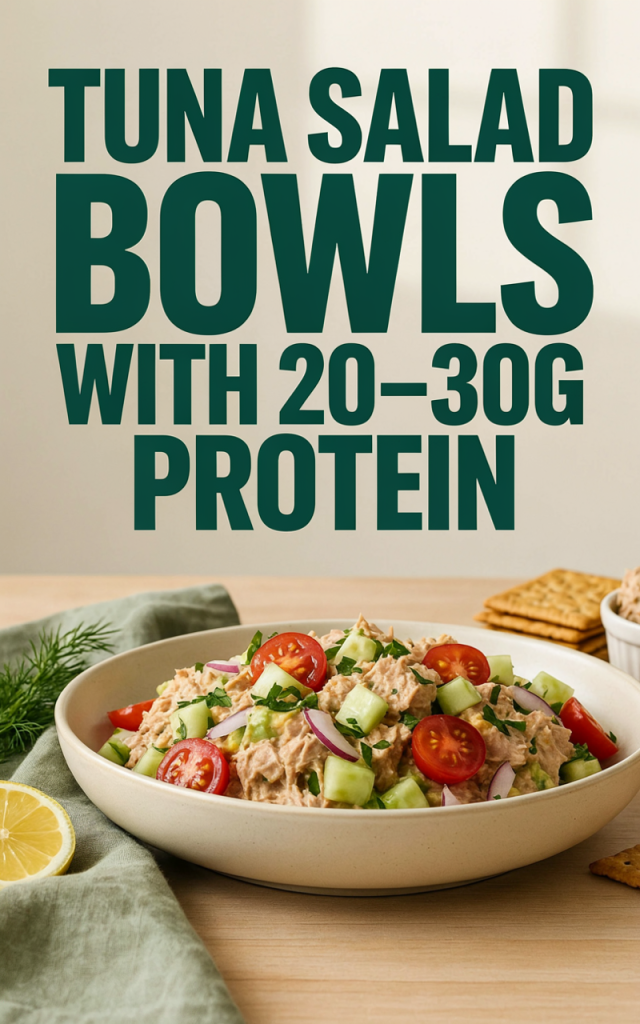
Tuna Salad Bowls With 20–30 Grams of Protein
Tuna salad bowls are one of the most versatile, nutrient-dense, and convenient meals you can make. Whether you’re meal-prepping for the week, fueling a workout, or just want a healthy lunch that keeps you full, a well-built tuna bowl can deliver 20–30 grams of protein in a single serving — the sweet spot for satiety and muscle maintenance for most people. This guide provides multiple recipe variations, clear instructions, nutrition estimates, and practical tips so you can build delicious tuna salad bowls that meet your protein goals every time.
Table of contents
– Why tuna salad bowls are a smart, protein-packed choice
– How to get 20–30 grams of protein per bowl (simple math)
– 6 tuna salad bowl recipes that hit 20–30 grams of protein (ingredients + instructions)
– Swap and scale: how to tweak protein and calories
– Meal prep, storage, and serving tips
– Frequently asked questions
– Conclusion
Why tuna salad bowls are a smart, protein-packed choice
Tuna is an excellent lean protein source: canned tuna offers a high protein-to-calorie ratio, is shelf-stable, affordable, and pairs beautifully with greens, grains, legumes, and flavorful dressings. Building a balanced bowl with vegetables, healthy fats, and a modest amount of carbs helps stabilize blood sugar and sustain energy through the afternoon.
From a nutrition perspective, aiming for 20–30 grams of protein per meal is a practical target for most adults: it supports muscle repair, keeps hunger at bay, and fits well into daily protein needs without overloading on calories. Combining tuna with modest amounts of high-protein dairy, legumes, eggs, or whole grains gets you into that range easily.
How to get 20–30 grams of protein per bowl (simple math)
Here are quick protein estimates you can use while assembling bowls (approximate values):
- Canned tuna (in water), 3 oz / 85 g drained: ~20 g protein
- Cooked quinoa, 1/2 cup: ~4 g protein
- Plain Greek yogurt, 1/3 cup: ~7–9 g protein
- Large egg: ~6 g protein
- Cooked chickpeas, 1/4 cup: ~3.5 g protein
- Feta cheese, 1 oz: ~4 g protein
- Cooked edamame, 1/4 cup: ~4 g protein
- Cottage cheese, 1/2 cup: ~12–14 g protein
Mix and match: start with ~3 oz (85 g) tuna for ~20 g protein, then add one or two of the small extras above (quinoa, egg, Greek yogurt, chickpeas, etc.) to land between 20 and 30 grams.
Now let’s put this into practice with concrete recipes.
6 Tuna Salad Bowl Recipes That Deliver 20–30 g Protein
Each recipe lists ingredients as a bulleted list and step-by-step instructions as a numbered list. Protein estimates are provided per serving.
1) Classic Mediterranean Tuna Salad Bowl — ~22 g protein
Ingredients
– 1 can (3 oz / 85 g drained) tuna in water, flaked (~20 g protein)
– 2 cups mixed salad greens or baby spinach
– 6 cherry tomatoes, halved
– 1/4 cup cucumber, sliced
– 1/8 cup red onion, thinly sliced
– 1 tbsp extra-virgin olive oil
– 1 tbsp lemon juice
– 1 tbsp chopped fresh parsley
– Salt and black pepper to taste
– Optional: 1 tbsp crumbled feta (+~1 g protein)
Instructions
1. Place greens in a medium bowl as the base.
2. Add halved tomatoes, cucumber, and red onion over the greens.
3. Flake the tuna and scatter it evenly on top.
4. Whisk olive oil, lemon juice, parsley, salt, and pepper in a small bowl; drizzle over the bowl.
5. Toss gently and finish with optional feta if using.
Protein estimate: ~22 g (tuna ~20 g + small amount from feta if used)
Why this works: Simple, fresh, low-carb, and filling — the tuna provides the protein while the veggies add volume and micronutrients.
2) Protein-Packed Tuna & Quinoa Bowl — ~24 g protein
Ingredients
– 1 can (3 oz / 85 g drained) tuna in water (~20 g protein)
– 1/2 cup cooked quinoa (~4 g protein)
– 1/4 cup chopped bell pepper
– 1/4 cup steamed green beans or broccoli florets
– 1 tbsp olive oil
– 1 tsp Dijon mustard
– 1 tsp red wine vinegar
– Salt and pepper to taste
– Fresh herbs (optional)
Instructions
1. Warm the cooked quinoa if chilled and place in the bottom of your bowl.
2. Arrange steamed green beans (or broccoli) and bell pepper around the quinoa.
3. Flake tuna over the center of the bowl.
4. Mix oil, mustard, and vinegar; season with salt and pepper and drizzle over the bowl.
5. Garnish with fresh herbs and serve.
Protein estimate: ~24 g (tuna ~20 g + quinoa ~4 g)
Why this works: Quinoa adds a small boost of plant protein and complex carbs for sustained energy, keeping the bowl balanced and filling.
3) Spicy Tuna & Avocado Bowl (Japanese-style) — ~23 g protein
Ingredients
– 1 can (3 oz / 85 g drained) tuna in water (~20 g protein)
– 1/2 small avocado, diced (~1–2 g protein)
– 1/2 cup sushi rice or brown rice, cooked (~2–3 g protein)
– 1 tbsp low-sodium soy sauce or tamari
– 1 tsp Sriracha or chili paste (adjust to taste)
– 1 tsp sesame oil
– 1 sheet nori, sliced into strips (optional)
– 1 tbsp sesame seeds (~1.6 g protein)
Instructions
1. Place cooked sushi or brown rice in the bowl as a base.
2. Mix tuna with soy sauce, Sriracha, and sesame oil in a small bowl; fold in gently.
3. Spoon spicy tuna over rice; add diced avocado to one side.
4. Sprinkle with sesame seeds and nori strips.
5. Adjust Sriracha or soy sauce to taste and serve.
Protein estimate: ~23 g (tuna ~20 g + rice and sesame seeds ~3 g)
Why this works: The spicy dressing and creamy avocado make the bowl feel indulgent while still keeping protein in the target range.
4) Mediterranean Chickpea & Tuna Bowl — ~23.5 g protein
Ingredients
– 2.5 oz / ~70 g drained tuna (~16 g protein)
– 1/4 cup cooked chickpeas (~3.5 g protein)
– 1 cup mixed greens
– 6–8 kalamata olives, halved
– 1 tbsp crumbled feta (~1.5–2 g protein)
– 1 tbsp extra-virgin olive oil
– 1 tbsp lemon juice
– Salt, pepper, and oregano to taste
Instructions
1. Layer mixed greens in a bowl.
2. Add chickpeas and olives across the bed of greens.
3. Flake the tuna and distribute it over the chickpeas and greens.
4. Whisk olive oil, lemon juice, oregano, salt, and pepper; drizzle over the bowl.
5. Crumble feta on top and serve.
Protein estimate: ~23.5 g (tuna ~16 g + chickpeas ~3.5 g + feta ~4 g)
Why this works: If you want more plant-based texture alongside tuna, chickpeas add fiber and a modest protein boost.
5) Greek Yogurt Tuna Salad Bowl (creamy, high-protein) — ~28 g protein
Ingredients
– 1 can (3 oz / 85 g drained) tuna in water (~20 g protein)
– 1/3 cup plain Greek yogurt (~7–9 g protein)
– 1/4 cup diced celery
– 1/4 cup diced apple or grapes (optional for sweetness)
– 1 tbsp Dijon mustard
– 1 tsp lemon juice
– Salt and pepper to taste
– 2 cups mixed greens or baby spinach
Instructions
1. In a bowl, combine Greek yogurt, Dijon mustard, lemon juice, salt, and pepper.
2. Add flaked tuna, celery, and apple or grapes (if using); mix until everything is evenly coated.
3. Place mixed greens in a serving bowl and top with the tuna mixture.
4. Serve immediately or chill for meal prep.
Protein estimate: ~28 g (tuna ~20 g + Greek yogurt ~8 g)
Why this works: Greek yogurt makes a creamy, tangy dressing that significantly increases protein without heavy fats.
6) Niçoise-Inspired Tuna Salad Bowl (with egg) — ~24 g protein
Ingredients
– 2.5 oz / ~70 g drained tuna (~16 g protein)
– 1 large hard-boiled egg (~6 g protein)
– 1/2 cup baby potatoes, boiled and halved (~1–2 g protein)
– 1 cup blanched green beans
– 6 cherry tomatoes, halved
– 1 tbsp olive oil
– 1 tsp Dijon mustard
– Salt and pepper to taste
– Optional: 1 tsp capers
Instructions
1. Arrange potatoes, green beans, and tomatoes on a plate or bowl.
2. Place flaked tuna on the vegetables.
3. Peel and halve the hard-boiled egg and set on top.
4. Whisk olive oil and mustard; season with salt and pepper and drizzle over the bowl.
5. Add capers if desired and serve.
Protein estimate: ~24 g (tuna ~16 g + egg ~6 g + potatoes ~2 g)
Why this works: A classic composition with the comforting bite of potatoes and the protein boost of an egg.
Swap and scale: how to tweak protein and calories
Adjusting protein in your bowl is straightforward. Use these swaps and additions to move within the 20–30 g range:
- Add 1/4 cup cooked edamame: +~4 g protein.
- Increase tuna to 4 oz (~113 g): +~7–8 g protein (be mindful of sodium when using canned tuna).
- Add 1/3–1/2 cup plain Greek yogurt: +~6–12 g protein depending on amount.
- Toss in 1/2 cup cottage cheese as a side or base: +~12 g protein.
- Add 1 large egg: +6 g protein.
- Add 1/4 cup cooked quinoa: +~2 g protein.
If you exceed 30 g and want to lower protein, reduce tuna to 2.5–3 oz, limit dairy add-ins, or increase vegetable volume (more greens, cucumbers, tomatoes) which add bulk with negligible protein.
Meal prep, storage, and serving tips
- Batch cook protein components: drain tuna, cook quinoa/potatoes, and hard-boil eggs at the start of the week.
- Keep wet ingredients separate: store dressing and creamy yogurt mixtures in small containers to keep greens crisp.
- Use mason jar layering for grab-and-go: dressing at the bottom, hearty veggies/grains in the middle, greens on top — shake and dump before eating.
- Storage: prepared tuna bowls (without delicate greens) last 3–4 days refrigerated. Bowls with avocado are best consumed the same day unless you add avocado right before serving.
- Low-sodium tuna: choose low-sodium or rinse canned tuna to reduce salt if you’re monitoring sodium intake.
Flavor-boosting tips (without adding lots of calories)
- Acid is your friend: lemon, lime, and vinegars brighten flavors and make the bowl feel lighter.
- Fresh herbs: parsley, cilantro, dill, or basil instantly upgrade a bowl.
- Crunch matters: raw carrots, radish, cucumber, or toasted seeds add texture and satisfaction.
- Spices: smoked paprika, sumac, za’atar, or crushed red pepper change the profile without extra fat.
Frequently asked questions (FAQ)
Q: How much tuna per bowl should I use to reliably hit at least 20 g of protein?
A: Aim for ~3 oz (85 g) of drained canned tuna per serving. That’s roughly 20 g of protein. Add a small help like 1/2 cup cooked quinoa, a tablespoon of sesame seeds, or a few tablespoons of Greek yogurt to reach 20–30 g as needed.
Q: Is canned tuna safe to eat regularly?
A: For most people, canned light tuna is safe in moderation. Pregnant people and young children should follow guidelines about mercury exposure (prefer light tuna and limit servings). If you have specific health concerns, check with your healthcare provider.
Q: Can these bowls fit into a weight-loss plan?
A: Yes. They’re high in protein and fiber-rich vegetables which help with satiety. Watch added oils, high-calorie dressings, and serving sizes of starchy sides if you’re tracking calories.
Q: Are there vegetarian alternatives that still reach 20–30 g protein?
A: Yes — swap tuna for a combo of edamame (1 cup shelled ~17 g), tempeh (3 oz ~16–18 g), or cottage cheese (1/2 cup ~12–14 g) plus legumes and grains, and you can reach the same protein range.
Conclusion
Tuna salad bowls are a reliable, delicious way to get 20–30 grams of protein in one meal without sacrificing flavor or convenience. Whether you like the freshness of a Mediterranean-style bowl, the creamy tang of Greek yogurt, or a Niçoise-inspired plate, these recipes make it easy to hit your protein goals. Use the swap-and-scale tips to customize portions, manage calories, and keep things interesting. With a little planning, you can enjoy a varied lineup of satisfying tuna bowls all week long — nutritious, portable, and tailored to your taste.
Ready to build your perfect bowl? Pick one recipe above, customize it with the protein tweaks that match your needs, and enjoy a balanced, protein-packed meal that keeps you energized and satisfied.