
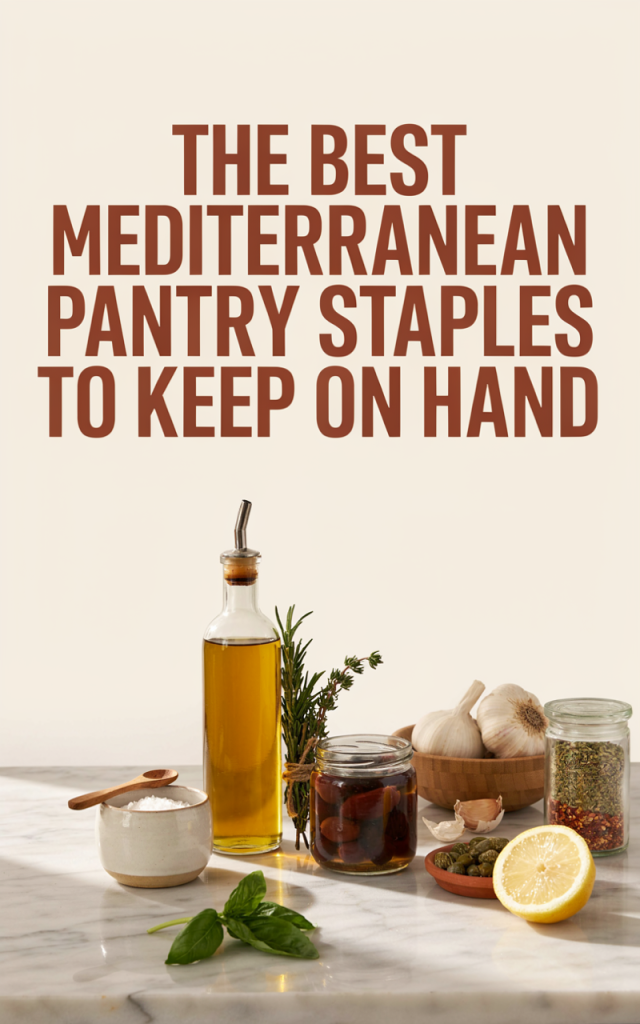
The Best Mediterranean Pantry Staples to Keep on Hand
A well-stocked Mediterranean pantry turns modest ingredients into bright, flavorful meals any night of the week. The Mediterranean eating pattern emphasizes plant-forward foods, healthy fats, herbs and spices, and simple preparations — and the pantry is where the magic begins. With a handful of reliable staples, you can build soups, salads, grain bowls, sauces, and quick dinners without a last-minute grocery run.
Ready to make Mediterranean eating easier? Get the 30-Day Mediterranean Meal Plan System with a complete 30-day calendar, 53 recipes, grocery lists, preparation guidance, and three bonus guides. You can also add the 30-page Quick-Meal Vault for fast, practical meal ideas.
Below you’ll find a practical list of pantry essentials, storage tips, easy meal ideas and recipes that use what you likely already have on hand. These choices focus on versatility, long shelf life, and authentic Mediterranean flavor so you can eat simply, seasonally and deliciously.
Why stock a Mediterranean pantry?
- Convenience: Canned beans, tomatoes and whole grains mean dinner in 20–30 minutes.
- Flavor foundation: Olive oil, dried herbs, capers and anchovies add savory depth with just a few pantry items.
- Budget-friendly: Beans, lentils and shelf-stable grains stretch meals and keep costs down.
- Flexible cooking: Pantry staples pair well with fresh produce, cheese or seafood when you have them.
This guide highlights staples that work together. You don’t need everything all at once — start with a few items and add more as you build recipes you like.
15 Mediterranean pantry staples to keep on hand
- Extra-virgin olive oil
- Why: The backbone of Mediterranean cooking — for dressings, finishing, roasting and light sautés.
- What to buy: A robust extra-virgin for finishing and a lighter one for everyday cooking. Look for recent harvest dates.
- Storage: Keep in a cool, dark place away from heat. Use within 12–18 months of harvest for best flavor.
- Canned whole tomatoes and crushed tomatoes
- Why: Base for sauces, stews, shakshuka and quick braises.
- What to buy: Whole peeled tomatoes (San Marzano-style if you like a sweeter flavor) and canned crushed or diced tomatoes.
- Storage/use: Frozen in portions if you open a lot at once; cook down into sauce or add directly to soups.
- Dried or canned beans (chickpeas, cannellini, lentils)
- Why: Protein, fiber and texture for salads, stews, dips and grain bowls.
- What to buy: Chickpeas (garbanzo), cannellini (white) beans and brown/green lentils are extremely versatile. Dried are cost-effective; canned are quick.
- Cooking tip: If using dried beans, soak overnight for faster cooking and gentler digestion.
- Canned tuna and sardines (in olive oil)
- Why: Shelf-stable omega-rich protein that makes salads, pasta dishes and sandwiches easy.
- What to buy: Look for sustainably sourced options if possible; oil-packed for richer flavor.
- Uses: Toss into salads, combine with beans and tomatoes, or spread on toast.
- Whole grains: Brown rice, farro, bulgur, barley, and couscous
- Why: Base for bowls and salads that hold up well and reheat nicely.
- What to buy: Choose at least two grains that you enjoy — for example, quick-cooking bulgur, chewy farro and long-grain brown rice.
- Storage: Keep in sealed containers to prevent pests; use whole-grain flours and older grains within recommended times.
- Pasta (dried) and orzo
- Why: Fast dinners and a great vessel for pantry sauces. Orzo works like a grain in salads.
- Tips: Stock one long pasta and one short shape; keep a small portion of whole-wheat pasta for variety.
- Tomato paste
- Why: Concentrated tomato flavor to deepen sauces, soups and braises.
- Storage: Transfer opened tomato paste to a covered container and refrigerate, or freeze tablespoon portions in a silicone tray for easy use.
- Tahini
- Why: Sesame seed paste for dressings (like tahini-lemon), dips (hummus) and marinades.
- Uses: Whisk with lemon, garlic and water for a creamy dressing; mix with yogurt or canned beans.
- Capers, olives and sun-dried tomatoes
- Why: Briny, acidic and umami flavors that brighten dishes.
- Uses: Add to salads, sauces, grain bowls and fish dishes for instant Mediterranean character.
- Garlic and onions (shelf-stable aromatics)
- Why: The foundation of many savory dishes.
- Storage: Store garlic and whole onions in a cool, dry, well-ventilated place (not refrigerated) for maximum shelf life. Keep potatoes separate.
- Dried herbs and ground spices (oregano, thyme, rosemary, cumin, smoked paprika, red pepper flakes)
- Why: Mediterranean flavors rely heavily on dried oregano, thyme and rosemary; spices like cumin and smoked paprika add warmth.
- Storage: Keep in airtight containers away from light and heat. Replace ground spices every 6–12 months for best flavor.
- Nuts and seeds (almonds, walnuts, pine nuts, sesame seeds)
- Why: Crunch, healthy fats and a protein boost for salads, pesto and grain bowls.
- Storage: Refrigerate or freeze nuts and seeds if not used within a few months to prevent rancidity. Pine nuts store best in freezer.
- Vinegars (red wine vinegar, white wine vinegar, balsamic)
- Why: Acid brightens dressings and pan sauces. Each vinegar brings a different flavor profile: red wine for tang, balsamic for sweet depth.
- Tip: A squeeze of lemon plus a splash of vinegar can rescue many dishes.
- Anchovies and preserved fish (jarred anchovies or anchovy paste)
- Why: Small amounts dissolve into sauces and dressings to add savory umami without tasting fishy.
- Uses: Mash into olive oil for salad dressings, add to tomato sauces or dress roasted vegetables.
- Honey and quality canned legumes (for quick sauces and sweet-salty balance)
- Why: Honey is a natural sweetener that balances acid and salt in dressings, glazes, and marinades. Canned legumes beyond chickpeas — like butter beans or fava — expand options.
- Uses: Drizzle over yogurt with nuts, or use in a vinaigrette.
How to shop smart for your Mediterranean pantry
- Start small: Stock a few basics (olive oil, canned tomatoes, chickpeas, tuna, a grain) and build over time.
- Buy what you eat: If you hate anchovies, choose more olives and capers instead — these items are about flavor balance, not strict rules.
- Check labels: Look for minimal added sugar or salt in canned goods when possible; plain beans and canned tomatoes are easy to season yourself.
- Buy in season and freeze: When tomatoes, peppers or fresh herbs are abundant, roast and freeze them to pair with pantry staples later.
- Budget swaps: Dried beans are cheaper than canned; bulgur is an inexpensive whole grain; local bulk bins can be cost-effective for grains and nuts.
Pantry organization and rotation
- Group by category: Keep oils and vinegars together, grains on one shelf, cans on another. This saves time when cooking.
- FIFO (first in, first out): Put newly purchased items behind older ones to ensure older items are used first.
- Label and date: Use a simple masking-tape or label to note when you opened bulky containers (like a jar of tahini).
- Use airtight containers: Transfer grain and flour from boxes to airtight containers to extend freshness and prevent pests.
Ready to make Mediterranean eating easier? Get the 30-Day Mediterranean Meal Plan System with a complete 30-day calendar, 53 recipes, grocery lists, preparation guidance, and three bonus guides. You can also add the 30-page Quick-Meal Vault for fast, practical meal ideas.
Storage and freshness — practical timelines
- Extra-virgin olive oil: Best within 12–18 months of harvest; once opened, use within 6 months for optimal flavor.
- Dried pasta, rice, and grains: 1–2 years if stored in a cool, dry place; whole grains may go rancid sooner due to oils.
- Dried beans: 1–2 years for best cooking quality; older beans can take longer to soften.
- Canned goods: Often 2–5 years shelf-stable — check best-by dates and rotate.
- Nuts and seeds: 3–6 months at room temp; refrigerate or freeze for 6–12 months.
- Spices: Replace ground spices annually; dried herbs may lose potency after 12–18 months.
Simple recipes and meal ideas using pantry staples
Below are quick, practical recipes that showcase how pantry items can create satisfying meals. Ingredients are bulleted and instructions are numbered for ease.
1) Tuna, White Bean & Tomato Salad (5–10 minutes)
- Ingredients:
- 1 can tuna in olive oil, drained
- 1 can cannellini or white beans, drained and rinsed
- 1 cup canned diced tomatoes, drained
- 2 tablespoons extra-virgin olive oil
- 1 tablespoon red wine vinegar or lemon juice
- 1 small shallot or 1/4 red onion, finely chopped (optional)
- Salt and black pepper to taste
- 1–2 tablespoons chopped parsley or dried oregano
- Instructions:
- In a large bowl, combine tuna, beans and diced tomatoes.
- Add the chopped shallot, olive oil and vinegar or lemon juice.
- Season with salt, pepper and herbs; toss gently.
- Taste and adjust acidity or salt. Serve on greens, with crusty bread or over cooked grains.
2) One-Pot Chickpea Tomato Pasta (20–25 minutes)
- Ingredients:
- 8 ounces dried pasta (penne, rigatoni, or spaghetti)
- 1 tablespoon extra-virgin olive oil
- 2 cloves garlic, minced (or 1/2 teaspoon garlic powder)
- 1 can diced tomatoes
- 1 can chickpeas, drained and rinsed
- 2 cups water or low-sodium broth
- 1 tablespoon tomato paste
- 1 teaspoon dried oregano
- Pinch of red pepper flakes (optional)
- Salt and pepper to taste
- 1–2 tablespoons grated Parmesan or crumbled feta (optional)
- Instructions:
- In a wide pot, warm olive oil over medium heat and briefly sauté garlic until fragrant (30–60 seconds).
- Add canned tomatoes, tomato paste, chickpeas, dried oregano, red pepper flakes, pasta and water or broth.
- Bring to a boil, then reduce heat and simmer, stirring occasionally, until pasta is al dente and liquid is mostly absorbed (about 10–12 minutes depending on pasta).
- Season with salt and pepper, stir in cheese if using, and serve with a drizzle of extra-virgin olive oil.
3) Farro & Olive Grain Bowl with Lemon-Tahini Dressing (makes 2–3 servings)
- Ingredients:
- 1 cup cooked farro (substitute bulgur or brown rice)
- 1/2 cup canned chickpeas, drained and rinsed
- 1/4 cup chopped olives (Kalamata or green)
- 2 tablespoons toasted nuts (almonds or walnuts)
- 2 tablespoons chopped sun-dried tomatoes
- 2 tablespoons tahini
- 2 tablespoons lemon juice
- 2–3 tablespoons water to thin
- Salt and pepper
- Instructions:
- Combine cooked farro, chickpeas, olives, nuts and sun-dried tomatoes in a bowl.
- Whisk together tahini, lemon juice and water until smooth; season with salt and pepper.
- Drizzle dressing over the bowl and toss to combine. Adjust consistency with more water or lemon as needed.
4) Quick Bruschetta with Canned Tomatoes and Anchovy Oil (10 minutes)
- Ingredients:
- 1 can whole tomatoes, drained and roughly chopped
- 2 cloves garlic, minced
- 2 tablespoons extra-virgin olive oil
- 2–3 anchovy fillets, finely chopped (or 1 tsp anchovy paste)
- 1 tablespoon red wine vinegar
- Salt and pepper
- Sliced crusty bread, toasted
- Instructions:
- Mix chopped tomatoes, garlic, olive oil, anchovy and vinegar in a bowl.
- Season with salt and pepper and let sit 5 minutes to meld flavors.
- Spoon over toasted bread and serve immediately.
Meal-building tips using pantry staples
- Think in templates: Protein (canned fish or beans) + grain (rice, pasta, farro) + veg (fresh, frozen or canned) + sauce (olive oil + vinegar or tahini) = a balanced meal.
- Use acidity: A squeeze of lemon or splash of vinegar livens up canned beans and tomatoes.
- Add texture: Top bowls with toasted nuts, seeds or crumbled crisp bread for contrast.
- Stretch flavor: A little anchovy or caper goes a long way to add depth to tomato sauces without overt fishiness.
- When fresh is limited: Frozen vegetables and a handful of fresh herbs or lemon are all you need to transform pantry-based meals.
Substitutions and variations
- No tahini? Use Greek yogurt if refrigerated items are available, or blend almonds with a little olive oil to mimic creaminess.
- No canned chickpeas? Use white beans or lentils as a substitute in salads and stews.
- Whole-grain pasta can replace farro or bulgur in bowls — adjust cooking times.
- No canned tomatoes? Use tomato paste diluted with water and season well, or roast fresh tomatoes and freeze for later.
Ready to make Mediterranean eating easier? Get the 30-Day Mediterranean Meal Plan System with a complete 30-day calendar, 53 recipes, grocery lists, preparation guidance, and three bonus guides. You can also add the 30-page Quick-Meal Vault for fast, practical meal ideas.
Conclusion
Stocking a Mediterranean pantry is about assembling flexible, flavorful building blocks rather than strict rules. Keep a base of good extra-virgin olive oil, canned tomatoes, beans, a couple of whole grains, flavorful condiments (olives, capers, tahini) and a handful of spices. With those staples, you can create meals that are quick, nutritious and satisfying — and adapt recipes to what’s on sale or in season. Start with a few favorites, practice simple templates, and you’ll find pantry cooking becomes a go-to strategy for tasty, stress-free meals.


