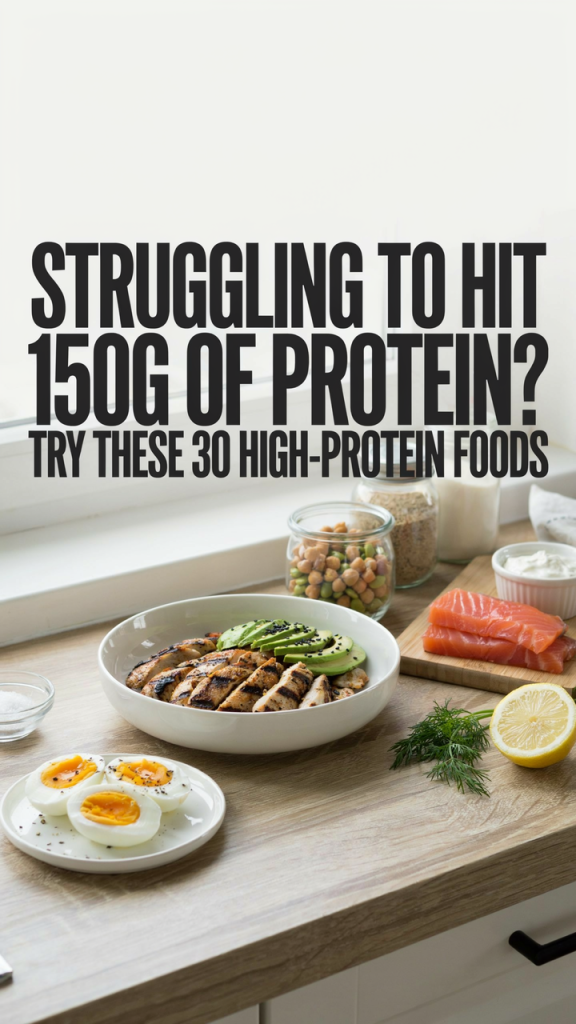
Struggling to Hit 150g of Protein? Try These 30 High-Protein Foods
Hitting 150 grams of protein a day can feel like a tall order—especially if you’re busy, plant-forward, or used to moderate portions. But with a little planning and the right foods, it’s totally doable and much more enjoyable than chugging protein shakes all day. This guide gives you 30 high-protein foods (exactly 30) with protein amounts, practical serving ideas, and several easy recipes so you can start building meals that get you to 150 g without stress.
Read on for an authoritative, encouraging plan to boost your daily protein while keeping flavor, variety, and nutrition front and center.
Why 150g of Protein?
Hitting 150 g of protein daily is a common target for people aiming to build or preserve muscle, lose fat while maintaining lean mass, or support active training. Depending on your body weight and goals, 150 g may represent 1.2–2.0 g/kg of body weight—ideal for many athletes and strength trainees. Protein also helps regulate appetite, supports recovery, and improves overall satiety.
Use the list below to mix and match throughout the day. Many entries include quick serving suggestions so you can stack protein across meals and snacks.
How to Use This List
- Aim to spread protein across 3–5 meals/snacks.
- Combine plant and animal sources for complete amino acid profiles.
- Use portion sizes listed to estimate totals; weigh food if you want precision.
- Try the included recipes if you want plug-and-play high-protein meals.
The 30 High-Protein Foods
Below are 30 foods that are high in protein, listed with typical protein per serving and quick ideas to add them to your day. Use them as building blocks to reach that 150 g target.
1. Chicken Breast (cooked)
- Protein: ~31 g per 100 g (3.5 oz) cooked
- Idea: Grilled chicken breast on a salad, in wraps, or batch-cooked for the week.
2. Turkey Breast (cooked)
- Protein: ~29 g per 100 g
- Idea: Sliced for sandwiches, added to soups, or roasted as a main.
3. Lean Beef (sirloin/tip)
- Protein: ~26–31 g per 100 g
- Idea: Steak night, diced into stir-fries, or ground for high-protein tacos.
4. Pork Tenderloin
- Protein: ~24 g per 100 g
- Idea: Roast slices, pair with veggies and grains for a balanced plate.
5. Salmon (wild/cooked)
- Protein: ~22–25 g per 100 g
- Idea: Pan-seared or baked, salmon adds omega-3s and solid protein.
6. Tuna (canned in water)
- Protein: ~25–30 g per 100 g (about 20–25 g per can drained)
- Idea: Tuna salad, mixed into pasta, or on whole-grain toast.
7. Cod / White Fish
- Protein: ~20 g per 100 g
- Idea: Mild-flavored fish for tacos, soups, or baked entrees.
8. Shrimp
- Protein: ~24 g per 100 g
- Idea: Quick-cooking protein for stir-fries, salads, or skewers.
9. Eggs (whole)
- Protein: ~6–7 g per large egg
- Idea: Breakfast omelets, boiled snacks, or in baked dishes.
10. Greek Yogurt (nonfat)
- Protein: ~10 g per 100 g (approx. 17 g per 170 g container)
- Idea: Breakfast bowls with fruit and nuts or blended into smoothies.
11. Cottage Cheese (low-fat)
- Protein: ~11–12 g per 100 g
- Idea: With fruit, as a savory dip base, or mixed into pancakes.
12. Skyr
- Protein: ~11–12 g per 100 g
- Idea: Icelandic-style yogurt used like Greek yogurt—thick and protein-rich.
13. Whey Protein Powder
- Protein: ~20–25 g per scoop (varies)
- Idea: Smoothies, mixed into oats, or used in high-protein baking.
14. Casein Protein Powder
- Protein: ~20–25 g per scoop
- Idea: Nighttime shake to slow protein digestion and support overnight recovery.
15. Tofu (firm)
- Protein: ~8–12 g per 100 g (varies by firmness)
- Idea: Stir-fries, baked cubes, or blended into dips/sauces.
16. Tempeh
- Protein: ~19 g per 100 g
- Idea: Marinated and grilled, crumbled into tacos, or cubed in salads.
17. Edamame (soybeans)
- Protein: ~11 g per 100 g (shelled)
- Idea: Snack on steamed edamame with sea salt or add to grain bowls.
18. Lentils (cooked)
- Protein: ~9 g per 100 g (about 18 g per cup cooked)
- Idea: Curries, soups, or tossed into salads for an extra protein boost.
19. Chickpeas (cooked)
- Protein: ~8–9 g per 100 g (approx. 15 g per cup cooked)
- Idea: Roasted snacks, hummus, or added to stews.
20. Black Beans (cooked)
- Protein: ~8 g per 100 g (approx. 15 g per cup cooked)
- Idea: Burritos, salads, soups, or protein-packed sides.
21. Quinoa (cooked)
- Protein: ~4 g per 100 g (approx. 8 g per cup cooked)
- Idea: Use as a base for grain bowls to complement other proteins.
22. Seitan
- Protein: ~25 g per 100 g (varies by product)
- Idea: A wheat-based meat alternative—grill, sauté, or cube for stir-fry.
23. Parmesan / Hard Cheeses
- Protein: ~35–38 g per 100 g (about 10 g per ounce)
- Idea: Grate over pasta, salads, or mix into egg dishes for flavor + protein.
24. Milk (skim or whole)
- Protein: ~3.4 g per 100 g (approx. 8 g per cup)
- Idea: Drink, add to smoothies, or use in cereals.
25. Peanut Butter (natural)
- Protein: ~25 g per 100 g (about 7–8 g per 2 tbsp)
- Idea: Spread on toast, mixed into smoothies, or as a dip for fruit.
26. Almonds
- Protein: ~21 g per 100 g (about 6 g per 28 g / 1 oz)
- Idea: Snack raw, add to yogurt, or include in trail mixes.
27. Pumpkin Seeds
- Protein: ~19 g per 100 g (about 8–9 g per 30 g serving)
- Idea: Sprinkle on salads, yogurt, or oatmeal for extra protein and crunch.
28. Hemp Seeds
- Protein: ~31–33 g per 100 g (about 9–10 g per 30 g serving)
- Idea: Add to smoothies, sprinkle on salads, or fold into yogurt.
29. Chickpea Pasta (or high-protein legume pasta)
- Protein: ~20–25 g per 100 g dry (varies; about 12–20 g per serving cooked)
- Idea: Swap standard pasta for chickpea pasta to boost meal protein.
30. Protein-Rich Seafood (e.g., Octopus, Squid)
- Protein: ~15–30 g per 100 g depending on species
- Idea: Explore grilled calamari, octopus salad, or seafood stews to diversify protein sources.
Practical Meal-Building Tips to Reach 150g
- Start strong: Aim for 30–40 g at breakfast (e.g., 3 eggs + Greek yogurt + whey).
- Protein with every snack: 10–20 g snacks (cottage cheese, edamame, protein shake).
- Double down at dinner: 40–60 g with a high-protein main (chicken + legumes + cheese).
- Mix plant + animal sources to hit totals while keeping variety and micronutrients high.
- Use protein powders strategically: one scoop in a morning smoothie and one post-workout can add 40–50 g with minimal volume.
- Prep in batches: grill several chicken breasts, roast tempeh, and cook quinoa for quick assembly.
Quick High-Protein Recipes & Meal Ideas
Below are several recipes and meal ideas using the foods above. Each recipe lists ingredients in bullets and instructions in numbered steps so you can start cooking.
High-Protein Breakfast Bowl (approx. 40 g protein)
Ingredients:
– 170 g (6 oz) plain Greek yogurt
– 2 large eggs (hard-boiled or poached)
– 2 tbsp hemp seeds
– 1 small banana, sliced
– 1 tbsp peanut butter
– Optional: handful of berries
Instructions:
1. Spoon Greek yogurt into a bowl.
2. Slice the hard-boiled or poached eggs and arrange on one side.
3. Add banana slices and berries.
4. Sprinkle hemp seeds over the bowl.
5. Drizzle peanut butter on top or warm slightly and swirl into yogurt.
6. Stir if desired and enjoy immediately.
Quick Tuna & Chickpea Salad (approx. 35–40 g protein)
Ingredients:
– 1 can (150–170 g drained) tuna in water
– 1 cup cooked chickpeas
– 1/4 cup diced red onion
– 1/2 cup chopped cucumber and tomatoes
– 1 tbsp olive oil
– Juice of 1/2 lemon
– Salt, pepper, and fresh herbs to taste
Instructions:
1. Drain tuna and flake into a mixing bowl.
2. Add cooked chickpeas and chopped vegetables.
3. Drizzle with olive oil and lemon juice.
4. Season with salt, pepper, and herbs.
5. Toss gently and serve over leafy greens or whole-grain toast.
High-Protein Salmon Quinoa Bowl (approx. 45 g protein)
Ingredients:
– 150 g cooked salmon fillet
– 1 cup cooked quinoa
– 1/2 cup steamed broccoli
– 1/4 cup edamame (shelled)
– 1 tbsp soy sauce or tamari
– 1 tsp sesame oil
– Optional: sesame seeds and scallions
Instructions:
1. Flake or slice cooked salmon.
2. Place quinoa in a bowl and top with salmon, broccoli, and edamame.
3. Drizzle soy sauce and sesame oil over the bowl.
4. Garnish with sesame seeds and scallions.
5. Serve warm or at room temperature.
Tempeh Stir-Fry (plant-forward, ~30–35 g protein)
Ingredients:
– 200 g tempeh, cubed
– 2 cups mixed stir-fry vegetables (peppers, snap peas, carrots)
– 2 tbsp soy sauce
– 1 tbsp rice vinegar
– 1 tsp honey or maple syrup
– 1 tbsp olive or sesame oil
– Optional: 1 cup cooked brown rice or chickpea pasta
Instructions:
1. Heat oil in a pan over medium-high heat.
2. Add tempeh cubes and brown on all sides (4–6 minutes).
3. Add vegetables and stir-fry until tender-crisp (3–5 minutes).
4. Mix soy sauce, rice vinegar, and honey; pour into pan.
5. Toss to coat and heat through.
6. Serve over brown rice or chickpea pasta if desired.
Chocolate Peanut Butter Protein Smoothie (~30 g protein)
Ingredients:
– 1 scoop (30 g) whey or plant protein powder (chocolate flavor)
– 1 cup milk (dairy or fortified plant milk)
– 1 tbsp peanut butter
– 1/2 frozen banana
– 1 tbsp cocoa powder (optional)
– Ice as needed
Instructions:
1. Add all ingredients to a blender.
2. Blend until smooth and creamy.
3. Adjust thickness with more milk or ice.
4. Pour into a glass and enjoy immediately.
Cottage Cheese & Fruit Power Snack (~20 g protein)
Ingredients:
– 1 cup low-fat cottage cheese
– 1/2 cup pineapple or berries
– 1 tbsp pumpkin seeds
– Dash of cinnamon or honey (optional)
Instructions:
1. Scoop cottage cheese into a bowl.
2. Top with fruit and pumpkin seeds.
3. Sprinkle with cinnamon or drizzle honey if desired.
4. Mix and eat with a spoon.
How to Structure a Day to Hit 150g (Sample Menu)
- Breakfast (40 g): Greek yogurt bowl (20 g) + 3 eggs (18–21 g)
- Mid-morning snack (15 g): Protein shake with 1 scoop whey (20–25 g) or cottage cheese (15 g)
- Lunch (35 g): Grilled chicken breast (30 g) + quinoa (5 g)
- Afternoon snack (10–15 g): Edamame (8–11 g) + a handful of almonds (6 g) — pick a portion
- Dinner (40–50 g): Salmon fillet (25–30 g) + lentil side (15–20 g)
Adjust portions up or down depending on your exact protein goals and calorie needs.
Tips for Vegetarians and Vegans
- Combine legumes (lentils, chickpeas, beans) with high-protein grains (quinoa, chickpea pasta) and seeds (hemp, pumpkin) to increase protein density and amino acid completeness.
- Include tofu, tempeh, and seitan as mainstays—tempeh and seitan are particularly protein-dense.
- Use protein powders from pea, soy, hemp, or mixed plant blends to bridge gaps.
- Snack smarter: roasted edamame, nuts and seeds, and high-protein yogurts (plant-based) help add protein without huge volume.
Frequently Asked Questions
What’s the easiest way to track protein?
Use a nutrition tracking app or keep a simple food log. Weighing portions for the first few weeks helps calibrate your estimates.
Are protein powders necessary?
No, but they’re convenient. Whole foods should be primary; powders are a practical supplement to help meet lofty targets like 150 g/day.
Can too much protein be harmful?
For most healthy people, 150 g/day is safe. Those with kidney disease should consult a clinician. Stay hydrated and balance protein with fiber-rich carbs and healthy fats.
Final Thoughts
Reaching 150 g of protein daily is a realistic goal with the right strategy. Use the 30 foods above as a toolbox: mix animal and plant proteins, distribute intake across meals, and lean on simple recipes for convenience. Small changes—adding Greek yogurt to breakfast, snacking on edamame, or swapping regular pasta for chickpea pasta—add up quickly.
Pick a few recipes from this post to start your week (batch-cook proteins like chicken, tempeh, or quinoa) and you’ll find hitting 150 g becomes a lot less intimidating and a lot more tasty. You’ve got this—one high-protein meal at a time.
If you’d like, I can create a 7-day meal plan that hits ~150 g protein per day tailored to your preferences (vegetarian, dairy-free, budget-friendly, etc.). Which would you prefer?