
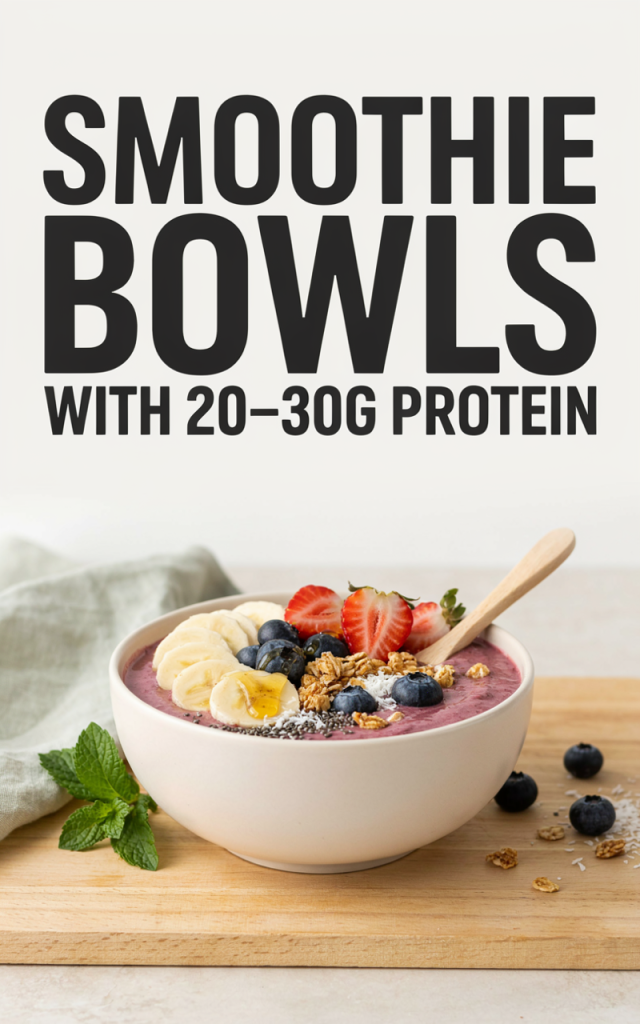
Smoothie Bowls With 20–30 Grams of Protein
Smoothie bowls are a delicious, colorful way to start the day—or to refuel after a workout. But many smoothie bowls are light on protein, leaving you hungry soon after eating. This guide gives you nutrient-dense smoothie bowls that reliably deliver 20–30 grams of protein per serving, with practical tips for both dairy and plant-based eaters. Each recipe includes an ingredient list and step-by-step instructions so you can make them easily at home. Whether you want a quick breakfast, a mid-day pick-me-up, or a post-workout recovery meal, these bowls are filling, balanced, and adaptable.
Why aim for 20–30 grams of protein?
Hitting 20–30 grams of protein in a meal is a practical target for most adults. It:
– Supports muscle protein synthesis after resistance exercise.
– Promotes satiety and helps control appetite.
– Helps stabilize blood sugar and energy levels.
– Provides a meaningful portion of daily protein needs (for many people, 20–30 g per main meal is a practical distribution of daily protein).
For most people, a smoothie bowl is an ideal vehicle to deliver that amount because it blends protein-dense ingredients into a creamy, easily digestible form.
How to consistently hit the 20–30 g target
Hitting this protein sweet spot is mostly about combining a concentrated protein source (protein powder, Greek yogurt, cottage cheese, tofu, or dairy milk) with complementary protein boosters (seeds, nut butters, or milk). Here are the most dependable protein-building ingredients:
Primary protein sources (choose one)
- Whey or casein protein powder: ~20–25 g per scoop
- Plant-based protein powder (pea, soy, rice blends): ~18–22 g per scoop
- Plain Greek yogurt (1 cup): ~18–22 g
- Cottage cheese (1 cup): ~24–28 g
- Silken tofu (1 cup): ~8–12 g (depends on firmness)
- Milk (cow) 1 cup: ~8 g; soy milk 1 cup: ~7 g
Protein boosters (small quantities add up)
- Hemp seeds: ~3.3 g protein per tablespoon (3 tbsp ≈ 10 g)
- Peanut/almond butter: 2 tbsp ≈ 7–8 g protein
- Chia seeds: 2 tbsp ≈ 4 g protein
- Rolled oats: 1/2 cup ≈ 5 g protein
- Quinoa (cooked) 1/2 cup ≈ 4 g protein
Mix and match a primary source with one or two boosters to land in the 20–30 g range. Below are eight tested recipes, each designed to deliver roughly 20–30 grams of protein. For clarity and ease, each recipe includes a quick estimated protein total. Adjust portion sizes or swap ingredients to fit your dietary preferences.
Protein-rich smoothie bowl recipes
1) Berry-Whey Greek Bowl — Estimated protein: ~30 g
A creamy berry bowl centered on whey and Greek yogurt for a smooth, tangy base.
Ingredients
– 1/2 cup plain nonfat Greek yogurt (~120 g) — ~10 g protein
– 1 scoop whey protein powder (vanilla) — ~20 g protein
– 1/2 cup mixed frozen berries (strawberries, blueberries, raspberries)
– 1/4 cup unsweetened almond milk (or water) to blend
– Toppings: 1 tbsp chia seeds (~2 g), 2 tbsp sliced almonds (~3 g), a few fresh berries
Instructions
1. Add Greek yogurt, whey protein powder, frozen berries, and almond milk to a blender.
2. Blend until smooth and thick. Add a splash more liquid if needed to reach spoonable consistency.
3. Pour into a bowl and smooth the top.
4. Sprinkle chia seeds, almonds, and fresh berries as toppings.
5. Serve immediately.
2) Peanut Butter Banana Protein Bowl (Plant-forward) — Estimated protein: ~28 g
Comforting banana and peanut butter with a plant protein boost.
Ingredients
– 1 scoop plant-based protein powder (pea/soy blend) — ~20 g protein
– 1 medium banana (frozen works best)
– 2 tablespoons peanut butter — ~8 g protein
– 1/2 cup unsweetened soy milk (or oat milk) — ~3–4 g protein (soy preferred for more protein)
– Toppings: sliced banana, 1 tbsp hemp seeds (~3.3 g), unsweetened cocoa nibs
Instructions
1. Combine the plant protein powder, banana, peanut butter, and soy milk in a blender.
2. Blend until thick and creamy, adding a touch more milk if needed.
3. Transfer to a bowl and smooth the surface.
4. Top with sliced banana, hemp seeds, and cocoa nibs.
5. Enjoy right away.
3) Tropical Cottage Cheese Bowl — Estimated protein: ~28 g
Cottage cheese adds a tangy creaminess that pairs perfectly with tropical fruit.
Ingredients
– 3/4 cup low-fat cottage cheese (~170 g) — ~21 g protein
– 1/2 cup frozen mango chunks
– 1/4 cup frozen pineapple chunks
– 1/4 cup unsweetened coconut water or almond milk
– Toppings: 2 tbsp hemp seeds (~6.6 g), a few fresh mango cubes, shredded coconut (optional)
Instructions
1. Place cottage cheese, frozen mango, pineapple, and coconut water in a blender.
2. Blend until creamy and smooth; you may need to pulse to incorporate fruit.
3. Pour into a bowl and add tropical toppings.
4. Sprinkle hemp seeds on top for texture and an extra protein boost.
5. Serve chilled.
4) Green Tofu + Hemp Protein Bowl (Vegan) — Estimated protein: ~22 g
Silken tofu and hemp seeds create a silky green bowl that’s gentle on the stomach and highly nutritious.
Ingredients
– 1 cup silken tofu (~245 g) — ~10 g protein
– 1 banana (frozen)
– 1 cup spinach or baby kale
– 3 tablespoons hemp seeds — ~10 g protein
– 1/4 cup unsweetened soy milk (optional; adds ~2 g protein)
– Toppings: sliced kiwi, pumpkin seeds (1 tbsp ≈ 2.5 g), a drizzle of maple syrup (optional)
Instructions
1. Add silken tofu, frozen banana, spinach, hemp seeds, and soy milk to a blender.
2. Blend until smooth and bright green. Adjust thickness by adding more milk if needed.
3. Transfer to a bowl and top with kiwi and pumpkin seeds.
4. Drizzle a small amount of maple syrup if you want extra sweetness.
5. Eat immediately (silken tofu bowls are best fresh).
5) Chocolate Almond Butter Protein Bowl — Estimated protein: ~27 g
A dessert-style bowl with cocoa and almond butter—satisfying yet balanced.
Ingredients
– 1 scoop chocolate whey protein powder — ~20 g protein
– 1 tablespoon almond butter — ~3.5 g protein
– 1/2 cup unsweetened 2% milk (or soy milk) — ~4 g protein (cow milk option)
– 1/2 frozen banana
– Toppings: 1 tbsp cacao nibs, 1 tbsp crushed hazelnuts or almonds
Instructions
1. Blend chocolate whey powder, almond butter, milk, and frozen banana until thick and smooth.
2. Pour into a bowl and add cacao nibs and crushed nuts on top.
3. Enjoy as a decadent breakfast or post-workout refuel.
6) Oats & Hemp Power Bowl — Estimated protein: ~24 g
This bowl is a hybrid between overnight oats and a smoothie—hearty, chewy, and protein-forward.
Ingredients
– 1/2 cup plain Greek yogurt (~125 g) — ~10 g protein
– 1/3 cup dry rolled oats — ~3–4 g protein (after blending)
– 3 tablespoons hemp seeds — ~10 g protein
– 1/2 cup frozen mixed berries
– 1/4 cup unsweetened almond milk to blend
– Toppings: sliced almonds, a drizzle of honey
Instructions
1. Place Greek yogurt, oats, hemp seeds, frozen berries, and almond milk in a blender.
2. Blend until you reach a thick, spoonable consistency. Oats will give body.
3. Spoon into a bowl and add toppings like almonds and honey.
4. This bowl holds well for a short time, so it’s good for on-the-go mornings.
7) Acai Protein Bowl — Estimated protein: ~29 g
An acai base with a protein powder boost and seeds for texture.
Ingredients
– 1 packet unsweetened frozen acai (usually 100 g)
– 1 scoop plant-based protein powder — ~20 g protein
– 1/4 cup plain Greek yogurt — ~5 g protein
– 1/4 cup unsweetened almond milk (or water) to blend
– Toppings: 2 tbsp chia seeds (~4 g), granola, fresh berries
Instructions
1. Break the frozen acai packet into chunks and add to a blender with plant protein, Greek yogurt, and almond milk.
2. Blend until thick; acai blends densely—add liquid a little at a time.
3. Spoon into a bowl and arrange toppings: chia seeds, granola, berries.
4. Serve immediately—acai bowls are best enjoyed fresh.
8) Mocha Coffee Protein Bowl — Estimated protein: ~29 g
Coffee lovers will appreciate caffeine plus protein for a morning energy lift.
Ingredients
– 1 scoop vanilla or chocolate whey protein powder — ~20 g protein
– 1/3 cup low-fat cottage cheese (~80 g) — ~9 g protein
– 1/2 cup brewed cold coffee or cold brew (cooled)
– 1 frozen banana (or ice cubes) for thickness
– Toppings: 1 tbsp chopped walnuts, cocoa powder dusting
Instructions
1. Combine cottage cheese, protein powder, cold coffee, and frozen banana in a blender.
2. Blend until smooth and creamy. Thin with a splash more coffee if needed.
3. Pour into a bowl and top with walnuts and a dusting of cocoa powder.
4. Enjoy right away for the best texture.
Tips for tailoring protein and flavor
- If a recipe is slightly under your desired protein target, add 1 tbsp hemp seeds (≈3.3 g) or 1 tbsp peanut butter (≈4 g) to boost it.
- If you want to avoid protein powders, increase Greek yogurt, cottage cheese, or silken tofu amounts; adjust texture by adding a bit more liquid.
- For very thick bowls, use frozen fruit or frozen banana; for thinner blends, use milk (dairy or soy) rather than water.
- To keep sugar in check, prefer unsweetened milk and unflavored or low-sugar protein powders. Sweeten with a small amount of honey or maple syrup only if needed.
- If you’re vegan, choose a high-quality plant protein (pea/soy blends) and use soy milk or increase hemp seeds/peanut butter to reach protein goals.
Meal timing and uses
- Breakfast: Smoothie bowls are a balanced morning meal—pair with coffee or tea for a complete routine.
- Post-workout: Aim to consume within 30–90 minutes after exercise for muscle recovery; a 20–30 g protein bowl fits perfectly.
- Snack or light lunch: These bowls are portable and satiating—add complex carbs (oats, quinoa) if you need extra energy for a long afternoon.
Storage and prep-ahead ideas
- Blend-and-store: You can pre-portion dry components (oats, seeds, protein powder) in jars. In the morning, add fresh/frozen fruit and liquid then blend.
- Keep toppings separate: Store granola, nuts, and seeds separately to preserve crunch.
- Make “freezer packs”: Assemble fruit and protein powder in a freezer bag. In the morning, dump contents into the blender with milk for a fast bowl.
FAQ
Q: Can I get 20–30 g protein without protein powder?
A: Yes. Use larger portions of Greek yogurt, cottage cheese, or silken tofu and add seeds/nut butters. Example: 1 cup Greek yogurt (≈20 g) + 1–2 tbsp hemp seeds (3–6 g) gets you near the target.
Q: Do these bowls contain too much sugar?
A: Natural sugars from fruit are part of a balanced meal. Choose lower-sugar fruits (berries) and unsweetened milks. Adjust sweeteners as needed.
Q: Can I freeze a prepared bowl?
A: Prepared bowls with dairy/Greek yogurt don’t freeze and thaw well for texture. Instead, freeze the fruit portions and blend fresh with protein and liquid.
Conclusion
Smoothie bowls are a versatile, enjoyable way to deliver 20–30 grams of protein in a single meal. By choosing a concentrated protein base (protein powder, Greek yogurt, cottage cheese, or tofu) and boosting with seeds or nut butters, you can create bowls that are both satisfying and convenient. Try the recipes above or mix and match ingredients to suit your taste and dietary needs. With a little planning, you can turn a simple smoothie bowl into a balanced, protein-packed meal that supports your energy, recovery, and appetite control. Enjoy experimenting—and feel proud that you’re fueling your body well.
