
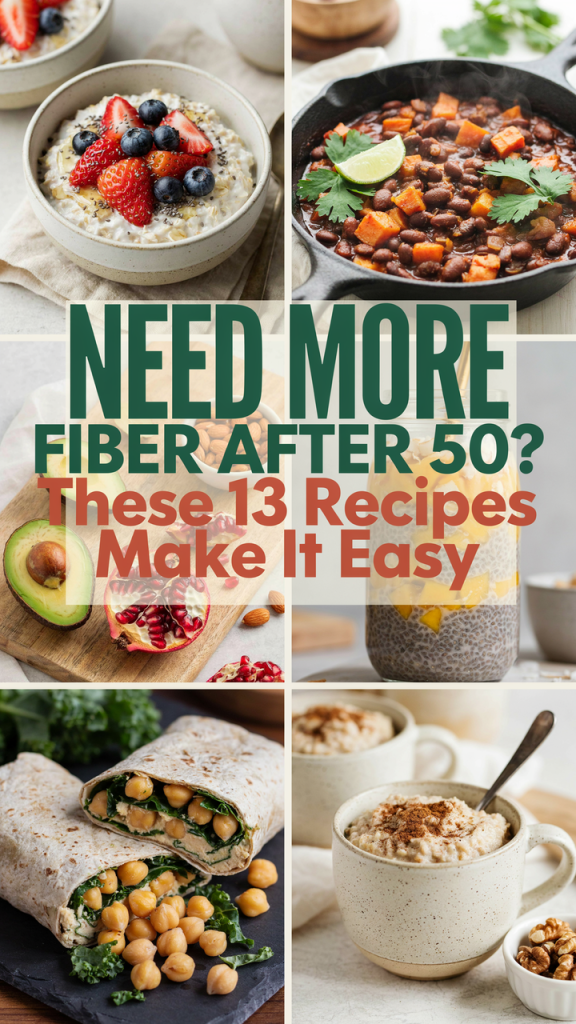
Need More Fiber After 50? These 13 Recipes Make It Easy
Aging brings wisdom, experience—and sometimes digestive changes. If you’ve noticed your digestion slowing down, cholesterol creeping up, or you just want meals that keep you energized and satisfied longer, increasing dietary fiber is one of the simplest, most effective strategies. After 50, fiber supports regularity, helps control blood sugar, improves heart health, and can help manage weight. The good news: delicious, easy-to-make meals can deliver the fiber you need without feeling like a chore.
Below you’ll find a short overview of why fiber is especially important after 50, practical tips to add more fiber safely, and 13 delicious, fiber-packed recipes you can start making this week. Each recipe includes a clear ingredients list and step-by-step instructions so you can jump right in.
Why Fiber Matters After 50
Fiber is a plant-based nutrient your body doesn’t fully digest, but it plays vital roles:
- Promotes regular bowel movements and reduces constipation risk, which becomes more common with age.
- Helps lower LDL (bad) cholesterol, reducing heart disease risk.
- Slows glucose absorption, improving blood sugar control and diabetes risk management.
- Increases satiety, which can help prevent overeating and support healthy weight.
- Feeds beneficial gut bacteria, supporting immune function and inflammation control.
There are two types of fiber: soluble (helps with cholesterol and blood glucose) and insoluble (adds bulk and helps stool pass). Aim for a mix of both in your meals.
How Much Fiber Do You Need After 50?
General guidelines:
– Women 50+ — about 21 grams/day.
– Men 50+ — about 30 grams/day.
Many people fall short of these targets. The recipes below are designed to be both tasty and concentrated sources of fiber so you can reach those goals more easily.
Practical Tips to Add Fiber Safely
- Increase fiber gradually over 1–2 weeks to prevent gas and bloating.
- Drink plenty of water—fiber needs fluids to work well.
- Mix insoluble and soluble fiber sources: whole grains, legumes, vegetables, fruits, nuts, and seeds.
- Replace refined grains with whole grains: choose whole oats, brown rice, barley, quinoa, whole-grain bread.
- Snack smart: fruit, nuts, raw veggies with hummus, or a fiber-rich smoothie.
- If you take medications, check with your provider about potential interactions with high-fiber diets.
Now — the recipes. Below are exactly 13 fiber-forward dishes that are practical, flavorful, and easy to adapt.
The 13 Recipes
- Overnight Oats with Chia and Berries
- Green Power Smoothie with Flax and Avocado
- Lentil and Root Vegetable Soup
- Quinoa, Black Bean & Corn Salad with Lime Dressing
- Roasted Brussels Sprouts, Farro & Walnut Bowl
- Chickpea and Spinach Coconut Curry
- Apple-Oat Almond Muffins (low added sugar)
- Sweet Potato & Black Bean Enchiladas
- Greek Yogurt Parfait with High-Fiber Granola and Berries
- Barley and Roasted Vegetable Medley with Tahini Dressing
- Sardine and White Bean Salad with Whole Grain Toast
- Hearty Three-Bean Chili with Tomatoes and Peppers
- Berry, Oat & Flaxseed Breakfast Bars (no-bake option)
1. Overnight Oats with Chia and Berries
High in both soluble and insoluble fiber, overnight oats are an effortless breakfast that improves regularity and keeps hunger at bay.
Ingredients:
– 1/2 cup old-fashioned rolled oats
– 1 tbsp chia seeds
– 1 cup low-fat milk or plant milk (soy or oat)
– 1/2 cup mixed berries (fresh or frozen)
– 1 tbsp ground flaxseed
– 1 tsp honey or maple syrup (optional)
– Pinch of cinnamon
– Optional: 1 tbsp chopped nuts (almonds or walnuts)
Instructions:
1. In a jar or bowl, combine oats, chia seeds, ground flaxseed, cinnamon, and milk.
2. Stir well, cover, and refrigerate overnight (or at least 4 hours).
3. In the morning, stir the mixture and add a splash of milk if too thick.
4. Top with berries, nuts, and a drizzle of honey if desired.
5. Enjoy cold or warmed briefly in the microwave.
Nutrition note: Add a spoonful of nut butter for extra protein and healthy fats.
2. Green Power Smoothie with Flax and Avocado
A fiber-forward smoothie that’s creamy, nutrient-dense, and portable—great for busy mornings.
Ingredients:
– 1 cup spinach (packed)
– 1/2 ripe avocado
– 1/2 banana (preferably frozen)
– 1 tbsp ground flaxseed
– 1/2 cup plain Greek yogurt or plant yogurt
– 1 cup unsweetened almond or oat milk
– 1/2 cup frozen peas or edamame (optional for extra fiber & protein)
– Ice if desired
Instructions:
1. Add spinach, avocado, banana, flaxseed, yogurt, and milk to a blender.
2. If using peas/edamame for extra fiber, add them now.
3. Blend until smooth, adding ice to reach desired thickness.
4. Taste and adjust sweetness with a small amount of honey if needed.
5. Pour into a glass and drink immediately.
Tip: Flaxseed provides fiber and omega-3s; grind it fresh or use pre-ground for best absorption.
3. Lentil and Root Vegetable Soup
Lentils are a superstar fiber source, and this warming soup is comforting and easy to make in a big batch.
Ingredients:
– 1 cup dried brown or green lentils, rinsed
– 1 tbsp olive oil
– 1 medium onion, diced
– 2 cloves garlic, minced
– 2 carrots, diced
– 2 celery stalks, diced
– 1 medium sweet potato or potato, diced
– 1 can (14 oz) diced tomatoes
– 6 cups low-sodium vegetable or chicken broth
– 1 tsp dried thyme
– 1 bay leaf
– Salt and pepper to taste
– 2 cups chopped kale or spinach (optional)
– Juice of 1/2 lemon
Instructions:
1. Heat olive oil in a large pot over medium heat. Add onion and garlic; sauté until translucent.
2. Add carrots, celery, and sweet potato; cook 5 minutes to soften.
3. Stir in lentils, diced tomatoes, broth, thyme, and bay leaf. Bring to a simmer.
4. Reduce heat and simmer 25–30 minutes until lentils are tender.
5. If using kale or spinach, stir in during the last 5 minutes.
6. Remove bay leaf, season with salt, pepper, and lemon juice.
7. Serve hot; store leftovers in the fridge for up to 4 days or freeze.
Serve with a slice of whole-grain bread for extra fiber.
4. Quinoa, Black Bean & Corn Salad with Lime Dressing
A colorful, chilled salad that’s great for lunches and delivers whole-grain fiber plus legumes.
Ingredients:
– 1 cup cooked quinoa (cooled)
– 1 can (15 oz) black beans, rinsed and drained
– 1 cup fresh or frozen corn (thawed if frozen)
– 1 red bell pepper, diced
– 1/4 cup red onion, finely chopped
– 1/4 cup chopped cilantro
– 2 tbsp olive oil
– Juice and zest of 1 lime
– 1/2 tsp ground cumin
– Salt and pepper to taste
Instructions:
1. In a large bowl, combine cooked quinoa, black beans, corn, bell pepper, red onion, and cilantro.
2. Whisk together olive oil, lime juice, lime zest, cumin, salt, and pepper.
3. Pour dressing over the salad and toss to combine.
4. Refrigerate for at least 30 minutes to let flavors meld.
5. Serve chilled or at room temperature.
Tip: Add diced avocado for creaminess and more soluble fiber.
5. Roasted Brussels Sprouts, Farro & Walnut Bowl
Farro is an ancient whole grain high in fiber and protein. Paired with Brussels sprouts and walnuts, this bowl is a hearty, fiber-packed main.
Ingredients:
– 1 cup cooked farro
– 3 cups Brussels sprouts, trimmed and halved
– 2 tbsp olive oil, divided
– Salt and pepper
– 1/3 cup chopped walnuts, toasted
– 2 tbsp dried cranberries (optional)
– 2 tbsp crumbled feta (optional)
– 1 tbsp balsamic vinegar
Instructions:
1. Preheat oven to 425°F (220°C). Toss Brussels sprouts with 1 tbsp olive oil, salt, and pepper. Roast on a baking sheet for 20–25 minutes until caramelized.
2. Meanwhile, cook farro according to package instructions; fluff and keep warm.
3. Toast walnuts in a dry skillet over medium heat for 2–3 minutes, watching carefully.
4. In a large bowl, combine farro, roasted Brussels sprouts, walnuts, and cranberries.
5. Drizzle with remaining olive oil and balsamic vinegar, toss to combine.
6. Top with feta if using and serve warm.
Farro keeps well for lunches; portion into containers for an easy grab-and-go meal.
6. Chickpea and Spinach Coconut Curry
Legumes and leafy greens make this curry rich in fiber, iron, and flavor. Serve with brown rice for an extra boost.
Ingredients:
– 1 tbsp coconut or olive oil
– 1 onion, diced
– 2 cloves garlic, minced
– 1 tbsp grated fresh ginger
– 1–2 tsp curry powder or paste (adjust to taste)
– 1 can (15 oz) chickpeas, rinsed and drained
– 1 can (14 oz) diced tomatoes
– 1 can (14 oz) light coconut milk
– 4 cups fresh spinach
– Salt and pepper to taste
– Juice of 1/2 lemon
– Cooked brown rice or quinoa, for serving
Instructions:
1. Heat oil in a large skillet over medium heat. Add onion, garlic, and ginger; sauté until fragrant.
2. Stir in curry powder/paste and cook 1 minute.
3. Add chickpeas, diced tomatoes, and coconut milk. Bring to a simmer.
4. Simmer 10–12 minutes to thicken slightly.
5. Stir in spinach until wilted, then season with salt, pepper, and lemon juice.
6. Serve over brown rice or quinoa.
Swap chickpeas for lentils or add mixed vegetables to vary the fiber profile.
7. Apple-Oat Almond Muffins (low added sugar)
These muffins are a high-fiber, heart-healthy treat using oats, whole wheat flour, and apples.
Ingredients:
– 1 cup whole wheat flour
– 1 cup rolled oats
– 1 tsp baking powder
– 1/2 tsp baking soda
– 1 tsp cinnamon
– 1/4 tsp salt
– 1 large egg (or flax egg for vegan)
– 1/2 cup unsweetened applesauce
– 1/4 cup milk or plant milk
– 2 tbsp honey or maple syrup (optional)
– 1 apple, peeled and finely chopped
– 1/4 cup chopped almonds
Instructions:
1. Preheat oven to 375°F (190°C). Line a muffin tin or grease lightly.
2. In a bowl, mix flour, oats, baking powder, baking soda, cinnamon, and salt.
3. In another bowl, whisk egg, applesauce, milk, and honey/maple syrup.
4. Combine wet and dry ingredients, then fold in chopped apple and almonds.
5. Spoon batter into muffin tin and bake 18–20 minutes or until a toothpick comes out clean.
6. Cool on a rack before serving.
These freeze well and are perfect for fiber-boosted snacks.
8. Sweet Potato & Black Bean Enchiladas
Sweet potatoes and black beans deliver flavor, fiber, and comfort—this is a crowd-pleasing, nutritious dinner.
Ingredients:
– 2 medium sweet potatoes, peeled and diced
– 1 tbsp olive oil
– 1 tsp chili powder
– 1/2 tsp cumin
– Salt and pepper
– 1 can (15 oz) black beans, rinsed and drained
– 1 cup shredded low-fat cheese (or dairy-free alternative)
– 8 whole-wheat tortillas
– 1 cup enchilada sauce (store-bought or homemade)
– Chopped cilantro and avocado for serving
Instructions:
1. Preheat oven to 400°F (200°C). Toss sweet potatoes with olive oil, chili powder, cumin, salt, and pepper. Roast on a baking sheet for 20–25 minutes until tender.
2. Mash roasted sweet potatoes slightly and mix with black beans.
3. Spread a few tablespoons of enchilada sauce on the bottom of a baking dish.
4. Fill each tortilla with sweet potato-black bean mixture and a sprinkle of cheese; roll and place seam-side down in the dish.
5. Pour remaining sauce over the enchiladas and top with remaining cheese.
6. Bake 15–20 minutes until bubbly. Garnish with cilantro and avocado.
Serve with a side salad of leafy greens for extra fiber.
9. Greek Yogurt Parfait with High-Fiber Granola and Berries
An easy, customizable breakfast or snack that combines probiotics with fiber-rich toppings.
Ingredients:
– 1 cup plain Greek yogurt (or plant yogurt)
– 1/2 cup mixed berries (blueberries, raspberries, strawberries)
– 1/3 cup high-fiber granola (look for at least 4–6 g fiber per serving)
– 1 tbsp chia seeds or ground flaxseed
– Drizzle of honey (optional)
Instructions:
1. Spoon half the yogurt into a bowl or jar.
2. Layer half the berries and half the granola on top.
3. Add the remaining yogurt, then top with the rest of the berries and granola.
4. Sprinkle with chia or flaxseed and drizzle honey if desired.
5. Serve immediately.
Tip: Add a small handful of chopped nuts for extra fiber and healthy fats.
10. Barley and Roasted Vegetable Medley with Tahini Dressing
Barley is a chewy whole grain that’s high in fiber. Combined with roasted veggies and a creamy tahini dressing, it’s satisfying and nutritious.
Ingredients:
– 1 cup cooked pearl barley
– 2 cups assorted vegetables (eggplant, zucchini, bell peppers), chopped
– 1 tbsp olive oil
– Salt and pepper
– 2 tbsp tahini
– Juice of 1 lemon
– 1 tbsp warm water to thin
– 1 clove garlic, minced
– 2 tbsp chopped parsley
Instructions:
1. Preheat oven to 425°F (220°C). Toss vegetables with olive oil, salt, and pepper; spread on a baking sheet and roast 20–25 minutes until tender.
2. Whisk together tahini, lemon juice, garlic, and warm water until smooth. Adjust thickness with more water if needed.
3. In a bowl, combine cooked barley, roasted vegetables, and parsley.
4. Drizzle with tahini dressing and toss to combine.
5. Serve warm or at room temperature.
Add chickpeas or grilled tofu for more fiber and protein.
11. Sardine and White Bean Salad with Whole Grain Toast
Sardines are rich in omega-3s; white beans add fiber and creaminess in this quick, savory salad.
Ingredients:
– 1 can (15 oz) cannellini or navy beans, rinsed and drained
– 1 can sardines in olive oil, drained and flaked
– 1 small red onion, thinly sliced
– 1 tbsp capers (optional)
– 2 tbsp chopped parsley
– Juice of 1/2 lemon
– Salt and pepper to taste
– Whole grain bread, toasted, for serving
Instructions:
1. In a bowl, combine beans, flaked sardines, red onion, capers, and parsley.
2. Drizzle with lemon juice, season with salt and pepper, and gently toss.
3. Serve on top of whole-grain toast or alongside a green salad.
4. Enjoy immediately.
This is a protein-and-fiber-packed lunch that comes together in minutes.
12. Hearty Three-Bean Chili with Tomatoes and Peppers
Beans are fiber champions. A three-bean chili is filling, freezer-friendly, and full of flavor.
Ingredients:
– 1 tbsp olive oil
– 1 onion, chopped
– 2 cloves garlic, minced
– 1 red bell pepper, chopped
– 1 green bell pepper, chopped
– 1 can (15 oz) kidney beans, drained and rinsed
– 1 can (15 oz) black beans, drained and rinsed
– 1 can (15 oz) pinto beans, drained and rinsed
– 1 can (28 oz) crushed tomatoes
– 2 tbsp chili powder
– 1 tsp cumin
– 1 cup low-sodium vegetable or beef broth
– Salt and pepper to taste
Instructions:
1. Heat oil in a large pot over medium heat. Sauté onion and garlic until soft.
2. Add bell peppers and cook 5 minutes.
3. Stir in beans, crushed tomatoes, chili powder, cumin, and broth.
4. Bring to a simmer, reduce heat, and cook 20–25 minutes to blend flavors.
5. Taste and season with salt and pepper. Serve with a dollop of plain yogurt and chopped scallions.
Chili often tastes better the next day—perfect for meal prep.
13. Berry, Oat & Flaxseed Breakfast Bars (No-Bake Option)
These bars are quick to make, high in fiber, and portable—ideal for on-the-go breakfasts or snacks.
Ingredients:
– 2 cups rolled oats
– 1 cup mixed berries (fresh or thawed frozen)
– 1/2 cup nut butter (almond or peanut)
– 1/4 cup honey or maple syrup
– 2 tbsp ground flaxseed
– 1/4 cup chopped nuts or seeds (pumpkin, sunflower)
– Pinch of salt
Instructions:
1. In a food processor, pulse oats until slightly broken but not powdered (optional for texture).
2. In a saucepan over low heat, warm nut butter and honey until combined. Remove from heat.
3. In a bowl, mix oats, flaxseed, nuts/seeds, and berries. Pour warm nut butter mixture over the dry mix and stir until combined.
4. Press mixture firmly into a lined 8×8 pan. Refrigerate at least 1 hour to set.
5. Cut into bars and store in the fridge for up to 5 days (or freeze for longer).
No-bake bars are great for travel; substitute dried fruit if fresh berries aren’t available.
Conclusion: Small Changes, Big Benefits
Adding fiber after 50 doesn’t mean bland meals or complicated diets. With a few simple swaps—whole grains instead of refined, beans and lentils instead of processed proteins, and daily servings of fruits, vegetables, nuts, and seeds—you can make a meaningful difference to digestion, heart health, and energy. These 13 recipes are practical, family-friendly, and designed to fit into a busy lifestyle while helping you reach fiber targets gradually and comfortably.
Start by trying 2–3 recipes this week: batch-cook the lentil soup, prep overnight oats for breakfasts, and make a big pot of three-bean chili to freeze. Remember to increase fiber gradually and drink plenty of water. If you have specific health conditions (like IBS or diverticulitis), tailor your approach with guidance from a registered dietitian or your healthcare provider.
You’ve got this—small, consistent choices add up. Which recipe will you try first?


