
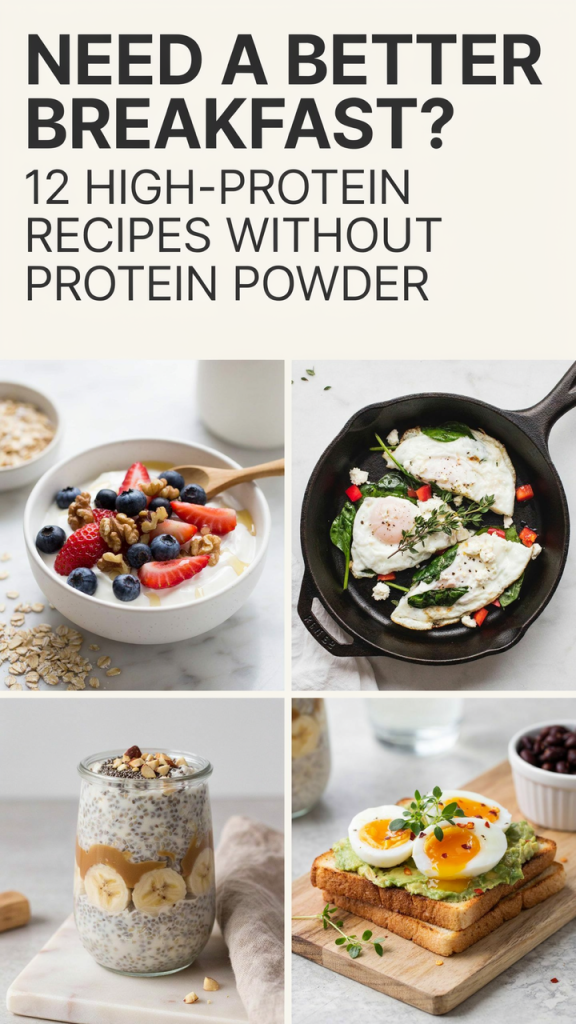
Need a Better Breakfast? 12 High-Protein Recipes Without Protein Powder
Starting your day with a protein-rich breakfast has benefits that extend far beyond muscle health. A protein-packed morning meal helps stabilize blood sugar, reduce mid-morning cravings, support cognitive function, and keep you feeling full longer — which can help with weight management and sustained energy. But you don’t need protein powders to get a protein-rich start. Whole foods deliver high-quality protein plus vitamins, minerals, fiber, and flavor.
Below are 12 delicious, practical, and satisfying high-protein breakfast recipes — all without protein powder. Each recipe includes a clear ingredients list and step-by-step instructions so you can cook confidently. Many of these can be prepped ahead for busy mornings, and they scale easily if you’re feeding a family. Let’s dig in.
Why choose a high-protein breakfast (without powder)?
- Whole foods provide additional nutrients (fiber, healthy fats, micronutrients) that protein powders usually lack.
- Real-food proteins (eggs, dairy, legumes, fish, tofu, lean meats) tend to be more filling and versatile.
- Preparing protein-rich breakfasts can be cost-effective and more satisfying than relying on supplements.
Now, the main event: 12 high-protein breakfast recipes that are tasty, balanced, and practical for everyday life.
12 High-Protein Breakfast Recipes Without Protein Powder
1) Greek Yogurt Parfait with Nuts, Seeds, and Berries
Approx. protein: 20–28 g per serving (depends on yogurt)
Ingredients:
– 1½ cups plain Greek yogurt (2% or whole)
– ½ cup mixed berries (fresh or frozen)
– 2 tbsp mixed seeds (pumpkin, chia, flax)
– 2 tbsp chopped nuts (almonds or walnuts)
– 1–2 tsp honey or maple syrup (optional)
– 2 tbsp rolled oats or granola (optional for crunch)
Instructions:
1. Spoon Greek yogurt into a bowl or jar.
2. Layer berries over the yogurt.
3. Sprinkle mixed seeds and chopped nuts on top.
4. Add oats or granola if using.
5. Drizzle with honey or maple syrup to taste and serve.
Notes: Use full-fat yogurt for more satiety. Swap in skyr or kefir for variation.
2) Savory Cottage Cheese Bowl with Tomato, Cucumber, and Toasted Seeds
Approx. protein: 22–28 g per serving
Ingredients:
– 1½ cups cottage cheese (2% or full-fat)
– 1 medium tomato, diced
– ½ cucumber, diced
– 1 tbsp olive oil
– 1 tbsp toasted pumpkin seeds
– 1 tbsp chopped fresh herbs (chives, parsley, or dill)
– Salt and pepper to taste
– 1 slice whole-grain toast (optional)
Instructions:
1. Place cottage cheese in a bowl.
2. Top with diced tomato and cucumber.
3. Drizzle olive oil over the vegetables.
4. Sprinkle toasted pumpkin seeds and chopped herbs.
5. Season with salt and pepper, and serve with toast if desired.
Notes: Cottage cheese is an excellent, high-protein dairy that mixes well with savory flavors.
3) Spinach and Feta Omelette with Chickpeas
Approx. protein: 28–34 g per serving
Ingredients:
– 3 large eggs
– ¼ cup canned chickpeas, rinsed and drained
– 1 cup fresh spinach, chopped
– 2 tbsp crumbled feta cheese
– 1 tbsp olive oil or butter
– Salt and pepper to taste
Instructions:
1. Whisk eggs with a pinch of salt and pepper.
2. Heat oil/butter in a nonstick skillet over medium heat.
3. Add spinach and sauté until wilted (about 1–2 minutes).
4. Add chickpeas and warm for 1 minute.
5. Pour eggs into the skillet and tilt to spread evenly.
6. Sprinkle feta over the eggs and cook until the eggs are set (2–3 minutes).
7. Fold omelette in half and slide onto a plate.
Notes: Chickpeas add both protein and a pleasant texture; swap feta for goat cheese if you prefer.
4) Smoked Salmon and Avocado Toast on Whole-Grain
Approx. protein: 18–24 g per serving
Ingredients:
– 2 slices whole-grain bread, toasted
– 3–4 oz smoked salmon
– ½ avocado, mashed
– 1 tbsp plain Greek yogurt or crème fraîche (optional)
– 1 tsp lemon juice
– 1 tbsp capers or thinly sliced red onion (optional)
– Fresh dill, salt, and pepper to taste
Instructions:
1. Toast the bread slices.
2. Mash the avocado with lemon juice, salt, and pepper.
3. Spread mashed avocado on toast.
4. Top with smoked salmon and a dollop of Greek yogurt or crème fraîche if using.
5. Garnish with capers, red onion, and fresh dill. Serve immediately.
Notes: Smoked salmon is protein-rich and pairs well with whole grains and healthy fats from avocado.
5) Tofu Scramble Breakfast Burrito
Approx. protein: 20–28 g per burrito
Ingredients:
– 8 oz firm tofu, pressed and crumbled
– 1 tsp turmeric
– 1 tsp ground cumin
– 1 small onion, diced
– 1 bell pepper, diced
– 1 cup baby spinach
– 1 tbsp olive oil
– Salt and pepper to taste
– 1 whole-grain tortilla
– Salsa and avocado slices for serving
Instructions:
1. Heat olive oil in a skillet over medium heat and sauté onion and bell pepper until soft.
2. Add crumbled tofu, turmeric, cumin, salt, and pepper and cook 4–5 minutes.
3. Stir in spinach and cook until wilted.
4. Warm tortilla, spoon scramble into center, add salsa and avocado.
5. Fold into a burrito and serve.
Notes: Tofu is a great plant-based protein — press it well to remove excess water for better texture.
6) Black Bean and Sweet Potato Hash with Fried Eggs
Approx. protein: 28–34 g per serving (2 eggs + beans)
Ingredients:
– 2 large eggs
– 1 medium sweet potato, peeled and diced
– 1 cup canned black beans, rinsed and drained
– ½ onion, diced
– 1 tbsp olive oil
– 1 tsp smoked paprika
– Salt and pepper to taste
– Fresh cilantro and lime wedges for garnish
Instructions:
1. Heat oil in a skillet over medium heat and sauté onion until translucent.
2. Add diced sweet potato and cook until tender and slightly crispy (8–10 minutes).
3. Stir in black beans and smoked paprika; cook until beans are heated through.
4. In a separate pan, fry eggs to your liking.
5. Plate the hash, top with fried eggs, garnish with cilantro and a squeeze of lime.
Notes: This dish balances complex carbs, fiber, and protein for sustained energy.
7) Quinoa Breakfast Porridge with Almonds and Banana
Approx. protein: 12–18 g per serving
Ingredients:
– 1 cup cooked quinoa
– ¾ cup milk or plant milk (soy for extra protein)
– 1 medium banana, sliced
– 2 tbsp chopped almonds
– 1 tsp cinnamon
– 1 tsp honey or maple syrup (optional)
Instructions:
1. In a small saucepan, warm cooked quinoa with milk and cinnamon over low heat until heated through.
2. Pour into a bowl and top with banana slices and chopped almonds.
3. Drizzle with honey or maple syrup if desired and serve warm.
Notes: Quinoa is a complete plant protein; using soy milk boosts the protein content further.
8) Shakshuka with White Beans
Approx. protein: 22–28 g per serving
Ingredients:
– 2 large eggs
– 1 can (14 oz) diced tomatoes
– ½ cup canned white beans, rinsed and drained
– 1 small onion, diced
– 1 clove garlic, minced
– 1 tbsp olive oil
– 1 tsp ground cumin
– 1 tsp smoked paprika
– Salt and pepper to taste
– Fresh parsley for garnish
Instructions:
1. Heat olive oil in a skillet and sauté onion and garlic until translucent.
2. Add diced tomatoes, cumin, paprika, salt, and pepper; simmer for 6–8 minutes.
3. Stir in white beans and cook until heated.
4. Make two small wells in the sauce and crack an egg into each.
5. Cover and cook 5–7 minutes until eggs are set to your preference.
6. Garnish with parsley and serve with crusty whole-grain bread.
Notes: The beans add protein, fiber, and a creamier texture to classic shakshuka.
9) Breakfast Lentil Salad with Hard-Boiled Eggs
Approx. protein: 28–34 g per serving
Ingredients:
– 1 cup cooked green or brown lentils
– 2 hard-boiled eggs, halved
– 1 small cucumber, diced
– 1 small carrot, grated
– 2 tbsp chopped parsley
– 1 tbsp olive oil
– 1 tbsp lemon juice
– Salt and pepper to taste
Instructions:
1. In a bowl, combine cooked lentils, cucumber, grated carrot, and parsley.
2. Whisk olive oil, lemon juice, salt, and pepper; toss dressing with the lentil mixture.
3. Top salad with halved hard-boiled eggs.
4. Serve chilled or at room temperature.
Notes: Lentils are inexpensive and an excellent vegan protein; pairing them with eggs raises total protein and satiety.
10) Peanut Butter Banana Overnight Oats with Chia
Approx. protein: 16–22 g per serving
Ingredients:
– ½ cup rolled oats
– ¾ cup milk or soy milk
– 2 tbsp peanut butter (or other nut butter)
– 1 tbsp chia seeds
– 1 medium banana, sliced
– 1 tsp honey or maple syrup (optional)
Instructions:
1. In a jar or bowl, combine oats, milk, peanut butter, chia seeds, and sweetener if using.
2. Stir well to combine and press banana slices on top.
3. Cover and refrigerate overnight (or at least 4 hours).
4. Stir before eating and add extra banana or a sprinkle of nuts for texture.
Notes: Using soy or dairy milk and a generous tablespoon of peanut butter increases the protein content.
11) Cottage Cheese Pancakes with Blueberries
Approx. protein: 28–34 g for a stack (depends on cottage cheese amount)
Ingredients:
– 1 cup cottage cheese
– 2 large eggs
– ½ cup rolled oats or oat flour
– 1 tsp baking powder
– ½ cup fresh or frozen blueberries
– 1 tbsp coconut oil or butter for frying
– Optional: cinnamon or vanilla extract
Instructions:
1. Blend cottage cheese, eggs, oats, baking powder, and optional flavorings until smooth (use a blender or food processor).
2. Heat oil or butter in a nonstick skillet over medium heat.
3. Pour ¼-cup batter for each pancake and sprinkle blueberries on top.
4. Cook until bubbles form, flip, and cook until golden (2–3 minutes per side).
5. Serve warm with fresh fruit and a drizzle of maple syrup if desired.
Notes: Cottage cheese yields fluffy, protein-rich pancakes without needing flour-based batter.
12) Chicken Breakfast Sausage with Veggie Frittata
Approx. protein: 30–36 g per serving
Ingredients:
– 4 large eggs
– 4 oz cooked chicken sausage or crumbled cooked chicken breast
– 1 cup mixed vegetables (bell pepper, zucchini, spinach), chopped
– 1 tbsp olive oil
– 2 tbsp grated Parmesan or cheddar
– Salt and pepper to taste
Instructions:
1. Preheat oven broiler (if finishing under broiler) or heat heavy oven-safe skillet.
2. Heat oil in skillet over medium heat and sauté vegetables until softened.
3. Add chicken sausage or cooked chicken and warm through.
4. Whisk eggs with cheese, salt, and pepper and pour over vegetables in the skillet.
5. Cook on stovetop until edges set (about 3–4 minutes), then transfer to oven or broiler just until top is set and lightly golden (2–3 minutes).
6. Slice and serve warm.
Notes: Use leftover roasted chicken in place of sausage to keep it leaner. This frittata reheats well for quick breakfasts.
Quick meal-prep tips and protein-boosting swaps
- Double recipes to have breakfast-ready portions for 2–4 days.
- Keep hard-boiled eggs, cooked lentils, quinoa, and beans in the fridge for quick assembly.
- Swap dairy with soy-based alternatives if you need more plant protein.
- Add a spoonful of nut butter or a handful of seeds to bowls and smoothies (no powder) to increase protein and healthy fats.
- Use canned fish (sardines, tuna) in toast or salads for inexpensive, shelf-stable protein.
Pairing and portion guidance
- Aim for 20–35 g of protein at breakfast for most active adults; adjust up if you have higher needs.
- Combine a protein source (eggs, dairy, legumes, tofu, fish, chicken) with fiber-rich carbs (whole grains, fruits, vegetables) and healthy fats for balanced blood sugar and fullness.
Frequently asked questions (brief)
Q: What if I’m vegetarian or vegan?
A: Many options above are vegetarian or vegan-friendly (tofu scramble, lentil salad, quinoa porridge). For vegan protein boosts, choose soy milk, tofu, tempeh, legumes, nuts, and seeds.
Q: Can I prepare these recipes ahead?
A: Yes — parfait components, overnight oats, cooked grains, beans, boiled eggs, and frittatas keep well for several days when refrigerated.
Q: Do these breakfasts keep you full?
A: Combining protein with fiber and some fat is key. Most of the above pair all three, promoting satiety for several hours.
Conclusion
A delicious, energy-sustaining breakfast doesn’t require protein powder — it only requires whole, accessible ingredients and a little planning. The 12 recipes above provide balanced choices for omnivores, vegetarians, and those leaning plant-based, and they’re flexible enough to customize to personal taste and schedule. Start by trying one new recipe each week, batch-cooking what works, and layering in your favorite spices and textures. With protein, fiber, and flavor covered, your mornings will become more satisfying, productive, and enjoyable — one bite at a time.
