How To Make Healthy Chicken Stir Fry
When it comes to quick and healthy meals, few dishes rival the vibrant flavors and nutrition packed into a chicken stir fry. As we embark on this culinary journey together, we’ll explore everything from choosing the right ingredients to mastering cooking techniques that ensure our stir fry is both delicious and health-conscious. Let’s get started.
Understanding Stir Fry Basics
Stir frying is a cooking technique that has its roots in Chinese cuisine. The essence of stir frying involves cooking food quickly over high heat, using a small amount of oil. This method not only preserves the nutrients of our ingredients but also locks in flavors and colors, making our meals visually appealing and healthy.
To achieve that perfect stir fry, we need to keep a few basic principles in mind:
- High Heat: A high temperature helps to sear the ingredients, creating a caramelized exterior that enhances flavor.
- Prep Before Cooking: All ingredients should be prepped and ready to go: stir frying is a fast process and we don’t want to scramble around looking for things while cooking.
- Small Batches: Depending on our cooking pan’s size, it’s better to cook in small batches to ensure even cooking.
By understanding these basics, we lay the foundation for a successful stir fry that’s both healthy and delicious.
Choosing the Right Ingredients
The beauty of a chicken stir fry lies in its versatility. When it comes to choosing the right ingredients, we can tailor our dish to our preferences and nutritional needs.
Chicken Selection
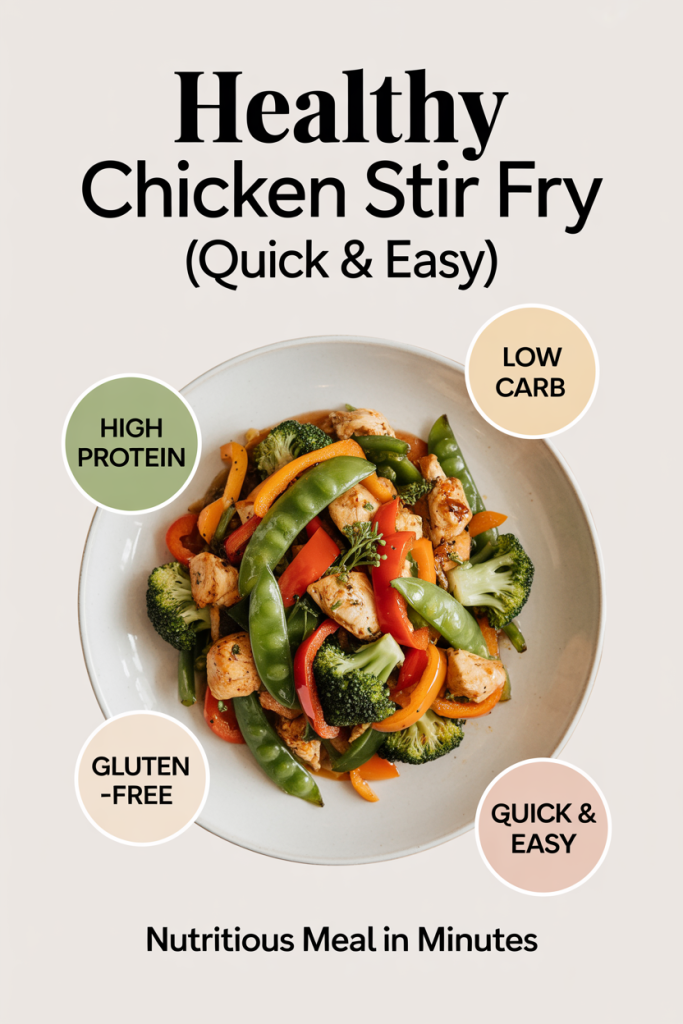
Opt for lean cuts of chicken, such as chicken breast. These cuts are lower in fat and high in protein, making them a perfect choice for a healthy meal. We can either cube the chicken for a classic stir fry or slice it into strips for a different texture.
Vegetables
The vegetables we choose significantly impact the healthiness of our stir fry. Here are some great options:
- Bell Peppers: Rich in vitamins A and C, they add a sweet crunch.
- Broccoli: Packed with fiber and antioxidants, it adds a satisfying crunch.
- Carrots: Bright, colorful, and full of beta-carotene.
- Snow Peas: These are crunchy and sweet, offering a delightful bite.
Sauce and Oils
Finally, the sauce and oil we use contribute to the health factor. We can opt for low-sodium soy sauce, sesame oil, or even homemade sauce with fresh ingredients. Using oils like olive or avocado oil can provide healthy fats without compromising our dish’s overall healthiness.
Preparation Techniques for Chicken
Preparing our chicken properly is crucial for the overall success of our stir fry.
Marinating
One method to add flavor while enhancing tenderness is marinating our chicken. A simple marinade can include:
- Low-sodium soy sauce
- Garlic and ginger for aromatic flavor
- A dash of honey for a hint of sweetness
Letting the chicken marinate for at least 30 minutes can amplify flavors and contribute to a more tender end product.
Cutting Techniques
When cutting chicken, it’s best to slice against the grain. This technique ensures that our pieces are tender and easy to chew. Uniformity in size is also key, as it ensures even cooking.
Cooking Methods for Stir Fry
Now that we have our ingredients prepped and ready, let’s investigate into the cooking methods that will bring our chicken stir fry to life.
Stir Frying
Stir frying requires a wok or a non-stick skillet for best results. Here’s a simple process:
- Heat the Oil: Heat your pan over high heat and add a small amount of oil until it shimmers.
- Cook the Chicken: Add the marinated chicken to the pan. Cook until browned and just cooked through, about 5-7 minutes.
- Add Vegetables: Next, introduce your vegetables, starting with the ones that take longer to cook (like carrots and broccoli) before finishing with quicker-cooking options (like bell peppers and peas).
- Finish with Sauce: Finally, add your sauce towards the end of cooking. This allows the flavors to meld without losing freshness.
Flavoring Your Stir Fry
Flavor is key to a good stir fry, and there are countless ways we can elevate our dish.
Aromatics
One of the best ways to build flavor is through aromatics. Adding minced garlic, fresh ginger, or green onions to the hot oil before the chicken helps create a savory base.
Sauces
We can experiment with various sauces or combinations:
- Oyster sauce provides a rich umami flavor.
- Chili paste can add a kick for those who like heat.
- A mix of soy sauce, honey, and a splash of rice vinegar gives a perfect balance of sweet and savory.
Garnishes
Don’t forget garnishes. Fresh cilantro or crushed red pepper flakes can enhance the presentation and flavor, making our dish even more appealing.
Serving Suggestions and Pairings
After cooking our chicken stir fry, it’s time to serve. Here are some excellent pairing options:
Base Options
- Brown Rice: A wholesome base that absorbs the flavors beautifully.
- Quinoa: A fantastic gluten-free option that adds extra protein.
- Zoodles (Zucchini Noodles): For a low-carb alternative, zoodles can be a delightful twist.
Sides
Consider complementing our stir fry with:
- Steamed Edamame: Adds healthy protein and fiber.
- Fresh Spring Rolls: Perfect for a light appetizer.
Nutritional Benefits of Chicken Stir Fry
Chicken stir fry isn’t just a delicious dish: it’s also packed with nutritional benefits:
- Lean Protein: Chicken is a great source of lean protein, essential for muscle repair and growth.
- Packed with Vegetables: Stir frying allows us to incorporate a variety of colorful vegetables, which provide vitamins, minerals, and fiber vital for our overall health.
- Healthy Fats: Using appropriate oils in moderation gives us necessary omega-3 and omega-6 fatty acids.
- Low in Calories: By controlling our ingredients, we can create a nutrient-dense dish that’s low in calories, making it suitable for weight management.
Conclusion
To conclude, making a healthy chicken stir fry is an enjoyable cooking process that yields tremendous flavor and health benefits. By understanding the basics, selecting the right ingredients, mastering preparation techniques, and incorporating flavor elements, we can create a meal that is both satisfying and nourishing. So, next time we’re in the kitchen, let’s whip up a stir fry that not just tantalizes our taste buds but also aligns with our health goals.