Cortisol Vs Belly Fat: How Stress Really Creates Stubborn Weight (Science-Backed Guide 2026)
Stress is ubiquitous, but not all stress affects our bodies the same way. When people talk about “Cortisol vs Belly Fat,” they’re asking a practical question: why does stress seem to make abdominal fat cling to us while other areas stay the same? In this guide we unpack the biology, the evidence from human studies, and what we can do about it. We’ll separate the quick, adaptive spikes of cortisol from the damaging effects of chronic elevation, explain why visceral belly fat is uniquely harmful, and give evidence-based strategies to lower cortisol and support fat loss. Our aim is to give you clear, actionable insight grounded in the latest research through 2026, not vague promises, but realistic steps that actually change how stress affects our waistlines.
What Cortisol Is And How It Works In The Body
Cortisol is a steroid hormone produced by the adrenal cortex and is one of the primary effectors of the hypothalamic–pituitary–adrenal (HPA) axis. It’s best known as the “stress hormone,” but that label hides nuance. Cortisol helps regulate glucose metabolism, immune responses, inflammation, blood pressure, and our sleep–wake cycle. Its release follows a diurnal rhythm, highest in the early morning to help us wake and lowest around midnight, while also surging in response to acute stressors.
Mechanistically, cortisol acts by binding to intracellular glucocorticoid receptors in many tissues. That interaction changes gene expression and protein activity, shifting metabolism toward increased blood glucose via gluconeogenesis, reduced peripheral glucose uptake, and mobilization of energy stores. In the short term, these effects are protective: they give muscles and brain the fuel needed for fight-or-flight. But the same mechanisms have trade-offs when cortisol is elevated chronically.
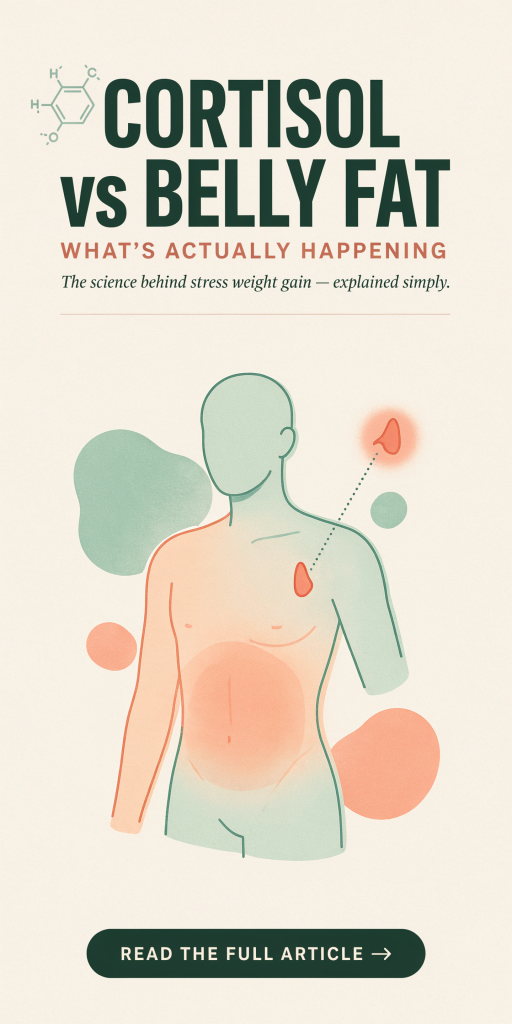
Importantly, cortisol’s effects are tissue-specific. In muscle and bone, prolonged cortisol exposure promotes protein breakdown and reduced formation. In adipose tissue, cortisol can increase both the differentiation of preadipocytes (adipogenesis) and lipoprotein lipase activity, which favors fat storage. That tissue specificity is central to understanding why cortisol relates to abdominal fat more than to overall weight distribution.
How Cortisol Promotes Abdominal Fat Accumulation
When we consider cortisol’s role in fat distribution, several interacting pathways explain preferential belly fat accumulation. First, cortisol increases lipoprotein lipase in visceral adipose tissue, an enzyme that hydrolyzes circulating triglycerides and facilitates fatty acid uptake into fat cells. Second, cortisol enhances differentiation of mesenchymal stem cells into adipocytes, again more so in visceral depots under certain conditions.
Cortisol also interacts with insulin. Elevated cortisol raises blood glucose and often prompts hyperinsulinemia: insulin is an anabolic hormone that promotes lipogenesis and inhibits lipolysis. In the abdominal region, the combination of higher insulin responsiveness and cortisol-driven enzyme changes creates a metabolic milieu that favors fat storage.
Finally, cortisol affects appetite and behavior. It can increase cravings for calorie-dense, sugary, and fatty foods, what many call comfort foods. Those behavioral effects compound the biochemical drivers and accelerate abdominal fat gain. The net result: cortisol doesn’t just raise total fat, it shifts storage toward the abdomen, where metabolic consequences are most pronounced.
What The Research Says: Human Studies On Cortisol And Belly Fat
Evidence from human studies supports a link between cortisol and central adiposity, but the relationship is complex and context-dependent. Cross-sectional studies consistently find associations between higher circulating cortisol (or markers of HPA axis activation) and greater waist circumference or visceral adipose tissue measured by imaging. For example, population studies using CT or MRI have shown that people with higher fasting cortisol or altered diurnal patterns tend to have more visceral fat, independent of body mass index.
Intervention studies add mechanistic weight. Administration of exogenous glucocorticoids (like prednisone) reliably increases abdominal fat and insulin resistance in humans, demonstrating causality in a pharmacologic context. Conversely, some interventions that blunt cortisol responses, such as cognitive-behavioral stress reduction or targeted medications, have shown modest reductions in waist measures in randomized trials, though effects vary.
That said, cortisol measures are tricky. Single serum cortisol measurements reflect only a momentary state. Salivary cortisol, hair cortisol concentration (a longer-term integrative marker), and diurnal slope assessments give richer data. Studies that use multiple measures and imaging for fat distribution provide the clearest picture: dysregulated cortisol, particularly flattened diurnal rhythms or chronically elevated integrated cortisol, is associated with more visceral belly fat.
Acute Versus Chronic Stress: Different Cortisol Patterns, Different Effects
Not all cortisol is created equal. Acute stress produces a sharp, brief cortisol spike that helps mobilize energy and sharpen alertness. When we experience a short-lived stressor, like narrowly avoiding an accident or giving an important presentation, cortisol does its job and then falls back to baseline. That pattern is adaptive and not likely to cause lasting fat accumulation.
Chronic stress, but, typically alters cortisol dynamics in two damaging ways: sustained elevation and dysregulation of the diurnal rhythm. Some people exhibit persistently high daytime cortisol, others show a blunted morning peak and elevated evening levels, and some have a flattened slope across the day. These chronic patterns keep tissues exposed to cortisol’s metabolic effects long enough to alter fat deposition, muscle breakdown, and glucose regulation.
Behaviorally, chronic stress also promotes poor sleep, emotional eating, and reduced motivation for physical activity, each of which independently encourages weight gain. So while a single stressful event won’t make belly fat appear overnight, repeated or prolonged HPA axis activation sets the stage for the physiological and behavioral changes that do.
Visceral Versus Subcutaneous Fat: Why Belly Fat Is Metabolically Dangerous
When we talk about belly fat, we need to distinguish between subcutaneous fat (under the skin) and visceral fat (around internal organs). Subcutaneous abdominal fat can be cosmetically undesirable but is metabolically less active. Visceral fat, but, is hormonally and immunologically active: it secretes cytokines (like IL-6 and TNF-alpha), adipokines (including lower adiponectin and higher resistin), and has a higher rate of lipolysis that releases free fatty acids into the portal circulation.
That portal release matters because free fatty acids go directly to the liver, promoting hepatic insulin resistance, increased VLDL production, and dyslipidemia. Visceral fat’s inflammatory secretions also contribute to systemic low-grade inflammation, which is implicated in atherosclerosis, type 2 diabetes, and other cardiometabolic diseases. Clinically, waist circumference and waist-to-hip ratio, proxies for visceral adiposity, predict cardiovascular events and mortality better than BMI in many studies.
Understanding this distinction explains why cortisol-driven increases in visceral fat are particularly concerning: the cost isn’t just appearance, it’s an elevated risk for metabolic disease.
Key Findings From Longitudinal, Cross-Sectional, And Intervention Trials
Across study designs, certain themes recur. Longitudinal studies show that adverse life events and sustained psychosocial stress predict increases in central adiposity over years. For instance, cohorts followed for multiple years reveal that people with chronic work stress or caregiving burdens tend to accumulate more abdominal fat even after adjusting for diet and activity.
Cross-sectional analyses repeatedly find correlations between altered cortisol metrics (e.g., flattened diurnal slope, higher hair cortisol) and greater visceral fat measured by imaging. These studies are valuable for hypothesis generation but can’t prove directionality.
Intervention trials are perhaps the most informative. Trials using pharmacologic glucocorticoids demonstrate direct causation: therapy leads to measurable increases in visceral fat and insulin resistance. Behavioral interventions, mindfulness, CBT, structured exercise, have had mixed but promising results in lowering cortisol markers and waist circumference. Notably, multimodal interventions that combine sleep optimization, movement, and stress-management typically yield better outcomes than any single change, which suggests the problem is multifactorial and responds best to comprehensive approaches.
Lifestyle Drivers That Raise Cortisol And Encourage Belly Fat
Several everyday factors amplify cortisol secretion and tilt our metabolism toward abdominal fat storage. Sleep disruption is one of the most powerful: short or poor-quality sleep elevates evening cortisol and impairs glucose tolerance. Chronic sleep loss also increases appetite-regulating hormones in ways that favor caloric intake.
Dietary factors matter too. Diets high in refined carbohydrates and added sugars can provoke greater post-meal glucose and insulin excursions, which interact with cortisol to promote lipogenesis. Excessive caffeine intake and irregular meal timing (like frequent late-night eating) may also aggravate HPA axis activity in susceptible people.
Physical inactivity reduces the beneficial buffering effect of exercise on stress reactivity. Conversely, overtraining without adequate recovery is a form of chronic stress that raises cortisol. Psychological and social stressors, financial strain, job stress, relationship conflict, are obvious drivers. Finally, environmental factors like noise pollution or chronically bright lighting at night can blunt diurnal cortisol rhythms and, over time, favor abdominal fat accumulation.
Practical, Evidence-Based Strategies To Lower Cortisol And Target Belly Fat
We recommend a multi-pronged plan that addresses behavior, sleep, movement, and diet. Start with sleep: aim for consistent bed and wake times, reduce late-night light exposure, and target 7–9 hours of restorative sleep. Small sleep gains have outsized effects on cortisol regulation and appetite control.
Next, manage stress with evidence-based techniques. Mindfulness-based stress reduction, cognitive-behavioral strategies, and controlled breathing exercises lower salivary and hair cortisol in randomized trials. Even short daily practices, 10–20 minutes of mindful breathing, or regular social support can shift HPA activity.
Exercise is vital but should be balanced. Regular moderate-intensity aerobic activity and resistance training improve insulin sensitivity and reduce visceral fat. We caution against chronic high-volume endurance training without adequate recovery if you’re already stressed. Nutrition-wise, prioritize whole foods, steady protein intake, fiber-rich carbohydrates, and limit added sugars and late-night eating. Caffeine in moderation is fine: heavy habitual intake may worsen sleep and cortisol patterns for some people.
Finally, consider targeted clinical steps when lifestyle changes aren’t enough: evaluate medications that may raise cortisol (e.g., chronic glucocorticoids), review sleep disorders like sleep apnea, and, when appropriate, work with clinicians to screen for endocrine disorders. Combining these strategies tends to produce greater reductions in waist circumference than any single intervention alone.
When Cortisol Isn’t The Only Culprit: Other Hormones, Genetics, Age, And Medications
Cortisol is a major player, but abdominal fat is rarely the result of a single factor. Sex hormones influence fat distribution, men typically store more visceral fat, while premenopausal women store more subcutaneous fat: menopause shifts that balance. Thyroid hormones affect basal metabolic rate, and low thyroid function can promote weight gain. Insulin and leptin resistance are central to energy balance, and interactions among these hormones determine how and where we store fat.
Genetics and early-life exposures matter too. Some people are genetically predisposed to accumulate visceral fat: epigenetic changes from childhood stressors also shape lifelong HPA axis responsiveness. Age-related muscle loss reduces resting metabolic rate, making fat gain easier with the same caloric intake.
Medications can be important contributors: systemic glucocorticoids, some antipsychotics, and certain antidepressants are known to promote central weight gain. When we evaluate stubborn belly fat, we look broadly at hormonal panels, medication lists, sleep quality, and family history, only then can we tailor a realistic plan.
Conclusion
When we frame this as “Cortisol vs Belly Fat,” the fight isn’t one-dimensional. Cortisol’s metabolic effects, especially when chronically elevated or dysregulated, promote visceral fat through enzymatic actions in adipose tissue, interplay with insulin, and behavioral drivers like increased appetite and poor sleep. Human studies through 2026 support this link, but they also show that cortisol is part of a broader web that includes other hormones, lifestyle, genetics, and medications.
For most of us, the most effective approach is comprehensive: restore healthy sleep, adopt balanced nutrition, use stress-reduction techniques that we can sustain, and maintain appropriately dosed exercise. Those steps not only lower cortisol markers but also reduce visceral fat and improve metabolic risk. We don’t have to accept stubborn belly fat as inevitable, by addressing the physiological and behavioral contributors together, we can shift the balance in our favor.