8 Best Substitutes for Dijon Mustard
Dijon mustard is a kitchen workhorse — bright, tangy, slightly sharp and silky-smooth. It appears in vinaigrettes, marinades, sauces, sandwiches, potato salads and more. But what if you’re out of Dijon, or you need a different flavor profile, or you’re catering to dietary preferences? Good news: there are several effective substitutes that will preserve the balance of acidity, spice and creaminess Dijon brings to a dish.
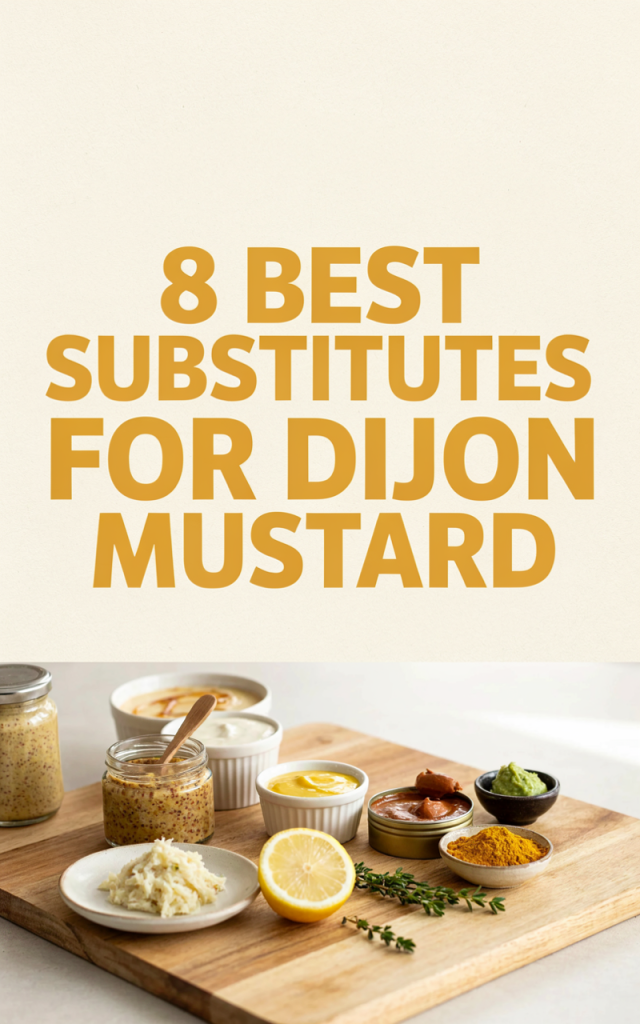
This guide walks through the 8 best Dijon mustard substitutes, when to use each, exact swap advice, and helpful mini-recipes so you can mix a quick replacement in seconds. Whether you’re making a mustard-forward vinaigrette or a creamy mustard sauce for meat, you’ll leave with practical options and confidence to proceed without missing a beat.
How to choose the right substitute
Before diving into the list, quickly decide which qualities of Dijon your recipe needs:
– Flavor intensity and sharpness — Dijon is moderately sharp; substitutes range from mild (yellow) to very spicy (horseradish).
– Texture — Dijon is smooth; stone-ground or whole-grain will add texture.
– Sweetness — some alternatives (honey mustard) are sweeter and may need an acid adjustment.
– Emulsifying ability — mustards stabilize vinaigrettes; mayonnaise or mustard powder + liquid can substitute for this property.
With that in mind, here are the 8 best substitutes and how to use them.
1. Yellow (American) Mustard
Yellow mustard is the most common pantry backup. It’s made from white mustard seeds, vinegar, turmeric and seasoning.
Why it’s a good substitute:
– Bright acidity and tang make it a straightforward swap in sandwiches, dressings, and marinades.
– Mild flavor means it won’t overpower other ingredients.
When to use:
– Sandwich spreads, burgers, potato salad, casual dressings and dips.
– Not ideal when you need Dijon’s more refined, wine-like tang for delicate sauces.
Swap ratio and tips:
– Use 1:1 (equal amounts) for most recipes.
– If you need more bite, add a splash (1/4–1/2 tsp per tablespoon) of white wine vinegar or a pinch of ground black pepper.
Storage:
– Store in the refrigerator; use within the manufacturer’s recommended period after opening (usually several months).
2. Whole-Grain Mustard
Whole-grain (or stone-ground) mustard retains intact or partially crushed seeds. It provides visual texture and a robust mustard flavor.
Why it’s a good substitute:
– Fuller, nuttier flavor with a pleasing crunch — great where Dijon’s mustard complexity is important but texture is welcome.
– Works well in sauces, vinaigrettes and on roasted meats.
When to use:
– Salad dressings, glazes, charcuterie, pork and roasted vegetables.
Swap ratio and tips:
– Use 1:1 when texture is acceptable. If you need a smoother finish, blend the whole-grain mustard briefly in a food processor with a little olive oil or water.
– If you miss the slightly sharp wine note of Dijon, stir in 1/4 tsp white wine vinegar per tablespoon of whole-grain mustard.
Storage:
– Refrigerate after opening. Whole-grain mustard keeps well (several months) because of vinegar content.
3. Spicy Brown Mustard
Spicy brown mustard (often labeled as “brown mustard”) uses darker seeds and sometimes coarse grinding; it’s earthier and hotter than yellow mustard.
Why it’s a good substitute:
– Provides heat and depth closer to Dijon’s bite, especially useful in heartier dishes.
When to use:
– Marinades, robust vinaigrettes, sandwiches with cured meats, rubs for beef or pork.
Swap ratio and tips:
– Start with 1:1. If the dish is delicate, reduce to 3/4 the amount and balance with a mild oil or a splash of cream to soften the heat.
– Add a little sweetener (honey or maple syrup, 1/2 tsp) if the mustard seems too aggressive.
Storage:
– Keep refrigerated; typically good for months after opening.
4. Mustard Powder (Dry Mustard)
Dry mustard (ground mustard powder) is concentrated and versatile. It’s made from ground mustard seeds and is a staple ingredient for creating homemade mustards or adding heat to sauces.
Why it’s a good substitute:
– You can control intensity and texture. Reconstitute into a paste for an approximation of Dijon or blend into dressings and rubs.
When to use:
– When you want precise control in sauces, dry rubs, or to make a quick fresh mustard.
Reconstituting ratio and tip:
– For a Dijon-like paste: mix 1 Tbsp mustard powder with 1 Tbsp white wine vinegar (or apple cider vinegar) and 1/2–1 tsp water. Let sit 10–15 minutes to bloom, then use 1:1 in recipes calling for Dijon.
– Dry mustard also boosts emulsification in dressings when whisked into the oil and vinegar.
Storage:
– Keep in an airtight container in a cool, dark place; lasts many months.
5. Homemade Dijon-Style Mustard (Recipe)
If you want the closest flavor profile to commercial Dijon and you have mustard seeds and vinegar on hand, make your own Dijon-style mustard. This recipe produces a smooth, tangy mustard with that winey note Dijon is known for.
Ingredients:
– 1/2 cup brown or black mustard seeds
– 1/2 cup white wine (or 1/3 cup white wine + 1/6 cup water)
– 1/4 cup white wine vinegar
– 1/2 teaspoon kosher salt
– 1 teaspoon honey or sugar (optional; balances sharpness)
– 1–2 tablespoons neutral oil (optional, for smoother texture)
Instructions:
1. Combine mustard seeds and wine in a nonreactive bowl or jar. Cover and let soak at room temperature for 8–12 hours (overnight) to soften the seeds.
2. Transfer the soaked mixture to a blender or food processor. Add white wine vinegar, salt, and honey (if using).
3. Blend to desired consistency — smooth like Dijon or slightly textured. Scrape down sides as needed.
4. If you prefer an extra-smooth, silky mustard, stream in 1–2 tablespoons neutral oil while blending.
5. Taste and adjust: add a splash more vinegar for brightness or a pinch more salt. If it’s too grainy, let it rest in the fridge for a day — flavors mellow and texture evens out.
6. Store in a clean jar in the refrigerator. It will develop flavor over 2–3 days and keeps for several weeks.
Usage:
– Use this in place of Dijon 1:1 in vinaigrettes, sauces and sandwiches.
6. Honey Mustard (Prepared or Quick Recipe)
Honey mustard brings sweetness along with tang and is an excellent go-to when Dijon’s sharpness isn’t essential and a sweeter profile is welcome.
Why it’s a good substitute:
– Smooth, creamy and balances sugar and acid well. Great as a dipping sauce or glaze.
When to use:
– Chicken tenders, salad dressings for bitter greens, as a glaze for salmon or pork, and sandwich spreads.
Quick honey mustard recipe (makes about 1/3 cup)
Ingredients:
– 3 tablespoons yellow mustard or spicy brown mustard
– 2 tablespoons honey
– 1 tablespoon apple cider or white wine vinegar
– Pinch of salt
Instructions:
1. Whisk mustard, honey and vinegar together until smooth.
2. Taste and adjust: add more honey for sweetness, more vinegar for tang, or a pinch of salt.
3. Use immediately or refrigerate in a covered container for up to 1 week.
Swap guidance:
– Use 1:1 by volume if you want sweetness included. If substituting in a savory sauce where sweetness would be undesirable, reduce the honey mustard amount to 3/4 and add a splash of vinegar.
7. Prepared Horseradish (or Horseradish Sauce)
Prepared horseradish delivers heat and pungency that can stand in for Dijon’s bite when you want an assertive flavor. It won’t replicate the mustard seed character, but it can supply the necessary peppery kick.
Why it’s a good substitute:
– Sharpness and heat similar to mustard’s bite, especially useful in beef or creamy sauces.
When to use:
– Horseradish is excellent in steak sauces, roast beef sandwiches, potato salads, and as a component in creamy dressings or dips.
Swap tips:
– Use 1/2 to 3/4 the amount by volume of Dijon (it’s often hotter). Taste as you go.
– To mimic Dijon’s acidity, whisk in a small splash of white wine vinegar (1/4 tsp per tablespoon of horseradish) and a tiny pinch of mustard powder if available.
Storage:
– Prepared horseradish keeps several months in the refrigerator once opened; homemade varieties are freshest within a few weeks.
8. Mayonnaise + Vinegar + Mustard Powder (Quick Emulsified Substitute — Recipe)
When Dijon is needed for emulsification and creaminess in dressings or sauces — especially cold ones — a quick mayo-based substitute can replicate texture and tang.
Why it’s a good substitute:
– Produces a stable, creamy emulsion similar to Dijon in dressings and sauces. You can tweak sharpness and acidity.
Quick mayo-mustard substitute (yields ~1/4 cup)
Ingredients:
– 3 tablespoons mayonnaise
– 1 teaspoon mustard powder (or 1 teaspoon prepared mustard)
– 1 teaspoon white wine vinegar or apple cider vinegar
– 1/4 teaspoon sugar or honey (optional)
– Pinch of salt and black pepper
Instructions:
1. In a small bowl, whisk together mayonnaise and mustard powder until smooth.
2. Add vinegar and whisk to emulsify and thin to desired consistency.
3. Stir in sugar, salt and pepper to taste.
4. Use immediately as a Dijon replacement in dressings, sandwiches, or dips. Refrigerate any leftovers up to 3–5 days.
Swap guidance:
– Use this 1:1 for Dijon when the recipe calls for a creamy, emulsifying mustard. Reduce amount slightly in more delicate vinaigrettes and adjust oil ratio to balance.
Quick Swap Ratios and Practical Tips (Cheat Sheet)
- Yellow mustard: 1:1. Add 1/4 tsp vinegar per tbsp if you want more bite.
- Whole-grain mustard: 1:1. Blend for a smoother texture if needed.
- Spicy brown mustard: 1:1 (start with less in delicate dishes).
- Mustard powder: Reconstitute (1 tbsp powder + 1 tbsp vinegar + 1/2 tsp water) and use 1:1.
- Homemade Dijon-style mustard: Use 1:1.
- Honey mustard: 1:1 where sweetness is acceptable; otherwise reduce and add vinegar to taste.
- Prepared horseradish: 1/2–3/4 amount; balance with vinegar.
- Mayo + mustard powder + vinegar mix: 1:1 for creamy needs.
General tips:
– Always taste and adjust. Mustard intensity varies by brand and age.
– If a substitute is sweeter (like honey mustard), reduce sweet elements elsewhere in the recipe or increase acidity.
– When replacing mustard in cooked sauces, add substitutes gradually and cook low and slow to meld flavors.
Storage and Shelf Life Notes
- Prepared mustards (Dijon, yellow, spicy brown, whole-grain): refrigerate after opening; typically good for several months — check the label for “best by” guidance.
- Homemade mustards: last several weeks to a couple months refrigerated; flavor will mellow and sometimes improve after 24–48 hours.
- Dry mustard: store in a cool, dark place in an airtight container for up to a year for best potency.
- Mayonnaise-based substitutes: keep refrigerated and use within 3–5 days.
Frequently Asked Questions
- Can I use wasabi instead of Dijon? Wasabi or wasabi paste can mimic heat but has a very different flavor (more horseradish-like and sharper). Use sparingly and mostly in Asian-inspired preparations.
- I need Dijon for a cooked sauce—will these substitutes hold up to heat? Yes, most prepared mustards and homemade Dijon-style mustard hold up to moderate cooking. Add delicate substitutes (like mayonnaise mixes) after cooking if you want to preserve brightness.
- Is any substitute gluten-free? Most mustards are gluten-free, but always read labels. Prepared horseradish and mustard powder are usually gluten-free; commercial Dijon sometimes contains wine or flavorings—check the brand.
Conclusion
Running out of Dijon mustard is not an emergency — it’s an invitation to experiment. Whether you reach for classic yellow mustard for a quick fix, stone-ground mustard for texture, mustard powder to reconstitute exactly what you need, or you blend a quick mayo-vinegar mustard for creamy dressings, there’s a reliable substitute for every cooking situation.
Use the swap ratios and recipes in this guide to preserve the balance and function Dijon provides in your dish, and don’t be afraid to taste and tweak. In many cases, a substitute introduces a delightful new twist that can elevate a familiar recipe. Happy cooking — and may your pantry always be well-stocked (but flexible)!