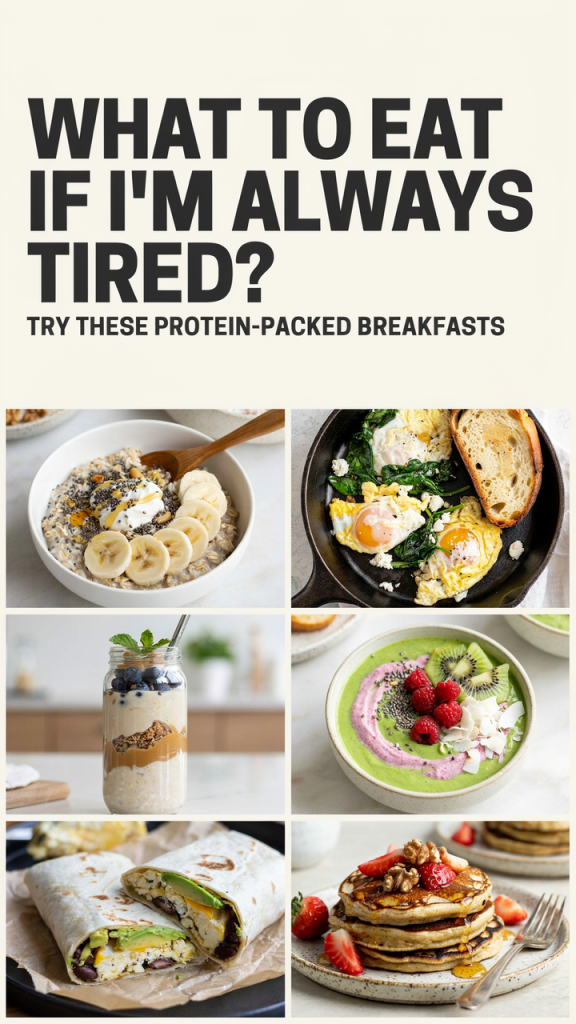
What Should I Eat If I’m Always Tired? Try These Protein-Packed Breakfasts
Feeling tired every morning — or dragging through the afternoon — is one of the most common complaints I hear from readers. While many factors contribute to persistent fatigue (sleep, stress, medical conditions), what you eat at breakfast can make a major difference. Choosing protein-packed breakfasts helps stabilize blood sugar, supports neurotransmitter production, and keeps you feeling full and focused longer than a carb-heavy pastry does.
In this guide you’ll learn why protein matters for energy, how much to aim for, what other nutrients to include, and 12 delicious, practical high-protein breakfasts you can make (plus make-ahead and quick prep tips). Each recipe below includes an ingredients list and step-by-step instructions so you can start swapping in energy-boosting breakfasts tomorrow.
Why a Protein-Packed Breakfast Helps When You’re Always Tired
Protein contributes to sustained energy in several ways:
- Keeps blood sugar steadier: Protein slows carbohydrate absorption and reduces the crash-and-burn cycle that follows sugary breakfasts.
- Supports neurotransmitters: Amino acids from protein are precursors for brain chemicals like dopamine and norepinephrine that regulate alertness and motivation.
- Increases satiety: Protein helps you feel full longer, reducing mid-morning energy dips and the temptation to reach for caffeine or snacks.
- Preserves lean mass: Adequate protein helps maintain muscle, which supports metabolism and overall energy levels.
Aim for roughly 20–30 grams of protein at breakfast for most adults. If you’re very active, older, pregnant, or recovering from illness, you may need more. Combine protein with fiber and healthy fat for best results.
Other nutrients to pair with protein
- Complex carbohydrates (oats, quinoa, whole-grain toast) for steady glucose.
- Fiber (vegetables, fruits, seeds, legumes) to slow absorption.
- Healthy fats (olive oil, avocado, nuts) for satiety and brain health.
- Iron and B vitamins (leafy greens, lean meats, legumes, fortified cereals) are especially important when fatigue is related to nutrient deficiencies.
If you’re chronically tired despite diet and sleep changes, see a clinician to rule out anemia, thyroid issues, sleep apnea, depression, or other medical causes.
12 Protein-Packed Breakfasts to Fight Fatigue
Below are 12 breakfast ideas explicitly listed so you can pick one to try. Each recipe includes ingredients and step-by-step instructions.
1. Greek Yogurt Bowl with Nuts, Seeds & Berries
Approx. protein: 20–30 g (depending on yogurt)
Ingredients
– 1 cup plain Greek yogurt (nonfat or 2%)
– 1/2 cup mixed berries (fresh or thawed frozen)
– 2 tbsp chopped nuts (almonds or walnuts)
– 1 tbsp chia seeds or hemp hearts
– 1 tsp honey or maple syrup (optional)
Instructions
1. Spoon Greek yogurt into a bowl.
2. Top with berries, chopped nuts, and seeds.
3. Drizzle with honey if desired and stir lightly.
4. Eat immediately or pack in a container for on-the-go.
Why it helps: Greek yogurt is high in complete protein; nuts and seeds add healthy fats and extra protein, plus fiber.
2. Spinach, Feta & Egg White Omelet
Approx. protein: 25–30 g
Ingredients
– 3 large egg whites + 1 whole egg (or 4 egg whites)
– 1 cup fresh spinach, chopped
– 1/4 cup crumbled feta cheese
– 1 tsp olive oil or cooking spray
– Salt and pepper to taste
Instructions
1. Whisk egg whites and whole egg with a pinch of salt and pepper.
2. Heat oil in a nonstick skillet over medium heat and sauté spinach until wilted.
3. Pour eggs into skillet and cook until edges begin to set.
4. Sprinkle feta on one half, fold omelet, and cook 1–2 minutes more.
5. Slide onto a plate and serve with a slice of whole-grain toast if desired.
Why it helps: Eggs provide high-quality protein and choline for brain function. Spinach delivers iron and folate.
3. Cottage Cheese and Fruit Parfait
Approx. protein: 20–28 g
Ingredients
– 1 cup low-fat cottage cheese
– 1/2 cup sliced peaches or pineapple (fresh or canned in water)
– 2 tbsp granola or crushed walnuts
– 1 tsp cinnamon or a drizzle of honey
Instructions
1. Layer half the cottage cheese in a bowl or jar.
2. Add half the fruit and sprinkle with cinnamon.
3. Add remaining cottage cheese and top with granola or walnuts.
4. Serve immediately or refrigerate for up to 24 hours.
Why it helps: Cottage cheese is an excellent source of slow-digesting casein protein and calcium.
4. Smoked Salmon and Avocado Toast
Approx. protein: 18–25 g
Ingredients
– 2 slices whole-grain or sprouted bread, toasted
– 3–4 oz smoked salmon
– 1/2 ripe avocado, mashed
– 1 tsp lemon juice
– Fresh dill or black pepper for garnish
Instructions
1. Mash the avocado with lemon juice and spread evenly on toast.
2. Layer smoked salmon slices on top.
3. Garnish with dill or pepper and serve.
Why it helps: Salmon provides protein plus omega-3s that support cognition and mood. Pairing with whole grains adds energy-sustaining carbs.
5. Peanut Butter Banana Protein Smoothie
Approx. protein: 25–35 g (with protein powder)
Ingredients
– 1 medium banana
– 1 cup milk (dairy or fortified plant milk)
– 2 tbsp peanut or almond butter
– 1 scoop whey or plant-based protein powder (~20 g protein per scoop)
– 1/2 cup spinach (optional)
– Ice cubes as desired
Instructions
1. Combine all ingredients in a blender.
2. Blend until smooth and creamy.
3. Pour into a glass and drink immediately.
Why it helps: Smoothies are quick and portable. Adding protein powder ensures a robust protein dose; nut butter adds healthy fat.
6. Quinoa Breakfast Bowl with Eggs & Veggies
Approx. protein: 22–30 g
Ingredients
– 1 cup cooked quinoa (leftover or microwavable)
– 2 large eggs (poached, scrambled, or fried)
– 1/2 cup cherry tomatoes, halved
– 1/2 cup sautéed kale or spinach
– 1 tbsp olive oil
– Salt, pepper, and red pepper flakes
Instructions
1. Reheat cooked quinoa in a skillet or microwave.
2. Sauté greens briefly in olive oil, season with salt.
3. Prepare eggs to your liking.
4. Assemble quinoa in a bowl, top with greens, tomatoes, and eggs.
5. Season and enjoy.
Why it helps: Quinoa is a complete plant protein (contains all essential amino acids) and pairs well with eggs for a balanced meal.
7. Overnight Oats with Protein Powder and Chia Seeds
Approx. protein: 20–30 g
Ingredients
– 1/2 cup rolled oats
– 3/4–1 cup milk (dairy or plant milk)
– 1 scoop protein powder (vanilla or unflavored)
– 1 tbsp chia seeds
– 1/2 cup berries or chopped apple
Instructions
1. In a jar, combine oats, protein powder, chia seeds, and milk; stir well.
2. Add fruit and seal jar.
3. Refrigerate overnight (or at least 4 hours).
4. Stir and eat cold or warmed briefly.
Why it helps: Make-ahead convenience with steady-release carbs, protein powder for a reliable protein boost, and chia for fiber and omega-3s.
8. Tofu Scramble with Black Beans and Veggies (Vegan)
Approx. protein: 20–28 g
Ingredients
– 7–8 oz firm tofu, crumbled
– 1/2 cup cooked black beans
– 1/2 bell pepper, diced
– 1/4 tsp turmeric, salt, and pepper
– 1 tbsp nutritional yeast (optional)
– 1 tsp olive oil
Instructions
1. Heat oil in a skillet over medium heat and sauté bell pepper until softened.
2. Add crumbled tofu and turmeric; cook 4–5 minutes, stirring occasionally.
3. Stir in black beans and nutritional yeast; heat through.
4. Season and serve with salsa and a corn tortilla or whole-grain toast.
Why it helps: Tofu and beans combine for a complete protein (when eaten with grains) and provide fiber to keep energy steady.
9. Chia Seed Pudding with Hemp Hearts and Almonds
Approx. protein: 12–18 g (add protein powder to boost)
Ingredients
– 3 tbsp chia seeds
– 1 cup milk (dairy or fortified plant milk)
– 2 tbsp hemp hearts
– 2 tbsp sliced almonds
– 1 tsp vanilla extract and sweetener to taste
Instructions
1. Combine chia seeds, milk, vanilla, and sweetener in a jar; stir or shake well.
2. Refrigerate 4+ hours or overnight until pudding-like.
3. Top with hemp hearts and almonds just before eating.
Why it helps: Chia and hemp offer plant-based protein, fiber, and omega-3s. Add a scoop of protein powder if you need more grams.
10. High-Protein Pancakes (Oat + Cottage Cheese)
Approx. protein: 20–30 g (for 2–3 pancakes)
Ingredients
– 1 cup rolled oats
– 1/2 cup cottage cheese
– 2 eggs
– 1 tsp baking powder
– 1/2 tsp cinnamon
– Cooking spray or a little butter
Instructions
1. Blend oats in a blender to make oat flour.
2. Add cottage cheese, eggs, baking powder, and cinnamon; blend to a smooth batter.
3. Heat a nonstick skillet over medium heat and grease lightly.
4. Pour batter to form pancakes; cook 2–3 minutes per side until golden.
5. Serve with berries and a small drizzle of syrup if you like.
Why it helps: Cottage cheese and eggs pack high-quality protein into a comforting breakfast pancake.
11. Breakfast Burrito with Turkey Sausage & Eggs
Approx. protein: 28–35 g
Ingredients
– 1 whole-grain tortilla
– 2 eggs, scrambled
– 2 oz cooked turkey sausage or crumbles
– 1/4 cup black beans
– 2 tbsp shredded cheese (optional)
– Salsa and avocado slices
Instructions
1. Warm tortilla briefly in a skillet.
2. Scramble eggs and warm turkey sausage and black beans.
3. Lay eggs, sausage, beans, and cheese on tortilla, add salsa and avocado.
4. Fold burrito and grill in a skillet for a minute per side to seal and warm.
5. Slice and serve.
Why it helps: Combines multiple protein sources and fiber to keep you satisfied and energized.
12. Lentil & Vegetable Breakfast Hash with Poached Egg
Approx. protein: 20–28 g
Ingredients
– 3/4 cup cooked lentils
– 1 small sweet potato, peeled and diced
– 1/2 cup diced bell pepper and onion mix
– 1-2 tbsp olive oil
– 1 poached or fried egg
– Salt, pepper, and paprika
Instructions
1. Heat oil in a skillet and cook sweet potato until tender (8–10 minutes).
2. Add onion and bell pepper and sauté until soft.
3. Stir in cooked lentils and season with salt, pepper, and paprika; heat through.
4. Top the hash with a poached or fried egg and serve.
Why it helps: Lentils are an excellent plant protein and offer iron and fiber to support energy.
Quick 5–10 Minute Protein-Packed Options
If mornings are chaotic, try these fast combos — each meets the ingredient/instructions requirement and takes under 10 minutes.
- Hard-boiled eggs with an apple and a handful of almonds.
Ingredients: 2 hard-boiled eggs, 1 apple, 1 oz almonds.
Instructions: Peel eggs, slice apple, and pack almonds. Eat together. - Cottage cheese with sliced tomato and cracked pepper on whole-grain crackers.
Ingredients: 1/2 cup cottage cheese, 1 medium tomato, 4 whole-grain crackers.
Instructions: Slice tomato, arrange on crackers, top with cottage cheese and pepper. - Protein shake and a banana.
Ingredients: 1 scoop protein powder, 1 cup milk, 1 banana.
Instructions: Blend or shake protein powder with milk, peel banana and eat alongside.
Make-Ahead & Meal-Prep Tips
- Batch-cook proteins: Boil a dozen eggs, cook a pot of quinoa, or roast a tray of turkey sausage at the start of the week for fast assembly.
- Overnight jars: Make overnight oats or chia pudding in jars for 3–4 days of breakfasts.
- Freeze portions: Pancakes freeze well; reheat in toaster or microwave.
- Pre-chop veggies: Dice peppers, onions, and sweet potatoes and store in air-tight containers for quick scrambles or hashes.
When Protein Alone Isn’t the Answer
If you’ve increased protein and still feel exhausted, consider these possibilities:
- Sleep debt or poor sleep quality (sleep apnoea, insomnia).
- Nutrient deficiencies (iron, B12, vitamin D).
- Mental health issues: depression and anxiety often manifest as fatigue.
- Medical conditions: thyroid disease, diabetes, chronic infections, autoimmune disorders.
A primary care visit with basic labs (CBC, TSH, iron studies, vitamin D/B12) is a sensible next step if symptoms persist.
How to Build an Energizing Breakfast Plate (Quick Checklist)
- 20–30 g of protein (eggs, dairy, tofu, legumes, fish, lean meat, or protein powder)
- A serving of fiber-rich carbs (whole grains, fruit)
- 1 serving of vegetables or fruit for micronutrients
- A small amount of healthy fats (nuts, seeds, avocado, olive oil)
Balancing these components helps sustain energy, reduce cravings, and support mood and cognition.
Sample Weekly Rotation (for busy planners)
- Monday: Greek yogurt bowl with berries and nuts.
- Tuesday: Spinach feta omelet + whole-grain toast.
- Wednesday: Overnight oats with protein powder.
- Thursday: Smoked salmon avocado toast.
- Friday: Quinoa bowl with eggs and veggies.
- Saturday: High-protein pancakes with fruit.
- Sunday: Tofu scramble with black beans.
Rotate to avoid boredom and to cover a range of nutrients.
Conclusion
If you’re always tired, swapping low-protein breakfasts for protein-packed options is a practical, evidence-based strategy to improve energy and focus. Aim for 20–30 grams of protein at breakfast, pair protein with fiber and healthy fats, and pick breakfasts that you enjoy and can prepare consistently. The 12 recipes above offer a variety of flavors and formats — from make-ahead jars to quick smoothies — so you can find what fits your schedule and taste.
Start small: pick two recipes from this list, prep ingredients on the weekend, and commit to them for a week. Track how your energy and hunger change. If fatigue persists despite dietary changes, consult your healthcare provider to check for underlying causes. You deserve morning meals that support your energy and help you show up fully each day — and these protein-packed breakfasts are a strong step in that direction.