Can’t Hit 150g of Protein? These Meals Make It Surprisingly Easy
Hitting a daily target of 150 grams of protein can feel like a tall order—especially when life gets busy. But with smart recipes, portion planning, and a few protein boosters, you can hit that number without resorting to endless chicken breasts or plain protein shakes. This article gives you an arsenal of delicious, practical meals and snacks (with full ingredient lists and step-by-step instructions) that make 150g/day not just possible, but enjoyable.
Below you’ll find why 150g might be right for you, science-backed tips to help absorption and satiety, and a selection of high-protein meals and snacks that are easy to prep. All recipes include estimated protein per serving and variations so you can adapt to vegetarian or vegan needs.
Why 150g of Protein?
Hitting 150 grams of protein can support:
– Muscle repair and growth (especially if you lift weights or do regular resistance training).
– Satiety and appetite control, which helps with body composition goals.
– Preservation of lean mass during calorie deficits.
For many active men and some women, 1.6–2.2 g/kg bodyweight is a useful target; for a 75–95 kg person that translates roughly to 120–210 g/day—so 150 g is a reasonable, middle-ground target for many active people. As always, if you have kidney disease or specific medical conditions, check with a healthcare provider.
Quick High-Protein Strategies (Before the meals)
- Prioritize protein at every meal and snack—aim for 25–50 g per main meal and 10–25 g per snack.
- Use concentrated sources: lean meats, Greek yogurt, cottage cheese, eggs, whey/pea protein, tofu, tempeh, seitan, fish.
- Add small boosters: a scoop of protein powder, a few tablespoons of hemp seeds, 1/4 cup of legumes, or a glass of milk with a snack.
- Spread protein evenly across the day (3–5 feedings) to maximize muscle protein synthesis.
- Meal prep: cook a big batch of chicken, lentils, or quinoa and portion it out.
Now—let’s get into the meals. Each one lists ingredients and step-by-step instructions and shows an approximate protein count per serving.
High-Protein Meals & Snack Recipes
1) Greek Yogurt + Whey Protein Power Bowl
Estimated protein: ~45 g per serving
Ingredients
– 1½ cups plain, nonfat Greek yogurt (about 34 g protein)
– 1 scoop whey or plant protein powder (20–25 g protein per scoop)
– 2 tbsp chia seeds or hemp seeds (optional) (4–6 g protein)
– ¼ cup fresh berries and 2 tbsp chopped nuts for texture
– Optional: sweetener or cinnamon to taste
Instructions
1. Spoon the Greek yogurt into a bowl.
2. Stir in the protein powder until smooth and well-combined.
3. Mix in chia/hemp seeds if using.
4. Top with berries and chopped nuts.
5. Serve chilled.
Notes: Use full-fat Greek yogurt if you want more calories; swap whey for pea protein for dairy-free option.
2) Egg White Omelet with Cottage Cheese & Smoked Salmon
Estimated protein: ~52 g per serving
Ingredients
– 6 egg whites (about 21 g protein)
– ½ cup low-fat cottage cheese (14 g protein)
– 3 oz smoked salmon (approx. 17 g protein)
– 1 cup baby spinach
– 1 tsp olive oil or cooking spray
– Salt, pepper, and fresh dill or chives to taste
Instructions
1. Warm a nonstick skillet with olive oil over medium heat; wilt the spinach for 1–2 minutes and remove.
2. Pour in the egg whites, seasoning lightly with salt and pepper; cook until edges set.
3. Spoon cottage cheese onto one half of the omelet, add smoked salmon and wilted spinach.
4. Fold the omelet and cook for another minute until the filling is warmed.
5. Garnish with dill/chives and serve.
Tip: Swap smoked salmon for turkey breast slices if you prefer.
3) Protein Pancakes (Oats, Cottage Cheese & Eggs)
Estimated protein: ~35 g per serving (for a 2–3 pancake stack)
Ingredients
– 1 cup rolled oats
– 1 cup low-fat cottage cheese (28 g protein)
– 2 whole eggs (12 g protein)
– 1 scoop vanilla protein powder (optional) (20–25 g)
– ½ tsp baking powder and pinch of salt
– Cooking spray or butter for pan
Instructions
1. Blend oats in a blender until they reach a flour-like consistency.
2. Add cottage cheese, eggs, protein powder (if using), baking powder, and salt; blend until smooth.
3. Heat a nonstick skillet and add cooking spray.
4. Pour batter to form pancakes of desired size; cook 2–3 minutes per side until golden.
5. Serve with fresh fruit or a small drizzle of maple syrup.
Notes: Skip the protein powder if you want lower protein—this will still be protein-rich thanks to cottage cheese and eggs.
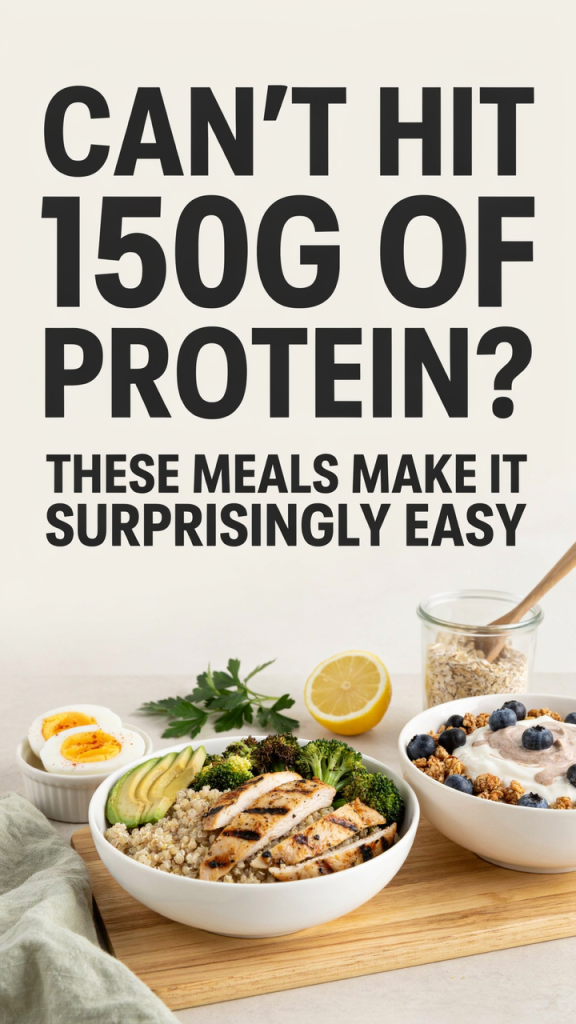
4) Chicken & Quinoa Power Bowl
Estimated protein: ~46 g per serving
Ingredients
– 6 oz cooked chicken breast (approx. 38 g protein)
– 1 cup cooked quinoa (8 g protein)
– 1 cup steamed broccoli
– ¼ avocado
– Dressing: 1 tbsp olive oil, lemon juice, salt, pepper
Instructions
1. Slice the cooked chicken breast.
2. Assemble cooked quinoa in a bowl; top with chicken, broccoli, and avocado slices.
3. Drizzle dressing over the bowl, season to taste.
4. Mix and enjoy warm or cold.
Meal prep tip: Cook a big batch of chicken and quinoa for several days of bowls.
5) Turkey & Three-Bean Chili
Estimated protein: ~38–42 g per large serving
Ingredients
– 1 lb lean ground turkey (about 88 g protein total; using 1/4 of pot = ~22 g per serving if 4 servings; adapt portion)
– 1 can kidney beans, drained (about 13 g protein per cup)
– 1 can black beans, drained (13 g protein per cup)
– 1 can cannellini beans, drained (15 g protein per cup)
– 1 can crushed tomatoes
– 1 onion, diced; 2 cloves garlic minced
– 1 tbsp chili powder, 1 tsp cumin, salt, pepper
– 1 tbsp olive oil
Instructions
1. Heat oil in a large pot and sauté onion until translucent; add garlic and cook 30 seconds.
2. Add ground turkey and cook until no longer pink.
3. Stir in spices, then add tomatoes and drained beans.
4. Simmer 20–30 minutes to allow flavors to meld.
5. Adjust seasoning and serve. Top with Greek yogurt or shredded cheese if desired.
Portioning note: Use larger turkey portion or add a protein-booster (e.g., extra turkey or a scoop of unflavored protein powder mixed into sauce) to reach higher per-serving protein.
6) Salmon & Lentil Salad
Estimated protein: ~42 g per serving
Ingredients
– 6 oz baked or grilled salmon fillet (approx. 34 g protein)
– ½ cup cooked green or brown lentils (9 g protein)
– Mixed salad greens, cucumber, cherry tomatoes
– 1 tbsp olive oil, 1 tbsp vinegar, salt & pepper
Instructions
1. Cook lentils according to package instructions; cool slightly.
2. Season salmon and bake or grill until cooked through (about 10–12 minutes at 400°F / 200°C).
3. Combine greens, lentils, cucumber, and tomatoes in a bowl.
4. Flake salmon into large chunks and place on salad.
5. Dress with olive oil and vinegar, season, and serve.
Variation: Replace salmon with canned tuna for a pantry option.
7) Steak, Roasted Vegetables & Sweet Potato
Estimated protein: ~46 g per serving
Ingredients
– 6 oz sirloin or flank steak (approx. 42 g protein)
– 1 medium sweet potato, roasted (approx. 4 g protein)
– 1 cup roasted Brussels sprouts or mixed veggies
– 1 tsp olive oil, salt, pepper, rosemary
Instructions
1. Preheat oven to 425°F (220°C). Toss chopped sweet potato and veggies in olive oil, salt, and pepper; roast 25–30 minutes.
2. Season steak with salt and pepper; sear in a hot skillet 3–4 minutes per side for medium, or grill to preference.
3. Let steak rest 5 minutes and then slice.
4. Serve steak with roasted sweet potato and vegetables.
Tip: Add a side of Greek yogurt-based dipping sauce for an extra protein bump.
8) Tofu & Edamame Stir-Fry (Vegetarian, can be Vegan)
Estimated protein: ~34–40 g per serving (depends on portions)
Ingredients
– 14 oz firm tofu, pressed and cubed (approx. 36 g protein per block)
– 1 cup shelled edamame (9 g protein)
– 2 cups mixed bell peppers and broccoli
– 2 tbsp soy sauce, 1 tbsp sesame oil, 1 tsp honey or agave
– 1 clove garlic, 1 tsp ginger
Instructions
1. Press tofu to remove excess water, then cube.
2. Heat sesame oil in a wok or large skillet; stir-fry tofu until golden brown. Remove and set aside.
3. Add garlic and ginger, then vegetables; stir-fry until crisp-tender.
4. Return tofu to pan, add edamame and sauce (soy + honey/agave), toss to coat and heat through.
5. Serve over cauliflower rice or brown rice.
Variation: Add seitan (25 g protein per 3 oz) to bump protein even higher, or serve over quinoa.
9) Shrimp & Brown Rice Bowl
Estimated protein: ~40 g per serving
Ingredients
– 6 oz cooked shrimp (approx. 36 g protein)
– 1 cup cooked brown rice (5 g protein)
– 1 cup steamed snap peas and carrots
– 1 tbsp soy sauce or chili-lime dressing
Instructions
1. Cook brown rice according to package directions.
2. Sauté shrimp briefly with a little oil, salt, and pepper until pink (2–3 minutes).
3. Steam vegetables until crisp-tender.
4. Assemble rice, vegetables, and shrimp; drizzle dressing and serve.
Quick swap: Use canned tuna or canned salmon for a pantry-friendly version.
10) Tuna Salad Stuffed Avocado or Pita
Estimated protein: ~40 g per serving
Ingredients
– 1 can (5–6 oz) tuna in water, drained (approx. 30–35 g protein)
– 2 tbsp Greek yogurt or light mayo
– 1 stalk celery diced, 1 tsp lemon juice, salt & pepper
– 1 large avocado halved or 1 whole-wheat pita
Instructions
1. Mix tuna, Greek yogurt/mayo, celery, lemon juice, salt and pepper.
2. Spoon tuna mixture into avocado halves or into a pita pocket.
3. Serve with a side salad or raw veggies.
Boost: Add 1–2 hard-boiled egg whites for extra protein.
11) Cottage Cheese & Nut Bowl (Snack)
Estimated protein: ~32–36 g per serving
Ingredients
– 1 cup low-fat cottage cheese (about 28 g protein)
– 2 tbsp chopped almonds or walnuts (4–6 g protein)
– 1 tbsp ground flaxseed or hemp seeds (2–3 g)
– Fresh fruit or cinnamon to taste
Instructions
1. Spoon cottage cheese into a bowl.
2. Top with nuts and seeds, and fresh fruit if desired.
3. Stir and enjoy.
Fast tip: This is an excellent mid-afternoon snack that doubles as a dessert alternative.
12) Protein Smoothie (Meal Replacement)
Estimated protein: ~40–55 g depending on ingredients
Ingredients
– 1 scoop whey or plant protein powder (20–25 g)
– 1 cup milk or fortified plant milk (8 g for dairy)
– ½ cup Greek yogurt (10–12 g)
– 1 tbsp peanut butter or almond butter (4 g)
– 1 cup frozen banana or berries
Instructions
1. Add all ingredients to a blender.
2. Blend until smooth, adding water or ice to adjust consistency.
3. Pour and drink immediately.
Customizable: Add oats, chia seeds, or spinach. For vegan option: use pea protein + soy milk + silken tofu for higher protein.
13) Beef Jerky + Nut Mix Snack
Estimated protein: ~26 g per portion
Ingredients
– 2 oz beef or turkey jerky (approx. 20 g protein)
– ¼ cup mixed nuts (almonds, peanuts) (5–7 g protein)
– Optional: 1 small apple or raw veggie sticks
Instructions
1. Combine jerky and nuts in a container.
2. Pack alongside fruit or veggies.
3. Eat as a quick on-the-go snack.
Note: Choose low-sugar, minimally processed jerky.
14) Tempeh & Black Bean Bowl (Vegan)
Estimated protein: ~36–42 g per serving
Ingredients
– 1 cup tempeh, cubed and pan-fried (approx. 31 g protein)
– ½ cup cooked black beans (7–8 g protein)
– 1 cup mixed greens and salsa
– 1 tbsp olive oil, lime juice, cumin
Instructions
1. Crumble or cube tempeh and pan-fry in olive oil until golden.
2. Warm cooked black beans and season with cumin.
3. Assemble tempeh, beans, and greens; top with salsa and lime.
4. Mix and serve.
Boost: Serve over quinoa or add a scoop of pea protein stirred into salsa for extra grams.
How to Combine These Meals into a 150g Day
Here are a few sample day templates that hit ~150 g protein. Adjust portions as needed.
Sample Day A — Omnivore (approx. 150–160 g)
– Breakfast: Egg White Omelet with Cottage Cheese & Smoked Salmon — 52 g
– Snack: Cottage Cheese & Nut Bowl — 32 g
– Lunch: Chicken & Quinoa Power Bowl — 46 g
– Snack: Beef Jerky + Nuts — 20 g
Total ≈ 150 g
Sample Day B — Balanced with Protein Shake (approx. 150–165 g)
– Breakfast: Protein Pancakes (with protein powder) — 35 g
– Mid-morning: Protein Smoothie — 45 g
– Lunch: Salmon & Lentil Salad — 42 g
– Snack: Greek Yogurt + Whey Power Bowl (half-size) — 25 g
Total ≈ 147 g; add a boiled egg or extra Greek yogurt to hit 150+
Sample Day C — Vegetarian/Vegan (close to 150 g with planning)
– Breakfast: Protein Smoothie (pea protein + soy milk + silken tofu) — 45 g
– Snack: Tempeh & Black Bean Bowl — 36 g
– Lunch: Tofu & Edamame Stir-Fry (larger tofu portion + edamame) — 40 g
– Dinner: Lentil & Seitan (or extra tempeh) stew — 30 g
Total ≈ 151 g
Tips: measure portions and use a tracking app for the first week to get a feel for protein amounts. Swapping or increasing portions can easily push totals up.
Practical Meal Prep Tips
- Batch-cook 3–4 servings of chicken, quinoa, roasted veggies, or legumes to assemble bowls quickly.
- Keep single-serve containers of Greek yogurt and cottage cheese on hand.
- Freeze smoothie portions (pre-measured) so you only need to add liquid and blend.
- Use canned tuna/salmon and jerky for emergency protein in your desk drawer.
- Pre-portion nuts and seeds into snack bags to avoid overeating while still getting protein.
Digestive and Health Considerations
- Spread protein intake across the day to reduce digestive strain and maximize muscle-building.
- If you consume a lot of dairy, watch for lactose intolerance symptoms; try lactose-free yogurt, kefir, or plant-based proteins.
- People with kidney disease should consult a doctor before increasing protein.
- Hydrate well—higher protein intake increases urea production and water needs.
FAQs
Q: Are protein powders necessary?
A: No—whole foods can get you there—but powders are convenient and efficient, especially when you’re short on time or appetite.
Q: Can I hit 150g on a vegetarian/vegan diet?
A: Yes—use combinations of soy (tofu, tempeh), seitan, legumes, lentils, protein powders (pea/rice blends), and grains like quinoa. Focus on nutrient-dense, concentrated sources like tempeh and seitan to keep volume manageable.
Q: What if I feel too full?
A: Lower the volume of low-protein carbs/veg and increase concentrated protein sources (eggs, Greek yogurt, tofu, protein powders). Liquid meals (smoothies) can also help.
Final Notes & Encouragement
Getting to 150 grams of protein a day doesn’t require an endless parade of plain chicken or tasteless shakes. With the right recipes, a little prep, and strategic boosters, you can make each meal work toward your goal—deliciously. Start by choosing one or two new recipes from this list to integrate into your week. After a few days you’ll find hitting 150 g feels surprisingly easy and sustainable.
If you want, tell me whether you’re omnivore, vegetarian, or vegan and I’ll build a one-week meal plan (with grocery list) tailored to your calorie needs and taste preferences. You’ve got this. Make a plan, prep a few staples, and watch hitting 150g transition from “hard” to routine.
Happy cooking and protein-pursuing!