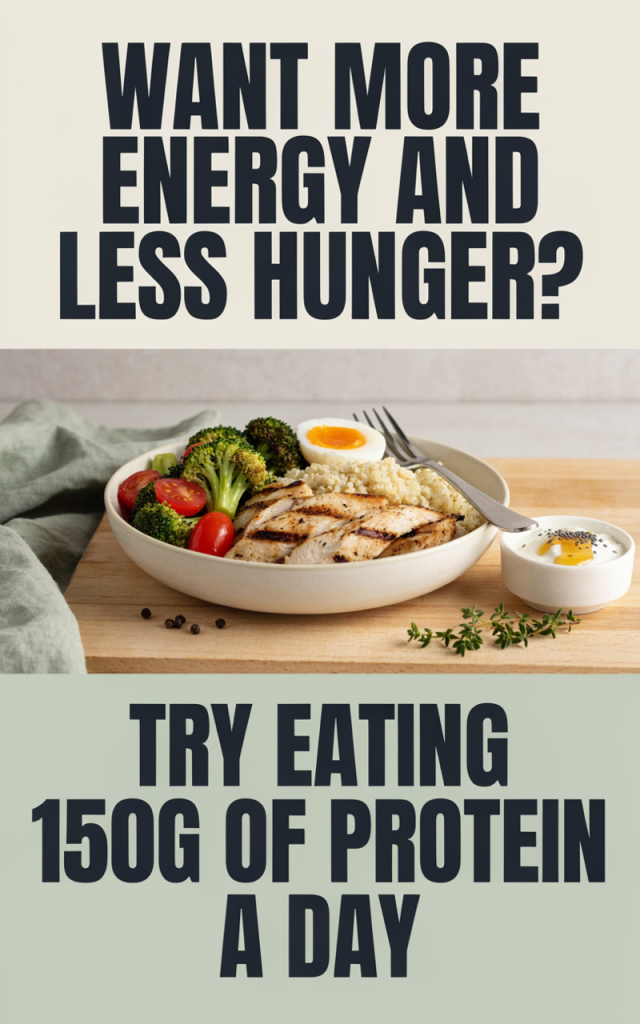
Want More Energy and Less Hunger? Try Eating 150g of Protein a Day
Eating more protein is one of the simplest, most effective changes you can make to feel more energized, reduce hunger, and protect lean muscle mass. If you’re considering a daily target like 150 grams of protein, this guide breaks down the science, the practical strategies, and realistic meal ideas and recipes to help you hit that goal consistently. Whether you’re an active person, trying to lose weight, or simply craving fewer energy dips and less snacking, this post is for you.
Why 150 grams? Is that right for me?
The official minimum recommended intake for most adults is about 0.8 g/kg of body weight — but that number is a baseline to prevent deficiency, not an optimal target for energy, appetite control, or preserving muscle. Many health professionals recommend higher protein intakes for active people, older adults, and those aiming to lose fat or maintain muscle mass: commonly 1.2–2.0 g/kg body weight.
- For someone weighing 75 kg (165 lb), 150 g/day is 2.0 g/kg — a common target for resistance-trained adults.
- For someone heavier, 150 g might be about 1.2–1.6 g/kg.
- For someone lighter, 150 g could be quite high.
So 150 g is a useful practical target for many people, but you should adjust based on your weight, activity level, goals, and medical status. If you have kidney disease or other medical conditions, check with your clinician before increasing protein.
How does eating more protein boost energy and reduce hunger?
Here are the key mechanisms:
- Increased satiety: Protein is the most filling macronutrient, which reduces hunger between meals and lowers overall calorie intake in many studies.
- Stable blood sugar: Protein slows carbohydrate absorption and stimulates insulin and glucagon appropriately, helping to avoid mid-afternoon energy crashes.
- Thermic effect: Protein has a higher thermic effect (energy used to digest food), meaning you burn more calories processing protein versus carbs or fats — a small metabolic boost.
- Muscle maintenance and function: Protein helps preserve or build lean muscle. More muscle supports metabolic health and everyday energy (you feel stronger and less fatigued).
- Neurotransmitters: Amino acids are precursors to neurotransmitters (like dopamine and serotonin) involved in alertness and mood.
How to spread 150 g through the day (why distribution matters)
Research suggests there’s a benefit to spreading protein intake fairly evenly across meals — something like 30–50 g per meal — rather than having most in one meal. Aim for:
- 3 meals with 30–50 g of protein each, plus 1–2 protein-rich snacks, OR
- 4–5 moderately high-protein meals/snacks that total 150 g.
Hitting about 30–40 g of protein per meal helps trigger muscle protein synthesis and keeps you satisfied.
High-quality protein: what to choose and why
Prioritize a mix of high-quality proteins that supply all essential amino acids and enough leucine (a key amino acid for muscle protein synthesis). Good sources:
- Animal: lean beef, chicken, turkey, pork, eggs, fish, dairy (Greek yogurt, cottage cheese), whey protein.
- Plant: soy (tofu, tempeh, edamame), seitan, legumes, quinoa, vegan protein powders (pea, rice blends). Combine complementary plant proteins throughout the day.
Now — let’s get practical with meal ideas and recipes that make 150 g achievable, delicious, and sustainable.
Sample day: how a 150 g protein day looks (realistic and tasty)
Below is one complete sample day that totals about 150 g protein. Portions and protein counts are approximate — use nutrition labels or apps to track precisely.
- Breakfast: Protein smoothie — 30 g
- Mid-morning snack: Greek yogurt bowl — 20 g
- Lunch: Chicken & quinoa bowl — 50 g
- Afternoon snack: Tuna salad on whole grain crackers — 25 g
- Dinner: Egg and vegetable scramble — 25 g
Total: ~150 g
Each recipe below includes ingredients and step-by-step instructions so you can make them at home.
Recipes and meal ideas
Protein Smoothie — ~30 g protein per serving
Ingredients:
– 1 scoop (25–30 g) whey or plant-based protein powder (20–24 g protein)
– 1 cup (240 ml) unsweetened almond milk or milk of choice
– 3/4 cup (170 g) plain Greek yogurt (15–20 g protein)
– 1/2 cup frozen berries
– 1 tbsp nut butter (optional — adds healthy fats and flavor)
– 1 handful spinach (optional)
Instructions:
1. Add the almond milk and Greek yogurt to a blender.
2. Add the protein powder, frozen berries, nut butter, and spinach.
3. Blend until smooth and creamy. Add water or ice to reach desired consistency.
4. Taste and adjust (add a little honey or banana if you want more sweetness).
Notes: Swap Greek yogurt portion if you use a larger protein powder scoop. Aim for a total of ~30 g protein.
Greek Yogurt Power Bowl — ~20 g protein per serving
Ingredients:
– 1 cup (245 g) plain nonfat Greek yogurt (18–20 g protein)
– 1 tbsp chia seeds or hemp seeds
– 1/4 cup fresh berries
– 2 tbsp chopped nuts (almonds or walnuts)
– 1 tsp cinnamon or a drizzle of honey (optional)
Instructions:
1. Spoon the Greek yogurt into a bowl.
2. Sprinkle chia or hemp seeds and chopped nuts on top.
3. Add berries and a dash of cinnamon or honey if desired.
4. Stir gently and enjoy.
Notes: Add a scoop of protein powder stirred into the yogurt to boost protein if you need extra.
Chicken & Quinoa Bowl — ~50 g protein per serving
Ingredients:
– 6 oz (about 170 g) cooked chicken breast (approx. 42 g protein)
– 1 cup cooked quinoa (approx. 8 g protein)
– 1 cup mixed greens or roasted vegetables
– 1/2 avocado, sliced
– 1–2 tbsp olive oil + lemon juice/your favorite dressing
– Salt, pepper, and herbs to taste
Instructions:
1. Cook quinoa according to package directions; fluff and set aside.
2. Season chicken breast with salt, pepper, and herbs; grill or pan-sear until fully cooked (internal temp 165°F/74°C).
3. Slice the cooked chicken and combine with quinoa and greens in a bowl.
4. Top with avocado and drizzle with olive oil and lemon juice or dressing.
5. Toss gently and serve warm or at room temperature.
Variations: Swap quinoa for farro or brown rice; swap chicken for salmon or tempeh.
Tuna Salad with Crackers — ~25–30 g protein per serving
Ingredients:
– 1 can (5–6 oz/140–170 g) tuna in water, drained (approx. 25–30 g protein)
– 2 tbsp Greek yogurt or light mayo
– 1 tbsp Dijon mustard
– 1 stalk celery, finely chopped
– 1 tbsp chopped red onion or scallion
– Fresh lemon juice, salt, and pepper to taste
– Whole-grain crackers or lettuce leaves for serving
Instructions:
1. Drain the tuna well and place in a bowl.
2. Add Greek yogurt (or mayo), Dijon mustard, celery, onion, lemon juice, salt, and pepper.
3. Mix until well combined.
4. Scoop onto whole-grain crackers or serve in lettuce cups.
Tip: Add chopped hard-boiled egg for extra protein and creaminess.
Egg & Vegetable Scramble — ~25 g protein per serving
Ingredients:
– 3 large eggs (about 18–21 g protein)
– 1/2 cup (120 g) cottage cheese or 1/4 cup shredded cheese (6–12 g protein depending on type)
– 1 cup mixed vegetables (spinach, bell pepper, mushrooms)
– 1 tsp olive oil or butter
– Salt, pepper, and herbs to taste
Instructions:
1. Heat oil or butter in a nonstick skillet over medium heat.
2. Sauté vegetables until softened.
3. Whisk eggs with cottage cheese or shredded cheese, then pour into the pan.
4. Gently scramble until eggs are cooked but still moist.
5. Season and serve.
Optional: Serve over a slice of whole-grain toast for added carbs and fiber.
Lentil–Tempeh Stew (Vegetarian Protein Boost) — ~25–30 g protein per serving
Ingredients:
– 1 cup cooked lentils (approx. 18 g protein)
– 100 g tempeh, crumbled or cubed (approx. 18–20 g protein)
– 1 small onion, chopped
– 2 cloves garlic, minced
– 1 cup diced tomatoes (canned or fresh)
– 2 cups vegetable broth
– 1 tsp smoked paprika, 1 tsp cumin, salt, pepper
– 1 tbsp olive oil
– Fresh spinach or kale (optional)
Instructions:
1. Heat oil in a pot and sauté onion and garlic until translucent.
2. Add crumbled tempeh and cook 3–4 minutes to brown slightly.
3. Add lentils, diced tomatoes, spices, and vegetable broth.
4. Simmer 15–20 minutes until flavors meld and stew thickens.
5. Stir in spinach or kale until wilted. Adjust seasoning and serve.
Serve with a side of Greek yogurt or a sprinkling of feta for extra protein.
12 Quick High-Protein Snack Ideas (with approximate protein)
These are grab-and-go or assemble-in-minutes options to top up protein between meals.
- Greek yogurt (1 cup) — 18–20 g
- Cottage cheese (1 cup) — 24 g
- Protein shake (1 scoop + water or milk) — 20–30 g
- Hard-boiled eggs (2 eggs) — 12 g
- Tuna packet (3 oz) — 20 g
- Jerky (beef or turkey, 1 oz) — 9–12 g
- Edamame (1 cup) — 17 g
- Roasted chickpeas (1 cup) — 15 g
- Hummus (1/2 cup) + sliced bell pepper — 10 g
- Almonds (1/4 cup) + string cheese — 10–12 g total
- Protein bar (choose one with 15–20 g protein) — varies
- Small turkey roll-ups (3 oz turkey) — 18 g
Use these to bridge meals and reach your 150 g target.
Practical tips to hit 150 g without feeling overwhelmed
- Track for a week: Use an app or food diary to learn typical protein content of favorites.
- Prioritize protein at breakfast: Many people skimp at breakfast; adding 20–30 g here reduces cravings later.
- Keep easy staples on hand: canned tuna, Greek yogurt, cottage cheese, eggs, protein powder, tempeh, and pre-cooked chicken are time-savers.
- Use powders strategically: Whey or plant-based powders fill in gaps — not required, but helpful for convenience.
- Double up on protein at dinners if you exercise late; your body will use those amino acids for recovery.
- Combine plant proteins thoughtfully: beans + whole grains or legumes + seeds increase overall amino acid profile.
- Be mindful of calories: Increasing protein often increases total calories — if weight loss is the goal, adjust portion sizes of fats and carbs accordingly.
Who should avoid high-protein diets or consult a clinician?
Most healthy adults tolerate 150 g of protein daily without issues. However, consult your healthcare provider if you have:
- Chronic kidney disease
- Advanced liver disease
- Specific metabolic disorders
- Pregnancy or breastfeeding (seek individualized guidance)
If you have any new or worsening symptoms after increasing protein intake (unusual fatigue, swelling, or other concerns), check with your clinician.
How to measure progress (energy and hunger metrics)
Evaluate how the higher protein intake affects you over 2–4 weeks:
- Energy: track daytime energy levels and mid-day crashes (use a simple 1–5 scale daily).
- Hunger: note hourly hunger scores or number of snacks consumed.
- Sleep and mood: monitor for changes — better protein balance can improve sleep quality over time.
- Body composition: use strength, measurements, or body composition tools rather than only the scale.
Small behavior-based changes (fewer snack episodes, fewer late-night cravings, steadier workouts) are often the clearest wins.
Common barriers and how to overcome them
- Time to cook: Prep protein in batches (bake chicken, cook lentils, boil eggs) so meals assemble quickly.
- Cost concerns: Buy frozen fish and bulk legumes; canned fish and eggs are budget-friendly high-protein staples.
- Taste fatigue: Rotate flavors, use herbs/spices, and try new recipes to keep meals interesting.
- Digestive issues: Increase fiber slowly when adding legumes and use digestive aids (beano, soaking legumes) as needed.
Final tips for long-term success
- Make gradual changes: If you currently eat 70–90 g protein/day, increase in steps of 10–20 g to allow your appetite and digestion to adapt.
- Keep variety: Mix animal and plant proteins for nutrition and environmental balance.
- Pair protein with veggies and healthy fats: This combination improves satiety and nutrient intake.
- Celebrate non-scale wins: more consistent energy, fewer cravings, stronger workouts, and improved mood are meaningful outcomes.
Conclusion
Aiming for 150 grams of protein a day can be a practical, effective strategy to boost energy, reduce hunger, and support muscle and metabolic health — provided it fits your body size, goals, and medical status. Spread your protein across meals, favor high-quality sources, and use simple, delicious recipes and snack ideas to make it sustainable. Try the sample day and recipes in this post, adapt portions to your needs, and monitor how your energy and appetite respond over several weeks. If you’re consistent, you’ll likely notice steadier energy, fewer cravings, and a stronger, more resilient body.
If you want a personalized one-week meal plan or a grocery list tailored to vegetarian or vegan preferences to hit 150 g/day, tell me your dietary preferences and typical schedule — I’ll create it for you.