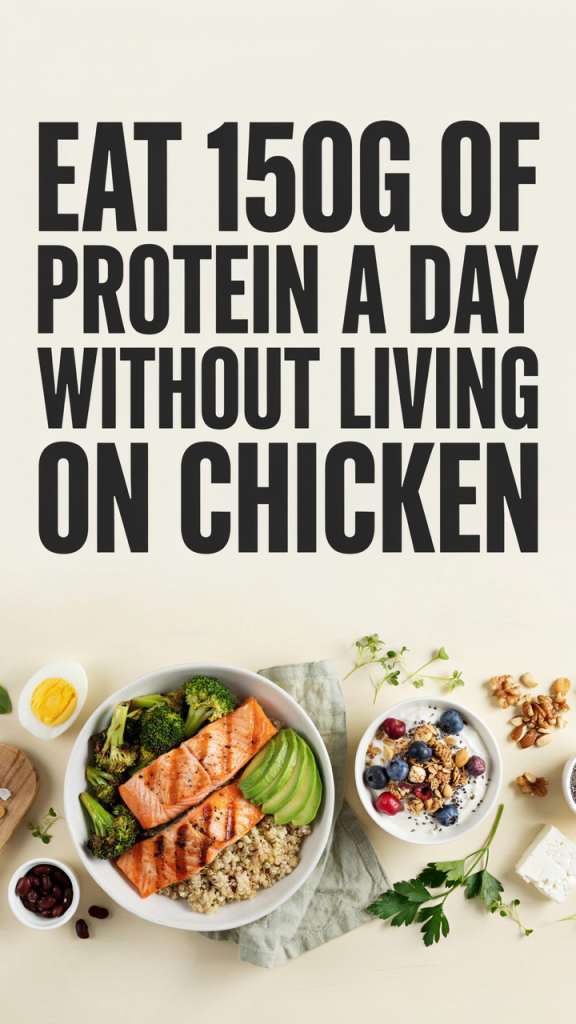
Eat 150g of Protein a Day Without Living on Chicken
Getting 150 grams of protein a day can feel daunting — especially if you picture eating endless chicken breasts. Good news: you don’t have to live on chicken to hit that target. With strategic choices, smart portioning, and a few tasty recipes, you can reach 150g of protein a day with variety, flavor, and satisfaction. This guide gives practical approaches, food lists, meal templates, and seven easy recipes that make high-protein eating enjoyable and sustainable.
Why 150g of Protein?
Hitting 150 grams of protein daily is a common target for people who are:
– Trying to build or maintain muscle
– Recovering from injury or intense training
– Managing appetite and body composition
– Following physician or coach recommendations based on body weight and activity
150g is roughly 1.2–2.0 g/kg for many active adults, depending on weight and goals. The key is distribution across the day and including complete proteins (or smart combinations of plant proteins).
How to Think About Protein (Quick Principles)
- Aim for 20–40 g of protein per meal across 3–5 eating occasions.
- Combine animal and plant proteins for variety and micronutrients.
- Include a protein-rich snack or two to keep totals up without huge meals.
- Use dairy, eggs, seafood, beef, pork, turkey, legumes, tofu, tempeh, seitan, and protein powders — not just chicken.
High-Protein Food Sources (with approximate protein per common serving)
- Whey protein (1 scoop): ~20–25 g
- Greek yogurt, nonfat (1 cup / 240 g): ~18–22 g
- Cottage cheese (1 cup / 226 g): ~24–28 g
- Eggs (1 large): ~6 g
- Salmon (4 oz / 113 g cooked): ~22–25 g
- Tuna, canned (3 oz): ~20–22 g
- Lean beef (4 oz / 113 g): ~24–26 g
- Pork loin (4 oz): ~24–26 g
- Ground turkey (4 oz): ~28–30 g
- Tempeh (100 g): ~18–20 g
- Tofu, firm (100 g): ~8–12 g
- Seitan (100 g): ~25 g
- Cooked lentils (1 cup): ~17–18 g
- Cooked quinoa (1 cup): ~8 g
- Edamame (1 cup): ~16–18 g
- Black beans (1 cup): ~15 g
- Almonds (1 oz / 28 g): ~6 g
(Values are approximate — check package labels for exact amounts.)
How to Hit 150g Without Chicken: A Strategy
- Build each meal around a protein anchor (fish, beef, pork, eggs, tofu, tempeh, dairy, or a protein shake).
- Add protein-boosting sides: lentils, quinoa, edamame, cottage cheese, Greek yogurt.
- Use protein-rich snacks: hard-boiled eggs, Greek yogurt, cottage cheese, protein bars or shakes, edamame.
- Use one fortified protein powder shake per day if you need to close the gap.
- Spread intake evenly (e.g., 35–40 g breakfast, 30–40 g lunch, 20–30 g snacks, 40–50 g dinner).
Meal Templates to Reach 150g (examples)
- Template A (3 meals + 2 snacks)
- Breakfast: Protein smoothie (whey + Greek yogurt) — ~40–50 g
- Lunch: Salmon + lentil salad — ~35–40 g
- Snack: Cottage cheese + berries — ~25–28 g
- Snack 2: Hard-boiled eggs (2) — ~12 g
- Dinner: Steak or pork chop + edamame — ~35–40 g
- Template B (4 meals)
- Breakfast: Omelette with smoked salmon — ~30–35 g
- Lunch: Tempeh quinoa bowl — ~30 g
- Afternoon meal: Lentil soup + turkey slices — ~30 g
- Dinner: Seared tuna + vegetables + quinoa — ~55–60 g
Adjust portion sizes to match your total caloric needs. Below are explicitly listed meal ideas and recipes you can use. Each recipe includes ingredients and step-by-step instructions.
Recipes & Meal Ideas (explicit list)
- Protein-Packed Berry & Greens Smoothie
- Smoked Salmon & Egg Scramble
- Greek Yogurt Parfait with Seeds and Nuts
- Tempeh Quinoa Power Bowl
- Turkey & Black Bean Chili
- Seared Salmon with Warm Lentil Salad
- Cottage Cheese & Berry Protein Bowl
Read the details for each recipe below — every recipe includes ingredients and numbered instructions.
Protein-Packed Berry & Greens Smoothie
Approximate protein: 40–45 g (depending on powder)
- Ingredients
- 1 scoop whey or plant-based protein powder (~20–25 g protein)
- 1 cup (240 g) nonfat Greek yogurt (~18–22 g protein)
- 1/2 cup frozen mixed berries
- 1 handful baby spinach
- 1 tbsp ground flaxseed or chia (optional)
- 1 cup unsweetened almond milk or water
- Ice as needed
- Instructions
- Add liquid and yogurt to a high-speed blender.
- Add the protein powder, berries, spinach, and flaxseed.
- Blend until smooth, adding ice to reach desired thickness.
- Taste and adjust sweetness with a teaspoon of honey or a few drops of vanilla if needed. Serve immediately.
Tip: Swap whey for a plant blend if you prefer dairy-free; add an extra spoon of nut butter (1 tbsp = ~4 g protein) to increase protein slightly.
Smoked Salmon & Egg Scramble
Approximate protein: 30–35 g
- Ingredients
- 3 large eggs (~18 g protein)
- 2 oz smoked salmon (~10–12 g protein)
- 1/2 cup chopped spinach
- 1 tbsp olive oil or butter
- Salt and pepper to taste
- Optional: chopped chives, lemon wedge
- Instructions
- Crack eggs into a bowl, whisk with a pinch of salt and pepper.
- Warm a non-stick skillet over medium heat and add oil or butter.
- Sauté spinach for 30–60 seconds until wilted.
- Pour eggs into the pan and gently scramble, folding until just set.
- Fold in smoked salmon off-heat for 30 seconds to warm without overcooking.
- Serve immediately with a squeeze of lemon and chives.
This makes a fast, savory breakfast with omega-3s and high-quality protein.
Greek Yogurt Parfait with Seeds and Nuts
Approximate protein: 25–30 g
- Ingredients
- 1 cup nonfat Greek yogurt (~18–22 g protein)
- 2 tbsp sliced almonds (~4 g protein)
- 1 tbsp chia or ground flax (~2 g protein)
- 1/2 cup mixed berries
- 1 tsp honey or maple (optional)
- Instructions
- Spoon Greek yogurt into a bowl or jar.
- Layer with berries and sprinkle chia/flax and almonds on top.
- Drizzle with honey if desired.
- Stir and enjoy, or pack for a grab-and-go snack.
Add a scoop of protein powder stirred into the yogurt for an extra 20+ g if you need more.
Tempeh Quinoa Power Bowl
Approximate protein: 30–35 g
- Ingredients
- 150 g tempeh (~27 g protein per 150 g; adjust as needed)
- 1/2 cup cooked quinoa (~4 g protein)
- 1 cup steamed broccoli or mixed vegetables
- 1 tbsp soy sauce or tamari
- 1 tsp sesame oil
- 1 tsp honey or maple (optional)
- 1 tsp minced garlic
- Optional: sliced scallions, sesame seeds
- Instructions
- Crumble tempeh into bite-sized pieces.
- Heat sesame oil in a skillet, add garlic and tempeh, and sauté 5–7 minutes until golden.
- Add soy sauce and a touch of honey, cook 1–2 more minutes to glaze.
- Warm quinoa and steam vegetables while tempeh cooks.
- Assemble bowl with quinoa, tempeh, and vegetables. Top with scallions and sesame seeds.
Tempeh is a great plant-based protein with a nutty flavor and meaty texture.
Turkey & Black Bean Chili
Approximate protein per serving (1 cup): ~28–32 g (recipe yields ~4 servings)
- Ingredients
- 1 lb (450 g) lean ground turkey (~100–115 g protein across recipe)
- 1 can (15 oz) black beans, drained and rinsed (~14–15 g protein)
- 1 can (14 oz) diced tomatoes
- 1 small onion, diced
- 2 cloves garlic, minced
- 1 tbsp chili powder
- 1 tsp cumin
- 1 cup low-sodium chicken or vegetable broth
- 1 tbsp olive oil
- Salt and pepper to taste
- Optional toppings: Greek yogurt, shredded cheese, chopped cilantro
- Instructions
- Heat oil in a large pot over medium heat. Add onion and garlic; sauté 3–4 minutes until soft.
- Add ground turkey, breaking it up with a spoon, and cook until browned, about 6–8 minutes.
- Stir in chili powder, cumin, salt, and pepper.
- Add black beans, diced tomatoes, and broth. Bring to a simmer.
- Reduce heat and simmer 20–25 minutes to meld flavors. Adjust seasoning.
- Serve topped with a dollop of Greek yogurt or shredded cheese if desired.
This chili freezes well and packs protein from both turkey and beans.
Seared Salmon with Warm Lentil Salad
Approximate protein: 40–45 g
- Ingredients
- 5–6 oz (140–170 g) salmon fillet (~30–35 g protein)
- 1/2 cup cooked green or brown lentils (~9 g protein)
- 1 cup baby spinach or arugula
- 1 tbsp olive oil
- 1 tsp Dijon mustard
- 1 tbsp red wine vinegar or lemon juice
- Salt, pepper, optional chopped herbs
- Instructions
- Warm lentils in a small saucepan with a pinch of salt; drain any excess liquid and keep warm.
- Whisk olive oil, mustard, and vinegar in a bowl; toss with warm lentils and greens.
- Heat a non-stick skillet over medium-high. Season salmon with salt and pepper.
- Sear salmon skin-side down 4–5 minutes, flip and cook another 2–3 minutes until cooked through.
- Plate salmon over the lentil salad and garnish with herbs.
This meal delivers a complete protein punch with healthy fats and fiber.
Cottage Cheese & Berry Protein Bowl
Approximate protein: 28–30 g
- Ingredients
- 1 cup full-fat or low-fat cottage cheese (~24–28 g protein)
- 1/2 cup fresh berries
- 1 tbsp chopped walnuts or almonds (~2 g protein)
- 1 tsp honey or cinnamon (optional)
- Instructions
- Scoop cottage cheese into a bowl.
- Top with berries and nuts.
- Drizzle with honey or sprinkle cinnamon if desired. Mix and eat.
A quick snack packed with casein protein — ideal before bed for slow-release amino acids overnight.
Sample Full Day (Practical Example Hitting ~150g)
Below is a sample day using recipes above. Protein values are approximate.
- Breakfast: Protein-Packed Berry & Greens Smoothie — 45 g
- Mid-morning snack: Cottage Cheese & Berry Protein Bowl (1 cup cottage cheese) — 28 g
- Lunch: Seared Salmon with Warm Lentil Salad — 40 g
- Afternoon snack: Hard-boiled eggs (2) — 12 g
- Dinner: Tempeh Quinoa Power Bowl (smaller tempeh portion) — 25 g
- Total: ~150 g
Swap any meal with turkey chili, smoked salmon scramble, or Greek yogurt parfait to keep variety high. You can also add an evening protein shake if you fall short.
Practical Tips to Make It Work
- Plan and batch-cook protein sources (bake salmon, roast pork tenderloin, make a pot of lentils or chili).
- Keep quick high-protein snacks accessible: Greek yogurt cups, cottage cheese packs, hard-boiled eggs, canned tuna, jerky, edamame.
- Use one protein shake per day if needed — it’s convenient and efficient.
- Pay attention to satiety: proteins plus fiber (vegetables, legumes, whole grains) keep you full.
- Rotate proteins weekly to avoid palate fatigue.
- Track for a week to learn which portion sizes match your energy needs.
Shopping List (High-Protein Staples)
- Greek yogurt, cottage cheese
- Eggs
- Salmon, tuna (canned), lean beef, pork, turkey
- Tempeh, tofu, seitan (if using)
- Protein powder (whey or plant blend)
- Lentils, black beans, quinoa
- Edamame (frozen)
- Nuts and seeds
- Spinach, broccoli, mixed vegetables
- Olive oil, basic seasonings
Troubleshooting Common Concerns
- Feeling too full: distribute protein across more meals or switch to leaner options (fish, turkey).
- Boredom: rotate recipes and try different spices and marinades.
- Budget: beans, lentils, canned tuna, eggs, and bulk protein powder can be cost-effective.
- Vegetarians: combine dairy, eggs, legumes, tempeh, seitan, and protein powders to hit targets. Aim to include complete proteins or combine complementary sources.
Conclusion
Hitting 150 grams of protein a day doesn’t require endless chicken breasts. With a mix of dairy, seafood, red meat, turkey, eggs, legumes, tempeh, and protein powders you can build satisfying, nutrient-dense meals that are delicious and varied. Use the meal templates and recipes above as building blocks, plan ahead, and rotate your favorites to stay consistent. Whether your goal is muscle gain, recovery, or satiety, you can reach 150 g per day in a way that fits your taste, budget, and lifestyle — and enjoy doing it.
Ready to try a week of non-chicken high-protein meals? Start by picking three recipes from this post and scheduling them into your week. Small, consistent changes add up fast.