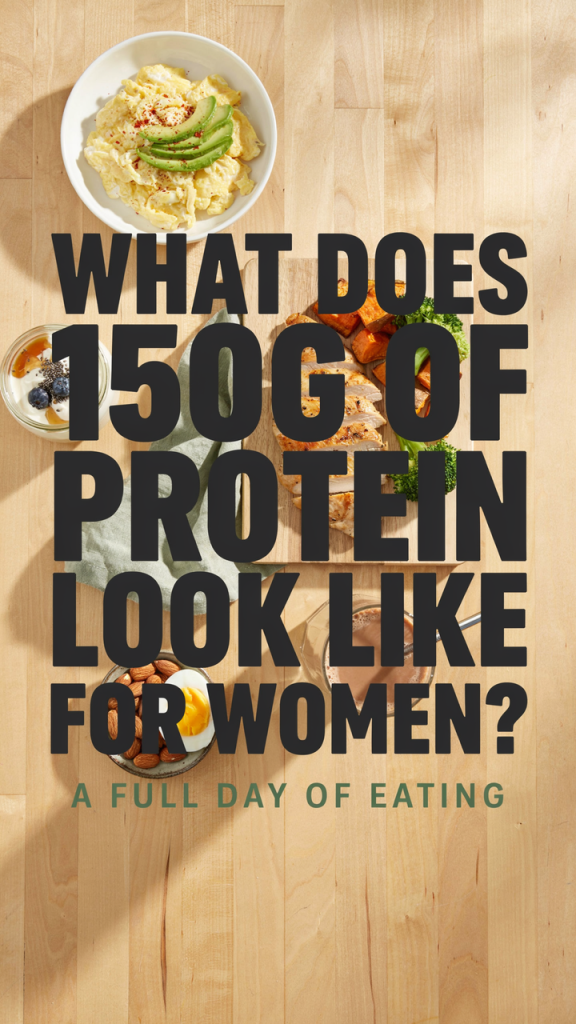
What Does 150g of Protein Look Like for Women? A Full Day of Eating
Eating 150 grams of protein in a day may sound like a lot — especially if you’re used to the typical “46 grams per day” guideline often cited for women. But for many active women, people trying to build or maintain muscle, and those aiming to lose fat while preserving lean mass, 150g of protein can be an appropriate and realistic target. In this article you’ll get an evidence-informed explanation of why someone might aim for 150g, how to pace that intake across a day, and a concrete full day of eating (with recipes) that totals roughly 150g of protein. You’ll also get a vegetarian alternative, practical tips, and easy swaps so you can adapt the plan to your tastes and goals.
Contents
– Why some women aim for 150g of protein
– How to spread protein across the day
– Sample Full Day of Eating — Non‑Vegetarian (≈150g protein)
– Breakfast recipe
– Lunch recipe
– Protein snack/shake recipe
– Dinner recipe
– Vegetarian Full Day of Eating — alternative (≈150g protein)
– Vegetarian breakfast recipe
– Vegetarian lunch recipe
– Vegetarian snack recipe
– Vegetarian dinner recipe
– Practical tips to hit 150g without feeling overwhelmed
– High-protein swaps and snack ideas
– FAQ
– Conclusion
Why some women aim for 150g of protein
Protein needs vary by body weight, activity level, goals, and life stage. A commonly used range for active adults or those pursuing muscle growth is 1.6–2.2 g/kg body weight (about 0.7–1.0 g/lb). For a woman weighing 68 kg (150 lb), that range is roughly 109–150 g/day. Athletes, people cutting calories, those in heavy strength training phases, or anyone prioritizing satiety and muscle maintenance may choose targets around 150 grams.
Benefits of a higher protein intake:
– Supports muscle protein synthesis and strength gains when combined with resistance training.
– Preserves lean mass during weight loss.
– Increases satiety and helps control appetite.
– Helps stabilize blood glucose when meals include both protein and carbs.
Note: 150g is not the right target for everyone. If you have kidney disease or other medical concerns, check with your healthcare provider first.
How to spread protein across the day
Distributing protein evenly across meals helps stimulate muscle protein synthesis multiple times per day and keeps you feeling satisfied. A practical distribution is:
– Breakfast: ~30–40 g
– Lunch: ~30–45 g
– Snack(s): ~20–30 g
– Dinner: ~30–50 g
Below is a precise, easy-to-follow full day that totals roughly 150 grams of protein. I list protein amounts for each ingredient so you can see what adds up.
Sample Full Day of Eating — Non‑Vegetarian (≈150g total)
Daily total: approximately 150 g protein.
Summary:
– Breakfast: Spinach & Egg White Omelet + Greek yogurt + toast — ~38 g
– Lunch: Grilled Chicken & Quinoa Salad — ~39 g
– Snack: Whey Protein Smoothie — ~28 g
– Dinner: Baked Salmon + Lentils — ~45 g
Total ≈ 150 g
Each recipe below includes ingredients (bulleted) and instructions (numbered).
Breakfast — Spinach & Egg White Omelet with Greek Yogurt and Toast (≈38 g protein)
Ingredients
– 2 large whole eggs (12 g protein)
– 3 large egg whites (≈10.8 g protein)
– 1 cup fresh spinach (negligible protein)
– 1 teaspoon olive oil or cooking spray
– Salt and pepper to taste
– 1/2 cup plain nonfat Greek yogurt (≈11 g protein)
– 1 slice whole‑grain bread, toasted (≈4 g protein)
Instructions
1. Whisk the 2 whole eggs and 3 egg whites together with a pinch of salt and pepper.
2. Heat a nonstick skillet over medium heat and add the olive oil or spray.
3. Sauté the spinach for 30–60 seconds until wilted.
4. Pour the egg mixture into the skillet and cook, stirring gently, then fold into an omelet once set.
5. Plate the omelet and serve with the 1/2 cup Greek yogurt on the side and the toasted whole‑grain bread.
6. Eat immediately. (Protein math: eggs ≈22.8 g, Greek yogurt ≈11 g, toast ≈4 g → total ≈38 g)
Notes: You can add mushrooms, tomatoes, or a sprinkle of low‑fat cheese if desired — adjust protein accordingly.
Lunch — Grilled Chicken & Quinoa Salad (≈39 g protein)
Ingredients
– 4 oz cooked (about 115 g) skinless chicken breast (≈35 g protein)
– 1/2 cup cooked quinoa (≈4 g protein)
– 1 cup mixed salad greens and chopped veggies (cucumber, bell pepper, etc.)
– 1 tablespoon olive oil + lemon juice or your favorite light vinaigrette
– Salt, pepper, and optional herbs (parsley, basil)
Instructions
1. If not pre-cooked, grill, pan-sear, or bake a chicken breast and slice into strips. Season with salt, pepper, and herbs.
2. Cook quinoa according to package instructions (1/2 cup cooked yield is typically about 1/4 cup dry).
3. Combine salad greens, chopped veggies, and quinoa in a bowl.
4. Top with the sliced chicken and drizzle with olive oil and lemon juice or vinaigrette.
5. Toss gently and serve. (Protein math: chicken ≈35 g, quinoa ≈4 g → total ≈39 g)
Tip: Swap chicken for turkey breast (similar protein) or use 4 oz lean pork if you prefer.
Snack — Whey Protein Smoothie (≈28 g protein)
Ingredients
– 1 scoop whey protein powder (≈20 g protein — check your brand)
– 1 cup skim milk or fortified plant milk (dairy skim ≈8 g protein; soy milk provides ~7–8 g depending on brand)
– 1/2 cup frozen berries or 1 banana (optional, for flavor)
– 1 handful ice
Instructions
1. Add the milk, whey protein powder, fruit (if using), and ice to a blender.
2. Blend until smooth, adjusting thickness with more milk or water if needed.
3. Pour into a glass and enjoy. (Protein math: whey ≈20 g + milk ≈8 g → ≈28 g)
Make it portable in a shaker bottle if you’re on the go.
Dinner — Baked Salmon with Lentils and Veggies (≈45 g protein)
Ingredients
– 5 oz cooked salmon fillet (≈36 g protein)
– 1/2 cup cooked lentils (≈9 g protein)
– 1 cup roasted or steamed vegetables (broccoli, Brussels sprouts, asparagus)
– 1 teaspoon olive oil for roasting, salt, pepper, lemon for seasoning
Instructions
1. Preheat oven to 400°F (200°C). Place salmon on a baking sheet, season with salt, pepper, and lemon, and bake for about 10–14 minutes or until cooked through.
2. While salmon cooks, warm cooked lentils in a small saucepan with a splash of water or broth, seasoning to taste.
3. Roast or steam vegetables and toss with a teaspoon of olive oil, salt, and pepper.
4. Plate salmon alongside the lentils and vegetables. (Protein math: salmon ≈36 g, lentils ≈9 g → ≈45 g)
Notes: Cooked protein values vary slightly by cut and cooking method — these are approximate and realistic values to demonstrate portion sizes.
Vegetarian Full Day of Eating (≈150g total)
If you prefer a vegetarian approach (ovo‑lacto), you can still hit 150g by combining dairy, eggs, legumes, and concentrated plant proteins. Summary:
– Breakfast: High‑Protein Greek Yogurt & Oat Bowl with Whey — ~38 g
– Lunch: Tofu, Edamame & Quinoa Bowl — ~40 g
– Snack: Cottage Cheese + Almonds — ~22 g
– Dinner: Lentil & Tempeh Stir‑Fry — ~50 g
Total ≈ 150 g
Below are recipes with ingredient lists and instructions.
Vegetarian Breakfast — Greek Yogurt & Oat Protein Bowl (≈38 g protein)
Ingredients
– 1 cup plain nonfat Greek yogurt (≈22 g protein)
– 1/2 cup cooked oats (or 1/4 cup dry rolled oats cooked) (≈3 g protein)
– 1 scoop whey protein powder or plant-based protein (≈15–20 g protein; use 15 g here)
– 1/2 cup berries or sliced banana (optional)
– 1 tablespoon chia seeds (≈2 g protein — optional)
Instructions
1. Stir the protein powder into the Greek yogurt until smooth (add a splash of water or milk if needed).
2. Add cooked oats and mix to combine.
3. Top with berries and chia seeds.
4. Serve chilled or at room temperature. (Protein math: yogurt ≈22 g + protein scoop ≈15 g + oats ≈3 g → ~40 g)
Note: If using plant-based protein powder, check label for protein content per scoop.
Vegetarian Lunch — Tofu & Edamame Quinoa Bowl (≈40 g protein)
Ingredients
– 6 oz firm tofu, pressed and cubed (≈15 g protein)
– 1/2 cup cooked quinoa (≈4 g protein)
– 1/2 cup shelled edamame (≈8.5 g protein)
– 1/4 cup hemp seeds (3 tablespoons ≈9 g protein) or 1 oz almonds (≈6 g)
– Mixed greens and veggies, dressing as desired
Instructions
1. Press tofu to remove excess water, then pan-sear or bake until golden and slightly crispy.
2. Warm the edamame and quinoa.
3. Assemble the bowl with quinoa, edamame, tofu, hemp seeds (or almonds), and fresh veggies.
4. Drizzle with dressing and serve. (Protein math: tofu ≈15 g + edamame ≈8.5 g + quinoa ≈4 g + hemp seeds ≈9 g → ~36.5 g; increase tofu to 8 oz or add a bit more hemp seeds to reach ~40 g)
Vegetarian Snack — Cottage Cheese + Almonds (≈22 g protein)
Ingredients
– 1 cup low‑fat cottage cheese (≈24 g protein — adjust to 1/2 cup if you prefer ~12 g)
– 1 tablespoon sliced almonds (≈1.5 g protein) or 1/4 cup almonds (6 g) depending on calorie preference
Instructions
1. Scoop cottage cheese into a bowl and top with almonds.
2. Add cinnamon, fruit, or a drizzle of honey if desired.
3. Eat chilled. (Protein math: 1 cup cottage cheese ≈24 g + almonds ≈2–6 g → ~26–30 g, adjust portion to hit target; use 3/4 cup cottage cheese for ≈18 g if you need balance)
Vegetarian Dinner — Lentil & Tempeh Stir‑Fry (≈50 g protein)
Ingredients
– 6 oz tempeh, crumbled or cubed (≈30 g protein for 6 oz; tempeh is ~5 g per ounce)
– 1 cup cooked green or brown lentils (≈18 g protein)
– 2 cups mixed stir-fry vegetables
– 1 tablespoon soy sauce, garlic, ginger, and 1 teaspoon oil
Instructions
1. Press and cube tempeh if desired. Sauté in a skillet with oil until golden brown.
2. Add garlic and ginger and cook 30 seconds.
3. Add vegetables and stir-fry until tender-crisp.
4. Stir in cooked lentils and soy sauce; heat through.
5. Serve hot. (Protein math: tempeh ≈30 g + lentils ≈18 g → ≈48 g; adjust tempeh portion slightly to reach ≈50 g)
Notes: You can achieve 150g total by small adjustments (slightly larger tempeh portion or adding a side of Greek yogurt).
Practical tips to hit 150g without feeling overwhelmed
- Use concentrated protein sources: a scoop of protein powder (≈20 g), cottage cheese (12–24 g per cup), Greek yogurt (11–22 g per cup), and lean meats (3–4 oz servings) make hitting totals easier.
- Prioritize protein at each meal: aim for 25–40 g per main meal and 15–30 g for snacks.
- Plan portions: portion cooked chicken, salmon, tofu, or tempeh by weight (4–6 oz cooked portions are common to hit 25–40 g).
- Combine plant proteins thoughtfully: legumes + grains or hemp seeds + yogurt help reach higher protein amounts.
- Use simple snacks: cottage cheese, string cheese, edamame, Greek yogurt, protein shakes, and beef jerky are compact and portable.
- Track for a few days: use a nutrition app to see how your regular meals stack up and make small swaps to increase protein.
- Hydrate and include fiber: higher protein meals can be more satiating; maintain fiber and water intake for digestion.
High‑protein swaps and snack ideas
Quick swaps to increase protein without huge volume:
– Add 1 scoop protein powder to yogurt, oatmeal, or smoothies (+15–25 g).
– Swap regular yogurt for Greek yogurt (+10–15 g per cup).
– Add 1/2 cup cottage cheese as a side (+12 g).
– Use edamame or roasted chickpeas for snacks (+8–12 g per 1/2 cup).
– Choose lean meats (4 oz cooked chicken ≈35 g) over fattier cuts.
Snack ideas (portable & protein‑rich)
– Greek yogurt + berries (15–22 g)
– Cottage cheese + pineapple (12–24 g)
– 1 protein shake with milk (≈25–30 g)
– Handful of roasted edamame (8–12 g)
– 1 string cheese + whole grain crackers (7–10 g)
– Hard-boiled eggs (6 g each)
– Beef jerky or turkey jerky (10–15 g per serving)
– Protein bar (10–20 g depending on brand)
Frequently Asked Questions
Q: Is 150g safe for women?
A: For healthy individuals with normal kidney function, short- and long-term studies generally show higher protein intakes are safe and helpful for body composition goals. If you have kidney disease or other medical conditions, consult your clinician.
Q: Will eating this much protein make me bulk up?
A: Protein itself does not make you bulk up — progressive resistance training combined with adequate calories promotes muscle growth. Protein supports recovery and muscle maintenance, but large calorie surpluses and specific training are required to “bulk” significantly.
Q: What if I don’t like animal protein?
A: You can reach 150g as a vegetarian by using dairy, eggs, legumes, tofu/tempeh, seitan, and protein powders. Vegan diets require slightly more planning but it’s achievable with concentrated plant proteins (seitan, tempeh, textured soy protein) and larger portion sizes of legumes and grains.
Conclusion
Hitting 150 grams of protein as a woman is doable and often desirable for strength training, body recomposition, or hunger control. The key is planning and using concentrated protein sources across meals. The sample day above — eggs and Greek yogurt at breakfast, chicken and quinoa at lunch, a protein smoothie snack, and a salmon/lentil dinner — demonstrates realistic portion sizes and a straightforward path to about 150 grams. If you prefer a vegetarian approach, the tofu/tempeh, lentil, Greek yogurt, and cottage cheese combinations show you can get there without meat.
Use these recipes as templates: adjust portion sizes and swap protein sources to match your tastes and energy needs. With simple planning, 150g can fit into a flexible, satisfying day of eating that supports your performance, body composition, and wellbeing. If you’d like, tell me your typical grocery list or favorite protein sources and I’ll customize a one‑day or week‑long meal plan that totals 150g to match your preferences and calorie target.