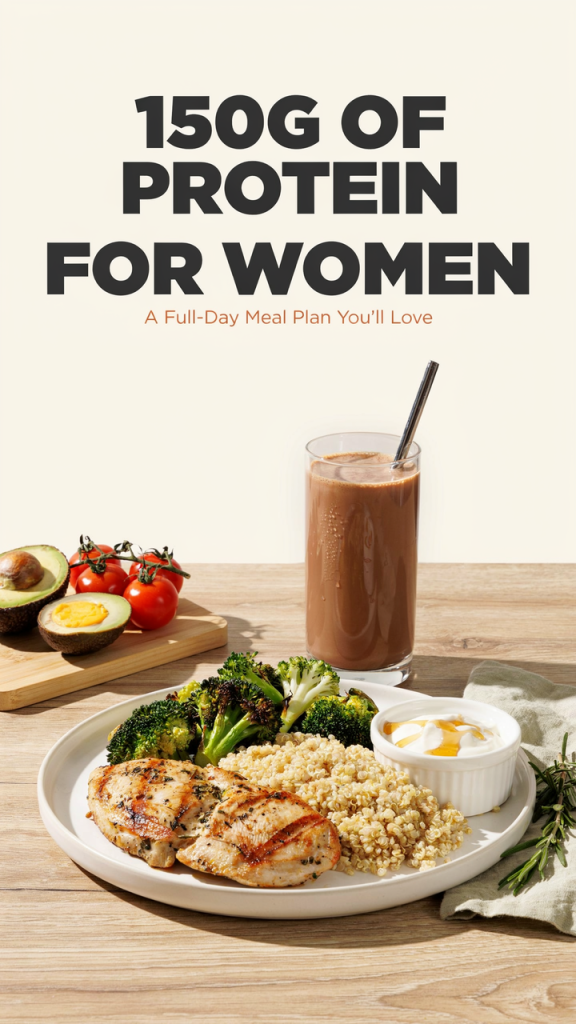
150g of Protein for Women: A Full-Day Meal Plan You’ll Love
Getting enough protein is a cornerstone of building and maintaining lean muscle, supporting recovery, stabilizing blood sugar, and keeping you full and energized throughout the day. For many active women—or anyone focused on fat loss, muscle tone, or athletic performance—150 grams of protein per day is a realistic target that supports those goals without sacrificing flavor or variety.
This article delivers a complete, delicious, and realistic full-day meal plan that totals approximately 150 grams of protein. Each meal includes a clear recipe with ingredient lists and step-by-step instructions. You’ll also get swaps, timing tips, and notes to make this plan work for your schedule and dietary preferences. Let’s dig in.
Who is this meal plan for?
- Women who aim for roughly 150 g of protein per day (suitable for many active women, strength training, or higher metabolic needs).
- Those who want simple, flavorful meals that are practical for weekdays.
- Anyone who appreciates a balance of whole-food protein sources (eggs, dairy, fish, poultry, legumes) with veggies and smart carbs.
Note: If you have specific medical needs, food allergies, or unique macro targets, treat this as a template and consult a registered dietitian or healthcare provider.
Why 150 grams of protein?
- Supports muscle repair and growth when strength training.
- Promotes satiety, which can help with weight control.
- Helps preserve lean mass during calorie deficits.
- Meets higher needs for women who are active, postpartum, perimenopausal, or recovering from injury.
Now—on to the meal plan. Each meal lists approximate protein amounts so you can see how the day adds up.
Daily protein overview (approximate)
- Breakfast — 45 g
- Morning snack — 15 g
- Lunch — 40 g
- Afternoon snack — 20 g
- Dinner — 30 g
Total ≈ 150 g protein
(Protein values are approximate and rounded for simplicity. Use a food scale and labels for exact counts.)
Full-Day Meal Plan (recipes included)
Breakfast — Smoked Salmon & Egg White Omelette with Cottage Cheese (≈45 g protein)
A savory, high-protein breakfast that’s quick to make and keeps you satisfied until lunch.
Ingredients
– 4 large egg whites (about 120 mL)
– 1 large whole egg
– 2 oz (about 56 g) smoked salmon, sliced
– 1/2 cup low-fat cottage cheese (about 120 g)
– 1 cup baby spinach (optional)
– 1 teaspoon olive oil or cooking spray
– Salt and pepper to taste
– Fresh dill or chives for garnish (optional)
– 1 slice whole-grain toast (optional; ~4 g protein included in total)
Instructions
1. Whisk the egg whites and whole egg in a small bowl; season with a little salt and pepper.
2. Heat a nonstick skillet over medium heat and add the olive oil or spray. Sauté the spinach for 30–60 seconds until wilted (if using).
3. Pour the eggs into the skillet, gently tilting to create an even layer. Cook until the edges set, then reduce heat to low.
4. Add the smoked salmon pieces on one half of the omelette. Fold the other half over and cook 30–60 seconds more until fully set.
5. Plate the omelette and serve with 1/2 cup cottage cheese on the side. Top with dill or chives and serve toast if desired.
Protein notes: egg whites + whole egg ≈ 20 g; 2 oz smoked salmon ≈ 11 g; 1/2 cup cottage cheese ≈ 14 g. Total ≈ 45 g.
Tips: Prep egg whites in a jar the night before for faster morning cooking. Swap smoked salmon for lean turkey or grilled tofu for different flavors.
Morning Snack — Greek Yogurt + Berries (≈15 g protein)
A creamy, protein-forward snack that travels well and fuels mid-morning energy.
Ingredients
– 3/4 cup plain nonfat Greek yogurt (about 170 g)
– 1/3 cup mixed berries (fresh or frozen)
– 1 tablespoon chia seeds or a small sprinkle of chopped nuts (optional)
– A drizzle of honey or a pinch of cinnamon (optional)
Instructions
1. Spoon the Greek yogurt into a bowl or portable container.
2. Stir in the berries and top with chia seeds or nuts if using.
3. Add a small drizzle of honey or a sprinkle of cinnamon for extra flavor.
Protein notes: 3/4 cup plain nonfat Greek yogurt ≈ 15 g protein. Keep portions consistent (Greek yogurt brands vary—check the label).
Swap: If you prefer a savory snack, replace Greek yogurt with a 1/2 cup cottage cheese + cherry tomatoes for similar protein.
Lunch — Grilled Chicken Quinoa Bowl (≈40 g protein)
A balanced bowl with lean chicken, fiber-rich quinoa, and plenty of veggies for a satisfying midday meal.
Ingredients
– 5 oz (about 140 g) cooked/grilled chicken breast, sliced
– 3/4 cup cooked quinoa (about 135 g)
– 1/2 cup shelled edamame (about 85 g) or chickpeas (optional)
– 1 cup mixed greens or baby spinach
– 1/2 cup cherry tomatoes, halved
– 1/4 cucumber, sliced
– 1–2 tablespoons olive oil + lemon juice or vinaigrette dressing
– Salt, pepper, and 1/2 teaspoon dried oregano or paprika
Instructions
1. If not already cooked, grill or pan-sear the chicken breast until internal temperature reaches 165°F (74°C); season with salt, pepper, and oregano or paprika. Let rest 3–5 minutes and slice.
2. Warm the cooked quinoa and edamame (or rinse the chickpeas) if desired.
3. Assemble the bowl with mixed greens as the base. Add quinoa, edamame/chickpeas, cherry tomatoes, cucumber, and sliced chicken.
4. Drizzle with olive oil and lemon juice or your favorite vinaigrette. Toss lightly and enjoy.
Protein notes: 5 oz cooked chicken breast ≈ 35 g; 3/4 cup cooked quinoa ≈ 5 g; small additions like edamame add extra protein. Total ≈ 40 g.
Make-ahead: Cook a batch of quinoa and chicken on Sunday to build bowls all week.
Afternoon Snack — Cottage Cheese + Hard-Boiled Egg (≈20 g protein)
Simple, portable, and a perfect pre- or post-workout snack.
Ingredients
– 1/2 cup low-fat cottage cheese (about 120 g)
– 1 large hard-boiled egg
– Optional: sprinkle of black pepper, paprika, or chives
Instructions
1. Hard-boil an egg (place in boiling water for 10–12 minutes, then cool in ice water and peel).
2. Scoop 1/2 cup cottage cheese into a container. Add the peeled hard-boiled egg on the side.
3. Season with pepper or paprika and enjoy cold or at room temperature.
Protein notes: 1/2 cup cottage cheese ≈ 14 g; 1 large egg ≈ 6 g. Total ≈ 20 g.
Speed tip: Boil a dozen eggs at the start of the week and store them in the fridge for quick snacks.
Dinner — Pan-Seared Salmon with Lentil Salad (≈30 g protein)
A satisfying dinner that balances omega-3-rich salmon with protein-packed lentils and fresh herbs.
Ingredients
– 3.5 oz (about 100 g) salmon fillet (raw weight)
– 1/2 cup cooked green or brown lentils (about 100 g cooked)
– 1 cup mixed salad greens or arugula
– 1/4 cup diced red bell pepper
– 1 tablespoon olive oil
– 1 tablespoon lemon juice or red wine vinegar
– Salt, pepper, and 1/2 teaspoon Dijon mustard (optional for dressing)
– Fresh parsley or basil for garnish
Instructions
1. Rinse and drain the cooked lentils. Toss them with diced red bell pepper, a drizzle of olive oil, lemon juice, and a pinch of salt and pepper to make a warm (or room-temperature) lentil salad.
2. Pat the salmon dry and season with salt and pepper. Heat a nonstick skillet over medium-high heat with a teaspoon of oil.
3. Place the salmon skin-side down (if it has skin) and cook 3–4 minutes, then flip and cook another 2–3 minutes until the salmon flakes with a fork and is cooked through. Cooking time depends on thickness.
4. Plate the salmon over the mixed greens and lentil salad. Garnish with fresh herbs and extra lemon if desired.
Protein notes: 3.5 oz salmon ≈ 20–22 g; 1/2 cup cooked lentils ≈ 8–9 g. Total ≈ 30 g.
Swap: If you prefer plant-based dinners, replace salmon with 150 g firm tofu (~15 g protein) and increase lentils to 1 cup cooked (~18 g) for a similar protein outcome.
Total protein recap
- Breakfast: ≈ 45 g
- Morning snack: ≈ 15 g
- Lunch: ≈ 40 g
- Afternoon snack: ≈ 20 g
- Dinner: ≈ 30 g
Approximate daily total: 150 g protein
Tips to make hitting 150 g easier and sustainable
- Spread protein evenly: Aim for 20–45 g per meal to keep amino acid delivery steady and appetite controlled.
- Prep proteins in batches: Grill chicken, hard-boil eggs, and cook quinoa/lentils on the weekend to assemble meals quickly.
- Prioritize complete proteins around workouts: Including animal or soy protein after training helps recovery.
- Use reliable protein add-ins: Greek yogurt, cottage cheese, and whey or plant protein powders are convenient ways to climb toward your target.
- Hydrate and pair with fiber: Protein-rich meals plus fibrous vegetables will keep you satisfied and support digestion.
- Adjust portion sizes: If you need fewer calories, slightly reduce grains or fats while maintaining protein portions.
Substitutions and customization ideas
- Vegetarian swap: Replace chicken/salmon with high-protein legumes, tempeh, extra Greek yogurt, or tofu. Example: 1 cup cooked lentils + 1/2 cup cottage cheese + 1/2 cup edamame can match protein targets.
- Dairy-free: Use firm tofu, tempeh, edamame, and plant-based protein powder instead of Greek yogurt and cottage cheese.
- Lower sodium: Choose low-sodium smoked salmon or swap it for grilled lean turkey breast.
- Weight and calorie adjustments: If 150 g feels too high, scale down portions (e.g., 4 oz chicken instead of 5 oz). If you need more calories and protein, add a protein shake or increase portion sizes slightly.
When to consider changing your protein goal
- If you’re sedentary with lower caloric needs, 150 g may be higher than necessary; calculate protein using 0.8–1.2 g per kg body weight for sedentary people, or 1.2–2.0 g/kg for active people (consult a professional).
- Pregnant or breastfeeding women have different needs—check with your provider.
- If you have kidney disease or another medical condition, speak with a healthcare professional before increasing protein.
Quick grocery list for the day
- Eggs
- Egg whites (carton) or extra eggs
- Smoked salmon or grilled turkey
- Low-fat cottage cheese
- Plain Greek yogurt
- Chicken breast
- Quinoa
- Edamame or chickpeas
- Fresh greens, spinach, tomatoes, cucumber
- Salmon fillet
- Lentils (dry or pre-cooked)
- Olive oil, lemon, basic spices
- Fresh herbs (dill, parsley, chives)
Final encouragement
Hitting 150 grams of protein doesn’t have to be boring, complicated, or restrictive. With simple recipes like the ones above—built from whole-food proteins and balanced plates—you’ll feel stronger, more satisfied, and better able to support your fitness goals. Use this plan as a template: swap in your favorite lean proteins, add herbs and spices you love, and tweak portion sizes to fit your calorie needs. Small, consistent steps create big changes—one energized, protein-packed meal at a time.
If you’d like this meal plan customized for plant-based preferences, lower calories, or a weekly grocery shopping list and batch-cooking schedule, let me know and I’ll create it for you.